religion
Articles (156)
In Memory of Mike Perry
Lincoln Cannon remembers Dr. Mike Perry—a devoted Alcor leader, cryonics pioneer, and religious transhumanist who contributed to the MTA and CTA communities.
The Urgency of Superintelligent Communion
Lincoln Cannon argues theosis in Mormon Transhumanism is communal, not individual—making superintelligent communion an existential imperative, not a nicety.
Carl Youngblood from the Depths
Lincoln Cannon celebrates the launch of Carl Youngblood's blog 'From the Depths,' named for Psalm 130 and exploring faith, doubt, and Mormon thought.
Predicting Future Church Presidents
Lincoln Cannon explores predicting future LDS Church presidents through seniority and actuarial reasoning, following the death of Jeffrey R. Holland.
Origin of Eternal Power
Lincoln Cannon draws on D&C 121 to explore how eternal power flows from righteousness, persuasion, and love — not compulsion or force.
Authors (35)

Ada Lovelace
Ada Lovelace (1815–1852) was a British mathematician and writer widely regarded as the world’s first computer programmer, a visionary who glimpsed the computational future nearly a century before the machines that would realize it. Born Augusta Ada Byron, the only legitimate child of the poet Lord Byron, Lovelace was raised by her mother Anne Isabella Milbanke, who deliberately cultivated in her a rigorous education in mathematics and science—partly, it is said, to guard against the romantic temperament of her absent father. That tension between poetic imagination and mathematical precision became her defining characteristic rather than her contradiction. Introduced to Charles Babbage in 1833, she became captivated by his proposed Analytical Engine. In 1843 she translated Luigi Menabrea’s account of the Engine from French, appending her own notes—nearly three times the length of the original—that described, among other things, an algorithm for computing Bernoulli numbers. This is now recognized as the first published algorithm intended for execution by a machine. Lovelace’s most striking contribution was not the algorithm itself but the conceptual leap it represented. She understood that the Analytical Engine could manipulate symbols according to rules, not merely numbers—that it was, in principle, a general-purpose engine of thought. She also recognized its limits: the machine, she wrote, could only do what we know how to order it to perform. That sober, precise boundary-drawing between tool and mind was itself a kind of philosophical precision that still shapes how we think about artificial intelligence. Her imagination ranged freely across what such an engine might compose, calculate, and create, anticipating by more than a century the questions that animate the intersection of computation and human cognition. From a Mormon transhumanist sensibility, Lovelace’s life embodies the conviction that intelligence—cultivated, disciplined, and applied to the highest tools available—is itself a sacred work. Her synthesis of mathematical rigor and imaginative reach, her insistence that the engines of computation might serve art and music as readily as arithmetic, resonates with a theology that treats creativity and intelligence as attributes of divinity in which humans genuinely participate. She died at thirty-six, leaving a legacy that took more than a century to be fully recognized—a reminder that the seeds of transformation are often sown long before the harvest is visible.

Alan Watts
Alan Wilson Watts (1915–1973) was a British-born American philosopher, writer, and speaker best known for popularizing Eastern philosophy—particularly Zen Buddhism, Taoism, and Hinduism—for Western audiences. He remains one of the most influential interpreters of Asian religious thought in the twentieth century. Watts began his career in England, where he was involved with the Buddhist Lodge in London. He later moved to the United States, briefly serving as an Episcopal priest before leaving the ministry to pursue a broader philosophical vocation. He became a professor and dean at the American Academy of Asian Studies in San Francisco and authored over twenty-five books, including The Way of Zen (1957), Psychotherapy East and West (1961), and The Book: On the Taboo Against Knowing Who You Are (1966). His lectures, many of which survive as recordings, continue to reach millions worldwide. Watts’s central teaching—that the individual self and the universe are fundamentally one—resonates with Mormon Transhumanist themes of theosis and the expansive potential of consciousness. His insistence that human beings are not merely in the universe but of it, expressions of a deeper cosmic process, parallels the tradition’s interest in humanity’s divine trajectory. However, significant differences exist. Watts generally rejected the concept of a personal God, viewing divinity as an impersonal process rather than a being with whom one could have a relationship. He was skeptical of doctrines of sin and moral depravity, seeing guilt as a psychological obstacle rather than a theological reality. He also questioned the Western emphasis on individual free will, favoring a view of spontaneous action aligned with Taoist wu wei . Despite these divergences, his lifelong project of dissolving boundaries between the sacred and the secular, the human and the divine, offers rich material for dialogue with Mormon Transhumanist thought.
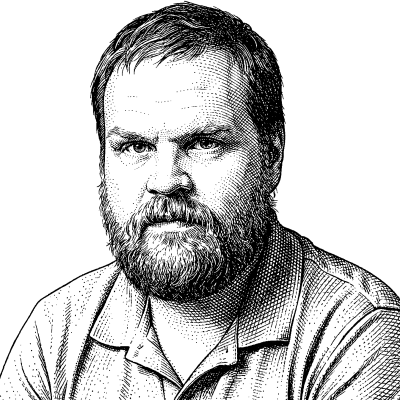
Allen Hansen was raised in northern Israel within the LDS faith, an experience that has profoundly shaped his academic and personal interests. His interdisciplinary scholarship spans a wide range of subjects, reflecting his diverse background and intellectual curiosity. Hansen’s research interests are particularly focused on the intersection of Mormonism, Judaism, and Biblical studies, with a keen interest in late antiquity. He also has scholarly interests in journalism, as well as Eastern European and Middle Eastern studies. This breadth allows him to explore unique connections between seemingly disparate fields. Hansen also brings a practical dimension to his scholarship through interests in business management and positive psychology, both of which he frames through the lens of Zion — exploring how organizational design and individual well-being might serve a larger communal vision. This thread of his work aligns naturally with the Mormon Transhumanist Association’s broader project of bridging faith and posthumanism.
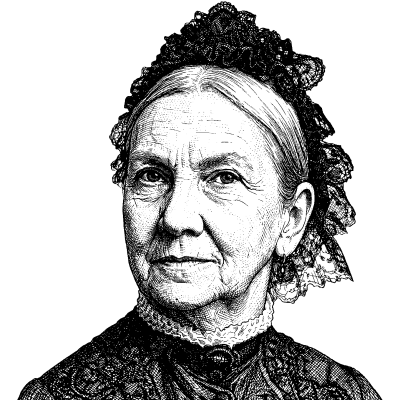
Bathsheba W. Smith
Bathsheba Wilson Bigler Smith (1822–1910) served as the fourth general president of the Relief Society from 1901 until her death. Born in what is now West Virginia, she was raised on her family’s 300-acre plantation before joining the Church in 1837 at age fifteen. She married George A. Smith, the youngest member of the Quorum of the Twelve, in 1841. At age nineteen, Bathsheba was the youngest woman present at the organization of the Relief Society in Nauvoo in 1842. She later served as matron of the Salt Lake Temple, a member of the Deseret Hospital board, and a leader in the western woman’s suffrage movement. In 1888, she became second counselor in the Relief Society general presidency. As Relief Society general president, Smith oversaw construction of the original Relief Society Building (completed 1909) and introduced classes on childrearing, industry, and marriage. Under her leadership, Relief Society wheat was shared with earthquake survivors in San Francisco and famine victims in China. She was the first woman granted a funeral service in the Salt Lake Tabernacle.

Charles Randall Paul is the founder and president of the Foundation for Religious Diplomacy, an organization based in New York and Utah dedicated to fostering trust between religious critics and rivals. Recognizing the need for constructive online dialogue, he co-founded The World Table, a software platform designed to facilitate respectful conversations on the internet. Paul’s academic background spans diverse fields. He holds a B.S. in Social Psychology from Brigham Young University, an MBA from Harvard University, and a Ph.D. from the University of Chicago Committee on Social Thought. This interdisciplinary approach informs his work on religious diplomacy and online discourse. Prior to his academic pursuits, Paul had a career as a commercial real estate developer. Influenced by thinkers such as William James, Jonathan Haidt, and Chantal Mouffe, Paul’s work explores themes of radical empiricism, personalism, and agonistic pluralism. His perspectives, rooted in Mormon theology and Joseph Smith’s notions of Zion, challenge conventional assumptions about knowledge and behavior, especially in the context of conflict and cooperation. He draws insight from the Mormon mythological example of the war in heaven, highlighting that knowledge doesn’t necessarily ensure moral behavior. Paul is married to Jan, and together they have five children and fifteen grandchildren.
Quotations (14)
 Sterling M. McMurrin
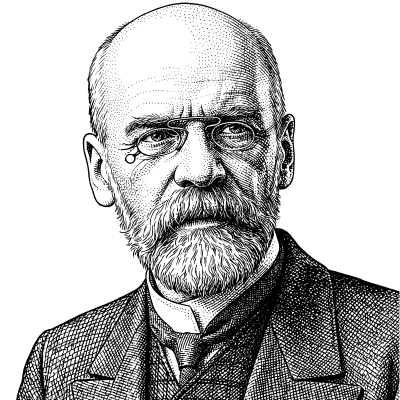 Emile Durkheim
 Clifford Geertz
Topical Guide (2)
Videos (24)
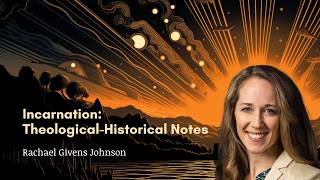
Rachael Givens Johnson
Incarnation: Some Theological-Historical Notes
In an age of seemingly endless possibilities for modifying our bodies, this presentation explores the value of limited embodiment, arguing that constraints and limitations may be prerequisites for cultivating joy, freedom, and connection rather than obstacles to overcome. Drawing on Brian Kershisnik’s painting “Dancing on a Very Small Island,” the speaker examines how recent cognitive science has undergone an “embodied makeover,” recognizing intelligence as embodied, embedded, enacted, and extended. The talk raises theological questions from the Latter-day Saint tradition—particularly Joseph Smith’s vision of resurrection as precise bodily restoration—suggesting that progress might paradoxically occur through condescension, sacrifice, and abnegation rather than purely through increasing autonomy and agency.
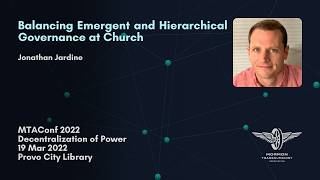
Jonathan Jardine
Balancing Emergent and Hierarchical Governance at Church
Jonathan Jardine, drawing on Clay Christensen’s strategic frameworks, examines how decentralization of church practice—not doctrine—can help build Zion. He traces LDS innovations like seminaries, the Primary, and the welfare program back to emergent strategies that bubbled up from local leaders solving real problems, later adopted and standardized by general authorities. Jardine contrasts this with recent decades’ shift toward deliberate, centrally planned initiatives, arguing that the church needs both approaches and should empower members to exercise their “spiritual muscles” through local innovation.
Don Bradley
“Raise Up Seed to Thy Brother”- The Ideologically Levirate Marriage of Joseph, Emma, & Alvin Smith
This presentation proposes that Joseph Smith believed his firstborn son Alvin held special rights to the golden plates because Joseph saw himself as fulfilling the biblical levirate law—raising up seed to his deceased brother Alvin, who had been present when Moroni first appeared and died shortly thereafter. The speaker uses abductive reasoning to argue that Joseph’s marriage to Emma was itself an adaptation of this ancient practice, making their union spiritually polygamous from the start. This hypothesis offers explanatory power for several puzzles in early Mormon history, including Joseph’s outsized expectations for his firstborn son, his need to marry Emma before obtaining the plates, and the later development of proxy work for the dead and plural marriage.
Chris Bradford
Open Thou Mine Eyes
Chris Bradford explores the tension between technological instrumentalism and genuine human relationship, drawing on Martin Buber’s distinction between “I-It” and “I-Thou” encounters. He argues that a purely technological approach to the world risks reducing people and nature to mere objects, and that Mormon transhumanism must complement its technological aspirations with the cultivation of empathy, charity, and recognition of the divine in others. Bradford contends that the grace saturating the world—visible when our “eyes are opened”—calls disciples of Christ to see and serve God in every neighbor, making the transhumanist project a fundamentally religious endeavor.
Ben Blair
The God of Transcending Narratives
This presentation examines how communal narratives function in religious communities, arguing that God consistently bursts self-assured narratives rather than confirming them—as seen in Moses’s life being repeatedly disrupted from Egyptian prince to fugitive to prophet. The speaker critiques both the LDS Church’s institutional narrative and ex-Mormon counter-narratives for missing the “sought goods” that justify any narrative, suggesting that disputes over historical and doctrinal claims miss the more essential question of whether these structures actually deliver salvation. Mormon transhumanism offers a framework where religious aspirations like immortality and eternal life need not remain abstract mysteries but can become serious goals with practical benchmarks, transforming narratives from self-justifying stories into accountable claims measured against real outcomes.