technology
Articles (229)
The Association Has a New Home
Explore the rebuilt transfigurism.org—a deeper library, topical guides, and community tools for those who take both faith and the future seriously.
Transhumanist Holy Week: Maundy Thursday
Caleb Jones on Maundy Thursday—how Jesus washing feet challenges transhumanists to center service, vulnerability, and compassion alongside technology's power.
Transhumanist Holy Week: Good Friday
Caleb Jones's Transhumanist Holy Week reflection on Good Friday—exploring how broken bread, crucifixion, and technological choice intertwine in Christ's final moments.
Transhumanist Holy Week: Holy Saturday
Caleb Jones on Holy Saturday—how Christ's Harrowing of Hell mirrors transhumanism's call to wield technology wisely, overcoming death while heeding its risks.
29 Thoughts on April 2026 General Conference
Lincoln Cannon reflects on the April 2026 LDS General Conference, reading 29 talks through a transhumanist lens of faith, technology, and transformation.
Authors (143)

Ada Lovelace
Ada Lovelace (1815–1852) was a British mathematician and writer widely regarded as the world’s first computer programmer, a visionary who glimpsed the computational future nearly a century before the machines that would realize it. Born Augusta Ada Byron, the only legitimate child of the poet Lord Byron, Lovelace was raised by her mother Anne Isabella Milbanke, who deliberately cultivated in her a rigorous education in mathematics and science—partly, it is said, to guard against the romantic temperament of her absent father. That tension between poetic imagination and mathematical precision became her defining characteristic rather than her contradiction. Introduced to Charles Babbage in 1833, she became captivated by his proposed Analytical Engine. In 1843 she translated Luigi Menabrea’s account of the Engine from French, appending her own notes—nearly three times the length of the original—that described, among other things, an algorithm for computing Bernoulli numbers. This is now recognized as the first published algorithm intended for execution by a machine. Lovelace’s most striking contribution was not the algorithm itself but the conceptual leap it represented. She understood that the Analytical Engine could manipulate symbols according to rules, not merely numbers—that it was, in principle, a general-purpose engine of thought. She also recognized its limits: the machine, she wrote, could only do what we know how to order it to perform. That sober, precise boundary-drawing between tool and mind was itself a kind of philosophical precision that still shapes how we think about artificial intelligence. Her imagination ranged freely across what such an engine might compose, calculate, and create, anticipating by more than a century the questions that animate the intersection of computation and human cognition. From a Mormon transhumanist sensibility, Lovelace’s life embodies the conviction that intelligence—cultivated, disciplined, and applied to the highest tools available—is itself a sacred work. Her synthesis of mathematical rigor and imaginative reach, her insistence that the engines of computation might serve art and music as readily as arithmetic, resonates with a theology that treats creativity and intelligence as attributes of divinity in which humans genuinely participate. She died at thirty-six, leaving a legacy that took more than a century to be fully recognized—a reminder that the seeds of transformation are often sown long before the harvest is visible.

Albert Einstein
Albert Einstein (1879–1955) was a German-born theoretical physicist whose work transformed humanity’s understanding of space, time, energy, and matter, making him one of the most consequential scientific minds in recorded history. Einstein developed the special theory of relativity (1905) and the general theory of relativity (1915), the latter offering a geometric account of gravity that replaced Newtonian mechanics at cosmological scales. His famous mass-energy equivalence, expressed as E=mc², opened new vistas in physics and eventually in energy technology. He was awarded the Nobel Prize in Physics in 1921 for his discovery of the law of the photoelectric effect, a cornerstone of quantum theory. Einstein held positions at the Swiss Federal Patent Office, the University of Zurich, the German University in Prague, ETH Zurich, and the Prussian Academy of Sciences before emigrating to the United States in 1933, where he joined the Institute for Advanced Study in Princeton until his death. Beyond equations and thought experiments, Einstein was a deeply reflective thinker on the relationship between human intelligence and ultimate reality. He resisted the label of atheist, describing his orientation instead as a posture of humble wonder before a universe marvelously arranged and obeying certain laws—laws our limited minds only dimly understand. He held that science without religion is lame, and religion without science is blind, insisting the two must work hand-in-hand. This is not the posture of a secularist who has set metaphysics aside; it is the posture of someone who treats the intelligibility of the cosmos as a moral and spiritual provocation. That sensibility finds natural resonance with the Mormon transhumanist conviction that creation, intelligence, and Godhood are continuous rather than severed—that the universe’s deep order is something we are called to investigate, participate in, and ultimately embody. Einstein did not share Mormon theology, but his insistence that wonder before the cosmos is practically indistinguishable from religious seriousness, and that the advance of knowledge is bound up with something larger than mere utility, speaks across that distance. His life’s work stands as a testament to the proposition that rigorous intelligence and reverent imagination are not opposites but partners in the long, unfinished project of understanding our place in a universe of staggering complexity and beauty.
Alexei Turchin
Alexei Turchin (born 1973, Moscow) is a Russian independent researcher, author, and transhumanist thinker whose work concentrates on existential risk, life extension, and the theoretical and technological pathways to human resurrection. Educated in physics and art history at Moscow State University, he has been an active figure in the Russian transhumanist movement since 2007 and a contributor to the Arch Mission Foundation, which is dedicated to preserving human knowledge across deep time. Turchin has written extensively on what he frames as a multilevel strategy for immortality: Plan A (defeating aging), Plan B (cryonics), Plan C (digital immortality), and Plan D (multiverse or quantum immortality). His philosophical work engages questions of personal identity, the nature of the connectome, and the informational basis of human consciousness—arguing that death is, at its core, a loss of information, and that resurrection is therefore a project of information reconstruction. Drawing on the Russian cosmist tradition, especially Nikolai Fedorov’s vision of the universal resurrection of the dead, Turchin argues that a sufficiently advanced superintelligent AI could simulate all of human history in enough detail to reconstruct every person who ever lived, transferring them into personalized continuations of existence. This vision resonates deeply with Mormon transhumanist hopes for technological resurrection and the redemption of the dead. At the 2019 Mormon Transhumanist Association Conference, themed “Redeeming Our Dead,” Turchin presented these ideas directly, proposing that benevolent superintelligences—far outnumbering malevolent ones across the universe—would be the natural agents of such a project. His work treats moral seriousness as inseparable from technical aspiration: questions of consent, unnecessary suffering, and the ethics of simulated existence are not afterthoughts but load-bearing concerns. In this sense, Turchin exemplifies the cosmist conviction that intelligence, at sufficient scale, becomes a redemptive force—a conviction that Mormon transhumanism, with its own doctrine of eternal progression and compassionate creation, finds deeply familiar.

Allen Hansen was raised in northern Israel within the LDS faith, an experience that has profoundly shaped his academic and personal interests. His interdisciplinary scholarship spans a wide range of subjects, reflecting his diverse background and intellectual curiosity. Hansen’s research interests are particularly focused on the intersection of Mormonism, Judaism, and Biblical studies, with a keen interest in late antiquity. He also has scholarly interests in journalism, as well as Eastern European and Middle Eastern studies. This breadth allows him to explore unique connections between seemingly disparate fields. Hansen also brings a practical dimension to his scholarship through interests in business management and positive psychology, both of which he frames through the lens of Zion — exploring how organizational design and individual well-being might serve a larger communal vision. This thread of his work aligns naturally with the Mormon Transhumanist Association’s broader project of bridging faith and posthumanism.
Allen Leigh is a veteran software engineer, electrical engineer, and author whose work seeks to harmonize the rigors of technical science with the principles of Latter-day Saint theology. With a professional career spanning forty-four years in the software industry and a background in electrical engineering, Leigh brings a pragmatic, systems-based perspective to religious inquiry, focusing on the structural mechanics of creation and eternity. Leigh’s intellectual contributions are best encapsulated in his book, One Mormon’s View of the Science-Religion Debate and the Quest for Eternity . In this text, he navigates the often-contentious boundary between empirical evidence and spiritual belief, arguing that the two disciplines are not mutually exclusive but rather complementary frameworks for understanding the universe. His work suggests that the perceived rift between science and religion often stems from a misunderstanding of the methodologies inherent to both. A key figure in discussions on Mormon Transhumanism, Leigh has applied his technical expertise to theological cosmology. His presentation at the MTAConf 2009 entitled “God, the Perfect Engineer” focused on the concept of “engineering design cycles”—the iterative processes used to plan, build, test, and refine complex systems. Leigh proposed a model in which God functions as a Master Engineer, utilizing similar design cycles in the creation of the earth. This framework raises profound questions regarding the nature of divine omnipotence and the practical realities of creation. By drawing parallels to earthly engineering projects—which are subject to constraints, iterations, and the risk of failure—Leigh investigates whether the creation of the earth followed a similar, non-linear path. He challenges his audience to consider if a divine creation project could, in theory, fail, and what the implications of such a failure would be for our understanding of God’s plan. Through this lens, Leigh encourages a view of the cosmos that appreciates the intricate, perhaps even experimental, nature of existence.
Quotations (30)
 John A. Widtsoe
 Jeffrey R. Holland
 Gordon B. Hinckley
 David O. McKay
Topical Guide (34)
See all 34 resultsVideos (16)
Jon Ogden
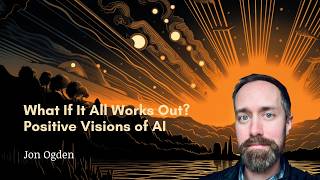
What If It All Works Out? Positive Visions of AI
This talk asks a hopeful question: What if it all works out? The speaker envisions AI’s positive potential at three levels—garden, city, and planet. At the garden level, he invokes the simple paradise of Epicurus: friends discussing ideas in peaceful surroundings, suggesting we may already be closer to Eden than we realize. But this vision falters when one considers the unhoused sleeping under Zion’s Bank, prompting a turn to the Mormon vision of Zion where there are no poor. Finally, at the planetary level, the speaker sees AI’s greatest promise in its capacity to detect microscopic toxins and enable truly sustainable material cycles—going from “one to zero” as nature does, so that everyone might eventually enjoy the simple luxury of talking about ideas with friends.
Nancy Fulda
Fact, Fiction, and Fantasy: Demystifying AI Hype in the Information Age
Nancy Fulda, an AI researcher and science fiction writer, offers a primer on how neural networks actually work—explaining backpropagation, weights, and training in accessible terms. She recounts how her own research on ChatGPT’s ability to predict statistical voting patterns was sensationalized by headlines into claims of AI omniscience, illustrating the terminology gap between researchers and the public. Fulda emphasizes that while AI is genuinely transformative—enabling new medicines, restoring sight, generating video—current systems lack internal state between interactions and remain far from sentience, with roughly 80% of commercial AI projects failing.
Vinay Gupta
Can Provably Fair Trade Be a Technology of Spiritual Liberation?
Vinay Gupta, founder of the blockchain company Materium and inventor of the Hexayurt refugee shelter, introduces the concept of “moral computing”—using technology to address the “moral toxins” that accumulate when consumers unknowingly support exploitative labor practices or environmental harm. He argues that while supply chain information about products already exists, it remains siloed within distant organizations, leaving consumers unable to make informed ethical choices. By combining blockchain’s transparency with Gandhian principles of fair trade, Gupta envisions a future where purchasing automatically triggers offsetting actions—like carbon credits—and where machine-readable specifications allow people to automate their moral preferences, filtering out goods produced under questionable conditions.
Closing Session: a discussion on COVID-19 and the interconnectedness of our world
This closing session roundtable discussion from the 2020 MTA conference explores the COVID-19 pandemic’s effects on global interconnectedness. Participants highlight encouraging developments—from a seventeen-year-old creating a widely-used pandemic dashboard to international cooperation on medical technology and the rapid expansion of remote work and education. The conversation turns to what the MTA can do during the crisis, with participants emphasizing the need to balance transhumanist optimism with genuine empathy for those suffering, the importance of understanding exponential growth’s implications, and the opportunity to strengthen the broader transhumanist movement through increased virtual collaboration.

Rio Harvey
Genetic Technologies and Biodiversification
Rio Harvey surveys genetic technologies from present capabilities to far-future possibilities, covering gene editing, personalized medicine, GMOs, and de-extinction. She raises ethical concerns about the concentration of genetic technology ownership, the mixed blessing of genetic diagnoses like Huntington’s disease, and the potential for personalized pathogens. Looking further ahead, Harvey explores how biodiversification could become a manufacturable resource and how our expanding powers will require new ethical frameworks—suggesting that religious transhumanism, with its tradition of contemplating human-like gods, offers valuable insights for thinking about the ethics of beings who can rewrite entire ecologies.