Videos

Showing 1–10 of 16
What If It All Works Out? Positive Visions of AI
8:18

Jon Ogden

What If It All Works Out? Positive Visions of AI

This talk asks a hopeful question: What if it all works out? The speaker envisions AI's positive potential at three levels—garden, city, and planet. At the garden level, he invokes the simple paradise of Epicurus: friends discussing ideas in peaceful surroundings, suggesting we may already be closer to Eden than we realize. But this vision falters when one considers the unhoused sleeping under Zion's Bank, prompting a turn to the Mormon vision of Zion where there are no poor. Finally, at the planetary level, the speaker sees AI's greatest promise in its capacity to detect microscopic toxins and enable truly sustainable material cycles—going from “one to zero” as nature does, so that everyone might eventually enjoy the simple luxury of talking about ideas with friends.

Can Provably Fair Trade Be a Technology of Spiritual Liberation?
19:14

Vinay Gupta

Can Provably Fair Trade Be a Technology of Spiritual Liberation?

Vinay Gupta, founder of the blockchain company Materium and inventor of the Hexayurt refugee shelter, introduces the concept of "moral computing"—using technology to address the "moral toxins" that accumulate when consumers unknowingly support exploitative labor practices or environmental harm. He argues that while supply chain information about products already exists, it remains siloed within distant organizations, leaving consumers unable to make informed ethical choices. By combining blockchain’s transparency with Gandhian principles of fair trade, Gupta envisions a future where purchasing automatically triggers offsetting actions—like carbon credits—and where machine-readable specifications allow people to automate their moral preferences, filtering out goods produced under questionable conditions.

Closing Session: a discussion on COVID-19 and the interconnectedness of our world
34:39

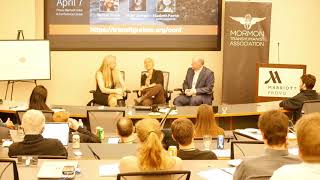
Closing Session: a discussion on COVID-19 and the interconnectedness of our world

This closing session roundtable discussion from the 2020 MTA conference explores the COVID-19 pandemic's effects on global interconnectedness. Participants highlight encouraging developments—from a seventeen-year-old creating a widely-used pandemic dashboard to international cooperation on medical technology and the rapid expansion of remote work and education. The conversation turns to what the MTA can do during the crisis, with participants emphasizing the need to balance transhumanist optimism with genuine empathy for those suffering, the importance of understanding exponential growth's implications, and the opportunity to strengthen the broader transhumanist movement through increased virtual collaboration.

Genetic Technologies and Biodiversification
36:55

Richard Harvey

Genetic Technologies and Biodiversification

Richard Harvey surveys genetic technologies from present capabilities to far-future possibilities, covering gene editing, personalized medicine, GMOs, and de-extinction. He raises ethical concerns about the concentration of genetic technology ownership, the mixed blessing of genetic diagnoses like Huntington’s disease, and the potential for personalized pathogens. Looking further ahead, Harvey explores how biodiversification could become a manufacturable resource and how our expanding powers will require new ethical frameworks—suggesting that religious transhumanism, with its tradition of contemplating human-like gods, offers valuable insights for thinking about the ethics of beings who can rewrite entire ecologies.