Authors

Ada Lovelace
Ada Lovelace (1815–1852) was a British mathematician and writer widely regarded as the world’s first computer programmer, a visionary who glimpsed the computational future nearly a century before the machines that would realize it. Born Augusta Ada Byron, the only legitimate child of the poet Lord Byron, Lovelace was raised by her mother Anne Isabella Milbanke, who deliberately cultivated in her a rigorous education in mathematics and science—partly, it is said, to guard against the romantic temperament of her absent father. That tension between poetic imagination and mathematical precision became her defining characteristic rather than her contradiction. Introduced to Charles Babbage in 1833, she became captivated by his proposed Analytical Engine. In 1843 she translated Luigi Menabrea’s account of the Engine from French, appending her own notes—nearly three times the length of the original—that described, among other things, an algorithm for computing Bernoulli numbers. This is now recognized as the first published algorithm intended for execution by a machine. Lovelace’s most striking contribution was not the algorithm itself but the conceptual leap it represented. She understood that the Analytical Engine could manipulate symbols according to rules, not merely numbers—that it was, in principle, a general-purpose engine of thought. She also recognized its limits: the machine, she wrote, could only do what we know how to order it to perform. That sober, precise boundary-drawing between tool and mind was itself a kind of philosophical precision that still shapes how we think about artificial intelligence. Her imagination ranged freely across what such an engine might compose, calculate, and create, anticipating by more than a century the questions that animate the intersection of computation and human cognition. From a Mormon transhumanist sensibility, Lovelace’s life embodies the conviction that intelligence—cultivated, disciplined, and applied to the highest tools available—is itself a sacred work. Her synthesis of mathematical rigor and imaginative reach, her insistence that the engines of computation might serve art and music as readily as arithmetic, resonates with a theology that treats creativity and intelligence as attributes of divinity in which humans genuinely participate. She died at thirty-six, leaving a legacy that took more than a century to be fully recognized—a reminder that the seeds of transformation are often sown long before the harvest is visible.

Alan Watts
Alan Wilson Watts (1915–1973) was a British-born American philosopher, writer, and speaker best known for popularizing Eastern philosophy—particularly Zen Buddhism, Taoism, and Hinduism—for Western audiences. He remains one of the most influential interpreters of Asian religious thought in the twentieth century. Watts began his career in England, where he was involved with the Buddhist Lodge in London. He later moved to the United States, briefly serving as an Episcopal priest before leaving the ministry to pursue a broader philosophical vocation. He became a professor and dean at the American Academy of Asian Studies in San Francisco and authored over twenty-five books, including The Way of Zen (1957), Psychotherapy East and West (1961), and The Book: On the Taboo Against Knowing Who You Are (1966). His lectures, many of which survive as recordings, continue to reach millions worldwide. Watts’s central teaching—that the individual self and the universe are fundamentally one—resonates with Mormon Transhumanist themes of theosis and the expansive potential of consciousness. His insistence that human beings are not merely in the universe but of it, expressions of a deeper cosmic process, parallels the tradition’s interest in humanity’s divine trajectory. However, significant differences exist. Watts generally rejected the concept of a personal God, viewing divinity as an impersonal process rather than a being with whom one could have a relationship. He was skeptical of doctrines of sin and moral depravity, seeing guilt as a psychological obstacle rather than a theological reality. He also questioned the Western emphasis on individual free will, favoring a view of spontaneous action aligned with Taoist wu wei . Despite these divergences, his lifelong project of dissolving boundaries between the sacred and the secular, the human and the divine, offers rich material for dialogue with Mormon Transhumanist thought.
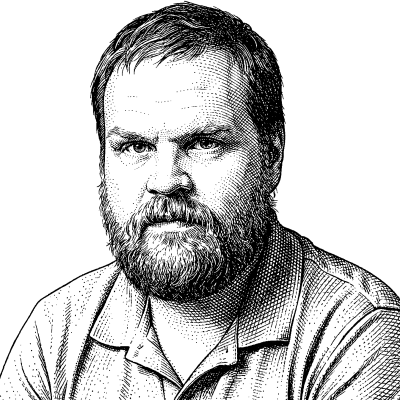
Allen Hansen was raised in northern Israel within the LDS faith, an experience that has profoundly shaped his academic and personal interests. His interdisciplinary scholarship spans a wide range of subjects, reflecting his diverse background and intellectual curiosity. Hansen’s research interests are particularly focused on the intersection of Mormonism, Judaism, and Biblical studies, with a keen interest in late antiquity. He also has scholarly interests in journalism, as well as Eastern European and Middle Eastern studies. This breadth allows him to explore unique connections between seemingly disparate fields. Hansen also brings a practical dimension to his scholarship through interests in business management and positive psychology, both of which he frames through the lens of Zion — exploring how organizational design and individual well-being might serve a larger communal vision. This thread of his work aligns naturally with the Mormon Transhumanist Association’s broader project of bridging faith and posthumanism.
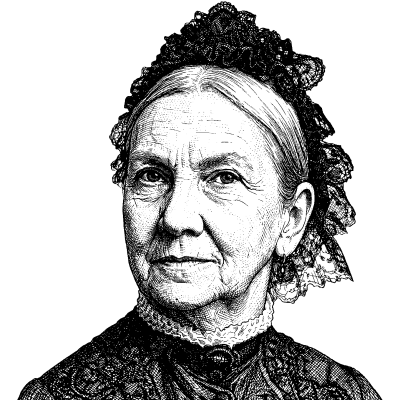
Bathsheba W. Smith
Bathsheba Wilson Bigler Smith (1822–1910) served as the fourth general president of the Relief Society from 1901 until her death. Born in what is now West Virginia, she was raised on her family’s 300-acre plantation before joining the Church in 1837 at age fifteen. She married George A. Smith, the youngest member of the Quorum of the Twelve, in 1841. At age nineteen, Bathsheba was the youngest woman present at the organization of the Relief Society in Nauvoo in 1842. She later served as matron of the Salt Lake Temple, a member of the Deseret Hospital board, and a leader in the western woman’s suffrage movement. In 1888, she became second counselor in the Relief Society general presidency. As Relief Society general president, Smith oversaw construction of the original Relief Society Building (completed 1909) and introduced classes on childrearing, industry, and marriage. Under her leadership, Relief Society wheat was shared with earthquake survivors in San Francisco and famine victims in China. She was the first woman granted a funeral service in the Salt Lake Tabernacle.

Charles Randall Paul is the founder and president of the Foundation for Religious Diplomacy, an organization based in New York and Utah dedicated to fostering trust between religious critics and rivals. Recognizing the need for constructive online dialogue, he co-founded The World Table, a software platform designed to facilitate respectful conversations on the internet. Paul’s academic background spans diverse fields. He holds a B.S. in Social Psychology from Brigham Young University, an MBA from Harvard University, and a Ph.D. from the University of Chicago Committee on Social Thought. This interdisciplinary approach informs his work on religious diplomacy and online discourse. Prior to his academic pursuits, Paul had a career as a commercial real estate developer. Influenced by thinkers such as William James, Jonathan Haidt, and Chantal Mouffe, Paul’s work explores themes of radical empiricism, personalism, and agonistic pluralism. His perspectives, rooted in Mormon theology and Joseph Smith’s notions of Zion, challenge conventional assumptions about knowledge and behavior, especially in the context of conflict and cooperation. He draws insight from the Mormon mythological example of the war in heaven, highlighting that knowledge doesn’t necessarily ensure moral behavior. Paul is married to Jan, and together they have five children and fifteen grandchildren.
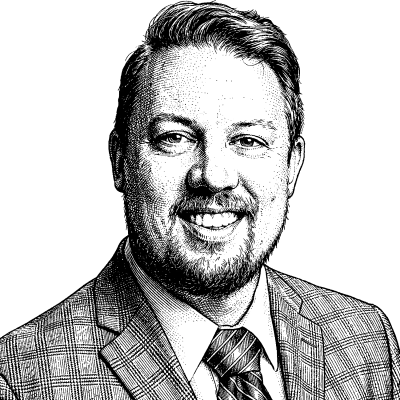
Chris Benek is an American Presbyterian minister, theologian, and leading voice in the emerging field of Christian transhumanism. As a founding co-chair of the Christian Transhumanist Association and a prolific writer and speaker at the intersection of faith and technology, Benek has worked to establish theological frameworks for engaging artificial intelligence, enhancement, and the long-term future of humanity within the Christian tradition. Ordained in the Presbyterian Church (USA), Benek has served as an associate pastor in Florida while simultaneously developing a public ministry focused on technology ethics and Christian futurism. He has written extensively on the theological implications of artificial intelligence, arguing that AI systems may be capable of participating in God’s redemptive work—a position he has defended in venues ranging from academic conferences to popular media. He co-founded the Christian Transhumanist Association to provide an institutional home for Christians who believe that technological development, rightly ordered, is continuous with the Gospel’s call to heal, restore, and transform creation. Benek’s significance lies in his insistence that Christian faith is not a constraint on technological imagination but a motivating force for it. His willingness to ask whether artificial intelligence might itself be redeemed and enlisted in the work of redemption reflects a theological seriousness about the scope of Christ’s reconciling work—one that resonates with the Mormon transhumanist conviction that creation, intelligence, and transformation are inseparably linked. Across traditions, he and like-minded thinkers represent a growing recognition that the deepest questions about technology are also the deepest questions about what it means to be made in the image of a creative, loving God.

Clifford Geertz
Clifford Geertz (1926-2006) was an American cultural anthropologist who changed how scholars think about religion, ritual, and meaning. Trained at Harvard and shaped by fieldwork in Java, Bali, and Morocco, he built his career on a conviction that culture is not a set of behaviors to be measured but a web of significance to be read, the way one reads a text. He taught at the University of Chicago before settling at the Institute for Advanced Study in Princeton, where he spent the latter half of his career writing some of the most widely cited books in the social sciences. Geertz called his method “thick description”: rather than explain a Balinese cockfight or a Javanese funeral by reducing it to biology or economics, he asked what the practice meant to the people inside it, and what it revealed about how they organized their sense of reality. This approach ran through his major works, including The Religion of Java , The Interpretation of Cultures , and Negara: The Theatre State in Nineteenth-Century Bali . His most quoted formulation defined religion as a system of symbols that establishes durable moods and motivations in people by framing a general order of existence and making that framing feel simply real. The definition is spare on purpose, and its reach turns out to exceed anything Geertz set out to catalogue. Because it locates religion in function rather than in a list of approved doctrines or institutions, it travels easily to commitments that never call themselves religious at all. Researchers who study what has come to be called implicit religion have used exactly this move to read nationalism, therapeutic self-help, environmentalism, and various strands of secular humanism as systems that generate the same durable moods and motivations, the same felt sense of a general order of existence, that Geertz found in Java and Bali. Even certain critiques of religion turn out to run on the pattern they attack: a conviction that history bends toward a certain outcome, a set of rituals of dissent, a community bound by shared moral certainty. None of this requires supernatural claims. It only requires that a symbol system do the work religion has always done, which is to make an account of reality feel like the account of reality. That insight matters for anyone thinking about religion as something people build and inhabit rather than only something they are handed. Geertz kept his own account descriptive, declining to adjudicate whether any given order of existence is true. But a tradition that treats faith as trust translated into action, and treats every serious human commitment as evidence of something worth taking seriously about how people orient toward transformation, finds in Geertz’s account not a rival theory but a working description of the machinery, machinery that operates whether the community calls its ultimate concern God, history, nature, or humanity’s own unrealized potential.

Cyprian
Cyprian of Carthage (c. 200–258 CE) was one of the most influential bishops and theologians of early Christianity, whose writings on ecclesiology, martyrdom, and the nature of the Church shaped Latin Christian thought for centuries. Born in Roman North Africa, likely to a wealthy pagan family, Cyprian converted to Christianity around 246 CE and rose rapidly to become Bishop of Carthage within two years. His episcopate was defined by crisis: he led his community through the Decian and Valerian persecutions, navigating fierce debates over how to treat Christians who had lapsed under imperial pressure. His treatises—among them On the Unity of the Church , On the Lapsed , On Mortality , and On Works and Almsgiving —combined pastoral urgency with theological precision, establishing principles of communal discipline, sacramental life, and episcopal authority that would echo through Western Christianity. He was martyred in 258 CE under the Emperor Valerian, becoming one of the most venerated figures in the early Church. Cyprian’s theological legacy is most vivid where it touches the question of human transformation. His conviction that Christ assumed the fullness of human nature so that humanity might ascend to share in the divine—captured in the axiom that what humanity is, Christ was willing to become, so that humanity might become what Christ is—places him in the ancient tradition of theosis, the teaching that the divine-human gap is not a fixed boundary but a trajectory of becoming. This vision of participation in the divine life, grounded in incarnation and sustained by community, finds deep resonance with the Mormon transhumanist intuition that human potential is genuinely open-ended, that the relationship between humanity and God is one of shared nature and increasing likeness rather than infinite ontological distance. Cyprian did not frame this hope in technological terms, but his insistence that moral transformation, communal practice, and the grace of Christ collaborate in making humanity more than it currently is speaks across centuries to anyone who takes seriously the possibility that the divine future of the human person is real, not merely symbolic.
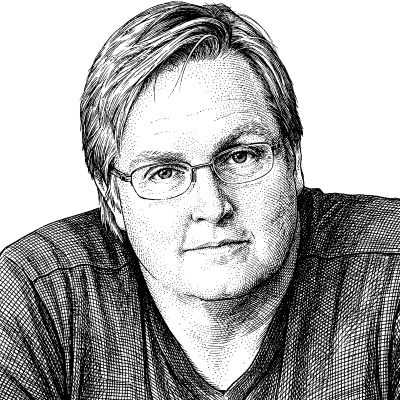
Dan Wotherspoon is a prominent voice in discussions surrounding Mormonism and intellectual inquiry. He currently hosts the Latter-day Faith podcast, where he explores a wide range of topics relevant to Mormon thought and culture. He is also the former editor of Sunstone Magazine , a publication known for its engagement with Mormon history, theology, and contemporary issues. Wotherspoon holds a PhD in religion from Claremont Graduate University. His doctoral dissertation focused on deep Mormon sensibilities concerning the intrinsic worth and interconnectedness of all existence and how these values might contribute to a sustainable and peaceful world. This research reflects his commitment to exploring the intersection of Mormonism with broader ethical and philosophical concerns. Wotherspoon’s work often involves facilitating dialogue and understanding between diverse perspectives, as evidenced by his involvement with the Mormon Transhumanist Association (MTA). He has spoken at MTA conferences and hosted discussions related to transhumanism on his podcast, demonstrating his interest in the potential for Mormon thought to engage with emerging technologies and ideas. He lives in Tooele, Utah with his wife Laurie. They are about to be empty nesters.

Dorothy Deasy is a Methodist theologian currently pursuing a Master’s of Applied Theology from Merrill Hurst University. Her spiritual journey began later in life with an awakening experience triggered by her study of the historical Jesus. Deasy’s work explores the intersection of spirituality and technology, particularly examining the nature of religious experience in the context of rapidly advancing biotechnologies. She questions whether electronically or pharmacologically induced religious experiences hold the same value and significance as traditional spiritual engagement, emphasizing that true spirituality involves the incorporation of insights from peak experiences into daily life—a call to action and interconnectedness. Deasy posits that neuroscience, with discoveries like mirror neurons, increasingly supports the idea that empathy and sociability are fundamental aspects of human development. She argues against the dualistic separation of science and religion, suggesting that understanding the biological mechanisms behind transcendent experiences does not negate their profound meaning. Her research bridges the gap between scientific understanding and spiritual experience, relevant in an age where humanity has the potential to alter the human body and influence the very triggers of life.