longevity
Articles (56)
In Memory of Mike Perry
Lincoln Cannon remembers Dr. Mike Perry—a devoted Alcor leader, cryonics pioneer, and religious transhumanist who contributed to the MTA and CTA communities.
Pope Leo Flatters Sister Death
Lincoln Cannon challenges Pope Leo XIV's embrace of "Sister Death," arguing it flatters mortality rather than confronting it with Christian hope.
Don't Die Can Be Good But Thriving Is Always Better
Lincoln Cannon reflects on biohacker Bryan Johnson's 'Don't Die' mission, arguing that true thriving—not mere survival—is the higher transhumanist aim.
Humanity+ and the Transhumanist Declaration
An elaboration of the Transhumanist Declaration—one of MTA's two official position documents—with commentary on each of its eight core points.
Life Extension: A Mormon Transhumanist View
Chris Bradford presents a Mormon transhumanist view of life extension, tracing the theology of immortality from LDS scripture to modern longevity science.
Authors (10)
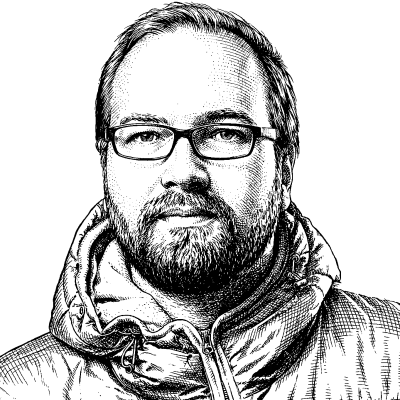
Alexei Turchin
Alexei Turchin (born 1973, Moscow) is a Russian independent researcher, author, and transhumanist thinker whose work concentrates on existential risk, life extension, and the theoretical and technological pathways to human resurrection. Educated in physics and art history at Moscow State University, he has been an active figure in the Russian transhumanist movement since 2007 and a contributor to the Arch Mission Foundation, which is dedicated to preserving human knowledge across deep time. Turchin has written extensively on what he frames as a multilevel strategy for immortality: Plan A (defeating aging), Plan B (cryonics), Plan C (digital immortality), and Plan D (multiverse or quantum immortality). His philosophical work engages questions of personal identity, the nature of the connectome, and the informational basis of human consciousness—arguing that death is, at its core, a loss of information, and that resurrection is therefore a project of information reconstruction. Drawing on the Russian cosmist tradition, especially Nikolai Fedorov’s vision of the universal resurrection of the dead, Turchin argues that a sufficiently advanced superintelligent AI could simulate all of human history in enough detail to reconstruct every person who ever lived, transferring them into personalized continuations of existence. This vision resonates deeply with Mormon transhumanist hopes for technological resurrection and the redemption of the dead. At the 2019 Mormon Transhumanist Association Conference, themed “Redeeming Our Dead,” Turchin presented these ideas directly, proposing that benevolent superintelligences—far outnumbering malevolent ones across the universe—would be the natural agents of such a project. His work treats moral seriousness as inseparable from technical aspiration: questions of consent, unnecessary suffering, and the ethics of simulated existence are not afterthoughts but load-bearing concerns. In this sense, Turchin exemplifies the cosmist conviction that intelligence, at sufficient scale, becomes a redemptive force—a conviction that Mormon transhumanism, with its own doctrine of eternal progression and compassionate creation, finds deeply familiar.

Aubrey de Grey is a biomedical gerontologist based in Cambridge, United Kingdom, and Mountain View, California. He is recognized for his work in combating the aging process and is a frequent speaker at events focused on the intersection of science, ethics, and longevity. De Grey serves as the Chief Science Officer of SENS Research Foundation, a California-based nonprofit dedicated to developing and promoting therapies to reverse aging. He is also the Editor-in-Chief of Rejuvenation Research , a leading peer-reviewed journal focused on intervention in aging. De Grey is best known for developing Strategies for Engineered Negligible Senescence (SENS), a comprehensive plan for repairing the accumulating molecular and cellular damage that constitutes mammalian aging. SENS breaks aging down into seven major classes of damage and identifies detailed approaches to addressing each one.

Elizabeth Parrish is the CEO of BioViva, a biotechnology corporation focused on combating cellular aging through the development of regenerative therapies for muscle and tissue. Driven by a humanitarian vision, BioViva strives to make these potentially life-saving therapies accessible to all. Parrish is recognized as a humanitarian entrepreneur, innovator, and a prominent voice advocating for genetic cures. As a strong proponent of education and advancement in regenerative medicine, she is a motivational speaker within the life sciences community and actively engages in international educational media outreach. She is also a founding member of the International Longevity Alliance. Further demonstrating her commitment to scientific discourse and discovery, Parrish is an affiliated member of the Complex Biological Systems Alliance (CBSA), a platform for highly gifted individuals. The CBSA’s mission is to advance scientific understanding of biological complexity and the origins of human disease. She also founded BioTrove Investments, LLC, and BioTrove Podcasts, initiatives dedicated to facilitating learning and funding research in the field of regenerative medicine. Though not raised religiously, Parrish expresses a reverence for nature and emphasizes the importance of self-reliance and action in achieving progress, urging individuals to actively utilize the tools available to them rather than waiting for others.

Dr. Matthew Memmott is a director and senior technical advisor for Alpha Tech Research, a technology startup focused on developing an advanced micro molten salt reactor. This innovative reactor design aims to provide twelve megawatts of inherently safe nuclear energy, while also producing valuable medical isotopes as a byproduct. His work positions him at the forefront of next-generation energy solutions. In addition to his role at Alpha Tech Research, Dr. Memmott is a professor in the chemical engineering department at Brigham Young University (BYU). He earned his bachelor’s degree in chemical engineering from BYU in 2005, and subsequently pursued advanced studies at MIT, where he obtained a master’s and PhD in nuclear science and engineering. His academic research centers on advanced nuclear reactor design, nuclear safety, and system modeling—all fields crucial for ensuring a sustainable and secure energy future. Dr. Memmott’s work aligns with transhumanist values by exploring how advanced technology can be leveraged to improve human well-being and sustainability. His exploration of nuclear energy, particularly inherently safe designs, reflects a desire to overcome challenges and create abundance. He is particularly interested in the distributed systems and blockchain applications in the energy realm.

Michio Kaku
Michio Kaku (born 1947) is an American theoretical physicist, futurist, and one of the most prominent science communicators of the contemporary era. A co-founder of string field theory, Kaku has spent his career exploring the fundamental nature of the universe while simultaneously making advanced physics accessible to millions through bestselling books, television programs, and public lectures. Born in San Jose, California, to Japanese-American parents, Kaku demonstrated exceptional scientific aptitude from a young age, reportedly building a particle accelerator in his garage as a teenager. He earned his Ph.D. from the University of California, Berkeley, and has held a long-standing professorship at the City College of New York. His academic work centers on string theory and its quest for a unified “Theory of Everything”—a single framework that would reconcile all fundamental forces of nature. Beyond the academy, Kaku has authored numerous popular science books, including Hyperspace , The Future of the Mind , Physics of the Impossible , and The Future of Humanity , which explore topics ranging from higher dimensions to the long-term trajectory of human civilization. Kaku’s futurism resonates strongly with several themes central to Mormon Transhumanism. He has articulated a vision of humanity’s future in which civilizations advance through progressively higher types on the Kardashev scale, eventually harnessing the energy of entire galaxies and potentially mastering the fabric of spacetime itself. His discussions of mind uploading, life extension, terraforming, and the colonization of space align with the transhumanist conviction that scientific knowledge and technological power can serve as means to realize extraordinary human potential. His concept of a “Type III” or even higher civilization—beings with godlike power over nature—echoes, in secular terms, the Mormon Transhumanist affirmation that humanity is invited to become compassionate creators. Where Kaku’s vision diverges from Mormon Transhumanism is primarily in its philosophical framing rather than its trajectory. Kaku generally approaches these questions from a naturalistic perspective, expressing admiration for Einstein’s impersonal “God of Spinoza”—a sense of cosmic order and harmony—rather than affirming a personal, relational God or the reality of divine grace working through human progress. Mormon Transhumanism would locate humanity’s extraordinary technological and creative future within a framework of covenant, prophetic authority, and trust in Christ, seeing these advances not merely as emergent properties of intelligence but as ordained means toward theosis. Nonetheless, Kaku’s expansive optimism about human potential and his insistence that the laws of physics permit civilizations of astonishing scope and power make his work a compelling conversation partner for anyone exploring the intersection of science, human destiny, and the divine.
Quotations (3)

 Brigham Young