harmonization
Articles (148)
29 Thoughts on April 2026 General Conference
Lincoln Cannon reflects on the April 2026 LDS General Conference, reading 29 talks through a transhumanist lens of faith, technology, and transformation.
Postsecular Christian Transhumanism
Lincoln Cannon responds to Comment Magazine, arguing for a postsecular Christian Transhumanism that embraces technology as part of human sanctification.
Humanity’s Past and Distant Future
Carl Youngblood presents to MTA members in Abidjan, arguing that transhumanism is deeply familiar to Latter-day Saints when properly understood.
Sankofa Futurism
Lincoln Cannon introduces Sankofa Futurism — recovering African philosophical roots to challenge Eurocentric transhumanism and expand humanity's vision.
A Brief History of Religious Transhumanism
Transhumanism's roots lie in religious Humanism—from theosis and Fyodorov's Cosmism to Joseph Smith's theology and Julian Huxley's coinage of the term.
Authors (8)

B. H. Roberts
Brigham Henry Roberts (1857–1933) was a historian, theologian, and General Authority of The Church of Jesus Christ of Latter-day Saints, widely regarded as one of the most rigorous and intellectually ambitious thinkers Mormonism has produced. Born in Warrington, England, and emigrating to Utah as a child, Roberts rose from a difficult, impoverished youth to become a missionary, editor, congressman-elect, and a member of the First Council of the Seventy from 1888 until his death. Roberts’s career bridged ecclesiastical leadership and serious scholarship. He served missions in the American South and presided over the Eastern States Mission, and he was elected to the U.S. House of Representatives in 1898, though he was denied his seat in a national controversy over plural marriage. He devoted decades to writing and editing, producing the six-volume Comprehensive History of the Church , editing the seven-volume History of the Church , and authoring theological works including The Mormon Doctrine of Deity , The Truth, The Way, The Life , and Studies of the Book of Mormon . In these works he engaged geology, biology, biblical criticism, and comparative religion with a candor unusual for his time and office. Roberts’s legacy resonates deeply with themes of human potential, intelligence, and the entanglement of faith with progress. He read the nineteenth and early twentieth centuries—railroads, electric light, wireless telegraphy, aviation, the spread of liberty—as “collateral rays” of the same light that opened the heavens to Joseph Smith, suggesting that the millennium might already be quietly underway in the works of human hands. He insisted that scientific research, including evidence of life and death long before Adam, belongs on the side of “development” rather than “contraction,” and that to engage such inquiry is “to link the church of God with the highest increase of human thought and effort.” Equally striking is Roberts’s generosity toward other traditions and his impatience with mental laziness. He refused to identify any particular church—Catholic, Protestant, Greek, Buddhist, Muslim, or even the societies of deists and atheists—as the “church of the devil,” reserving that phrase for the kingdom of evil wherever it appears, and affirming that wise teachers and prophets are raised up among all peoples. Against “simple faith” understood as ignorant acquiescence, he championed an intelligent, rational faith that strives “up to the very limit of man’s capacity” to know. In his confidence that intelligence is the glory of God and of humanity, that revelation invites rather than forecloses inquiry, and that the children of men are “moving up to a higher and truer conception of the things of God,” Roberts remains a vital voice for those who see in technology, science, and expanding moral imagination the natural shape of a divine future.

Cynthia Bailey is a lecturer in computer science at Stanford University. A dedicated educator, her research focuses on best practices in computer science education, with a particular emphasis on promoting inclusiveness in the tech industry. She is known for her thoughtful and well-researched contributions to discussions surrounding women in technology and the queer community. Beyond her work in computer science, Cynthia Bailey has been actively engaged in exploring the intersection of Mormonism and modern life. For a time she blogged about Mormon life on By Common Consent , providing insights and perspectives on faith in a contemporary context. Her presentation at the Sunstone West 2016 highlighted her interest in bringing together her professional expertise and her engagement with Mormon themes, specifically addressing the underrepresentation of women in technology within the Mormon community and exploring the potential of gospel principles in empowering girls’ coding initiatives. Cynthia resides in Palo Alto. She is esteemed for her quiet dedication to life-altering ideas, community building, and insightful contributions to discussions related to technology, social issues, and faith.
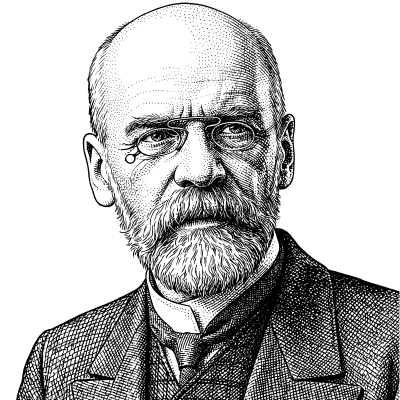
Emile Durkheim
Emile Durkheim was a pioneering French sociologist and philosopher, widely recognized alongside Karl Marx and Max Weber as one of the principal architects of modern social science. Born into a devout Jewish family in Épinal, France, Durkheim descended from a long line of rabbis. However, he broke with this tradition at an early age to lead a thoroughly secular life, dedicating his intellect to the scientific study of society rather than theology. A precocious student, Durkheim entered the prestigious École Normale Supérieure in 1879, where he studied alongside future intellectual luminaries such as Jean Jaurès and Henri Bergson. Dissatisfied with the abstract nature of traditional philosophy and the lack of a social science curriculum in France, he turned to the positivist theories of Auguste Comte and Herbert Spencer. He sought to establish sociology as a rigorous, empirical science, distinct from psychology and philosophy, capable of diagnosing social pathologies and guiding human progress. Durkheim’s academic career was defined by a prolific output of foundational texts. In 1893, he published his doctoral dissertation, The Division of Labour in Society , which introduced the concept of “anomie”—a breakdown of social norms resulting from rapid modernization. He argued that as societies evolve from primitive “mechanical” solidarity to complex “organic” solidarity, the interdependence of individuals becomes the new social glue. Two years later, he published The Rules of Sociological Method (1895) and established the first European department of sociology at the University of Bordeaux. His 1897 monograph, Suicide , pioneered the use of statistical methods in social research, demonstrating that even the most intensely personal act is influenced by social currents. Of particular relevance to the intersection of theology and human development was his final major work, The Elementary Forms of the Religious Life (1912). In this text, Durkheim analyzed religion not as a divine revelation but as a fundamental social fact—a “system of beliefs and practices relative to sacred things” that unites adherents into a single moral community. He introduced the concept of “collective consciousness” (or collective conscience), positing that the “sacred” is essentially society worshipping its own collective power. This sociological perspective suggests that while religious forms may evolve, the function of religion—to bind humanity together and preserve collective knowledge—remains a permanent and essential feature of human existence. Durkheim’s influence widened when he became a chair at the Sorbonne in Paris, where he profoundly shaped the French educational system. Tragically, his life was cut short by the First World War; devastated by the death of his son André on the war front, Durkheim died of a stroke in 1917. His legacy endures in the structural-functionalist approach to sociology and his enduring insight that human consciousness is deeply rooted in the collective social fabric.

Eric G. Swedin is an American historian, novelist, and professor whose work bridges the gap between the history of science, technology, and Latter-day Saint theology. A member of the faculty at Weber State University in Ogden, Utah, Swedin serves as a professor in the History Department, where he teaches courses on the history of science and technology, as well as classes in computer science and information systems. Swedin’s academic contributions are particularly relevant to the dialogue between faith and modernity. His 2003 book, Healing Souls: Psychotherapy in the Latter-day Saint Community , explores the historical tension and eventual integration between Mormon theology and secular psychology. In this work, Swedin documents how the LDS community navigated the rise of the mental health professions, ultimately melding theological doctrines with mainstream psychiatry—a historical precedent that mirrors contemporary discussions regarding transhumanism and the integration of emerging technologies with religious practice. Beyond his work on religious history, Swedin is a recognized voice in the history of computing. He co-authored Computers: The Life Story of a Technology (2005) and edited Science Fiction and Computing: Essays on Interlinked Domains (2011), investigating how speculative fiction has influenced the development of real-world technologies. Through his dual focus on the history of technology and the rigorous imagination of alternate history, Swedin offers a unique perspective on human progress, the fragility of civilization, and the enduring role of belief in a technological age.
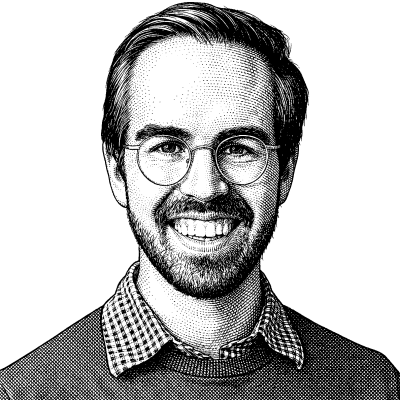
Jaxon Washburn is a Ph.D. student in Near Eastern Languages and Cultures with a focus on Armenian Studies at UCLA. He holds a Master of Theological Studies in History of Christianity from Harvard Divinity School (2023) and dual bachelor’s degrees in Religious Studies and History from Arizona State University (2021), both earned summa cum laude. Raised in an interfaith household, Jaxon has long been passionate about religious studies and interfaith activism, with early speaking engagements at venues including the Parliament of the World’s Religions and the United Nations. He formerly served as youth advisor for the Arizona Interfaith Movement and as a member of the Mormon Transhumanist Association. He went on to serve a mission for the Church of Jesus Christ of Latter-day Saints in Armenia—an experience that profoundly shaped the trajectory of his academic career. At Harvard Divinity School, Jaxon deepened his commitment to both scholarship and faith. He worked as a Research Associate with the Harvard Pluralism Project, contributing to efforts promoting religious literacy and interreligious engagement. His studies there also led to a published essay, “Mormonism: The Most American ‘Religious Other,’” in the Harvard Divinity Bulletin (Fall/Winter 2022). During his time at HDS, he developed a strong interest in Armenian religious history, studying Classical Armenian and working with Dr. Christina Maranci following the reestablishment of Harvard’s Mashtots Chair for Armenian Studies. Jaxon’s current research interests encompass the history of Christianity, Eastern and Armenian Christianity, mediums of interreligious exchange, and religious pluralisms in the South Caucasus. His earlier work on intersections between Hindu and Latter-day Saint traditions around themes of transfiguration and divine embodiment has broadened into a wider exploration of how religious communities interact, exchange, and develop across cultural boundaries.
Quotations (62)
 James E. Talmage
 Spencer W. Kimball
 John A. Widtsoe
 David O. McKay