A Brief History of Religious Transhumanism
Although many transhumanists are non-religious, transhumanist origins actually extend back to religious Humanism, a long-standing effort at integrating humanistic ethical and scientific imperatives with religious forms, metaphysics, and communities. Indeed, the word “transhumanism” itself was coined by a thinker deeply engaged with religion, and some of the most thoroughly transhumanist theology of the nineteenth century was preached decades before the word existed.
Religious Motivations for Scientific Advancement

The intellectual, the moral, the religious seem to me all naturally bound up and interlinked together in one great and harmonious whole.
While the scientific method has been instrumental in advancing our understanding of the cosmos, many scientists have been strongly motivated to pursue scientific discovery by their religious beliefs. Nikolaus Steno, a Danish priest and polymath considered by many to be the father of modern geology, refused to accept prevailing theories that the earth was formed through sudden, cataclysmic events, eventually leading to the theories of stratigraphy and uniformitarianism that are essential to geology today. His conviction that God was a being of intelligence and order led him to conclude that the laws of nature were discoverable and discernible.

The laws of nature are within the grasp of the human mind; God wanted us to recognize them by creating us after his own image so that we could share in his own thoughts.
Kepler’s conviction that God created an ordered, intelligible universe drove decades of painstaking measurement—and yielded the laws of planetary motion. For many founders of modern science, faith was not the obstacle to discovery but the motive for it.
German astronomer Johannes Kepler’s abiding faith in an ordered universe instilled in him a relentless drive to painstakingly measure minute divergences in the orbits of several heavenly bodies over many years. This ultimately led him to develop the laws of planetary motion, which diverged significantly from Platonic theories postulating perfect circular orbits. Several other notable scientists, including Galileo Galilei, Isaac Newton, and Charles Darwin, were similarly motivated by their religious beliefs.
Christian Transhumanism Before “Transhumanism”
New Testament writers (notably Paul the Apostle) and centuries of early Orthodox and Catholic authorities blended Christianity with the best scientific understanding of their day—much of which hearkened back to Plato and Aristotle. For many influential Christian thinkers, this mixing of religious and scientific knowledge deepened their belief in and commitment to the principle of theosis. Athanasius of Alexandria stated the doctrine with unmatched concision in the fourth century:

God became man that man might become God.
Throughout the following centuries, Christian theologians continued preaching being one with Christ and becoming God.
Over time, religious Humanism became increasingly focused on technology. Nineteenth-century Russian Orthodox thinker Nikolai Fyodorov (founder of the Cosmism movement) taught that the common task of humanity should be the technological resurrection of our ancestors. For Fyodorov this was no metaphor: the living owe their very lives to the dead, and science—pursued with religious devotion—is the means by which that debt will one day be repaid. Death, he argued, is not a fixed boundary of the human condition but a problem to be solved, and solving it is the literal work of Christian love.

God does everything not merely for humanity, but also through humanity. The Creator through us recreates the world; He resurrects all that are perished.
At around the same time, the American (and Christian) philosopher Charles Sanders Peirce laid many of the foundations for modern transhumanist commitments, including technological cognitive enhancement. Best known today as the father of pragmatism, Peirce understood the universe itself as evolving toward what he called concrete reasonableness—a growth driven, in his account, by agape, creative love. Minds, he taught, are not sealed vessels but growing things, extended by the instruments, symbols, and communities through which they reason. His cosmology is more theological than his secular readers tend to notice: creation exists so that finite minds may come to share in the life of God.

The purpose of creation as it must appear to us in our highest approaches to an understanding of it . . . is God’s movement toward self-reproduction.
That same conviction reached its fullest expression a generation later in the twentieth-century Jesuit priest and paleontologist Pierre Teilhard de Chardin, who advocated a vision of human evolution, accelerated by technology, in which humanity converges toward what he called the Omega Point—a final union of all persons in God. Teilhard saw the growing web of human thought and communication, his noosphere, as a stage in that convergence: matter complexifying into mind, and mind gathering into communion. Crucially, he insisted that this union does not dissolve persons but completes them—in his famous phrase, union differentiates. The communion he foresaw is not absorption into an undifferentiated whole, but the perfection of each member in relation to all the rest.

A very real “pantheism” if you like (in the etymological meaning of the word) but an absolutely legitimate pantheism—for if, in the last resort, the reflective centers of the world are effectively “one with God,” this state is obtained not by identification (God becoming all) but by the differentiating and communicating action of love (God all in everyone).
Mormonism: A Religious Transhumanism Before the Name
Pratt’s 1855 work framed priesthood as a science by which intelligent beings learn to command the elements. Its opening pages read like a transhumanist manifesto written a century before the word existed.
Fyodorov (1829–1903) was not the only nineteenth-century religious thinker whose theology anticipated transhumanism. Joseph Smith (1805–1844), a generation earlier, taught doctrines that were already transhumanist in substance: an embodied God who was once as we are; eternal progression, by which intelligence and capacity compound without end; theosis as the literal destiny of human beings; and the redemption of the dead as an ongoing labor in which humans participate. Mormonism, in this sense, was a religious transhumanism a century before the word existed.
Early Mormon thinkers developed these themes in strikingly proto-technological language. Parley P. Pratt’s 1855 Key to the Science of Theology framed priesthood as a kind of science by which intelligent beings come to command the elements and organize matter. Its opening pages read like a transhumanist manifesto written a century early:

The present is an age of progress, of change, of rapid advance, and of wonderful revolutions … humanity seizes the lightning, tames and subdues it, and makes it the bearer of its thoughts and dispatches.
In the early twentieth century, B. H. Roberts and John A. Widtsoe—a chemist by training—carried this naturalistic theology forward, treating Mormon doctrine as continuous with science rather than opposed to it. Widtsoe put the principle plainly:
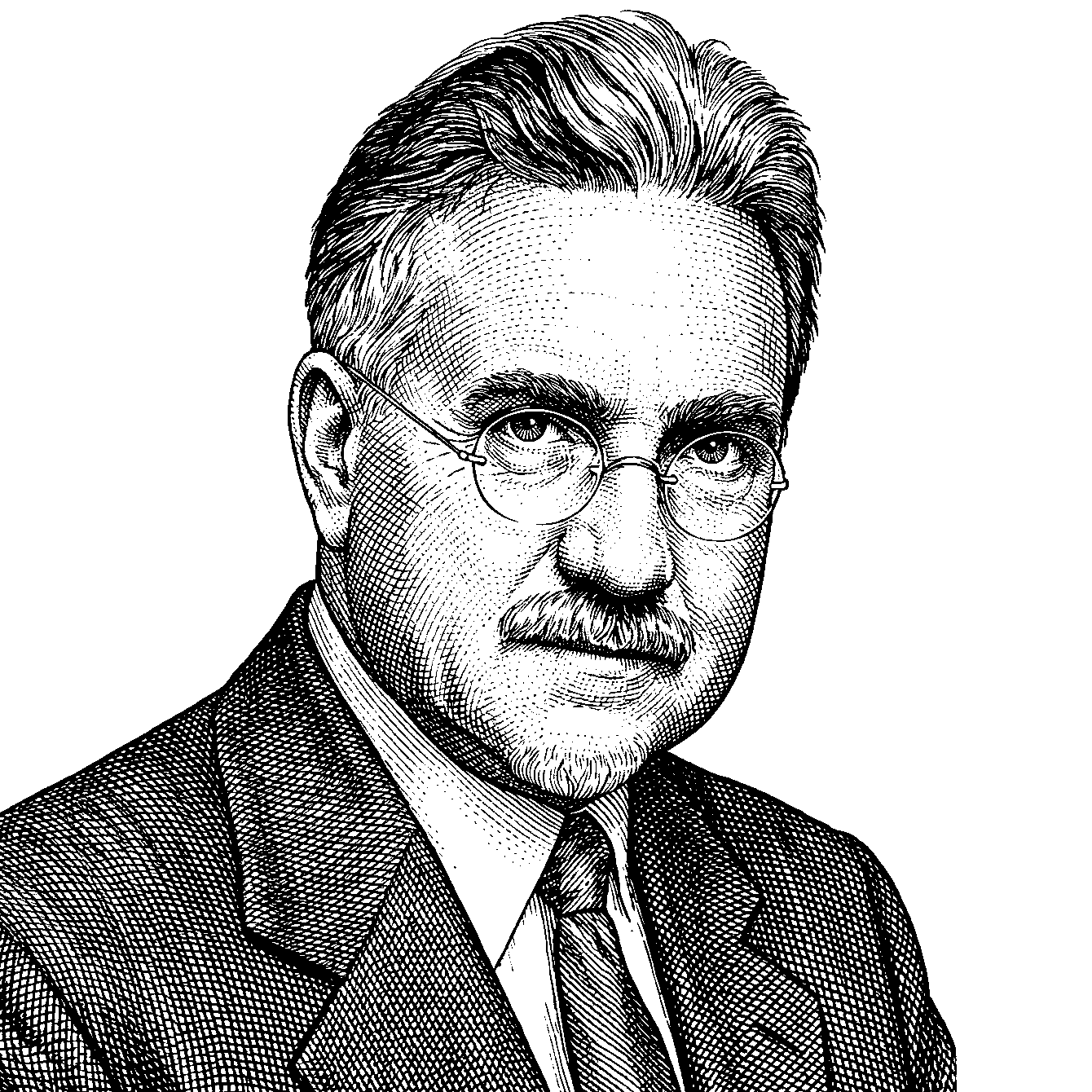
Truth is truth forever. Scientific truth cannot be theological lie. To the sane mind, theology and philosophy must harmonize. They have the common ground of truth on which to meet.
Coining the Word
The term “transhumanism” entered modern usage through Julian Huxley, the evolutionary biologist and first Director-General of UNESCO. Huxley used the word in print as early as 1927 in Religion Without Revelation, and developed it in his 1957 essay “Transhumanism”:

The human species can, if it wishes, transcend itself—not just sporadically, an individual here in one way, an individual there in another way, but in its entirety, as humanity. We need a name for this new belief. Perhaps transhumanism will serve: man remaining man, but transcending himself, by realizing new possibilities of and for his human nature.
Technology and religion have been entangled far longer than transhumanism: the press put scripture in ordinary hands and helped ignite the Reformation. Transhumanism makes a long-standing relationship explicit.
Notably, the word entered the modern vocabulary from a thinker explicitly engaged with the question of religion’s future—brother of novelist Aldous Huxley and grandson of T. H. Huxley—rather than from a purely technical context. From its very coinage, transhumanism has been entangled with religious questions about what humanity is for and what it might become. And technology has been entangled with religion far longer than that: Gutenberg’s press made scripture available to ordinary readers and helped ignite the Reformation; broadcast media and the Internet have reshaped how faith communities gather, teach, and proselytize. Religion has never been static with respect to technology, and transhumanism makes that long-standing relationship explicit.
Contemporary Religious Transhumanism
Formal religious transhumanist movements began in the early 21st century. Some founded new religions or complements to religion, such as the Terasem Movement Transreligion and the Turing Church. The majority embraced transhumanist interpretations of traditional religions, including members of the Mormon and Christian Transhumanist Associations—the two largest religious transhumanist organizations today.
The Mormon Transhumanist Association holds a notable place in this history. Founded on 3 March 2006, the MTA adopted the Mormon Transhumanist Affirmation on 13 May 2006 and formally affiliated with the World Transhumanist Association (now Humanity+) on 6 July 2006—making it the first explicitly religious organization formally affiliated with the broader transhumanist movement. MTA members later helped encourage and seed the founding of the Christian Transhumanist Association in 2014. These milestones matter because they show that religious transhumanism is not merely a recent reaction to secular transhumanism; it has been institutionally organized within the modern movement nearly from its beginning.
Religious transhumanists offer a way to understand and integrate religious and transhumanist ideas and ideals through a lens that aims to synthesize or reconcile them. An example of this is the term “transfigurist,” which some religious transhumanists use to refer to themselves. Religious transformation brings to mind sacred stories from many traditions, where people were physically transformed to an elevated state in response to a divine encounter. These traditions span from Hinduism and Judaism to Buddhism and Christianity. Notably, in the LDS (Mormon) tradition, transfiguration can apply not just to individual persons but to peoples, communities, cities, even entire worlds.
Religious transhumanists work for better understanding of both religious and transhumanist ideas. They translate between religious and transhumanist audiences, cultivate language that both groups can better understand and appreciate, and work to realize their shared aims. In this way, they carry on the rich tradition of Paul the Apostle, early Christian authorities, and early religious transhumanists.
Questions for Discussion
- What is your honest reaction to the idea of syncretizing or integrating parts of religious and scientific ideas and traditions?
- In what sense was Mormonism a “religious transhumanism before the name”? Which of Joseph Smith’s teachings fit that description best, and which fit it least?
- Why might it matter that the word “transhumanism” was coined by a thinker engaged with religious questions rather than a purely technical one?
- How do technological changes affect religion? What changes have occurred historically, and what changes are happening right now?
- How might religious transhumanists help or hinder discussions between religious and secular audiences today?
- What are the criteria to be a religious transhumanist? Do you consider yourself a religious transhumanist? Why or why not?
Advance to Primer 7