divine image
Articles (15)
How to Know God
Lincoln Cannon draws on Mormon scripture to explore how God can be known—through intelligence, embodiment, community, and presence throughout the world.
Theophanies of the Future
Lincoln Cannon speculates on what it would mean for a superintelligence to encounter God—exploring theophanies at the intersection of theology and advanced AI.
MTAConf 2025: Transformation through Renewal of the Mind
MTAConf 2025: Transformation through Renewal of the Mind—exploring neuroscience, spiritual practice, and cognitive frontiers.
God the Cosmic Host, and AI Creation
Lincoln Cannon argues that staying atheist while coherently aspiring to humanity's flourishing grows harder as AI creation raises profound questions about God.
Algorithmic Advent
Exploring the theological parallels between artificial intelligence and Mormon thought—how algorithmic creation echoes divine patterns and what AI’s emergence means for our understanding of intelligence, consciousness, and humanity’s cosmic potential.
Authors (7)

Basil the Great
Basil of Caesarea (c. 330–379), known as Basil the Great, was a bishop, theologian, and monastic reformer whose intellectual and institutional labors helped shape the foundations of Eastern Christianity. Born into a devout Christian family in Cappadocia (present-day Turkey), he studied at the finest schools of his age—Athens and Constantinople—before returning to establish a monastic community and eventually serving as Bishop of Caesarea from 370 until his death. Basil’s achievements were as practical as they were theological. He founded what historians regard as one of the earliest organized charitable complexes in the ancient world, a compound outside Caesarea that included a hospital, a hospice for travelers, and care facilities for the poor—a concrete expression of his conviction that faith without compassionate action is hollow. As a theologian, he contributed decisively to the articulation of Trinitarian doctrine and authored influential monastic rules that still govern communities of Eastern Christian monks today. Together with his brother Gregory of Nyssa and their friend Gregory of Nazianzus, he formed the Cappadocian Fathers, whose synthesis of Greek philosophy and Christian revelation became a cornerstone of classical theology. Basil’s deepest legacy may lie in his vision of human transformation through divine participation. In his treatise On the Holy Spirit , he described a soul indwelt by the Spirit as one that becomes spiritual itself, capable of “foreknowledge of the future, understanding of mysteries, apprehension of what is hidden”—a soul that advances through illumination toward what he did not hesitate to call “the being made God.” This is the doctrine of theosis : the idea that created intelligence, shaped by virtue and suffused with grace, can ascend toward genuine likeness to—and participation in—divinity. For Basil, that ascent was not a flight from the material world but a transformation of the whole person: mind, moral life, and communal practice included. His combination of rigorous intellectual formation, institutional care for the vulnerable, and fearless theological aspiration about humanity’s divine potential makes him a persistent and generative voice in any serious conversation about the relationship between intelligence, virtue, and the destiny of human beings.

Kathryn Knight Sonntag earned a BA in English and a BS in environmental studies before earning her MLA in landscape architecture and environmental planning. Her thesis focused on the role of the transcendent in landscapes and greatly informs her creative pursuits. She works as a freelance writer and landscape designer, and serves as the poetry editor for Wayfare Magazine. Her work centers on language as a powerful technology capable of manipulating ideas, transforming concepts, and achieving a specific vision. Sonntag’s scholarship builds upon ideas related to the role of language in shaping our understanding of the world and our relationship to it. Sonntag’s research delves into the archetype of the Divine Mother and the necessity of returning to her wisdom for the planet’s restoration. Drawing from thinkers like Elaine Showalter, Ursula K. Le Guin, and Jungian analyst Clarissa Pinkola Estés, she examines the suppressed experiences of women and the consequences of disconnecting from what she terms “wild nature.” Sonntag argues that a limited, male-centric view of nature has contributed to environmental degradation and that amplifying the voice of women is crucial for healing the world.

McKay Moore is a speaker and scholar affiliated with the Mormon Transhumanist Association (MTA), exploring the intersection of Mormon theology and transhumanist thought. His work delves into the theological implications of post-humanism, particularly within the unique context of Mormon beliefs about divine progression and the potential for humanity to achieve godhood. Moore’s research is deeply rooted in the Mormon concept of an eternal cycle of creation, where beings evolve into gods who then create new sentient beings. Moore’s presentations often address complex issues such as the ‘control problem’ in artificial intelligence (AI) and how Mormon theology might offer a unique perspective on aligning AI with human values. Drawing on the work of thinkers like Nick Bostrom, he analyzes capability and behavioral control methods for managing advanced AI, exploring how these approaches relate to the Mormon ‘plan of salvation’ as a post-human solution. His work seeks to bridge the gap between cutting-edge technological advancements and theological frameworks.
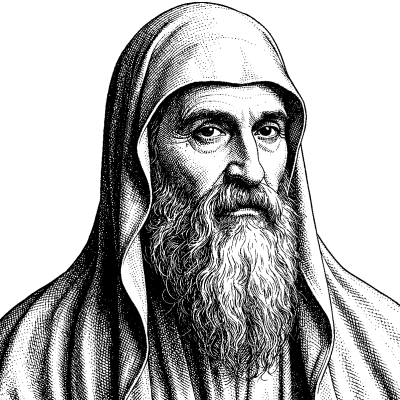
Origen
Origen of Alexandria (c. 184–253 AD) was an early Christian scholar, ascetic, and theologian. He was one of the most influential figures in early Christian theology and philosophy, known for his allegorical interpretation of Scripture. Born to Christian parents in Alexandria, Origen became head of the catechetical school there at age eighteen. He was extraordinarily prolific, producing biblical commentaries, theological treatises, and apologetic works. His Contra Celsum is a major defense of Christianity against pagan criticism. Origen taught that through communion with the divine, humans may rise to become divine—not only in Jesus but in all who believe and enter upon the life that Jesus taught. While some of his speculative ideas were later condemned, his influence on Christian thought, particularly on human potential for transformation and union with God, remains profound.

Randall Paul is a theorist deeply engaged with questions of value alignment, particularly within the context of Mormon cosmology and transhumanist thought. His work explores the nature of intelligence, divine purpose, and eternal sociality, drawing on Latter-day Saint theology while also critically examining its relationship with traditional Christian influences. Paul’s perspective is rooted in the belief that intelligences have always existed as individual, self-aware entities with infinite memories and a capacity for dynamic social interaction. Paul challenges conventional interpretations of the glory of God, positing that it lies not merely in intelligence itself, but in the capacity of intelligences to freely love and interact with one another. He suggests that our current mortal existence is an experiment designed to improve our ability to trust and love, preparing us for a more harmonious eternal life. He frames the Mormon Transhumanist Association (MTA) as a microcosm of this process, a space for superhuman entities—or gods—to learn how to better interact and foster mutual love. In his explorations, Paul questions the uncritical embrace of transhumanist ideals of longevity and enhanced capacities, arguing that the fundamental challenge lies in navigating the complexities of freedom and mutual influence within eternal societies. He emphasizes the importance of freely given and received love as the most valuable—and most scarce—resource in the cosmos, suggesting that intelligences exist in societies to expand the possibilities for these experiences. His aim is to provoke reflection on the deeper purposes of existence and the nature of divine love in a transhuman future.
Quotations (26)
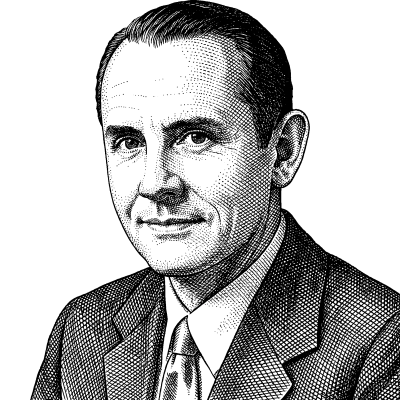 Spencer W. Kimball