creation
Articles (27)
MTA Year-End Report: Historic Invitations and African Expansion
MTA’s 2025 year-end report covers MTAConf on neurospirituality, an AI talk at the Church Office Building, and expanding African chapters.
Prompting God
Lincoln Cannon's prayer-form address at the 2025 MTA Conference reflects on how humans and AI might together participate in divine creation.
MTAConf 2025: Transformation through Renewal of the Mind
MTAConf 2025: Transformation through Renewal of the Mind—exploring neuroscience, spiritual practice, and cognitive frontiers.
God the Cosmic Host, and AI Creation
Lincoln Cannon argues that staying atheist while coherently aspiring to humanity's flourishing grows harder as AI creation raises profound questions about God.
Miracle Optimization
Lincoln Cannon expands on "The Technological Conception," arguing for miracle optimization as a richer framework for explaining divine action.
Authors (8)

Albert Einstein
Albert Einstein (1879–1955) was a German-born theoretical physicist whose work transformed humanity’s understanding of space, time, energy, and matter, making him one of the most consequential scientific minds in recorded history. Einstein developed the special theory of relativity (1905) and the general theory of relativity (1915), the latter offering a geometric account of gravity that replaced Newtonian mechanics at cosmological scales. His famous mass-energy equivalence, expressed as E=mc², opened new vistas in physics and eventually in energy technology. He was awarded the Nobel Prize in Physics in 1921 for his discovery of the law of the photoelectric effect, a cornerstone of quantum theory. Einstein held positions at the Swiss Federal Patent Office, the University of Zurich, the German University in Prague, ETH Zurich, and the Prussian Academy of Sciences before emigrating to the United States in 1933, where he joined the Institute for Advanced Study in Princeton until his death. Beyond equations and thought experiments, Einstein was a deeply reflective thinker on the relationship between human intelligence and ultimate reality. He resisted the label of atheist, describing his orientation instead as a posture of humble wonder before a universe marvelously arranged and obeying certain laws—laws our limited minds only dimly understand. He held that science without religion is lame, and religion without science is blind, insisting the two must work hand-in-hand. This is not the posture of a secularist who has set metaphysics aside; it is the posture of someone who treats the intelligibility of the cosmos as a moral and spiritual provocation. That sensibility finds natural resonance with the Mormon transhumanist conviction that creation, intelligence, and Godhood are continuous rather than severed—that the universe’s deep order is something we are called to investigate, participate in, and ultimately embody. Einstein did not share Mormon theology, but his insistence that wonder before the cosmos is practically indistinguishable from religious seriousness, and that the advance of knowledge is bound up with something larger than mere utility, speaks across that distance. His life’s work stands as a testament to the proposition that rigorous intelligence and reverent imagination are not opposites but partners in the long, unfinished project of understanding our place in a universe of staggering complexity and beauty.

Bernardo Vicente is an economist and researcher deeply interested in the intersection of economics, technology, and culture. He holds a degree in business administration and accounting from Lisbon Polytechnic Institute, along with a specialization in business analytics. Driven by a desire to leverage technology for societal betterment, he has developed an innovative economic theory known as “Harberger Georgism.” Harberger Georgism builds upon the principles of Georgism and Harberger taxation, exploring how Web3 technologies can sustainably develop the digital era and enhance the physical world. This theory aims to potentiate development in the physical world using economic strategies. Currently, Bernardo volunteers as a researcher at the Ethereum Foundation, contributing his expertise to the advancement of blockchain technology. His work explores the teleology and utility of emerging technologies like NFTs and the metaverse, aiming to ensure their positive impact on society.

Cameron Dayton is an American video game creative director, novelist, and writer known for his work in the gaming industry and speculative fiction. He has held prominent creative roles at several major studios, contributing to well-known franchises and original intellectual properties. Dayton served as creative director at Certain Affinity and has worked in narrative and creative leadership positions across the video game industry. He is also the author of the novel Etherwalker , a science-fantasy work set in a far-future world where technology and myth have intertwined, exploring themes of lost civilizations, human potential, and the rediscovery of powerful ancient technologies. His fiction often inhabits the intersection of epic fantasy and science fiction, imagining futures in which humanity’s relationship with technology is both perilous and transformative. Dayton has roots in the Latter-day Saint community, and his creative work reflects an imagination shaped by themes resonant with Mormon Transhumanist thought—particularly the idea that humanity’s trajectory involves the responsible stewardship of extraordinary power, and that the boundaries between the mundane and the transcendent are more porous than they appear. His speculative worlds frequently explore the tension between knowledge and wisdom, technological mastery and moral responsibility, echoing the Mormon Transhumanist conviction that scientific and technological progress are inseparable from ethical and spiritual development. His storytelling invites readers to consider what it means for ordinary individuals to inherit or rediscover capacities that border on the divine—a narrative arc that parallels the Latter-day Saint doctrine of theosis and the transhumanist aspiration toward radical human flourishing.
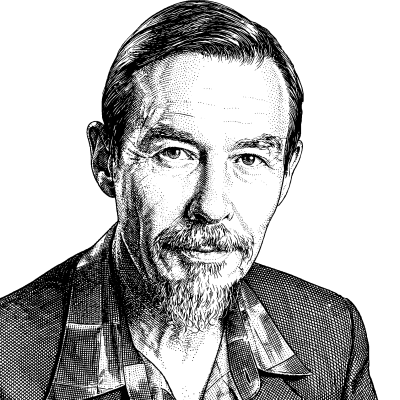
Carver Mead
Carver Mead (born 1934) is an American engineer, physicist, and pioneer of modern microelectronics whose foundational contributions to semiconductor theory and very-large-scale integration (VLSI) helped make the silicon age possible. A Gordon and Betty Moore Professor Emeritus of Engineering and Applied Science at the California Institute of Technology, Mead spent decades at the frontier of what computation could become, both as a theorist and as a practical builder of systems. Mead’s career achievements span an extraordinary range. He developed key models for understanding transistor behavior at the nanoscale, co-authored (with Lynn Conway) the landmark 1980 textbook Introduction to VLSI Systems , and essentially invented the methodology by which engineers design the dense integrated circuits that now inhabit every corner of modern life. He also pioneered neuromorphic engineering—the design of circuits that mimic the computational architecture of biological neural systems—and founded companies that applied these principles to sensory processing and analog computation. In 2022, he was awarded the Harold Pender Award; earlier recognition includes the Lemelson-MIT Prize and the National Medal of Technology and Innovation. What distinguishes Mead as a thinker is not only what he built but how he understood the act of building. He insisted that Moore’s Law is fundamentally a story about human belief: “Moore’s Law is really a thing about human activity, it’s about vision, it’s about what you’re allowed to believe. Because people are really limited by their beliefs, they limit themselves by what they allow themselves to believe about what is possible.” In this reading, technological progress is not an autonomous material force but a function of expanded imagination—a civilizational act of faith in possibility. This framing resonates deeply with traditions that locate human creativity within a larger divine economy, where intelligence, rightly directed and disciplined by moral courage, participates in the ongoing work of creation. Mead’s insistence that the boundary between what is and what could be is first a boundary of belief, and only second a boundary of physics, echoes the Mormon transhumanist conviction that humanity’s divine future is not given passively but willed, practiced, and built—one hard-won increment of understanding at a time.

James N. Gardner
James Nelson Gardner (May 5, 1946 – April 10, 2021) was an American lawyer, complexity theorist, and author whose cosmological speculations placed intelligence at the generative center of the universe itself. A Yale College and Yale Law School graduate, he served as a U.S. Supreme Court clerk and Oregon state senator before devoting much of his intellectual life to a far more expansive question: why does the universe appear so precisely calibrated to produce life and mind? Gardner’s answer, developed across peer-reviewed articles in Complexity and the Journal of the British Interplanetary Society and popularized in his books Biocosm (2003) and The Intelligent Universe (2007), was the “Selfish Biocosm” hypothesis. He argued that life and intelligence are not Darwinian accidents but are hardwired into cosmic evolution—that the universe’s bio-friendliness is the inheritance of a long lineage of intelligences who, in reaching the apex of their development, reproduced the cosmos itself by spawning “baby universes” endowed with the same life-generating properties. In Gardner’s vision, the destiny of highly evolved intelligence is nothing less than the infusion of the entire universe with life and the ultimate act of cosmic creation. For those who hold that intelligence is eternal and that divine creativity operates through natural processes, Gardner’s cosmology resonates with striking depth. The arc of his thought—intelligence as not merely a product of the cosmos but its architect and heir—maps naturally onto the Mormon transhumanist conviction that humanity’s progression toward Godhood is a real, physical, and cosmologically significant endeavor. Gardner did not speak in theological terms, but his insistence that the emergence of mind is the universe’s most consequential fact, and that sufficiently advanced intelligence becomes a creative force on a universal scale, opens conceptual ground that faith traditions oriented toward theosis and eternal progression have long inhabited from a different direction.
Quotations (9)
 Spencer W. Kimball
 John A. WidtsoeJohn A. Widtsoe
 Brigham Young
Topical Guide (4)
Videos (4)
George Handley
Caring for Creation: an LDS Perspective
George Handley outlines ten distinctive LDS doctrines that provide theological resources for environmental stewardship, including the belief that Earth is humanity’s intended eternal home rather than a mere way station, that bodies and sensory experience are to be treasured, and that all life forms were created spiritually before physically and are entitled to “multiply and replenish.” He emphasizes that LDS teachings on creation from unorganized matter (rather than ex nihilo) imply reverence for natural processes, while scriptures like the Word of Wisdom and the Law of Consecration mandate eating locally, consuming sparingly, and redistributing resources to the poor. Handley argues that the Anthropocene demands Latter-day Saints bring together both scientific literacy and religious values to adequately respond to environmental challenges.
Steven Peck
The Evolution of Novelty in an Open Universe: Requiem for Laplace’s Demon
Steven Peck challenges the deterministic “block universe” of Laplace’s demon, arguing that genuine randomness—rooted in quantum events—bubbles up through biology to create an open, evolving cosmos. Drawing on chaos theory, emergence, and evolutionary biology, he contends that novelty is continuously generated in ways that were never predetermined at the Big Bang. For Peck, this openness has profound theological implications: if God has an embodied, biological nature, then faith, hope, and charity are not merely earthly virtues but eternal necessities for navigating a universe where the future remains genuinely unwritten.
Joseph West
An open letter to the lost children of Mormonism
Joseph West addresses the “lost children of Mormonism” through Nietzsche’s parable of the camel, lion, and child. The camel gladly bears burdens; the lion rebels against old values with a sacred “no”; but only the child can offer the sacred “yes” needed for genuine creation. West argues that Mormonism’s radical heritage—alternative family structures, innovative economics, the belief that humans can become gods—was suppressed when the community capitulated to mainstream American values. He calls for reconciliation between faithful “camels” and disaffected “lions,” urging both to seek the “sacred feminine” wisdom that can guide them out of the wilderness.
Lincoln Cannon
Trust in Posthumanity and the New God Argument
Lincoln Cannon presents the New God Argument, a logical framework demonstrating that trust in humanity’s posthuman potential should lead to faith in God. The argument combines three sub-arguments: the angel argument (if prehumans are probable, posthumans probably already exist), the benevolence argument (posthumans are probably more benevolent than us), and the creation argument (posthumans probably created our world). Cannon shows how this reasoning aligns with Mormon theology—particularly Joseph Smith’s teaching that God was once as we are now—and responds to Richard Dawkins’s observation that sufficiently advanced extraterrestrials would be indistinguishable from gods.