evolution
Articles (24)
Retrospective at Year’s End
Carl Youngblood reflects at year's end on the dramatic changes witnessed in 2024 — a personal retrospective on revelation, intelligence, and evolution.
Our Spiritual and Technological Evolution
Lincoln Cannon explores how rising AI fits within a Mormon transhumanist vision of spiritual and technological evolution toward the divine.
Thus Spake Zarathustra Illustrated Edition
Lincoln Cannon reviews an illustrated Nietzsche's Thus Spake Zarathustra, exploring the Übermensch and its resonance with Mormon Transhumanist thought.
Why Are You Filling the Black Filing Cabinet?
Lincoln Cannon reflects on a metaphorical black filing cabinet inherited from his father—asking what we fill our lives with and what legacy we leave behind.
The New God Argument Evolves
Lincoln Cannon shares how the New God Argument has evolved—simplified and refined to be more accessible for broader engagement with theological thought.
Authors (55)

Albert Einstein
Albert Einstein (1879–1955) was a German-born theoretical physicist whose work transformed humanity’s understanding of space, time, energy, and matter, making him one of the most consequential scientific minds in recorded history. Einstein developed the special theory of relativity (1905) and the general theory of relativity (1915), the latter offering a geometric account of gravity that replaced Newtonian mechanics at cosmological scales. His famous mass-energy equivalence, expressed as E=mc², opened new vistas in physics and eventually in energy technology. He was awarded the Nobel Prize in Physics in 1921 for his discovery of the law of the photoelectric effect, a cornerstone of quantum theory. Einstein held positions at the Swiss Federal Patent Office, the University of Zurich, the German University in Prague, ETH Zurich, and the Prussian Academy of Sciences before emigrating to the United States in 1933, where he joined the Institute for Advanced Study in Princeton until his death. Beyond equations and thought experiments, Einstein was a deeply reflective thinker on the relationship between human intelligence and ultimate reality. He resisted the label of atheist, describing his orientation instead as a posture of humble wonder before a universe marvelously arranged and obeying certain laws—laws our limited minds only dimly understand. He held that science without religion is lame, and religion without science is blind, insisting the two must work hand-in-hand. This is not the posture of a secularist who has set metaphysics aside; it is the posture of someone who treats the intelligibility of the cosmos as a moral and spiritual provocation. That sensibility finds natural resonance with the Mormon transhumanist conviction that creation, intelligence, and Godhood are continuous rather than severed—that the universe’s deep order is something we are called to investigate, participate in, and ultimately embody. Einstein did not share Mormon theology, but his insistence that wonder before the cosmos is practically indistinguishable from religious seriousness, and that the advance of knowledge is bound up with something larger than mere utility, speaks across that distance. His life’s work stands as a testament to the proposition that rigorous intelligence and reverent imagination are not opposites but partners in the long, unfinished project of understanding our place in a universe of staggering complexity and beauty.

Aubrey de Grey is a biomedical gerontologist based in Cambridge, United Kingdom, and Mountain View, California. He is recognized for his work in combating the aging process and is a frequent speaker at events focused on the intersection of science, ethics, and longevity. De Grey serves as the Chief Science Officer of SENS Research Foundation, a California-based nonprofit dedicated to developing and promoting therapies to reverse aging. He is also the Editor-in-Chief of Rejuvenation Research , a leading peer-reviewed journal focused on intervention in aging. De Grey is best known for developing Strategies for Engineered Negligible Senescence (SENS), a comprehensive plan for repairing the accumulating molecular and cellular damage that constitutes mammalian aging. SENS breaks aging down into seven major classes of damage and identifies detailed approaches to addressing each one.

Augustine of Hippo
Aurelius Augustinus Hipponensis (354–430), commonly known as Augustine of Hippo or Saint Augustine, was a theologian, philosopher, and Bishop of Hippo Regius in Roman North Africa. He is widely regarded as one of the most influential figures in the development of Western Christianity and Western philosophy. Augustine’s major works include Confessions , a pioneering spiritual autobiography, and The City of God , a monumental defense of Christianity against pagan criticism following the sack of Rome. His theological contributions shaped doctrines on original sin, divine grace, predestination, and the nature of the Trinity. Before his conversion to Christianity, he explored Manichaeism and Neoplatonism, and his synthesis of Christian doctrine with classical philosophy profoundly influenced medieval thought, the Protestant Reformation, and modern philosophy alike. Augustine’s concept of deificatio (divinization) — the idea that humanity is called to participate in the divine nature — resonates with Mormon Transhumanist themes of theosis and the elevation of human potential. His emphasis on humanity’s restless longing for God (“Our hearts are restless until they rest in You”) speaks to a vision of human beings as fundamentally oriented toward transcendence. However, significant tensions exist between Augustine’s theology and Mormon Transhumanist thought. Augustine’s doctrine of original sin and total human depravity, his skepticism of unaided human will, and his emphasis on predestination stand in marked contrast to Latter-day Saint affirmations of human agency, moral capacity, and an optimistic anthropology. Additionally, Augustine’s commitment to creatio ex nihilo and the absolute ontological distinction between Creator and creature diverges from Mormon theology’s more materialist and continuity-oriented understanding of God and humanity. Nevertheless, Augustine’s enduring call to seek wisdom, his insistence that faith and reason are complementary, and his vision of humanity’s ultimate union with the divine ensure his lasting relevance to conversations at the intersection of faith, philosophy, and human flourishing.

B. H. Roberts
Brigham Henry Roberts (1857–1933) was a historian, theologian, and General Authority of The Church of Jesus Christ of Latter-day Saints, widely regarded as one of the most rigorous and intellectually ambitious thinkers Mormonism has produced. Born in Warrington, England, and emigrating to Utah as a child, Roberts rose from a difficult, impoverished youth to become a missionary, editor, congressman-elect, and a member of the First Council of the Seventy from 1888 until his death. Roberts’s career bridged ecclesiastical leadership and serious scholarship. He served missions in the American South and presided over the Eastern States Mission, and he was elected to the U.S. House of Representatives in 1898, though he was denied his seat in a national controversy over plural marriage. He devoted decades to writing and editing, producing the six-volume Comprehensive History of the Church , editing the seven-volume History of the Church , and authoring theological works including The Mormon Doctrine of Deity , The Truth, The Way, The Life , and Studies of the Book of Mormon . In these works he engaged geology, biology, biblical criticism, and comparative religion with a candor unusual for his time and office. Roberts’s legacy resonates deeply with themes of human potential, intelligence, and the entanglement of faith with progress. He read the nineteenth and early twentieth centuries—railroads, electric light, wireless telegraphy, aviation, the spread of liberty—as “collateral rays” of the same light that opened the heavens to Joseph Smith, suggesting that the millennium might already be quietly underway in the works of human hands. He insisted that scientific research, including evidence of life and death long before Adam, belongs on the side of “development” rather than “contraction,” and that to engage such inquiry is “to link the church of God with the highest increase of human thought and effort.” Equally striking is Roberts’s generosity toward other traditions and his impatience with mental laziness. He refused to identify any particular church—Catholic, Protestant, Greek, Buddhist, Muslim, or even the societies of deists and atheists—as the “church of the devil,” reserving that phrase for the kingdom of evil wherever it appears, and affirming that wise teachers and prophets are raised up among all peoples. Against “simple faith” understood as ignorant acquiescence, he championed an intelligent, rational faith that strives “up to the very limit of man’s capacity” to know. In his confidence that intelligence is the glory of God and of humanity, that revelation invites rather than forecloses inquiry, and that the children of men are “moving up to a higher and truer conception of the things of God,” Roberts remains a vital voice for those who see in technology, science, and expanding moral imagination the natural shape of a divine future.

Benjamin Franklin
Benjamin Franklin (January 17, 1706 – April 17, 1790) was an American polymath, statesman, scientist, inventor, writer, printer, philosopher, and Founding Father of the United States. Among the most influential intellectuals of the Enlightenment, Franklin earned the title “The First American” for his tireless advocacy of colonial unity and his diplomatic efforts to secure French support during the American Revolution. Born in Boston, Massachusetts, Franklin received only two years of formal schooling before beginning work in his father’s candlemaking shop. At age twelve, he became an apprentice to his brother James, a printer, where he developed his love of reading and writing. By age seventeen, he had run away to Philadelphia, where he would build his fortune and reputation. Franklin’s scientific contributions were remarkable. His experiments with electricity, including the famous kite experiment, established the nature of lightning and led to the invention of the lightning rod. He also invented bifocal glasses, the Franklin stove, and the glass armonica. His curiosity extended to oceanography, meteorology, and demography. As a civic leader, Franklin founded the American Philosophical Society, the first lending library, the University of Pennsylvania, and the first fire department in Philadelphia. His wit and wisdom, expressed through Poor Richard’s Almanack, shaped American culture for generations. Franklin’s vision of human progress through science and reason resonates strongly with transhumanist thought. His belief that future generations would master nature, extend human life, and achieve powers beyond imagination prefigured modern discussions of technological enhancement and human flourishing.
Quotations (22)
 James E. Talmage
 David O. McKay
 Spencer W. KimballDavid O. McKay
Topical Guide (1)
Videos (2)
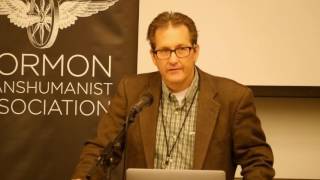
Steven Peck
The Evolution of Novelty in an Open Universe: Requiem for Laplace’s Demon
Steven Peck challenges the deterministic “block universe” of Laplace’s demon, arguing that genuine randomness—rooted in quantum events—bubbles up through biology to create an open, evolving cosmos. Drawing on chaos theory, emergence, and evolutionary biology, he contends that novelty is continuously generated in ways that were never predetermined at the Big Bang. For Peck, this openness has profound theological implications: if God has an embodied, biological nature, then faith, hope, and charity are not merely earthly virtues but eternal necessities for navigating a universe where the future remains genuinely unwritten.
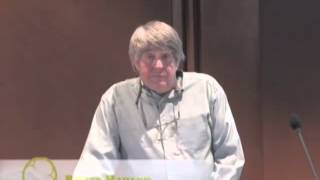
Three Spiritual Exemplars for Religious Transhumanists
Roger Hansen examines the lives and ideas of three early twentieth-century thinkers—John A. Widtsoe, Alfred North Whitehead, and Pierre Teilhard de Chardin—whose work offers valuable insights for religious transhumanists. Drawing on their shared beliefs in evolutionary progress, the interconnectedness of life, and the compatibility of science and religion, Hansen argues that these “spiritual exemplars” provide a theological foundation for eternal progression and the ongoing technological revolution. He suggests that Widtsoe’s commitment to reconciling LDS theology with science, Whitehead’s process philosophy, and Teilhard’s vision of humanity evolving toward an “Omega Point” all resonate deeply with Mormon transhumanist aspirations.