resurrection
Articles (42)
Transhumanist Holy Week: Holy Saturday
Caleb Jones on Holy Saturday—how Christ's Harrowing of Hell mirrors transhumanism's call to wield technology wisely, overcoming death while heeding its risks.
In Memory of Mike Perry
Lincoln Cannon remembers Dr. Mike Perry—a devoted Alcor leader, cryonics pioneer, and religious transhumanist who contributed to the MTA and CTA communities.
Pope Leo Flatters Sister Death
Lincoln Cannon challenges Pope Leo XIV's embrace of "Sister Death," arguing it flatters mortality rather than confronting it with Christian hope.
Celestial Forensics
Carl Youngblood's essay 'Celestial Forensics,' published in Wayfare Magazine, explores the Mormon doctrine of resurrection through a transhumanist lens.
Ordaining Priesthood for Resurrection
Lincoln Cannon asks how Mormon priesthood's sealing and ordinance powers might relate to resurrection — exploring the theological vision of raising the dead.
Authors (11)

Carl Youngblood co-founded the MTA in 2006 and has served as its President and CEO since 2021. He is engaged with the Association’s efforts to explore the intersection of Mormon theology and transhumanist philosophy. Among the many initiatives that Carl has been involved with, he has designed and built the Association’s current website, which unifies all prior content in a single location using inspiring visuals and animations. Youngblood’s professional career spans more than two decades of full-stack software development at the intersection of Silicon Slopes and Silicon Valley. He was an early employee at Omniture (acquired by Adobe), a founding engineering leader at Divvy (a Utah-based unicorn startup), co-founder of Blockscale LLC (a blockchain services firm eventually contracted into Coinbase), and Senior Solutions Architect for Amazon Managed Blockchain at AWS. His technical fluency ranges from scalable web architecture to blockchain infrastructure—the kind of deep engineering experience that grounds his theological speculation in working knowledge of the systems he writes about. Under his leadership, the Association has developed its mission of promoting abundant human flourishing through the compassionate use of science and technology, fostering dialogue across secular and religious audiences and arguing that each has something essential to learn from the other. His writing, collected on his blog From the Depths , spans over a decade of conference presentations and theological essays: meditations on participatory resurrection, the alignment of artificial intelligence read through the Grand Council narrative, intelligence as eternal and multifaceted, and religion as social technology. He writes, as a colleague has observed, with warmth and accessibility on questions of momentous practical consequence—how to navigate faith crisis without losing faith’s power, how to think about resurrection as something we actively participate in rather than passively receive. Youngblood’s distinctive contribution to transhumanism is the integration of serious technical expertise with serious theological reflection. He embodies the Mormon transhumanist conviction that scientific and spiritual development are not parallel tracks but a single path—that the learning required to build better systems is continuous with the exaltation Mormon theology envisions, and that human ingenuity, rightly oriented, is itself a divine imperative.
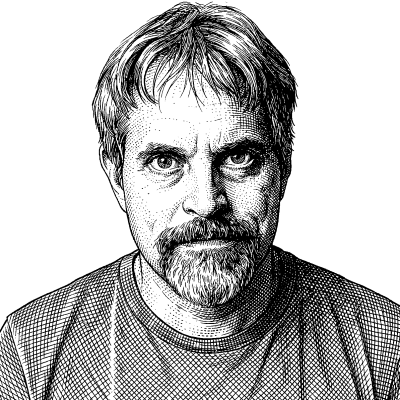
Eric Steinhart is a Professor of Philosophy at William Paterson University and the author of Your Digital Afterlives: Computational Theories of Life After Death . His work centers on metaphysics, employing contemporary analytical and logical methods, while also exploring historical metaphysical systems such as Neoplatonism and the philosophy of Leibniz. He is particularly interested in the intersection of formal sciences and theology, with a focus on alternatives to Abrahamic religions. Steinhart’s background is diverse. He grew up on a farm and initially trained as a computer scientist and mathematician, working as a software designer for several years, during which time he obtained patents for some of his algorithms. He later pursued advanced degrees in philosophy, and his earlier philosophical work included analyses of Nietzsche and metaphor, using possible world semantics. His research extends into the realms of metaphysics and computation, and he is featured in the documentary film Chronotrip , which deals with the concept of time travel. He affirms the existence of transfinitely endless hierarchies of sets, computers, languages, games, strategies, and minds. Steinhart’s current philosophical interests align with themes of eternal progression, alternative religious movements, and the application of evolutionary theory to cosmology.

George Q. Cannon
George Quayle Cannon (1827–1901) was one of the most influential leaders in the early history of The Church of Jesus Christ of Latter-day Saints, serving as a member of the Quorum of the Twelve Apostles and later as First Counselor in the First Presidency under four successive church presidents. A skilled orator, prolific publisher, and astute politician, Cannon shaped the church’s public image and theological discourse during a critical period of its development. Born in Liverpool, England, Cannon immigrated to the United States with his family at age fifteen following their conversion to the LDS faith. After his parents’ deaths, he was raised by his uncle John Taylor, who would later become the third president of the church. Cannon crossed the plains to Utah in 1847 and soon demonstrated exceptional abilities as a writer and leader. In 1849, he was called on a mission to California, and later served in Hawaii, where he learned the Hawaiian language and translated the Book of Mormon into Hawaiian. Cannon’s publishing career began in San Francisco, where he edited the Western Standard. Returning to Utah, he founded the Deseret News and later established the Juvenile Instructor magazine. He served as editor of the Millennial Star in England and built a publishing empire that produced books, pamphlets, and periodicals defending and explaining Latter-day Saint beliefs. His editorials and writings helped articulate church doctrine on subjects ranging from plural marriage to the nature of God. In 1860, Cannon was ordained an apostle at age thirty-two. He also served six terms as Utah’s delegate to the U.S. Congress (1872–1882), where he advocated for Utah statehood while defending the church against anti-polygamy legislation. Though he was eventually denied his congressional seat due to polygamy charges, his political experience proved invaluable to church leadership during the difficult years of federal prosecution. Cannon’s theological contributions reflect themes resonant with transhumanist thought. He taught extensively about human deification and eternal progression, declaring that ‘the object of man’s existence is that he might become like God.’ He envisioned humanity’s potential for infinite development and wrote of the transformative power of knowledge and technology in advancing God’s purposes. His writings on the resurrection emphasized the perfection and glorification of the human body—ideas that anticipate contemporary discussions of human enhancement and transcendence.

Hippolytus
Hippolytus of Rome (c. 170–235 AD) was an early Christian theologian, prolific writer, and ecclesiastical leader whose work represents one of the most ambitious attempts to systematize Christian doctrine in the ante-Nicene period. His precise origins are debated, but he was active in Rome during the late second and early third centuries, where he functioned as a prominent teacher and, according to some sources, may have served as a rival bishop during a period of schism. He is venerated as a martyr and saint in both the Roman Catholic and Eastern Orthodox traditions, and he is believed to have died in Sardinia following exile under the Emperor Maximinus Thrax. Hippolytus was extraordinarily productive. His surviving works include The Refutation of All Heresies , The Apostolic Tradition (a crucial early source on Christian liturgical practice), biblical commentaries, and a range of theological and polemical writings. He wrote in Greek at a time when Latin was beginning to dominate Western ecclesiastical culture, placing him at a transitional moment in the history of Christian thought. His engagement with philosophy, scripture, and the competing religious movements of his day reflects the intellectual intensity of a community still working out the implications of its own claims. What gives Hippolytus particular resonance for those interested in the theology of human transformation is the directness with which he articulated the Christian doctrine of theosis—the teaching that human beings are called not merely to serve God but to become divine. His writings speak of the human person as capable of being “deified and begotten unto immortality,” of becoming a “companion of God” and “co-heir with Christ.” He frames this not as a distant abstraction but as the actual destination of faithful human development: obedience and fidelity in small things open the way to the entrusting of greater ones, a logic that binds moral growth to ontological transformation. In this, Hippolytus stands in the same broad current as Irenaeus and Athanasius, carrying forward the ancient Christian conviction that the gap between humanity and divinity is meant to be closed—not by abolishing the distinction between Creator and creature, but by the creature’s genuine participation in divine life. That conviction, ancient as it is, resonates with the Mormon transhumanist understanding of theosis as a real, progressive, and ultimately practical aspiration.
Joseph F. Smith
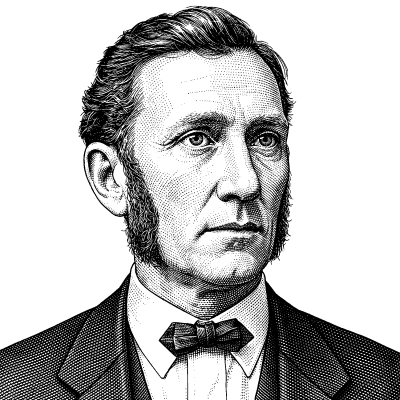
Joseph Fielding Smith (1838–1918) was the 6th President of The Church of Jesus Christ of Latter-day Saints, serving from 1901 until his death. He was the son of Hyrum Smith and nephew of Joseph Smith. Born in Far West, Missouri, Joseph F. Smith experienced the trials of early Church history firsthand. As a young child, he witnessed the aftermath of the Carthage martyrdom. At age nine, he drove an ox team across the plains to Utah with his widowed mother. At fifteen, he was called on a mission to Hawaii, where he had a transformative vision of the afterlife. He taught that Jesus’s work was not finished with his death and resurrection but continues until all who can be saved are redeemed. This expansive vision of salvation includes work for the dead and the promise that the faithful become saviors on Mount Zion alongside Christ.
Quotations (29)
 David O. McKay
Topical Guide (13)
See all 13 resultsVideos (4)
Giulio Prisco
How to Bring Eduardo Back to Life
Giulio Prisco explores the speculative physics and technology that might one day enable the resurrection of the dead, using his ancestor Eduardo Scarpeta as a personal example. Drawing on concepts from string theory, higher-dimensional physics, and the film Interstellar, he imagines future beings with access to the fourth spatial dimension who could scan information from the past and restore individuals to life. Prisco frames technological resurrection not as imminent but as a far-future possibility—one that invites hope rather than passive waiting, much like early science fiction inspired the eventual reality of space travel.
Mike Perry
An Alternative to Quantum Archaeology in Resurrecting the Dead
Mike Perry, a longtime cryonicist and author of Forever for All, proposes “parallel recreation” as an alternative to quantum archaeology for resurrecting the dead. While quantum archaeology attempts to retrodict the exact positions of atoms throughout history—an approach Perry finds implausible given quantum uncertainty—his method accepts some loss of historical information while still achieving meaningful resurrection through “informed guesswork.” Drawing on multiverse theory and an informational view of reality where identical copies are distributed across infinite universes, Perry argues that recreating persons consistent with surviving historical records would yield authentic versions of those who once lived. He views cryonics as the preferable path, allowing one to be a benefactor in future resurrection efforts rather than merely a beneficiary.
Lincoln Cannon
The Consolation: An Adaptation of the King Follett Sermon of Joseph Smith
Lincoln Cannon adapts Joseph Smith’s King Follett Sermon for a transhumanist age, offering consolation to those mourning the loss of loved ones. He argues that God was once as we are now and became posthuman through the same creative process we ourselves may follow. Information, like matter and energy, is eternal and cannot be created from nothing or annihilated—our dead persist in the causal fabric of reality, awaiting resurrection through the work of compassionate creators. Cannon calls for a synthesis of ritual and engineering: sacraments without technology are impotent, while technology without meaning is empty.
Mike Perry
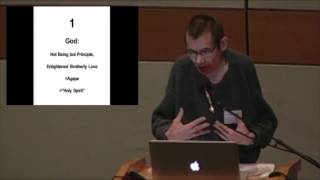
Christian Atheist Universal Immortalism
Mike Perry presents “Christian Atheist Universal Immortalism,” a philosophy combining the ethical framework of Christianity—enlightened brotherly love—with the belief that death can be overcome through scientific means rather than supernatural intervention. Perry argues that while Christian atheism provides a satisfying moral framework, it remains “deathist” in its acceptance of mortality; universal immortalism adds the commitment that all sentient beings should eventually gain salvation and eternal life through technological means such as cryonics. He views Jesus as a pioneer transhumanist immortalist whose command to “heal the sick and raise the dead” should be taken literally as our technology advances, and proposes that resurrection may be achieved through his “minibodies” theory rather than quantum archaeology, acknowledging that information may be irretrievably lost but that multiple authentic timelines could still be realized.