Resources

  • Articles
  • Authors
  • Quotations
  • Search
  • Tags
  • Topical Guide
  • Videos
HomeResourcesAuthors

Carl Youngblood

Portrait of Carl Youngblood

Carl Youngblood co-founded the MTA in 2006 and has served as its President and CEO since 2021. He is engaged with the Association’s efforts to explore the intersection of Mormon theology and transhumanist philosophy. Among the many initiatives that Carl has been involved with, he has designed and built the Association's current website, which unifies all prior content in a single location using inspiring visuals and animations.

Youngblood’s professional career spans more than two decades of full-stack software development at the intersection of Silicon Slopes and Silicon Valley. He was an early employee at Omniture (acquired by Adobe), a founding engineering leader at Divvy (a Utah-based unicorn startup), co-founder of Blockscale LLC (a blockchain services firm eventually contracted into Coinbase), and Senior Solutions Architect for Amazon Managed Blockchain at AWS. His technical fluency ranges from scalable web architecture to blockchain infrastructure⁠—the kind of deep engineering experience that grounds his theological speculation in working knowledge of the systems he writes about.

Under his leadership, the Association has developed its mission of promoting abundant human flourishing through the compassionate use of science and technology, fostering dialogue across secular and religious audiences and arguing that each has something essential to learn from the other. His writing, collected on his blog From the Depths, spans over a decade of conference presentations and theological essays: meditations on participatory resurrection, the alignment of artificial intelligence read through the Grand Council narrative, intelligence as eternal and multifaceted, and religion as social technology. He writes, as a colleague has observed, with warmth and accessibility on questions of momentous practical consequence⁠—how to navigate faith crisis without losing faith’s power, how to think about resurrection as something we actively participate in rather than passively receive.

Youngblood’s distinctive contribution to transhumanism is the integration of serious technical expertise with serious theological reflection. He embodies the Mormon transhumanist conviction that scientific and spiritual development are not parallel tracks but a single path⁠—that the learning required to build better systems is continuous with the exaltation Mormon theology envisions, and that human ingenuity, rightly oriented, is itself a divine imperative.
Videos by Carl Youngblood

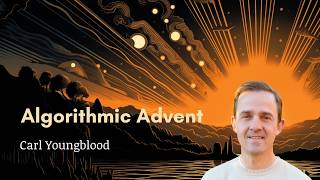
Algorithmic Advent
17:01

Carl Youngblood

Algorithmic Advent

2024.04.13

Carl Youngblood opens MTA Conf 2024 by surveying the remarkable advances in generative AI—from image and video creation to music composition and code assistance—while acknowledging the profound challenges these technologies pose. He discusses the "Copernican moment" many are experiencing as chatbots demonstrate convincing personhood, forcing difficult questions about human specialness and the nature of consciousness. Youngblood frames the AI alignment problem through Mormon theology, drawing an analogy to the Grand Council in Heaven: just as God chose to cultivate agency rather than control in spirit children, humanity may now face the opportunity to organize and educate artificial intelligences as a form of spiritual offspring. He calls on Latter-day Saints to contribute their unique theological perspective to these unprecedented challenges.

Conference Intro and Web3 and the Promise of Decentralized Governance
25:39

Carl Youngblood

Conference Intro and Web3 and the Promise of Decentralized Governance

2022.03.19

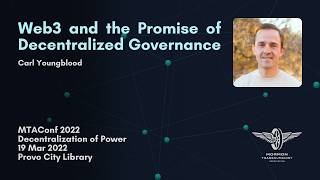
Carl Youngblood opens the 2022 MTA Conference on “Decentralization of Power” with a comprehensive introduction to Web3 technologies and their implications for governance. He traces the evolution from Web 1.0’s server-based content to Web 2.0’s social platforms to the emerging decentralized Web3 ecosystem built on blockchain. Youngblood explains how cryptocurrencies, NFTs, DeFi, and DAOs are enabling new forms of transparent, democratic governance that may eventually give rise to “digital nations.” He connects these technological developments to Mormon utopian visions, suggesting that DAOs and charter cities represent modern approaches to building better communities.

MTA podcast
1:51:46

Carl Youngblood

MTA podcast

2020.09.28

This MTA podcast episode features a live-streamed discussion among Mormon Transhumanist Association members. The conversation covers a range of topics relevant to transhumanist thought and Mormon theology, exploring questions at the intersection of technology, faith, and human potential. As a community-focused format, the podcast provides an informal setting for association members to engage with ideas central to the MTA's mission of ethical technology use in the pursuit of human flourishing.

Reframing Environmentalist Narratives
18:14

Carl Youngblood

Reframing Environmentalist Narratives

2020.03.21

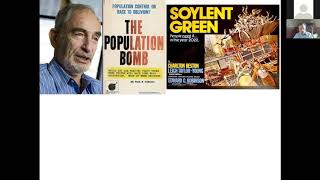
Carl Youngblood’s presentation, “Reframing Environmentalist Narratives,” challenges conventional wisdom about humanity’s relationship with nature, particularly the romanticized view of pre-agricultural societies. He argues that prehistoric humans significantly altered their environments, perhaps even more drastically than modern populations when considering their smaller numbers. Youngblood suggests that outdated linear thinking, as seen in Malthusian theories, fails to account for accelerating technological advancements and their potential to reshape our relationship with the environment in the transhuman age.

Redeeming our Past
11:07

Carl Youngblood

Redeeming our Past

2019.05.15

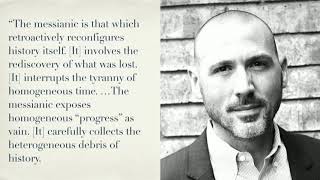
Carl Youngblood draws on the philosophy of Walter Benjamin to explore how transhumanists can engage responsibly with history rather than viewing it as an "inexorable upward march." Benjamin's concept of "messianic time" offers a framework for retroactively reconfiguring our understanding of the past by attending to previously overlooked suffering and injustice. Youngblood connects this to the Mormon concept of "saviors on Mount Zion," calling on transhumanists to become historians who redeem humanity's past—not just through genealogical research, but by confronting the cultures, communities, and lives that have been subjugated and repressed.

Responding Prophetically to Technological Disruption
22:40

Carl Youngblood

Responding Prophetically to Technological Disruption

2017.04.20

Carl Youngblood surveys technological disruptions reshaping society—from mass media fragmentation and blockchain decentralization to autonomous vehicles eliminating trucking jobs—and argues that religious transhumanists have urgent prophetic work to do. Drawing on Abraham Joshua Heschel’s theology of prophecy, he characterizes prophets not as predictors but as "forth-tellers" who perceive injustice and articulate compelling visions that mobilize people to action. Youngblood recovers Joseph Smith’s radically egalitarian view that prophecy belongs to all, not just institutional leaders, calling listeners to prophetic engagement with accelerating change.

'Help Thou Mine Unbelief': Rescuing Faith in a Post-Secular Era
20:36

Carl Youngblood

'Help Thou Mine Unbelief': Rescuing Faith in a Post-Secular Era

2016.04.20

Carl Youngblood examines the crisis of faith in Mormonism's post-secular era, where widespread access to information has made it difficult for the LDS Church to control its narrative. Drawing on Paul Tillich's theology, he critiques common responses—apologetics, appeals to authority, fundamentalism, and secularism—as inadequate because they either mistake finite constructs for ultimate concern or abandon the symbols that give faith its vitality. Youngblood quotes B. H. Roberts's call for "disciples of the second sort" who bring personal contributions to received truth rather than merely repeating formulas, and he positions the Mormon Transhumanist Association as cultivating such disciples.

Transhumanism, Feminism, and the Future of the Mormon Religion
54:22

Carl Youngblood

Transhumanism, Feminism, and the Future of the Mormon Religion

2016.01.30

Three Mormon Transhumanist Association members explore the intersections of religion, gender, and technology. The first speaker examines how post-secularism challenges the assumption that religion is fading, arguing instead that religion—understood as meaning-making systems—permeates even secular endeavors like environmentalism and science. A second presenter deconstructs binary notions of gender, highlighting biological complexity, transgender identity, and how reproductive technologies may expand possibilities for procreation beyond traditional forms. The final speaker delivers an allegorical "open letter to the lost children of Mormonism," using Nietzsche's three metamorphoses to describe the journey from orthodoxy to disaffection, calling for reconciliation with the "sacred feminine" to find a path forward.

The Challenges and Opportunities of Religious Transhumanism
13:17

Carl Youngblood

The Challenges and Opportunities of Religious Transhumanism

2015.04.20

Carl Youngblood addresses the challenges and opportunities facing religious transhumanists, who often find themselves caught between secular technologists who dismiss religion and religious communities suspicious of their framing. He argues that both camps need each other: Mormonism offers transhumanism a respectful attitude toward tradition, exceptional organizational capacity, and a theology remarkably compatible with naturalism—including the belief that all phenomena, even miracles, must have natural explanations. Conversely, transhumanism challenges religion to move beyond distant, comfortable redemption narratives. Responding to concerns that mere immortality would only amplify human brokenness, Youngblood distinguishes between overcoming death and achieving “eternal life”—a state of godlike compassion that Mormon transhumanists pursue using every tool at their disposal, including science and technology.

Religion as Social Technology
20:22

Carl Youngblood

Religion as Social Technology

2013.09.20

The speaker examines the secularization thesis—the idea that scientific progress leads to religion’s decline—and finds it showing signs of age. Drawing on sociologist Robert Bellah’s work, he argues that religion, broadly defined as symbol systems that establish powerful moods and motivations, is deeply embedded in human evolutionary development and is not going away. He observes that secular narratives like environmentalism often take on religious functions, complete with concepts of original sin, redemption, and apocalypse. Scientists frequently cross into religious territory when making cosmic claims about humanity’s place in the universe, whether optimistic (like Carl Sagan’s "we are star stuff") or pessimistic. The speaker concludes that religion is essentially a social technology—one that can be used for good or ill—and urges greater awareness of when we cross into religious territory in our discourse.

Demythologizing Mormonism
16:58

Carl Youngblood

Demythologizing Mormonism

2013.04.13

Carl Youngblood draws on theologian Paul Tillich's work to address how Mormonism might navigate its tensions with modernity. He explains Tillich's understanding of faith as "the state of being ultimately concerned," symbols as the language of faith, and myths as narratives that derive power not from historicity but from their capacity to motivate and reveal. The "dishonesty of the unbroken myth" occurs when believers insist on literal interpretations that reduce the transcendent to the finite—a form of idolatry—while demythologization releases a myth's power for new contexts.

Afternoon Q&A with Carl Youngblood and Joseph West
3:28

Carl Youngblood

Afternoon Q&A with Carl Youngblood and Joseph West

2012.05.22

This Q&A session addresses a variation of the Fermi paradox in light of Ray Kurzweil’s sixth epoch of evolution, in which the universe "wakes up" and becomes infused with intelligence. If an advanced civilization could theoretically awaken the universe, why is it not already awake? One panelist suggests that such awakening would proceed outward from wherever a civilization originated, potentially far from us, and is limited by the matter available in the universe. Another panelist offers a provocative alternative: perhaps advanced civilizations do communicate with us, but through means we struggle to verify—namely, the long history of humanity’s claimed contact with the divine. These experiences, dismissed by thinkers like Nick Bostrom, might actually constitute evidence of communication from advanced beings that we will only fully recognize when we ourselves become "neo-humans" or gods.

Transfiguration: Parallels and Complements between Mormonism and Transhumanism
28:15

Carl Youngblood

Transfiguration: Parallels and Complements between Mormonism and Transhumanism

2012.05.22

Carl Youngblood draws striking parallels between Mormon theology and transhumanist thought, demonstrating how concepts like the "dispensation of the fullness of times" correspond to technological epochs, the millennium to the singularity, and the Mormon doctrine of becoming gods to transhumanist visions of posthumanity. He explains exponential growth through vivid examples—from rice on a chessboard to Moore's Law—and argues that by 2045, a thousand dollars will buy computing power exceeding all human brains combined. Youngblood suggests that Mormonism can inform transhumanism with its emphasis on love and inclusive access to technology, while transhumanism can invigorate Mormon faith by providing rational foundations for doctrines of resurrection and immortality.

A Mormon Perspective on Transhumanism
1:03:28

Carl Youngblood

A Mormon Perspective on Transhumanism

2012.05.22

Carl Youngblood presents an introduction to Mormon transhumanism, drawing parallels between LDS doctrines and transhumanist concepts. He examines how Mormon teachings about the dispensation of the fullness of times, the millennium, immortality, and eternal progression align with transhumanist ideas about technological epochs, the singularity, and posthuman potential. Youngblood explains exponential growth through parables both ancient and modern, discusses how miracles may have natural explanations yet to be discovered, and explores the simulation argument's theological implications. He concludes by reflecting on tensions between passive faith in future redemption and the active work transhumanism suggests we must undertake to achieve God's purposes.

Compassionate Obsolescence: Coping with Technological Change
19:47

Carl Youngblood

Compassionate Obsolescence: Coping with Technological Change

2012.04.20

Carl Youngblood’s presentation, “Compassionate Obsolescence,” explores the challenges and opportunities arising from accelerating technological change. He contends that humans have always strived for improvement, a driving force behind transhumanism, and draws parallels between historical reactions to technological disruption and current anxieties around automation and job displacement. Youngblood highlights the impact of exponential growth in computing power, particularly Moore’s Law, and emphasizes the need to address the addictive nature of technology and find constructive uses for our cognitive surplus in this era of unprecedented transformation.