Afternoon Q&A with Carl Youngblood and Joseph West
This Q&A session addresses a variation of the Fermi paradox in light of Ray Kurzweil’s sixth epoch of evolution, in which the universe “wakes up” and becomes infused with intelligence. If an advanced civilization could theoretically awaken the universe, why is it not already awake? One panelist suggests that such awakening would proceed outward from wherever a civilization originated, potentially far from us, and is limited by the matter available in the universe. Another panelist offers a provocative alternative: perhaps advanced civilizations do communicate with us, but through means we struggle to verify—namely, the long history of humanity’s claimed contact with the divine. These experiences, dismissed by thinkers like Nick Bostrom, might actually constitute evidence of communication from advanced beings that we will only fully recognize when we ourselves become “neo-humans” or gods.
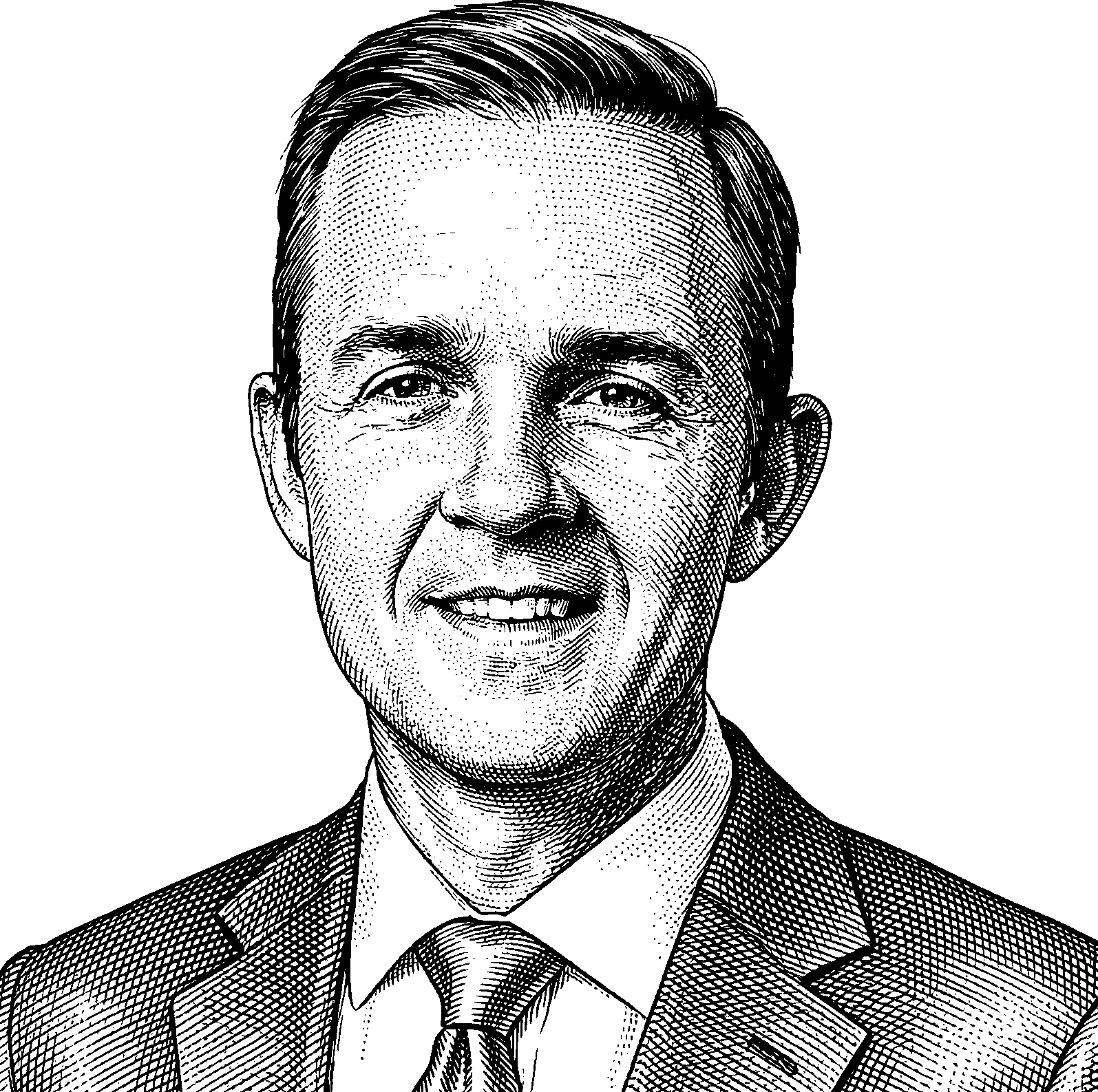
Carl Youngblood co-founded the MTA in 2006 and has served as its President and CEO since 2021. He is engaged with the Association’s efforts to explore the intersection of Mormon theology and transhumanist philosophy. Among the many initiatives that Carl has been involved with, he has designed and built the Association’s current website, which unifies all prior content in a single location using inspiring visuals and animations. ¶ Youngblood’s professional career spans more than two decades of full-stack software development at the intersection of Silicon Slopes and Silicon Valley. He was an early employee at Omniture (acquired by Adobe), a founding engineering leader at Divvy (a Utah-based unicorn startup), co-founder of Blockscale LLC (a blockchain services firm eventually contracted into Coinbase), and Senior Solutions Architect for Amazon Managed Blockchain at AWS. His technical fluency ranges from scalable web architecture to blockchain infrastructure—the kind of deep engineering experience that grounds his theological speculation in working knowledge of the systems he writes about. ¶ Under his leadership, the Association has developed its mission of promoting abundant human flourishing through the compassionate use of science and technology, fostering dialogue across secular and religious audiences and arguing that each has something essential to learn from the other. His writing, collected on his blog From the Depths, spans over a decade of conference presentations and theological essays: meditations on participatory resurrection, the alignment of artificial intelligence read through the Grand Council narrative, intelligence as eternal and multifaceted, and religion as social technology. He writes, as a colleague has observed, with warmth and accessibility on questions of momentous practical consequence—how to navigate faith crisis without losing faith’s power, how to think about resurrection as something we actively participate in rather than passively receive. ¶ Youngblood’s distinctive contribution to transhumanism is the integration of serious technical expertise with serious theological reflection. He embodies the Mormon transhumanist conviction that scientific and spiritual development are not parallel tracks but a single path—that the learning required to build better systems is continuous with the exaltation Mormon theology envisions, and that human ingenuity, rightly oriented, is itself a divine imperative.

Joseph West is a founding member, director, and secretary of the Mormon Transhumanist Association. He is deeply involved in exploring the crossroads of Mormonism, transhumanism, and technology. ¶ West is currently a PhD student in sociology at the University of Arizona, focusing his research on religion, culture, technology, and the family. He holds a bachelor’s degree in philosophy from the University of Utah. At the Parallels and Convergences Conference held in 2009, West presented on the “New God Argument,” co-authored with Lincoln Cannon, which explores potential reconciliations between religious perspectives and scientific materialism. The argument itself stems from secular assumptions and concludes with ideas resonating with Mormon perspectives on God and other religious matters. ¶ Beyond his academic and organizational work, West is a family man, a father of two children, and is married to their mother, Jessica.
Transcript
Speaker 1
I’d like to thank all of the panelists that have participated in this session. We just have a couple of minutes for maybe one or two questions. If anybody has some, immediately available.
Speaker 2
Yeah, if you have a question for anybody else that wants to chime in. This is sort of a a textured variation of the Furkey paradox that was brought up. So we’re talking about Kurzweil’s epics of singularity. And in his sixth epic, Kurzweil talks about the universe waking up and being infused with intelligence and with processing. So like the Fermi Paradox asserts This problem of extraterrestrials that we’ve never encountered and asks why haven’t we encountered them if they exist. Similarly, with Kurzweil’s epics, if an advanced civilization is hypothetically capable of waking the universe up. Why is the universe not already awake?
Speaker 3
I actually haven’t I haven’t really thought about that particular scenario, but I would say that from whatever point a civilization is bringing about this waking up Kurzweil seems to imply that it will proceed forth from wherever they originated, and they could be Potentially far or far away from us. And I think that the New God argument also discusses this a little bit where We shouldn’t necessarily assume that just because we haven’t heard from them that they’re not out there. But this waking up as I understand it Is limited by the amount of matter in the universe and how you can bridge the gap between those broad, vast areas of emptiness. And but I haven’t contemplated much further on that particular issue.
Speaker 4
I actually have a so Nick Bostrom Takes the Fermi paradox to lead to the conclusion that the advanced civilizations are not out there. And he does Take into account the perspectives of people who claim to have UFO experiences and stuff like that, and then he dismisses those as evidence. But one of the things we talk about in our paper is that what he fails to consider as potential Sort of like data for experience of these civilizations is the history of humanity’s individuals’ claims to have contact with the divine. Okay, so maybe what that can point us towards is that These advanced civilizations are capable of communicating with us in ways that’s difficult for us to sort of say for sure that this is communication from you know an advanced civilization, but these means that people have experienced, they claim to have these experiences since the beginning of humanity of having these contact with the divine. And so similarly with your question is that maybe that has happened, but that given our makeup for whatever reason, we’re unable to see it or detect it and that we will be when we become gods ourselves or become neo-humans.