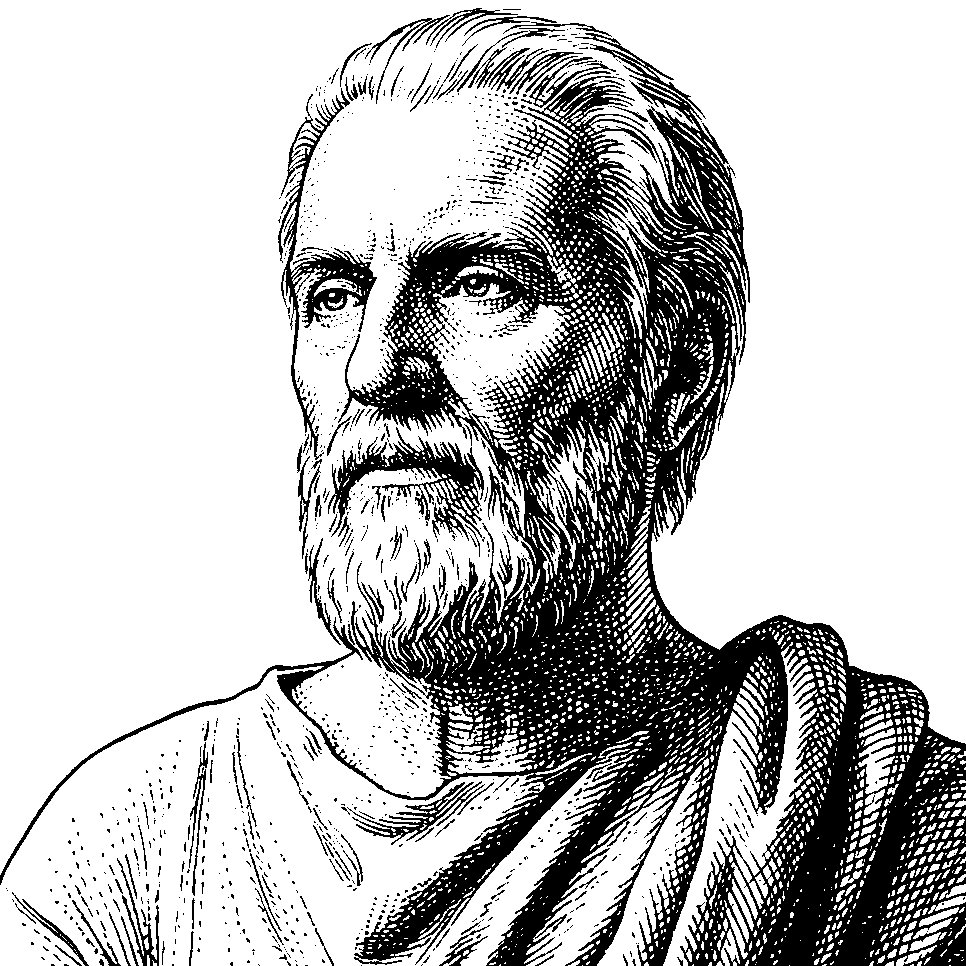
Hippolytus of Rome (c. 170–235 AD) was an early Christian theologian, prolific writer, and ecclesiastical leader whose work represents one of the most ambitious attempts to systematize Christian doctrine in the ante-Nicene period. His precise origins are debated, but he was active in Rome during the late second and early third centuries, where he functioned as a prominent teacher and, according to some sources, may have served as a rival bishop during a period of schism. He is venerated as a martyr and saint in both the Roman Catholic and Eastern Orthodox traditions, and he is believed to have died in Sardinia following exile under the Emperor Maximinus Thrax.
Hippolytus was extraordinarily productive. His surviving works include The Refutation of All Heresies, The Apostolic Tradition (a crucial early source on Christian liturgical practice), biblical commentaries, and a range of theological and polemical writings. He wrote in Greek at a time when Latin was beginning to dominate Western ecclesiastical culture, placing him at a transitional moment in the history of Christian thought. His engagement with philosophy, scripture, and the competing religious movements of his day reflects the intellectual intensity of a community still working out the implications of its own claims.
What gives Hippolytus particular resonance for those interested in the theology of human transformation is the directness with which he articulated the Christian doctrine of theosis—the teaching that human beings are called not merely to serve God but to become divine. His writings speak of the human person as capable of being “deified and begotten unto immortality,” of becoming a “companion of God” and “co-heir with Christ.” He frames this not as a distant abstraction but as the actual destination of faithful human development: obedience and fidelity in small things open the way to the entrusting of greater ones, a logic that binds moral growth to ontological transformation. In this, Hippolytus stands in the same broad current as Irenaeus and Athanasius, carrying forward the ancient Christian conviction that the gap between humanity and divinity is meant to be closed—not by abolishing the distinction between Creator and creature, but by the creature’s genuine participation in divine life. That conviction, ancient as it is, resonates with the Mormon transhumanist understanding of theosis as a real, progressive, and ultimately practical aspiration.