theosis
Articles (81)
The Association Has a New Home
Explore the rebuilt transfigurism.org—a deeper library, topical guides, and community tools for those who take both faith and the future seriously.
How to Know God
Lincoln Cannon draws on Mormon scripture to explore how God can be known—through intelligence, embodiment, community, and presence throughout the world.
29 Thoughts on April 2026 General Conference
Lincoln Cannon reflects on the April 2026 LDS General Conference, reading 29 talks through a transhumanist lens of faith, technology, and transformation.
Postsecular Christian Transhumanism
Lincoln Cannon responds to Comment Magazine, arguing for a postsecular Christian Transhumanism that embraces technology as part of human sanctification.
The Urgency of Superintelligent Communion
Lincoln Cannon argues theosis in Mormon Transhumanism is communal, not individual—making superintelligent communion an existential imperative, not a nicety.
Authors (23)

Alan Watts
Alan Wilson Watts (1915–1973) was a British-born American philosopher, writer, and speaker best known for popularizing Eastern philosophy—particularly Zen Buddhism, Taoism, and Hinduism—for Western audiences. He remains one of the most influential interpreters of Asian religious thought in the twentieth century. Watts began his career in England, where he was involved with the Buddhist Lodge in London. He later moved to the United States, briefly serving as an Episcopal priest before leaving the ministry to pursue a broader philosophical vocation. He became a professor and dean at the American Academy of Asian Studies in San Francisco and authored over twenty-five books, including The Way of Zen (1957), Psychotherapy East and West (1961), and The Book: On the Taboo Against Knowing Who You Are (1966). His lectures, many of which survive as recordings, continue to reach millions worldwide. Watts’s central teaching—that the individual self and the universe are fundamentally one—resonates with Mormon Transhumanist themes of theosis and the expansive potential of consciousness. His insistence that human beings are not merely in the universe but of it, expressions of a deeper cosmic process, parallels the tradition’s interest in humanity’s divine trajectory. However, significant differences exist. Watts generally rejected the concept of a personal God, viewing divinity as an impersonal process rather than a being with whom one could have a relationship. He was skeptical of doctrines of sin and moral depravity, seeing guilt as a psychological obstacle rather than a theological reality. He also questioned the Western emphasis on individual free will, favoring a view of spontaneous action aligned with Taoist wu wei . Despite these divergences, his lifelong project of dissolving boundaries between the sacred and the secular, the human and the divine, offers rich material for dialogue with Mormon Transhumanist thought.
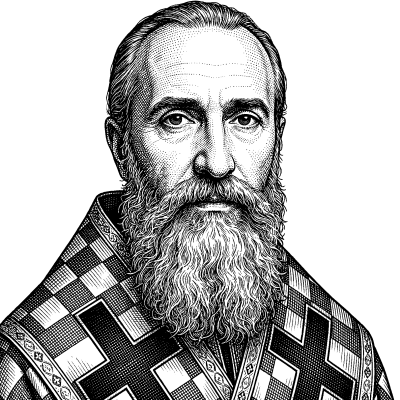
Athanasius
Athanasius of Alexandria (c. 296–373 AD) was one of the most influential theologians in Christian history, serving as the twentieth Pope of Alexandria and playing a decisive role in the development of Trinitarian doctrine. His lifelong defense of the Nicene Creed against Arianism earned him the title ‘Father of Orthodoxy,’ while his writings on the incarnation articulated a vision of human transformation that continues to resonate in Eastern Orthodox theology and beyond. Born in Alexandria, Egypt, Athanasius received a thorough education in Greek literature, philosophy, and Christian scripture. As a young deacon, he accompanied Bishop Alexander to the Council of Nicaea in 325 AD, where he witnessed the formulation of the creed that would define Christian orthodoxy. Three years later, at approximately thirty years of age, Athanasius succeeded Alexander as bishop of Alexandria—a position he would hold for forty-five years despite being exiled five times by various emperors sympathetic to Arianism. Athanasius ’ s most enduring theological contribution appears in his treatise On the Incarnation , written when he was still a young man. In this work, he articulated the doctrine of theosis—the belief that God became human so that humans might become divine. This concept, sometimes expressed as ‘God became man that man might become god,’ became central to Eastern Orthodox spirituality and has profound implications for understanding human potential and destiny. Throughout his tumultuous career, Athanasius faced opposition from Arian bishops, imperial persecution, and periods of exile in the Egyptian desert, Rome, and elsewhere. Yet he persisted in defending what he understood as apostolic faith against theological compromise. His friendship with the desert monks, including Anthony the Great, influenced his biography of Anthony, which became foundational for Christian monasticism and hagiography. Athanasius’s doctrine of theosis resonates profoundly with transhumanist themes. His vision of humanity’s potential for transformation and participation in divine nature anticipates contemporary discussions of human enhancement and transcendence. The idea that humans are destined for a radical elevation of their nature—not merely moral improvement but ontological transformation—connects ancient Christian theology with modern aspirations for human flourishing beyond current limitations.

Augustine of Hippo
Aurelius Augustinus Hipponensis (354–430), commonly known as Augustine of Hippo or Saint Augustine, was a theologian, philosopher, and Bishop of Hippo Regius in Roman North Africa. He is widely regarded as one of the most influential figures in the development of Western Christianity and Western philosophy. Augustine’s major works include Confessions , a pioneering spiritual autobiography, and The City of God , a monumental defense of Christianity against pagan criticism following the sack of Rome. His theological contributions shaped doctrines on original sin, divine grace, predestination, and the nature of the Trinity. Before his conversion to Christianity, he explored Manichaeism and Neoplatonism, and his synthesis of Christian doctrine with classical philosophy profoundly influenced medieval thought, the Protestant Reformation, and modern philosophy alike. Augustine’s concept of deificatio (divinization) — the idea that humanity is called to participate in the divine nature — resonates with Mormon Transhumanist themes of theosis and the elevation of human potential. His emphasis on humanity’s restless longing for God (“Our hearts are restless until they rest in You”) speaks to a vision of human beings as fundamentally oriented toward transcendence. However, significant tensions exist between Augustine’s theology and Mormon Transhumanist thought. Augustine’s doctrine of original sin and total human depravity, his skepticism of unaided human will, and his emphasis on predestination stand in marked contrast to Latter-day Saint affirmations of human agency, moral capacity, and an optimistic anthropology. Additionally, Augustine’s commitment to creatio ex nihilo and the absolute ontological distinction between Creator and creature diverges from Mormon theology’s more materialist and continuity-oriented understanding of God and humanity. Nevertheless, Augustine’s enduring call to seek wisdom, his insistence that faith and reason are complementary, and his vision of humanity’s ultimate union with the divine ensure his lasting relevance to conversations at the intersection of faith, philosophy, and human flourishing.

Basil the Great
Basil of Caesarea (c. 330–379), known as Basil the Great, was a bishop, theologian, and monastic reformer whose intellectual and institutional labors helped shape the foundations of Eastern Christianity. Born into a devout Christian family in Cappadocia (present-day Turkey), he studied at the finest schools of his age—Athens and Constantinople—before returning to establish a monastic community and eventually serving as Bishop of Caesarea from 370 until his death. Basil’s achievements were as practical as they were theological. He founded what historians regard as one of the earliest organized charitable complexes in the ancient world, a compound outside Caesarea that included a hospital, a hospice for travelers, and care facilities for the poor—a concrete expression of his conviction that faith without compassionate action is hollow. As a theologian, he contributed decisively to the articulation of Trinitarian doctrine and authored influential monastic rules that still govern communities of Eastern Christian monks today. Together with his brother Gregory of Nyssa and their friend Gregory of Nazianzus, he formed the Cappadocian Fathers, whose synthesis of Greek philosophy and Christian revelation became a cornerstone of classical theology. Basil’s deepest legacy may lie in his vision of human transformation through divine participation. In his treatise On the Holy Spirit , he described a soul indwelt by the Spirit as one that becomes spiritual itself, capable of “foreknowledge of the future, understanding of mysteries, apprehension of what is hidden”—a soul that advances through illumination toward what he did not hesitate to call “the being made God.” This is the doctrine of theosis : the idea that created intelligence, shaped by virtue and suffused with grace, can ascend toward genuine likeness to—and participation in—divinity. For Basil, that ascent was not a flight from the material world but a transformation of the whole person: mind, moral life, and communal practice included. His combination of rigorous intellectual formation, institutional care for the vulnerable, and fearless theological aspiration about humanity’s divine potential makes him a persistent and generative voice in any serious conversation about the relationship between intelligence, virtue, and the destiny of human beings.

Brigham Young
Brigham Young (1801–1877) was the second president of The Church of Jesus Christ of Latter-day Saints, the architect of the Mormon migration to the Great Basin, and the founding governor of Utah Territory. As the organizing genius behind the settlement of the American West, he directed the colonization of more than 300 towns, established institutions of commerce and education, and shaped a distinctive religious civilization from the desert floor. Born in Whitingham, Vermont, Young converted to the restored church in 1832 after years of searching among the Methodist and Reformed faiths. He rose quickly through the Quorum of the Twelve Apostles, led the harrowing evacuation of Nauvoo following Joseph Smith’s martyrdom in 1844, and guided an exodus of tens of thousands across the plains to the Salt Lake Valley in 1847. As church president for thirty years, he presided over the construction of the Salt Lake Temple, founded the University of Deseret, championed the Perpetual Emigration Fund to gather converts from Europe, and negotiated—not always successfully—the church’s uneasy relationship with the federal government. What the historical record reveals, and what Young’s own sermons confirm at every turn, is a mind constitutionally unwilling to divide the sacred from the natural. He taught that God operates by law, that miracles are simply “results or effects of causes hidden from our understandings,” and that every discovery in science and art has been “given by direct revelation from God.” The telegraph, the steam engine, the plow—all were, in his view, eternal principles progressively disclosed to a humanity climbing upward from its infancy. Science and religion were not rivals in his theology but two names for the same structured reality: “there is no true religion without true science, and consequently there is no true science without true religion.” This integration carried moral weight. Young urged the Saints to become a thinking people, warning against the spiritual danger of surrendering judgment to leaders rather than seeking personal revelation—a remarkable insistence on epistemic independence from a man who wielded considerable institutional authority. His vision of human destiny was correspondingly expansive. He affirmed that God “was once a man in mortal flesh as we are” and that humanity is “organized to become Gods,” called to exercise creative authority over matter across eternal worlds. He taught that identity—the preservation of the self through resurrection and exaltation—is “the greatest gift that God can bestow,” and he framed mortality as the school in which that self is forged through trial, independent thought, and disciplined living. His counsel to “prepare to live” rather than merely to die, and to extend healthy life by understanding natural law, anticipates a tradition of practical, body-affirming faith that takes seriously both the present body and its glorified future. Young remains a towering, complicated figure whose earthly administration included serious moral failures; yet his theological instinct—that intelligence, technology, and theosis belong to a single continuous story—endures as one of the most generative ideas in the Latter-day Saint tradition.
Quotations (148)
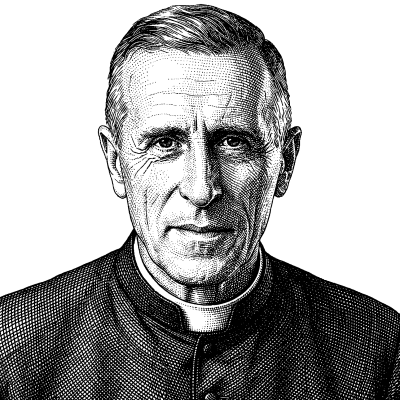 Pierre Teilhard de Chardin
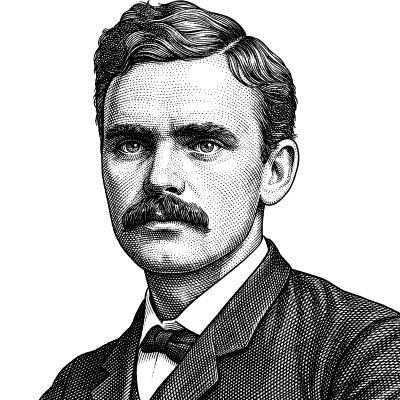 B. H. Roberts
Topical Guide (8)
See all 8 resultsVideos (6)
Lincoln Cannon
Return of Christ
Lincoln Cannon reinterprets the prophecy of Christ’s return through the lens of Christian theosis and Mormon theology. Examining the Hebrew Bible’s multiple “Christs”—including King David and Cyrus of Persia—alongside Paul’s teaching that “Christ is in you,” he argues that the “Son of Man” refers not exclusively to Jesus but to all the children of humanity. When Jesus says his return will be “as lightning visible from east to west,” he speaks of a collective transformation: the return of Christ is the moment when we become Christ, loving, healing, and raising the dead as Jesus commanded his disciples to do.
Ben Blair
Seek Ye First the Kingdom of God
Ben Blair argues that strong communities are byproducts of pursuing worthy aims rather than ends in themselves. He critiques both religious institutions that equate themselves with the kingdom of God and secular groups that make community their primary goal, suggesting that both miss the driving force of shared purpose. Drawing on examples from the D-Day invasion to the Mormon pioneers, Blair proposes that the Mormon Transhumanist Association’s aspirational vision—working collaboratively toward becoming gods who lift each other up—provides the kind of “work cut out for us” that sustains robust, long-lasting communities.
Joseph West
An open letter to the lost children of Mormonism
Joseph West addresses the “lost children of Mormonism” through Nietzsche’s parable of the camel, lion, and child. The camel gladly bears burdens; the lion rebels against old values with a sacred “no”; but only the child can offer the sacred “yes” needed for genuine creation. West argues that Mormonism’s radical heritage—alternative family structures, innovative economics, the belief that humans can become gods—was suppressed when the community capitulated to mainstream American values. He calls for reconciliation between faithful “camels” and disaffected “lions,” urging both to seek the “sacred feminine” wisdom that can guide them out of the wilderness.
Chris Bradford
Divine Aspirations: Creation, Ritual, and Authority
This presentation critiques the standard top-down model of divine authority in Mormonism—where God delegates power downward and refuses to recognize unauthorized rituals—and proposes an alternative bottom-up model rooted in Mormon scripture. Drawing on Doctrine and Covenants 29 and 121, the speaker argues that God’s power derives from honor freely given by those who trust in divine love, not from coercive imposition. Using analogies from computer science, including certificate authorities and distributed systems, the talk reframes authority as emerging from community consent and ritual as aspirational rather than mechanically efficacious—a projection of faith toward a future divine community that will ultimately validate the covenants made in hope.
Lincoln Cannon
Trust in Posthumanity and the New God Argument
Lincoln Cannon presents the New God Argument, a logical framework demonstrating that trust in humanity’s posthuman potential should lead to faith in God. The argument combines three sub-arguments: the angel argument (if prehumans are probable, posthumans probably already exist), the benevolence argument (posthumans are probably more benevolent than us), and the creation argument (posthumans probably created our world). Cannon shows how this reasoning aligns with Mormon theology—particularly Joseph Smith’s teaching that God was once as we are now—and responds to Richard Dawkins’s observation that sufficiently advanced extraterrestrials would be indistinguishable from gods.