mormonism
Articles (411)
Archive: Volume Two
Lincoln Cannon releases Archive: Volume Two (2009–2011), collecting 500+ pages of posts and essays on Mormon Transhumanism and the New God Argument.
As One of Us
Tyranny may stem from myopia, but could a superintelligent empathetic singleton truly govern for all? Exploring why centralized power remains high risk.
Introducing Pioneers, our new podcast
Long-form conversations with scientists, theologians, and builders working on today’s frontiers—and what drives them.
Twelve Worlds, One Frontier: Transfigurist Artwork Series
Twelve retro-futurist posters, a year with illustrator Yegor Shustov, and no AI imagery anywhere. The story behind the Transfigurist Artwork Series.
In Memory of Mike LaTorra
Remembering Mike LaTorra: Zen Buddhist priest, English professor, and transhumanist visionary who helped legitimize Mormon Transhumanism and bridged spiritual traditions.
Authors (37)
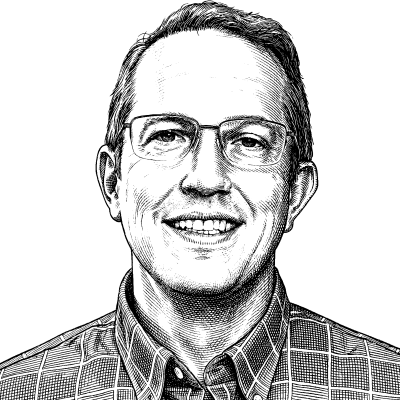
Adam Davis is a physicist and educator. He received his degree from Case Western University and currently teaches physics at Wayne State College. His academic pursuits extend beyond conventional physics into areas that bridge science and theology, particularly within the context of Latter-day Saint beliefs. Davis’s interests lie in exploring the concept of “spirit matter,” a topic central to Mormon theology. He approaches this subject through a scientific lens, seeking to develop models and frameworks for understanding its nature and properties. His work examines the theological necessity of spirit matter and considers its implications for human advancement and the attainment of divine potential. At the Mormon Thought & Engineering Vision conference held in 2009, Davis presented his perspectives on spirit matter, acknowledging the limited understanding currently available while emphasizing the importance of continued exploration. He examined scriptural and anecdotal accounts, including descriptions of spirit bodies and the spirit world, to inform his approach and stimulate further discussion on this complex topic—ultimately suggesting that no current models are completely adequate. Davis served on the MTA Board of Directors for several years.
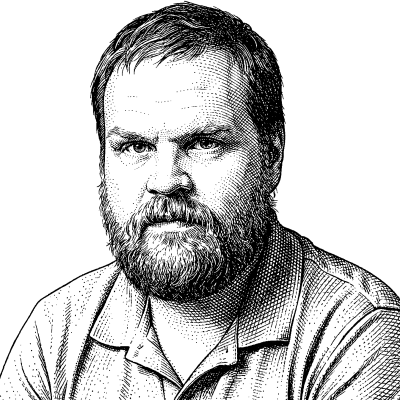
Allen Hansen was raised in northern Israel within the LDS faith, an experience that has profoundly shaped his academic and personal interests. His interdisciplinary scholarship spans a wide range of subjects, reflecting his diverse background and intellectual curiosity. Hansen’s research interests are particularly focused on the intersection of Mormonism, Judaism, and Biblical studies, with a keen interest in late antiquity. He also has scholarly interests in journalism, as well as Eastern European and Middle Eastern studies. This breadth allows him to explore unique connections between seemingly disparate fields. Hansen also brings a practical dimension to his scholarship through interests in business management and positive psychology, both of which he frames through the lens of Zion — exploring how organizational design and individual well-being might serve a larger communal vision. This thread of his work aligns naturally with the Mormon Transhumanist Association’s broader project of bridging faith and posthumanism.
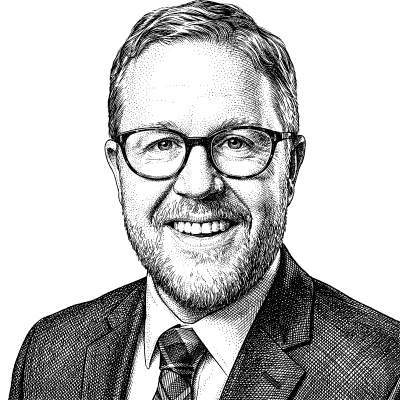
Ben Blair holds a PhD in philosophy and education from Teachers College, Columbia University. He is the co-founder of Newlane University—a platform focused on deinstitutionalizing education. An active member of the Church of Jesus Christ of Latter-day Saints, Blair’s work and perspective explore the intersection of religious community and secular ideals. He is particularly interested in how religious and post-religious communities can work towards shared goals, and he questions the equation of any particular organization with the broader concept of the ‘kingdom of God’. Blair, along with his wife, Gabrielle Blair, resides in France and they are the parents of six children. He presented at Sunstone West and is an attendee and speaker at Mormon Transhumanist Association conferences, where he explores the philosophical implications of faith, community, and progress.

Britt Hartley is an author, philosopher, and educator whose work explores the intersection of Mormon thought, philosophy, and the human search for meaning. Raised in a Latter-day Saint family in Idaho, she taught high school history and LDS seminary before pursuing graduate studies in theology with a focus on the future of American religion. Hartley is the author of Mormon Philosophy Simplified: An Easy LDS Approach to Classic Philosophical Questions (2019), which bridges the rich tradition of Mormon academic theology—drawing on thinkers like Terryl Givens, Hugh Nibley, and Blake Ostler—with the everyday questions of Latter-day Saint life. She presented at the 2019 Conference of the Mormon Transhumanist Association on how genealogical record-keeping across cultures reflects the priorities and narratives of the societies that produce them, and how advancing technology is expanding the transparency and complexity of Mormon genealogy in ways that may drive theological reflection. In her subsequent work, Hartley has focused on helping individuals navigate questions of meaning, connection, and spiritual practice beyond traditional religious frameworks. She is the author of No Nonsense Spirituality: All the Tools, No Faith Required (2024) and hosts the No-Nonsense Spirituality podcast, where she draws on philosophy, psychology, and contemplative practice to explore themes of awe, ritual, community, and purpose—concerns that resonate with the transhumanist commitment to human flourishing in all its dimensions. Hartley lives in Boise, Idaho with her husband and four children.

Bryce Haymond is an American designer, artist, writer, and independent scholar whose work explores the intersection of Mormon theology, mysticism, and the inner dimensions of human consciousness. Born and raised in the Salt Lake City area, he served a mission in El Salvador, studied design at Brigham Young University, and built a career as a professional designer and, more recently, as a developer working with generative AI. Haymond is the founder of the contemplative community and blog Thy Mind, O Human (thymindoman.com), where he investigates perennial wisdom traditions, altered states of consciousness, and the mystical cores of world religions. His scholarship draws on a broad range of sources—from Hugh Nibley and Margaret Barker to Mark Koltko-Rivera and Tibetan Buddhist philosophy—in pursuit of what he regards as the shared divine reality underlying all genuine mystical experience. He has presented multiple times at the Mormon Transhumanist Association conference, addressing the mystical core of Mormon spirituality, the Book of Mormon as literary alchemy, and most recently the use of AI art as a medium for reifying visionary and sacred experience. Haymond’s central argument—that Joseph Smith’s First Vision and comparable experiences across traditions represent genuine encounters with higher states of consciousness, accessible through contemplative practice—positions him at a generative intersection of religion, psychology, and technology. His reading of Joseph Smith as a practitioner of ‘technologies of transcendence,’ and his work using AI tools to render mystical visions into photorealistic sacred art, reflects a conviction that the boundary between inner and outer, spiritual and material, is more permeable than most traditions have allowed. The same intelligence that communes with ultimate reality in meditation, he suggests, can be cultivated, extended, and expressed through the tools humanity is now building—a vision that resonates deeply with Mormon Transhumanism’s aspiration to participate, as full human beings, in the ongoing work of creation and theosis.