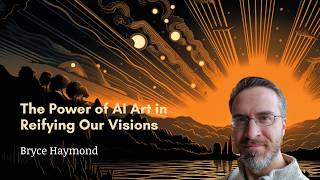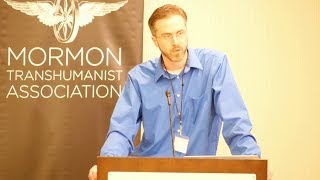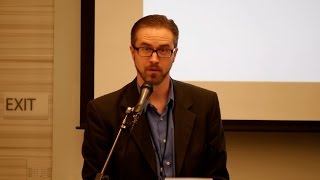
Bryce Haymond is an American designer, artist, writer, and independent scholar whose work explores the intersection of Mormon theology, mysticism, and the inner dimensions of human consciousness. Born and raised in the Salt Lake City area, he served a mission in El Salvador, studied design at Brigham Young University, and built a career as a professional designer and, more recently, as a developer working with generative AI.
Haymond is the founder of the contemplative community and blog Thy Mind, O Human (thymindoman.com), where he investigates perennial wisdom traditions, altered states of consciousness, and the mystical cores of world religions. His scholarship draws on a broad range of sources—from Hugh Nibley and Margaret Barker to Mark Koltko-Rivera and Tibetan Buddhist philosophy—in pursuit of what he regards as the shared divine reality underlying all genuine mystical experience. He has presented multiple times at the Mormon Transhumanist Association conference, addressing the mystical core of Mormon spirituality, the Book of Mormon as literary alchemy, and most recently the use of AI art as a medium for reifying visionary and sacred experience.
Haymond’s central argument—that Joseph Smith’s First Vision and comparable experiences across traditions represent genuine encounters with higher states of consciousness, accessible through contemplative practice—positions him at a generative intersection of religion, psychology, and technology. His reading of Joseph Smith as a practitioner of ‘technologies of transcendence,’ and his work using AI tools to render mystical visions into photorealistic sacred art, reflects a conviction that the boundary between inner and outer, spiritual and material, is more permeable than most traditions have allowed. The same intelligence that communes with ultimate reality in meditation, he suggests, can be cultivated, extended, and expressed through the tools humanity is now building—a vision that resonates deeply with Mormon Transhumanism’s aspiration to participate, as full human beings, in the ongoing work of creation and theosis.