transhumanism experts
Articles (105)
Transhumanist Holy Week: Maundy Thursday
Caleb Jones on Maundy Thursday—how Jesus washing feet challenges transhumanists to center service, vulnerability, and compassion alongside technology's power.
Transhumanist Holy Week: Good Friday
Caleb Jones's Transhumanist Holy Week reflection on Good Friday—exploring how broken bread, crucifixion, and technological choice intertwine in Christ's final moments.
Transhumanist Holy Week: Holy Saturday
Caleb Jones on Holy Saturday—how Christ's Harrowing of Hell mirrors transhumanism's call to wield technology wisely, overcoming death while heeding its risks.
In Memory of Mike Perry
Lincoln Cannon remembers Dr. Mike Perry—a devoted Alcor leader, cryonics pioneer, and religious transhumanist who contributed to the MTA and CTA communities.
Steven Christiansen appointed Global Vice President & COO
The MTA appoints Steven Christiansen — Provo Chapter President — as Global Vice President and COO, expanding the organization's leadership team.
Authors (98)
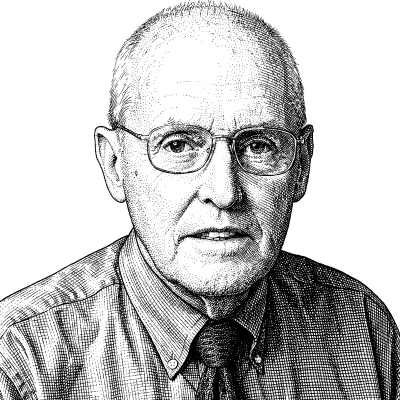
Allen Leigh is a veteran software engineer, electrical engineer, and author whose work seeks to harmonize the rigors of technical science with the principles of Latter-day Saint theology. With a professional career spanning forty-four years in the software industry and a background in electrical engineering, Leigh brings a pragmatic, systems-based perspective to religious inquiry, focusing on the structural mechanics of creation and eternity. Leigh’s intellectual contributions are best encapsulated in his book, One Mormon’s View of the Science-Religion Debate and the Quest for Eternity . In this text, he navigates the often-contentious boundary between empirical evidence and spiritual belief, arguing that the two disciplines are not mutually exclusive but rather complementary frameworks for understanding the universe. His work suggests that the perceived rift between science and religion often stems from a misunderstanding of the methodologies inherent to both. A key figure in discussions on Mormon Transhumanism, Leigh has applied his technical expertise to theological cosmology. His presentation at the MTAConf 2009 entitled “God, the Perfect Engineer” focused on the concept of “engineering design cycles”—the iterative processes used to plan, build, test, and refine complex systems. Leigh proposed a model in which God functions as a Master Engineer, utilizing similar design cycles in the creation of the earth. This framework raises profound questions regarding the nature of divine omnipotence and the practical realities of creation. By drawing parallels to earthly engineering projects—which are subject to constraints, iterations, and the risk of failure—Leigh investigates whether the creation of the earth followed a similar, non-linear path. He challenges his audience to consider if a divine creation project could, in theory, fail, and what the implications of such a failure would be for our understanding of God’s plan. Through this lens, Leigh encourages a view of the cosmos that appreciates the intricate, perhaps even experimental, nature of existence.

Brent Allsop
Brent Allsop (b. 1959) is an American technologist, transhumanist activist, and co-founder of the Mormon Transhumanist Association, whose career has been shaped by a sustained conviction that the most important questions about consciousness, identity, and human destiny are both scientific and spiritual. Allsop is a Senior Software Engineer at 3M Health Information Systems and the founder of Canonizer.com, a collaborative wiki-survey platform launched in 2006 and designed to help communities build genuine consensus on contested questions—from philosophy of mind to ethics to emerging technology. His professional life has run in parallel with decades of advocacy for life extension and transhumanist causes, and he has been a founding voice in the MTA since its inception. At the center of Allsop’s intellectual work is a serious engagement with the philosophy of consciousness—specifically the problem of qualia, or the subjective qualities of experience. He has developed a theoretical framework for scientifically detecting and measuring qualia, arguing that bridging the explanatory gap between brain states and conscious experience requires new mapping functions and, ultimately, direct brain-to-brain connections that allow individuals to share elemental experiences. His vision of mind uploading follows from this: not a copy-and-delete procedure but a gradual transition of experiential continuity into enhanced digital form. This work finds a natural resonance with Joseph Smith’s teaching that “all spirit is matter”—a naturalist theology that Allsop has taken seriously as a framework for understanding what spiritual engineering and consciousness uploading might actually involve. Allsop has also applied his consensus-building instincts to the MTA itself, presenting the 2012 member survey and reflecting on what distinguishes the Association from other transhumanist communities: a spirit of mutual support and collaborative inquiry rather than fractiousness. His Canonizer platform embodies the same aspiration at scale—enabling individuals to identify trusted experts and survey their collective views, so that the expanding moral landscape of technological power can be navigated with wisdom rather than paralysis. The emerging expert consensus on representational qualia theory, he has noted, aligns surprisingly well with 19th-century Mormon descriptions of consciousness and spirit—a convergence he regards not as coincidence but as evidence that prophetic and scientific inquiry can illuminate the same truths from different directions.

Carl Teichrib is a Canadian researcher, writer, and lecturer who has spent more than two decades documenting the ideological and spiritual currents reshaping Western civilization—with particular attention to transhumanism, globalism, and the re-enchantment of secular culture. He is the author of Game of Gods: The Temple of Man in the Age of Re-Enchantment (2018) and served as editor of Forcing Change , a research journal tracking transformative movements in politics, religion, and technology. Teichrib’s work is rooted in on-the-ground investigation: he has attended and reported on events ranging from Burning Man to world federalist conferences to transhumanist gatherings, bringing an ethnographic sensibility to ideological terrain that most commentators treat from a distance. His research focuses on the convergence of technological aspiration, spiritual seeking, and political vision—the overlapping currents through which humanity is, in various ways, reaching for transcendence. Writing from an evangelical Christian perspective, Teichrib approaches transhumanism critically, as a symptom of a deeper human longing that he believes is being misdirected. That diagnosis differs from a Mormon transhumanist reading, which holds that the longing itself—for greater intelligence, longer life, expanded capacity, and participation in divine creative work—is genuine and worth pursuing through rigorous, ethical, technologically-engaged means. Still, Teichrib’s careful documentation of transhumanist aspirations, his recognition that the movement addresses real spiritual hunger, and his insistence that ideas about human transformation carry profound moral weight make him a serious interlocutor for anyone thinking carefully about where humanity is headed and why.

Charles W. Penrose
Charles W. Penrose (1832–1925) was a British-born Latter-day Saint apostle, editor, poet, and theologian whose six-decade career as a writer and church leader made him one of the most intellectually formidable figures in nineteenth- and early twentieth-century Mormonism. Born in London, Penrose converted to the Church of Jesus Christ of Latter-day Saints in 1850 and emigrated to Utah in 1861. He served as editor of the Deseret News for two significant stints and became one of the church’s most prolific public intellectuals, writing doctrinal essays, hymns—including the beloved O Ye Mountains High —and polemical defenses of Mormon theology. He was ordained an apostle in 1904 and served as Second Counselor in the First Presidency under Presidents Joseph F. Smith and Heber J. Grant until shortly before his death. What distinguished Penrose among his contemporaries was the rigor he brought to questions of religious authority and rational inquiry. His conviction that revelation must be investigated rather than merely received—that the Saints should weigh prophetic claims with active, disciplined intelligence rather than passive deference—reflects a deeply epistemically serious faith. “We respect him,” he wrote of a sitting church president, “but we do not believe his personal views or utterances are revelations from God; and when ‘Thus saith the Lord,’ comes from him, the saints investigate it.” This is not skepticism at the expense of faith; it is faith disciplined by the same intelligence that Mormon theology declares co-eternal with God. Penrose understood that genuine trust in divine communication requires the full exercise of human reason, not its suspension. That conviction connects naturally to the broader Mormon vision of theosis—the idea that intelligence, rightly cultivated, is itself the stuff of eternal progression. Penrose spent his life insisting that Latter-day Saints be not merely believing but thinking believers, capable of distinguishing personal opinion from revelation, tradition from truth. In a tradition that affirms the mind and the spirit as inseparable, his legacy is a reminder that the path toward Godhood runs through honest inquiry as surely as it runs through covenant and community.

Chelsea Shields is a biocultural anthropologist, TED Fellow, and researcher whose work explores the evolutionary foundations of religious belief and the physiological power of social connection. Raised in a Latter-day Saint family in Utah, she went on to earn dual PhDs in biological and cultural anthropology from Boston University in 2017. Shields’ academic research focuses on the concept of social susceptibility—how human bodies have evolved to be deeply responsive to social interaction and meaning-making. Over the course of a decade, she conducted extensive fieldwork with Asante indigenous healers in central Ghana, studying the evolution and elicitation of placebo and nocebo effects in ritual healing ceremonies. Her dissertation, “The Social Life of Placebos,” argues that grounding human behavior in social adaptations reveals important discoveries across placebo studies, religion, pain, stress, and empathy. She presented at the 2014 Conference of the Mormon Transhumanist Association on the evolutionary psychology of religion, examining how religious belief functions as a powerful biocultural force—shaping neural development, social bonding, and coping mechanisms—and how understanding these processes is essential for anyone thinking seriously about the future of the human brain and body. Shields is a three-time TED speaker, an advocate for gender equality within religious communities, and founder of Brandthropologie Agency, where she applies her research in social susceptibility and nonverbal communication to brand strategy and consumer research. She lives in Salt Lake City with her family.
Quotations (13)
 Steven Dick
 Nick Bostrom