Resources

  • Articles
  • Authors
  • Quotations
  • Search
  • Tags
  • Topical Guide
  • Videos

Quotations

Showing 1–10 of 13
Previous1
Steven DickSteven Dick

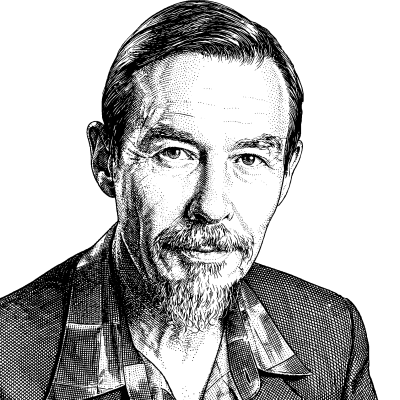
[Future religious thinkers] must be open to radically new conceptions of God, not necessarily the God of the ancients, nor the God of human imagination, but a God grounded in cosmic evolution, the biological universe, and the three principles: Why would a Messiah only come to us? Humans are likely not the center of anything. Nor the ultimate creation of God (likely not the head of the class when it comes to brainpower and intelligence) . . . A major effect of the concept of a natural God is that it has the capacity to reconcile science and religion. For those with a vested interest in the supernatural God of most standard religions, this may be too great a sacrifice for reconciliation. But consider the benefits. A natural God is an intelligence in and of the world, a God amenable to scientific methods, or at least approachable by them. A supernatural God incorporates a concept all scientists reject in connection with their science. For some, this may be precisely the point: that God cannot be, and should not be, approachable by science. But for Einstein and many other scientists (perhaps expressed in a different way for the latter) “the cosmic religious feeling is the strongest and noblest motive for scientific research.”

non-mormonstranshumanism expertsharmonizationfaithscience
Nikolay FyodorovNikolay Fyodorov

God does everything not merely for humanity, but also through humanity. The Creator through us recreates the world; He resurrects all that are perished.

resurrectiontheosisnon-mormonstranshumanism expertsparticipatory atonement

Transhumanist Declaration: Humanity stands to be profoundly affected by science and technology in the future. We envision the possibility of broadening human potential by overcoming aging, cognitive shortcomings, involuntary suffering, and our confinement to planet Earth. We believe that humanity’s potential is still mostly unrealized. There are possible scenarios that lead to wonderful and exceedingly worthwhile enhanced human conditions. We recognize that humanity faces serious risks, especially from the misuse of new technologies. There are possible realistic scenarios that lead to the loss of most, or even all, of what we hold valuable. Some of these scenarios are drastic, others are subtle. Although all progress is change, not all change is progress. Research effort needs to be invested into understanding these prospects. We need to carefully deliberate how best to reduce risks and expedite beneficial applications. We also need forums where people can constructively discuss what should be done, and a social order where responsible decisions can be implemented. Reduction of existential risks , and development of means for the preservation of life and health, the alleviation of grave suffering, and the improvement of human foresight and wisdom should be pursued as urgent priorities, and heavily funded. Policy making ought to be guided by responsible and inclusive moral vision, taking seriously both opportunities and risks, respecting autonomy and individual rights, and showing solidarity with and concern for the interests and dignity of all people around the globe. We must also consider our moral responsibilities towards generations that will exist in the future. We advocate the well-being of all sentience , including humans, non-human animals, and any future artificial intellects , modified life forms, or other intelligences to which technological and scientific advance may give rise. We favour allowing individuals wide personal choice over how they enable their lives. This includes use of techniques that may be developed to assist memory, concentration, and mental energy; life extension therapies; reproductive choice technologies; cryonics procedures; and many other possible human modification and enhancement technologies.

transhumanism expertshuman potential
Nick BostromNick Bostrom

It may be possible for simulated civilizations to become posthuman. They may then run their own ancestor-simulations on powerful computers they build in their simulated universe. Such computers would be “virtual machines”, a familiar concept in computer science. (Java script webapplets, for instance, run on a virtual machine – a simulated computer – inside your desktop.)

transhumanism expertshuman potential
Carver MeadCarver Mead

Moore’s Law is really a thing about human activity, it’s about vision, it’s about what you’re allowed to believe. Because people are really limited by their beliefs, they limit themselves by what they allow themselves to believe about what is possible.

transhumanism expertstechnologyaccelerating changehuman potential
Emile DurkheimEmile Durkheim

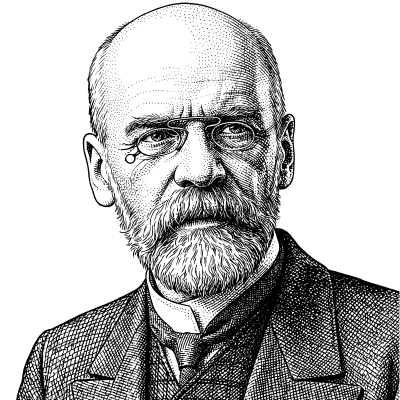
One can affirm nothing that science denies, deny nothing that it affirms, establish nothing that does not rest, directly or indirectly, on the principles borrowed from it. From then on, faith no longer exerts the same hegemony as before over the system of ideas that we can continue to call religious.

transhumanism expertsreligionharmonizationsciencesyncretism
Ramez NaamRamez Naam

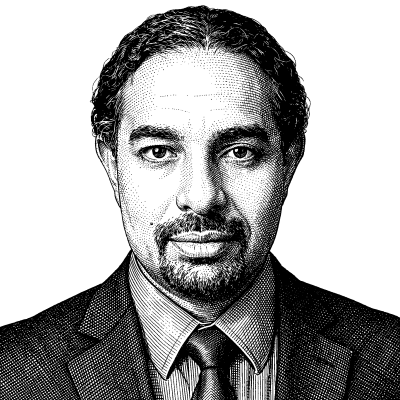
'Playing God' is actually the highest expression of human nature. The urges to improve ourselves, to master our environment, and to set our children on the best path possible have been the fundamental driving forces of all human history. Without these urges to “play God,” the world as we know it wouldn’t exist today.

theosistranshumanism expertshuman potential
Ray KurzweilRay Kurzweil

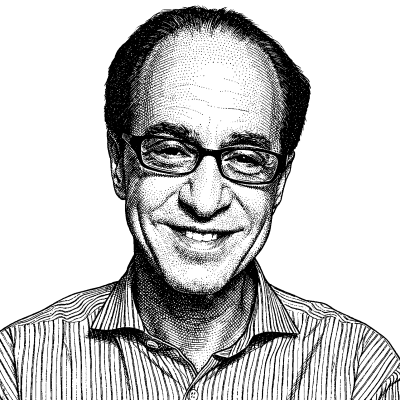
So that means that the twentieth century wasn’t a hundred years of change at today’s rate of change, because we’ve been speeding up. It was actually twenty years of change at today’s rate of change. Exponential change is quite explosive, so in the next century we’ll make about twenty thousand years of change at today’s rate of progress—about a thousand times greater than the twentieth century, and that century was no slouch for change.

transhumanism expertshuman potential
Julian HuxleyJulian Huxley

The human species can, if it wishes, transcend itself—not just sporadically, an individual here in one way, an individual there in another way, but in its entirety, as humanity. We need a name for this new belief. Perhaps transhumanism will serve: man remaining man, but transcending himself, by realizing new possibilities of and for his human nature.

eternal progressiontheosisnon-mormonstranshumanism expertsagencyhuman potentialevolutionfuturism
Ray KurzweilRay Kurzweil

The matter and energy in our vicinity will become infused with the intelligence, knowledge, creativity, beauty, and emotional intelligence (the ability to love, for example) of our human-machine civilization. . . . So in a sense, we can say that the Singularity will ultimately infuse the universe with spirit.

transfigurationnon-mormonstranshumanism expertstechnologyaccelerating change
Previous1