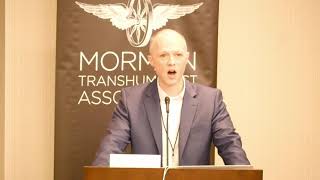
participatory atonement
Articles (19)
The Role of Christ in Transhumanism
Christ as savior, exemplar, and collaborator—exploring participatory atonement, grace and works, and the Body of Christ as a communal transhuman future.
Ordaining Priesthood for Resurrection
Lincoln Cannon asks how Mormon priesthood's sealing and ordinance powers might relate to resurrection — exploring the theological vision of raising the dead.
Covenant Is Atonement
Lincoln Cannon's sacrament talk explores the inseparable link between covenant-making and atonement in LDS theology—commitment, reconciliation, and faith.
Redeeming Our Past
Moral progress demands we face our past honestly. Carl Youngblood makes the case that redemption, not escape, is the true transhumanist imperative.
Mormon Naturalism
Mormon theology’s unique naturalism—rejecting creation ex nihilo and a supernatural God—bridges faith and science by redefining divinity within natural law.
Authors (4)
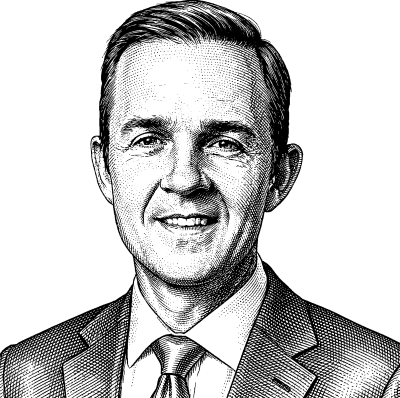
Carl Youngblood co-founded the MTA in 2006 and has served as its President and CEO since 2021. He is engaged with the Association’s efforts to explore the intersection of Mormon theology and transhumanist philosophy. Among the many initiatives that Carl has been involved with, he has designed and built the Association’s current website, which unifies all prior content in a single location using inspiring visuals and animations. Youngblood’s professional career spans more than two decades of full-stack software development at the intersection of Silicon Slopes and Silicon Valley. He was an early employee at Omniture (acquired by Adobe), a founding engineering leader at Divvy (a Utah-based unicorn startup), co-founder of Blockscale LLC (a blockchain services firm eventually contracted into Coinbase), and Senior Solutions Architect for Amazon Managed Blockchain at AWS. His technical fluency ranges from scalable web architecture to blockchain infrastructure—the kind of deep engineering experience that grounds his theological speculation in working knowledge of the systems he writes about. Under his leadership, the Association has developed its mission of promoting abundant human flourishing through the compassionate use of science and technology, fostering dialogue across secular and religious audiences and arguing that each has something essential to learn from the other. His writing, collected on his blog From the Depths , spans over a decade of conference presentations and theological essays: meditations on participatory resurrection, the alignment of artificial intelligence read through the Grand Council narrative, intelligence as eternal and multifaceted, and religion as social technology. He writes, as a colleague has observed, with warmth and accessibility on questions of momentous practical consequence—how to navigate faith crisis without losing faith’s power, how to think about resurrection as something we actively participate in rather than passively receive. Youngblood’s distinctive contribution to transhumanism is the integration of serious technical expertise with serious theological reflection. He embodies the Mormon transhumanist conviction that scientific and spiritual development are not parallel tracks but a single path—that the learning required to build better systems is continuous with the exaltation Mormon theology envisions, and that human ingenuity, rightly oriented, is itself a divine imperative.

Cyprian
Cyprian of Carthage (c. 200–258 CE) was one of the most influential bishops and theologians of early Christianity, whose writings on ecclesiology, martyrdom, and the nature of the Church shaped Latin Christian thought for centuries. Born in Roman North Africa, likely to a wealthy pagan family, Cyprian converted to Christianity around 246 CE and rose rapidly to become Bishop of Carthage within two years. His episcopate was defined by crisis: he led his community through the Decian and Valerian persecutions, navigating fierce debates over how to treat Christians who had lapsed under imperial pressure. His treatises—among them On the Unity of the Church , On the Lapsed , On Mortality , and On Works and Almsgiving —combined pastoral urgency with theological precision, establishing principles of communal discipline, sacramental life, and episcopal authority that would echo through Western Christianity. He was martyred in 258 CE under the Emperor Valerian, becoming one of the most venerated figures in the early Church. Cyprian’s theological legacy is most vivid where it touches the question of human transformation. His conviction that Christ assumed the fullness of human nature so that humanity might ascend to share in the divine—captured in the axiom that what humanity is, Christ was willing to become, so that humanity might become what Christ is—places him in the ancient tradition of theosis, the teaching that the divine-human gap is not a fixed boundary but a trajectory of becoming. This vision of participation in the divine life, grounded in incarnation and sustained by community, finds deep resonance with the Mormon transhumanist intuition that human potential is genuinely open-ended, that the relationship between humanity and God is one of shared nature and increasing likeness rather than infinite ontological distance. Cyprian did not frame this hope in technological terms, but his insistence that moral transformation, communal practice, and the grace of Christ collaborate in making humanity more than it currently is speaks across centuries to anyone who takes seriously the possibility that the divine future of the human person is real, not merely symbolic.
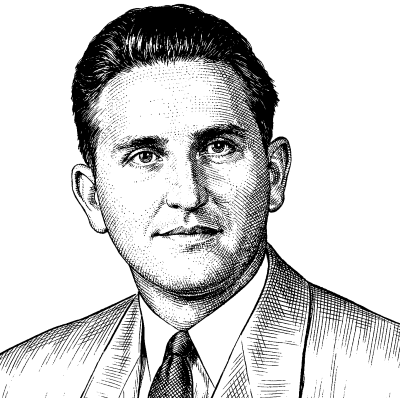
Thomas S. Monson
Thomas S. Monson (1927–2018) was the sixteenth president of The Church of Jesus Christ of Latter-day Saints and one of the most widely beloved pastoral figures in modern Mormon history. Born on August 21, 1927, in Salt Lake City, Utah, he studied at the University of Utah and earned an MBA from Brigham Young University before embarking on a career in publishing management at the Deseret News . Ordained an apostle at the remarkably young age of thirty-six in 1963, he served in the First Presidency under three successive church presidents before succeeding Gordon B. Hinckley as church president on February 3, 2008—a position he held until his death on January 2, 2018. Monson’s career was marked by breadth of institutional service and unusual constancy of personal pastoral attention. He chaired the Church Educational System’s Board of Trustees, served on the National Executive Board of Scouting America, and was appointed by President Ronald Reagan to the U.S. President’s Task Force for Private Sector Initiatives. He was a prolific author and speaker, known for a gift of memory that allowed him to recall individuals by name decades after meeting them. He received honorary doctorates from multiple institutions and the highest awards of both Scouting America and the World Organization of the Scout Movement. What distinguished Monson most was the integration he modeled between grand institutional responsibility and intimate human attention. His ministry was relentlessly oriented toward individuals: the widow, the sick, the forgotten. In one characteristic formulation, he described the faithful as literally becoming “saviors on Mount Zion”—participants in the Atonement through proxy and service, extending redemptive work to those who cannot accomplish it for themselves. That vision of distributed, participatory salvation, in which ordinary human beings become instruments of divine transformation in each other’s lives, animates a theology in which human potential and divine purpose are inseparable. Monson’s legacy is not primarily doctrinal elaboration but enacted conviction: that compassion, attention, and faithful action are among the most powerful technologies a human being can bring to bear on the world.

William James
William James (1842–1910) was an American philosopher and psychologist, widely regarded as the father of American psychology and one of the most influential thinkers of the nineteenth and early twentieth centuries. A founding figure of pragmatism, James taught at Harvard for decades, where his work shaped philosophy, psychology, and the study of religion in ways that continue to reverberate. James’s contributions span an extraordinary range. His landmark Principles of Psychology (1890) established psychology as a rigorous empirical discipline. His philosophical writings—including The Will to Believe , Pragmatism , and A Pluralistic Universe —developed a vision of truth as something made rather than merely found, tested in lived experience and practical consequence. In The Varieties of Religious Experience (1902), he brought the same empirical seriousness to mysticism, conversion, and faith, treating religious experience as genuine data about human consciousness and its possibilities. What animates James’s legacy, and gives it enduring resonance, is his insistence that ideas must be tested against the full weight of human life—its dangers, its moral demands, its capacity for transformation. His account of the “strenuous mood”—the awakening of our deepest energies in response to genuine stakes and infinite demands—captures something essential about the relationship between faith and moral agency. For James, a world without God risks collapsing into a “don’t-care” temperament; religious faith, by opening an infinite scale of obligation and possibility, frees “every sort of energy and endurance, of courage and capacity for handling life’s evils.” This is not theology as mere comfort but as a spur to transformation. His vision of cooperative moral adventure—a world whose perfection is “conditional merely” on whether each agent does their “level best”—frames human existence as a genuinely open, participatory project, one where trust, risk, and collaborative effort are constitutive of whatever good is achieved. That vision sits naturally alongside Mormon transhumanist convictions about theosis, participatory atonement, and humanity’s co-creative role in its own divine future.
Quotations (10)
 Thomas S. Monson
 John A. Widtsoe
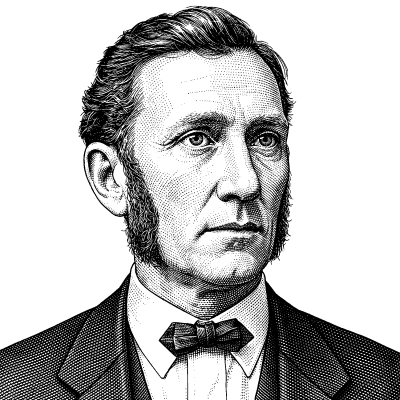 Joseph F. Smith