ecumenism
Articles (18)
The Urgency of Superintelligent Communion
Lincoln Cannon argues theosis in Mormon Transhumanism is communal, not individual—making superintelligent communion an existential imperative, not a nicety.
Just as We Have, They Received the Holy Gift
Lincoln Cannon presents a narrative from Acts, exploring how Peter's vision of radical inclusion challenges every boundary of the expected and the holy.
Meditation on the Rebirth of Christ
Lincoln Cannon reflects on Christmas Eve across Catholic mass, LDS sacrament, and the first epistle of John—meditating on the rebirth of Christ.
A Primer Primer
Ben Blair introduces the MTA Primers—short, accessible guides to key Mormon Transhumanist ideas designed for meetups and curious newcomers.
2017 Annual Meeting of the American Academy of Religion
MTA highlights transhumanism and religion sessions worth attending at the 2017 American Academy of Religion Annual Meeting in Boston, November 18–21.
Authors (11)

B. H. Roberts
Brigham Henry Roberts (1857–1933) was a historian, theologian, and General Authority of The Church of Jesus Christ of Latter-day Saints, widely regarded as one of the most rigorous and intellectually ambitious thinkers Mormonism has produced. Born in Warrington, England, and emigrating to Utah as a child, Roberts rose from a difficult, impoverished youth to become a missionary, editor, congressman-elect, and a member of the First Council of the Seventy from 1888 until his death. Roberts’s career bridged ecclesiastical leadership and serious scholarship. He served missions in the American South and presided over the Eastern States Mission, and he was elected to the U.S. House of Representatives in 1898, though he was denied his seat in a national controversy over plural marriage. He devoted decades to writing and editing, producing the six-volume Comprehensive History of the Church , editing the seven-volume History of the Church , and authoring theological works including The Mormon Doctrine of Deity , The Truth, The Way, The Life , and Studies of the Book of Mormon . In these works he engaged geology, biology, biblical criticism, and comparative religion with a candor unusual for his time and office. Roberts’s legacy resonates deeply with themes of human potential, intelligence, and the entanglement of faith with progress. He read the nineteenth and early twentieth centuries—railroads, electric light, wireless telegraphy, aviation, the spread of liberty—as “collateral rays” of the same light that opened the heavens to Joseph Smith, suggesting that the millennium might already be quietly underway in the works of human hands. He insisted that scientific research, including evidence of life and death long before Adam, belongs on the side of “development” rather than “contraction,” and that to engage such inquiry is “to link the church of God with the highest increase of human thought and effort.” Equally striking is Roberts’s generosity toward other traditions and his impatience with mental laziness. He refused to identify any particular church—Catholic, Protestant, Greek, Buddhist, Muslim, or even the societies of deists and atheists—as the “church of the devil,” reserving that phrase for the kingdom of evil wherever it appears, and affirming that wise teachers and prophets are raised up among all peoples. Against “simple faith” understood as ignorant acquiescence, he championed an intelligent, rational faith that strives “up to the very limit of man’s capacity” to know. In his confidence that intelligence is the glory of God and of humanity, that revelation invites rather than forecloses inquiry, and that the children of men are “moving up to a higher and truer conception of the things of God,” Roberts remains a vital voice for those who see in technology, science, and expanding moral imagination the natural shape of a divine future.

Gerrit W. Gong
Gerrit W. Gong (b. 1953) is an American religious leader, diplomat, and scholar who serves as a member of the Quorum of the Twelve Apostles of The Church of Jesus Christ of Latter-day Saints—a calling to which he was ordained in 2018. Born in Los Angeles, California, Gong grew up in a family that bridged Chinese heritage and Latter-day Saint faith—a bicultural formation that has shaped his lifelong interest in the meeting points of diverse traditions, civilizations, and ways of knowing. He earned his doctorate from Oxford University as a Rhodes Scholar and built a distinguished career as a China specialist, serving in various capacities at the U.S. State Department and at the Center for Strategic and International Studies before his full-time ecclesiastical service. Gong’s scholarly work focused on the standards and norms of international society, the dynamics of civilization, and the conditions under which peoples with different histories and values can find common ground. His book The Standard of ‘Civilization’ in International Society (1984) remains a notable contribution to international relations theory. Within the Church, he served as President of Brigham Young University--Hawaii and as a General Authority Seventy before his call to the Twelve, bringing to his apostolic ministry a rare combination of diplomatic experience, cross-cultural fluency, and intellectual depth. What distinguishes Gong’s public voice is a consistent attentiveness to the way personal memory, family bonds, and shared stories carry people across generations and toward greater wholeness. He speaks often of the power of belonging—to family, to community, to God—as a living force that shapes identity and sustains hope. This vision of covenant relationship as something that grows, deepens, and ultimately transcends mortality resonates naturally with the Mormon transhumanist conviction that eternal progression is not an abstraction but a present practice, woven from intelligence, love, and the patient work of becoming.
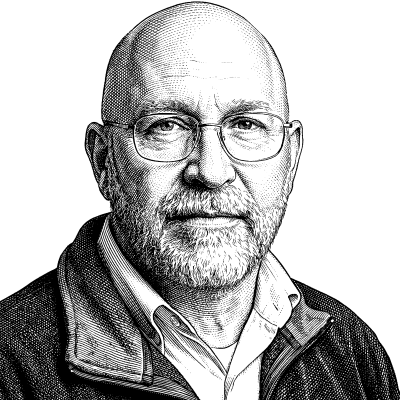
James McLean Ledford is a Christian transhumanist thinker and technologist whose work explores the convergence of faith, reason, and emerging technology. He came to broader attention within transhumanist circles through his participation in the Transhumanism and Spirituality conference held in 2010, where he presented on the theme of Christian transhumanism—situating the aspirations of the transhumanist movement within the theological and philosophical traditions of Christianity. In his 2010 presentation at the Transhumanism and Spirituality Conference, Ledford engaged with questions central to the Christian transhumanist philosophy: the moral imperative to overcome suffering and death, the relationship between human creativity and divine purpose, and the compatibility of technological enhancement with Christian anthropology. Drawing on scriptural and theological sources, he argued that the pursuit of radical human transformation need not stand in opposition to Christian faith, but may in fact represent a fulfillment of humanity’s God-given capacity for reason, creativity, and stewardship. His perspective reflects a tradition of thought that sees science and technology not as rivals to spiritual life, but as instruments through which humanity participates in an ongoing work of creation and redemption. Ledford’s engagement with these themes places him within a growing ecumenical movement of religiously committed transhumanists who seek to articulate a vision of the future that is at once technologically ambitious and spiritually grounded. Unlike secular transhumanism, which often brackets or dismisses metaphysical commitments, Christian transhumanism—as Ledford and others have framed it—insists that the deepest motivations for overcoming human limitation are themselves theological: rooted in love, hope, and the belief that creation is oriented toward flourishing. His work remains a meaningful contribution to the ongoing conversation between religious communities and transhumanist philosophy, a dialogue that the Mormon Transhumanist Association has been instrumental in fostering since its founding. Ledford’s willingness to engage these questions publicly, and to articulate a coherent Christian framework for thinking about technological transformation, reflects the kind of intellectually serious, spiritually committed engagement that this conversation requires.
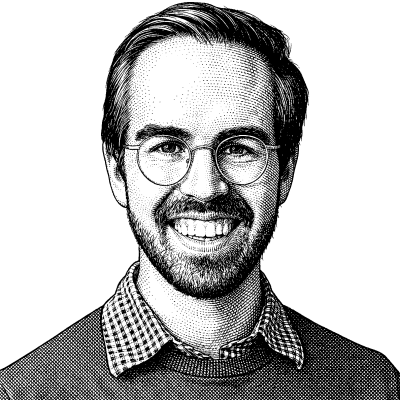
Jaxon Washburn is a Ph.D. student in Near Eastern Languages and Cultures with a focus on Armenian Studies at UCLA. He holds a Master of Theological Studies in History of Christianity from Harvard Divinity School (2023) and dual bachelor’s degrees in Religious Studies and History from Arizona State University (2021), both earned summa cum laude. Raised in an interfaith household, Jaxon has long been passionate about religious studies and interfaith activism, with early speaking engagements at venues including the Parliament of the World’s Religions and the United Nations. He formerly served as youth advisor for the Arizona Interfaith Movement and as a member of the Mormon Transhumanist Association. He went on to serve a mission for the Church of Jesus Christ of Latter-day Saints in Armenia—an experience that profoundly shaped the trajectory of his academic career. At Harvard Divinity School, Jaxon deepened his commitment to both scholarship and faith. He worked as a Research Associate with the Harvard Pluralism Project, contributing to efforts promoting religious literacy and interreligious engagement. His studies there also led to a published essay, “Mormonism: The Most American ‘Religious Other,’” in the Harvard Divinity Bulletin (Fall/Winter 2022). During his time at HDS, he developed a strong interest in Armenian religious history, studying Classical Armenian and working with Dr. Christina Maranci following the reestablishment of Harvard’s Mashtots Chair for Armenian Studies. Jaxon’s current research interests encompass the history of Christianity, Eastern and Armenian Christianity, mediums of interreligious exchange, and religious pluralisms in the South Caucasus. His earlier work on intersections between Hindu and Latter-day Saint traditions around themes of transfiguration and divine embodiment has broadened into a wider exploration of how religious communities interact, exchange, and develop across cultural boundaries.
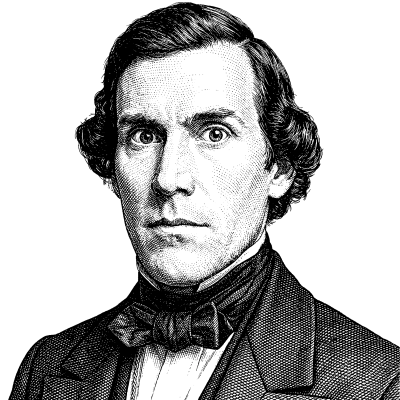
Orson Pratt
Orson Pratt (1811–1881) was an original member of the Quorum of the Twelve Apostles, a mathematician, and a prolific writer for the early Latter-day Saint movement. The younger brother of Parley P. Pratt, he was baptized on his nineteenth birthday in 1830 and ordained an apostle in 1835. He became the last surviving member of the original Twelve. On July 21, 1847, Pratt became the first Latter-day Saint to enter the Salt Lake Valley, arriving three days before the main pioneer company. He preached the first sermon in the valley and dedicated it to the Lord. He and William Clayton also invented a precursor to the modern odometer to measure their journey. Throughout his life, Pratt pursued his strong interest in mathematics and astronomy. He published New and Easy Method of Solution of the Cubic and Biquadratic Equations and Key to the Universe. He served as Church Historian and Recorder, edited Church periodicals, and divided the Book of Mormon and Doctrine and Covenants into verses with cross-references.
Quotations (13)
 B. H. Roberts