love
Articles (48)
Transhumanist Holy Week: Maundy Thursday
Caleb Jones on Maundy Thursday—how Jesus washing feet challenges transhumanists to center service, vulnerability, and compassion alongside technology's power.
In Memory of Mike Perry
Lincoln Cannon remembers Dr. Mike Perry—a devoted Alcor leader, cryonics pioneer, and religious transhumanist who contributed to the MTA and CTA communities.
Origin of Eternal Power
Lincoln Cannon draws on D&C 121 to explore how eternal power flows from righteousness, persuasion, and love — not compulsion or force.
The Eternal Dance
Lincoln Cannon reflects on his son’s wedding with a visionary poem exploring love, faith, and humanity’s divine potential—an eloquent meditation on marriage as eternal dance.
New Africa Regional Presidency Announced
The Mormon Transhumanist Association announces a new leadership team for its Africa Region, expanding the MTA's global community presence.
Authors (10)

Antoine de Saint-Exupéry
Antoine de Saint-Exupéry (1900–1944) was a French aviator, writer, and moral philosopher whose work stands among the most enduring explorations of human meaning, courage, and the relationship between solitude and community in the twentieth century. Born into an aristocratic family in Lyon, he pursued aviation at a time when flight was still a frontier art, serving as a commercial and military pilot across Europe, North Africa, and South America. His cockpit became a laboratory for existential reflection, and the sky a medium through which he interrogated what it means to be fully human. Saint-Exupéry’s literary output is inseparable from his vocation as a pilot. Night Flight (1931), Wind, Sand and Stars (1939), and Flight to Arras (1942) drew directly from his aerial experience to trace the moral dimensions of responsibility, sacrifice, and fraternity under risk. The Little Prince (1943), written during wartime exile in New York, became one of the best-selling and most-translated books in history—a deceptively simple fable about perception, love, and the invisible bonds that give life its weight. He disappeared on a reconnaissance mission over the Mediterranean in July 1944, never to return; the mystery of his end deepened the mythic quality already surrounding his life. Saint-Exupéry’s lasting significance lies in his insistence that technology—the airplane above all—does not diminish humanity but can, rightly inhabited, enlarge it. He understood flight not as escape from the earth but as a vantage from which human solidarity becomes visible in a new way. His writing returns persistently to themes of creative discipline, the cultivation of inner life, the obligation of the living toward the lost, and the kind of love that sees what is essential rather than what is merely present. These concerns resonate naturally with the Mormon Transhumanist conviction that the proper work of intelligence and technology is to deepen relationship, expand moral vision, and orient human striving toward the fullest possible flourishing of every soul.

Ben Romney is a senior software engineer at Qualtrics. Outside of his professional career, he pursues his interest in moral philosophy. He presented at the MTAConf 2020 on his paper, “A Gradient Rubric for Human and Non-Human Utility,” available at bromney.com/ethicspaper.pdf. Romney’s work focuses on expanding ethical considerations beyond the human species to encompass animals, plants, and potentially robots, all in service of maximizing global happiness. He advocates for a utilitarian approach, proposing a gradient rubric to quantify various life forms’ capacity for happiness, aiming to prioritize efforts to improve the world for all sentient beings.

Connie Packer has previously served as the Vice President of the Mormon Transhumanist Association. As a leader within the MTA, she played a key role in guiding the Association’s activities and affairs, focusing on the publication of quality content related to transhumanism and Mormon Transhumanism. Packer helped to facilitate important processes like board member elections and charitable endeavors through initiatives like Kiva Micro Loans, which have collectively funded hundreds of loans to help lift people, improve their conditions, and help them reach their goals.
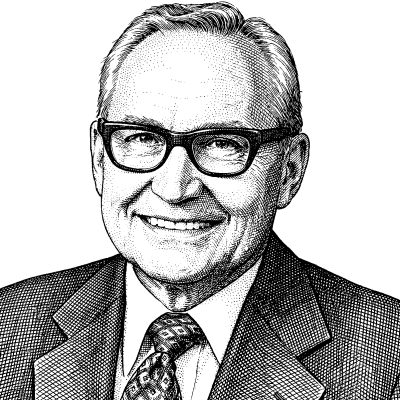
L. Tom Perry
Lowell Tom Perry (5 August 1922 – 30 May 2015) was an American businessman and religious leader who served as a member of the Quorum of the Twelve Apostles of The Church of Jesus Christ of Latter-day Saints for over forty years. Born in Logan, Utah, to a father who served as bishop throughout Perry’s childhood, he developed an early grounding in Church service. From 1942 to 1944, Perry served a mission in the Northern States Mission headquartered in Chicago. After returning, he joined the United States Marine Corps and was assigned to the 2nd Marine Division, landing on Saipan where he spent about a year and helped construct an LDS chapel on the island. He was among the American troops sent to occupy Japan after the war. Perry graduated from Utah State Agricultural College (now Utah State University) in 1949 with a bachelor’s degree in finance, having served as president of the university’s Associated Students. His professional career was spent in retail, climbing the corporate ladder to become a top executive in department stores across Idaho, California, New York, and Massachusetts before entering full-time Church service. Called as an Assistant to the Quorum of the Twelve Apostles in 1972, Perry was sustained as an Apostle on April 6, 1974, and ordained five days later. He married Virginia C. Lee in 1947; she died of cancer in December 1974. He remarried Barbara Dayton in 1976. Known for his optimism and big smile, Perry served faithfully until his death from thyroid cancer in 2015. His decades of service exemplified the integration of professional excellence with lifelong religious commitment.

Melissa Wei-Tsing Inouye
Melissa Wei-Tsing Inouye was a scholar and historian who explored the intersection of religion and culture in Greater China, global Mormonism, and 20th-century Chinese Christianity. She received her PhD in East Asian languages and civilizations from Harvard University in 2011. Her major work, China and the True Jesus: Charisma and Organization in a Chinese Christian Church (Oxford University Press, 2019), provides a comprehensive history of the True Jesus Church and charismatic Christian movements in modern China. In addition to her academic research, Inouye was a prolific writer and essayist known for her candid reflections on faith, motherhood, and the global church. Her memoir, Crossings: A Bald Asian American Latter-day Saint Woman Scholar’s Ventures through Life, Death, Cancer, and Motherhood (2019), and her subsequent book, Sacred Struggle: Seeking Christ on the Path of Most Resistance (2023), examined the role of suffering and community within the Latter-day Saint experience. She was also a founding member of the Global Mormon Studies research network and served on the advisory board of the Neal A. Maxwell Institute for Religious Scholarship. Inouye passed away on April 23, 2024, at the age of 44, following a seven-year battle with colon cancer. She is remembered for her work bridging Chinese history, global religious movements, and transhumanist ideals, as well as for her commitment to fostering a more inclusive and globally-aware religious community.
Quotations (11)
 Joseph Smith
Topical Guide (4)
Videos (2)
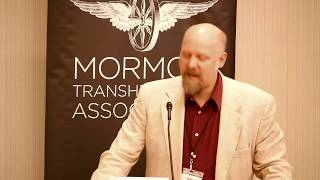
Chris Bradford
Open Thou Mine Eyes
Chris Bradford explores the tension between technological instrumentalism and genuine human relationship, drawing on Martin Buber’s distinction between “I-It” and “I-Thou” encounters. He argues that a purely technological approach to the world risks reducing people and nature to mere objects, and that Mormon transhumanism must complement its technological aspirations with the cultivation of empathy, charity, and recognition of the divine in others. Bradford contends that the grace saturating the world—visible when our “eyes are opened”—calls disciples of Christ to see and serve God in every neighbor, making the transhumanist project a fundamentally religious endeavor.
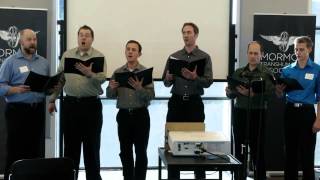
You Are the New Day
The MTA Barbershop Chorus performs John Rutter’s “You Are the New Day,” a hymn of hope and renewal. Introduced by a reflection on humanity’s responsibility to shape the future through “good minds and loving hearts,” the performance celebrates themes of love, life, and the dawning possibility of each new day—affirming that hope persists even when time seems to be running out.