education
Articles (161)
The Association Has a New Home
Explore the rebuilt transfigurism.org—a deeper library, topical guides, and community tools for those who take both faith and the future seriously.
Reflections on a Pivotal Year
Carl Youngblood reflects on a pivotal year — examining society's relationship with generosity, technology, faith, and intelligence at a critical moment.
Steven Christiansen appointed Global Vice President & COO
The MTA appoints Steven Christiansen — Provo Chapter President — as Global Vice President and COO, expanding the organization's leadership team.
MTA Year-End Report: Historic Invitations and African Expansion
MTA’s 2025 year-end report covers MTAConf on neurospirituality, an AI talk at the Church Office Building, and expanding African chapters.
Humanity’s Past and Distant Future
Carl Youngblood presents to MTA members in Abidjan, arguing that transhumanism is deeply familiar to Latter-day Saints when properly understood.
Authors (97)

Ada Lovelace
Ada Lovelace (1815–1852) was a British mathematician and writer widely regarded as the world’s first computer programmer, a visionary who glimpsed the computational future nearly a century before the machines that would realize it. Born Augusta Ada Byron, the only legitimate child of the poet Lord Byron, Lovelace was raised by her mother Anne Isabella Milbanke, who deliberately cultivated in her a rigorous education in mathematics and science—partly, it is said, to guard against the romantic temperament of her absent father. That tension between poetic imagination and mathematical precision became her defining characteristic rather than her contradiction. Introduced to Charles Babbage in 1833, she became captivated by his proposed Analytical Engine. In 1843 she translated Luigi Menabrea’s account of the Engine from French, appending her own notes—nearly three times the length of the original—that described, among other things, an algorithm for computing Bernoulli numbers. This is now recognized as the first published algorithm intended for execution by a machine. Lovelace’s most striking contribution was not the algorithm itself but the conceptual leap it represented. She understood that the Analytical Engine could manipulate symbols according to rules, not merely numbers—that it was, in principle, a general-purpose engine of thought. She also recognized its limits: the machine, she wrote, could only do what we know how to order it to perform. That sober, precise boundary-drawing between tool and mind was itself a kind of philosophical precision that still shapes how we think about artificial intelligence. Her imagination ranged freely across what such an engine might compose, calculate, and create, anticipating by more than a century the questions that animate the intersection of computation and human cognition. From a Mormon transhumanist sensibility, Lovelace’s life embodies the conviction that intelligence—cultivated, disciplined, and applied to the highest tools available—is itself a sacred work. Her synthesis of mathematical rigor and imaginative reach, her insistence that the engines of computation might serve art and music as readily as arithmetic, resonates with a theology that treats creativity and intelligence as attributes of divinity in which humans genuinely participate. She died at thirty-six, leaving a legacy that took more than a century to be fully recognized—a reminder that the seeds of transformation are often sown long before the harvest is visible.
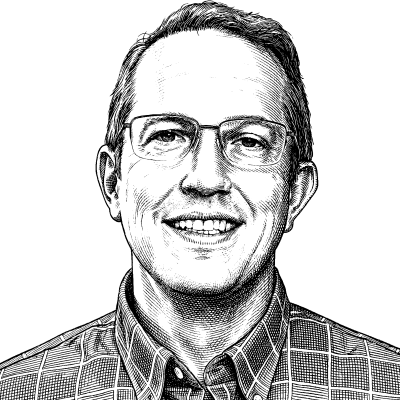
Adam Davis is a physicist and educator. He received his degree from Case Western University and currently teaches physics at Wayne State College. His academic pursuits extend beyond conventional physics into areas that bridge science and theology, particularly within the context of Latter-day Saint beliefs. Davis’s interests lie in exploring the concept of “spirit matter,” a topic central to Mormon theology. He approaches this subject through a scientific lens, seeking to develop models and frameworks for understanding its nature and properties. His work examines the theological necessity of spirit matter and considers its implications for human advancement and the attainment of divine potential. At the Mormon Thought & Engineering Vision conference held in 2009, Davis presented his perspectives on spirit matter, acknowledging the limited understanding currently available while emphasizing the importance of continued exploration. He examined scriptural and anecdotal accounts, including descriptions of spirit bodies and the spirit world, to inform his approach and stimulate further discussion on this complex topic—ultimately suggesting that no current models are completely adequate. Davis served on the MTA Board of Directors for several years.
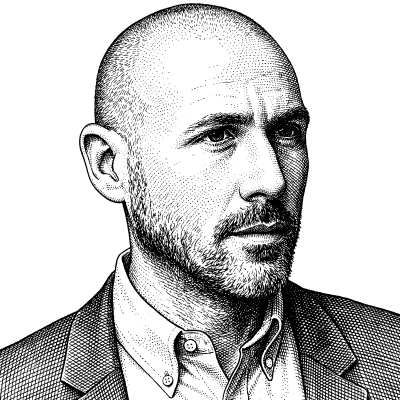
Adam Miller is a philosopher, educator, and author whose work serves as a bridge between contemporary continental philosophy and Latter-day Saint theology. He holds a bachelor’s degree from Brigham Young University and earned his master’s and PhD in philosophy from Villanova University. Miller currently serves as a professor of philosophy at Collin College in McKinney, Texas, where he also directs the college’s honors program. Miller is a leading voice in the “new Mormon theology” movement, characterized by a rigorous yet accessible approach to religious thought that often operates outside traditional institutional hierarchies. His scholarship draws heavily on the work of French philosophers such as Alain Badiou and Bruno Latour to re-examine Mormon metaphysics. In works like Speculative Grace: Bruno Latour and Object-Oriented Theology , Miller explores an “object-oriented” ontology, proposing a theological framework where grace and agency are embedded within the material relationships of the world—a perspective that resonates with discussions regarding the nature of matter and intelligence found within transhumanist discourse. A prolific writer, Miller has authored numerous influential books that challenge readers to engage deeply with scripture and tradition. His Letters to a Young Mormon is widely regarded for its candid and pastoral approach to questions of faith and agency. He has also produced a series of “urgent paraphrases” of biblical texts, including Grace Is Not God’s Backup Plan (Romans) and Nothing New Under the Sun (Ecclesiastes), which seek to unveil the tremendous power of ancient scripture for modern audiences. His engagement with secular culture is evident in The Gospel According to David Foster Wallace , a text praised by The New York Times for its “incantatory and gorgeous” prose. Beyond his writing, Miller has played a pivotal role in shaping the infrastructure of modern Mormon studies. He co-founded Salt Press, an independent publisher of Mormon theology later acquired by Brigham Young University’s Maxwell Institute. He also founded and serves as co-director of the Latter-day Saint Theology Seminar, an annual colloquium that fosters collaborative, close readings of scripture. Through these efforts, Miller has cultivated a space for rigorous theological experimentation, emphasizing a “theology of the present” that calls for active, transformative engagement with the divine in the here and now.
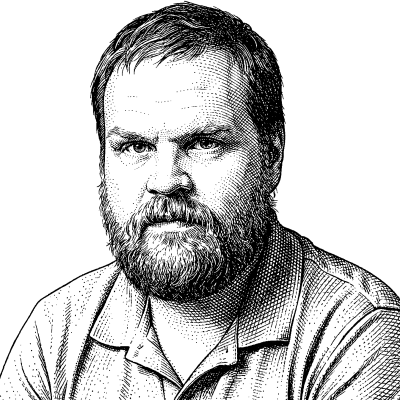
Allen Hansen was raised in northern Israel within the LDS faith, an experience that has profoundly shaped his academic and personal interests. His interdisciplinary scholarship spans a wide range of subjects, reflecting his diverse background and intellectual curiosity. Hansen’s research interests are particularly focused on the intersection of Mormonism, Judaism, and Biblical studies, with a keen interest in late antiquity. He also has scholarly interests in journalism, as well as Eastern European and Middle Eastern studies. This breadth allows him to explore unique connections between seemingly disparate fields. Hansen also brings a practical dimension to his scholarship through interests in business management and positive psychology, both of which he frames through the lens of Zion — exploring how organizational design and individual well-being might serve a larger communal vision. This thread of his work aligns naturally with the Mormon Transhumanist Association’s broader project of bridging faith and posthumanism.
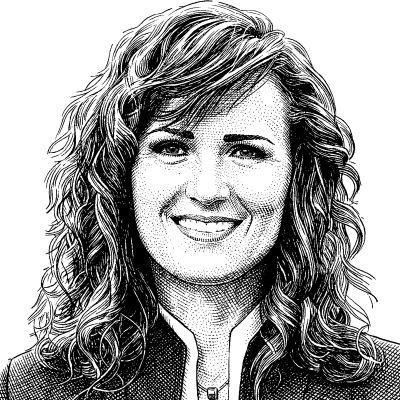
Ally Isom is a business and community leader with a diverse background spanning public service, corporate strategy, and political engagement. Currently a Republican candidate for the United States Senate in Utah, she brings a wealth of experience to the political arena. Isom has demonstrated a commitment to fostering authentic human connection, a theme echoed throughout her work and personal interests. This dedication aligns with the Mormon Transhumanist Association’s focus on leveraging technology to enhance human potential and spiritual growth. Prior to her senatorial bid, Isom held prominent positions in Utah state government, including Deputy Chief of Staff and spokesperson for Governor Gary Herbert. She also served in public affairs, communication, and branding roles within the Church of Jesus Christ of Latter-day Saints. Her career transitioned into the private sector, where she served as Chief Strategy and Marketing Officer and, eventually, acting executive officer for Evok Nano, a company focused on innovation and technology. Isom’s presentation at MTAConf 2022 highlighted the vital importance of human connection, particularly in the wake of the COVID-19 pandemic. She explored the neuroscience behind connection, emphasizing its role in strengthening the immune system, promoting mental and emotional well-being, and fostering spiritual growth. This perspective resonates with transhumanist ideals of enhancing human capabilities and experiences through technology and community engagement. Outside of her professional life, Isom enjoys a variety of activities, including riding, hiking, cooking, and indulging in her favorite dish, mole poblano, preferably enjoyed on a beach with a good book. She is married to Eric and they have four children and five grandchildren.
Quotations (10)

 Gordon B. Hinckley
 Brigham Young
 B. H. Roberts