Authors

Antoine de Saint-Exupéry
Antoine de Saint-Exupéry (1900–1944) was a French aviator, writer, and moral philosopher whose work stands among the most enduring explorations of human meaning, courage, and the relationship between solitude and community in the twentieth century. Born into an aristocratic family in Lyon, he pursued aviation at a time when flight was still a frontier art, serving as a commercial and military pilot across Europe, North Africa, and South America. His cockpit became a laboratory for existential reflection, and the sky a medium through which he interrogated what it means to be fully human. Saint-Exupéry’s literary output is inseparable from his vocation as a pilot. Night Flight (1931), Wind, Sand and Stars (1939), and Flight to Arras (1942) drew directly from his aerial experience to trace the moral dimensions of responsibility, sacrifice, and fraternity under risk. The Little Prince (1943), written during wartime exile in New York, became one of the best-selling and most-translated books in history—a deceptively simple fable about perception, love, and the invisible bonds that give life its weight. He disappeared on a reconnaissance mission over the Mediterranean in July 1944, never to return; the mystery of his end deepened the mythic quality already surrounding his life. Saint-Exupéry’s lasting significance lies in his insistence that technology—the airplane above all—does not diminish humanity but can, rightly inhabited, enlarge it. He understood flight not as escape from the earth but as a vantage from which human solidarity becomes visible in a new way. His writing returns persistently to themes of creative discipline, the cultivation of inner life, the obligation of the living toward the lost, and the kind of love that sees what is essential rather than what is merely present. These concerns resonate naturally with the Mormon Transhumanist conviction that the proper work of intelligence and technology is to deepen relationship, expand moral vision, and orient human striving toward the fullest possible flourishing of every soul.

Ben Romney is a senior software engineer at Qualtrics. Outside of his professional career, he pursues his interest in moral philosophy. He presented at the MTAConf 2020 on his paper, “A Gradient Rubric for Human and Non-Human Utility,” available at bromney.com/ethicspaper.pdf. Romney’s work focuses on expanding ethical considerations beyond the human species to encompass animals, plants, and potentially robots, all in service of maximizing global happiness. He advocates for a utilitarian approach, proposing a gradient rubric to quantify various life forms’ capacity for happiness, aiming to prioritize efforts to improve the world for all sentient beings.

Connie Packer has previously served as the Vice President of the Mormon Transhumanist Association. As a leader within the MTA, she played a key role in guiding the Association’s activities and affairs, focusing on the publication of quality content related to transhumanism and Mormon Transhumanism. Packer helped to facilitate important processes like board member elections and charitable endeavors through initiatives like Kiva Micro Loans, which have collectively funded hundreds of loans to help lift people, improve their conditions, and help them reach their goals.
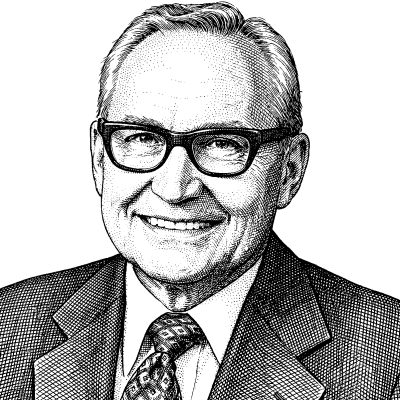
L. Tom Perry
Lowell Tom Perry (5 August 1922 – 30 May 2015) was an American businessman and religious leader who served as a member of the Quorum of the Twelve Apostles of The Church of Jesus Christ of Latter-day Saints for over forty years. Born in Logan, Utah, to a father who served as bishop throughout Perry’s childhood, he developed an early grounding in Church service. From 1942 to 1944, Perry served a mission in the Northern States Mission headquartered in Chicago. After returning, he joined the United States Marine Corps and was assigned to the 2nd Marine Division, landing on Saipan where he spent about a year and helped construct an LDS chapel on the island. He was among the American troops sent to occupy Japan after the war. Perry graduated from Utah State Agricultural College (now Utah State University) in 1949 with a bachelor’s degree in finance, having served as president of the university’s Associated Students. His professional career was spent in retail, climbing the corporate ladder to become a top executive in department stores across Idaho, California, New York, and Massachusetts before entering full-time Church service. Called as an Assistant to the Quorum of the Twelve Apostles in 1972, Perry was sustained as an Apostle on April 6, 1974, and ordained five days later. He married Virginia C. Lee in 1947; she died of cancer in December 1974. He remarried Barbara Dayton in 1976. Known for his optimism and big smile, Perry served faithfully until his death from thyroid cancer in 2015. His decades of service exemplified the integration of professional excellence with lifelong religious commitment.

Melissa Wei-Tsing Inouye
Melissa Wei-Tsing Inouye was a scholar and historian who explored the intersection of religion and culture in Greater China, global Mormonism, and 20th-century Chinese Christianity. She received her PhD in East Asian languages and civilizations from Harvard University in 2011. Her major work, China and the True Jesus: Charisma and Organization in a Chinese Christian Church (Oxford University Press, 2019), provides a comprehensive history of the True Jesus Church and charismatic Christian movements in modern China. In addition to her academic research, Inouye was a prolific writer and essayist known for her candid reflections on faith, motherhood, and the global church. Her memoir, Crossings: A Bald Asian American Latter-day Saint Woman Scholar’s Ventures through Life, Death, Cancer, and Motherhood (2019), and her subsequent book, Sacred Struggle: Seeking Christ on the Path of Most Resistance (2023), examined the role of suffering and community within the Latter-day Saint experience. She was also a founding member of the Global Mormon Studies research network and served on the advisory board of the Neal A. Maxwell Institute for Religious Scholarship. Inouye passed away on April 23, 2024, at the age of 44, following a seven-year battle with colon cancer. She is remembered for her work bridging Chinese history, global religious movements, and transhumanist ideals, as well as for her commitment to fostering a more inclusive and globally-aware religious community.

Neal A. Maxwell
Neal Ash Maxwell (1926–2004) was a member of the Quorum of the Twelve Apostles of The Church of Jesus Christ of Latter-day Saints from 1981 until his death. He was known for his eloquent speaking and writing style. Born in Salt Lake City, Maxwell served in World War II and later earned a PhD in political science. He served as Commissioner of the Church Educational System and was Executive Vice President of the University of Utah before his call to the Seventy and later the Twelve. His teachings often explored the tension between absolute truth and fraternal love, drawing from diverse sources including Thomas Merton and Mahatma Gandhi. He taught that love is the only answer to the challenge of possessing truth while remaining fraternal with others who see differently.

Randall Paul is a theorist deeply engaged with questions of value alignment, particularly within the context of Mormon cosmology and transhumanist thought. His work explores the nature of intelligence, divine purpose, and eternal sociality, drawing on Latter-day Saint theology while also critically examining its relationship with traditional Christian influences. Paul’s perspective is rooted in the belief that intelligences have always existed as individual, self-aware entities with infinite memories and a capacity for dynamic social interaction. Paul challenges conventional interpretations of the glory of God, positing that it lies not merely in intelligence itself, but in the capacity of intelligences to freely love and interact with one another. He suggests that our current mortal existence is an experiment designed to improve our ability to trust and love, preparing us for a more harmonious eternal life. He frames the Mormon Transhumanist Association (MTA) as a microcosm of this process, a space for superhuman entities—or gods—to learn how to better interact and foster mutual love. In his explorations, Paul questions the uncritical embrace of transhumanist ideals of longevity and enhanced capacities, arguing that the fundamental challenge lies in navigating the complexities of freedom and mutual influence within eternal societies. He emphasizes the importance of freely given and received love as the most valuable—and most scarce—resource in the cosmos, suggesting that intelligences exist in societies to expand the possibilities for these experiences. His aim is to provoke reflection on the deeper purposes of existence and the nature of divine love in a transhuman future.

Spencer Cannon is a second-generation Mormon transhumanist, raised with these ideals from a young age by his parents—including his father who has presented at Mormon Transhumanist Association (MTA) conferences. His upbringing has fostered a unique perspective where his relationship to religion is very scientific, and his relationship to science is very religious. Spencer first attended an MTA meetup around the age of 13 or 14 and has found the community and intellectual banter particularly valuable for expanding his mind. Outside of his engagement with the MTA, Spencer is involved in the performing arts. He and his wife are both theater performers, working as actors. This involvement has provided him a unique perspective on the potential impact of emerging technologies like AI, particularly regarding anxieties within the artistic community. Spencer’s transhumanist views drive him to engage in the cultural discourse surrounding technological advancements to emphasize personal responsibility in building a beautiful future where technology can raise one another up, making the world more equitable, safer, smarter, kinder, more loving.

Thomas S. Monson
Thomas S. Monson (1927–2018) was the sixteenth president of The Church of Jesus Christ of Latter-day Saints and one of the most widely beloved pastoral figures in modern Mormon history. Born on August 21, 1927, in Salt Lake City, Utah, he studied at the University of Utah and earned an MBA from Brigham Young University before embarking on a career in publishing management at the Deseret News . Ordained an apostle at the remarkably young age of thirty-six in 1963, he served in the First Presidency under three successive church presidents before succeeding Gordon B. Hinckley as church president on February 3, 2008—a position he held until his death on January 2, 2018. Monson’s career was marked by breadth of institutional service and unusual constancy of personal pastoral attention. He chaired the Church Educational System’s Board of Trustees, served on the National Executive Board of Scouting America, and was appointed by President Ronald Reagan to the U.S. President’s Task Force for Private Sector Initiatives. He was a prolific author and speaker, known for a gift of memory that allowed him to recall individuals by name decades after meeting them. He received honorary doctorates from multiple institutions and the highest awards of both Scouting America and the World Organization of the Scout Movement. What distinguished Monson most was the integration he modeled between grand institutional responsibility and intimate human attention. His ministry was relentlessly oriented toward individuals: the widow, the sick, the forgotten. In one characteristic formulation, he described the faithful as literally becoming “saviors on Mount Zion”—participants in the Atonement through proxy and service, extending redemptive work to those who cannot accomplish it for themselves. That vision of distributed, participatory salvation, in which ordinary human beings become instruments of divine transformation in each other’s lives, animates a theology in which human potential and divine purpose are inseparable. Monson’s legacy is not primarily doctrinal elaboration but enacted conviction: that compassion, attention, and faithful action are among the most powerful technologies a human being can bring to bear on the world.
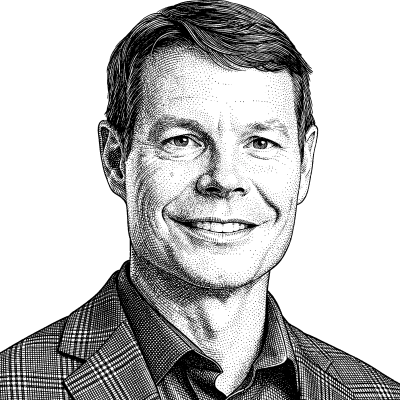
Varden Hadfield is a speaker and professional with a deep interest in the intersection of Mormonism and Transhumanism, particularly focusing on the role of Jesus Christ and the concept of grace. He presented at the MTA (Mormon Transhumanist Association) conference, exploring the perceived differences and potential merging points between these seemingly disparate fields. Since 1999, Varden has worked in major gifts for LDS Philanthropies at BYU. Prior to that, he contributed to the American Lung Association of Colorado and the Research Information Division of The Church of Jesus Christ of Latter-day Saints. His educational background includes a Bachelor of Science degree in Sociology from BYU and a Master of Arts degree in Philanthropic Studies from Indiana University. A convert to the LDS Church multiple times throughout his life, Varden served a mission in Detroit and is currently a scoutmaster in Orem, Utah. He is married with six children and enjoys a variety of hobbies including backpacking, dancing, fiddling, and woodworking. He also finds personal satisfaction in running.