Videos

Showing 1–10 of 24
Incarnation: Some Theological-Historical Notes
15:10

Rachael Givens Johnson

Incarnation: Some Theological-Historical Notes

In an age of seemingly endless possibilities for modifying our bodies, this presentation explores the value of limited embodiment, arguing that constraints and limitations may be prerequisites for cultivating joy, freedom, and connection rather than obstacles to overcome. Drawing on Brian Kershisnik’s painting "Dancing on a Very Small Island," the speaker examines how recent cognitive science has undergone an "embodied makeover," recognizing intelligence as embodied, embedded, enacted, and extended. The talk raises theological questions from the Latter-day Saint tradition—particularly Joseph Smith’s vision of resurrection as precise bodily restoration—suggesting that progress might paradoxically occur through condescension, sacrifice, and abnegation rather than purely through increasing autonomy and agency.
"Raise Up Seed to Thy Brother"- The Ideologically Levirate Marriage of Joseph, Emma, & Alvin Smith
19:14

Don Bradley

"Raise Up Seed to Thy Brother"- The Ideologically Levirate Marriage of Joseph, Emma, & Alvin Smith

This presentation proposes that Joseph Smith believed his firstborn son Alvin held special rights to the golden plates because Joseph saw himself as fulfilling the biblical levirate law—raising up seed to his deceased brother Alvin, who had been present when Moroni first appeared and died shortly thereafter. The speaker uses abductive reasoning to argue that Joseph's marriage to Emma was itself an adaptation of this ancient practice, making their union spiritually polygamous from the start. This hypothesis offers explanatory power for several puzzles in early Mormon history, including Joseph's outsized expectations for his firstborn son, his need to marry Emma before obtaining the plates, and the later development of proxy work for the dead and plural marriage.

The God of Transcending Narratives
19:47

Ben Blair

The God of Transcending Narratives

This presentation examines how communal narratives function in religious communities, arguing that God consistently bursts self-assured narratives rather than confirming them—as seen in Moses’s life being repeatedly disrupted from Egyptian prince to fugitive to prophet. The speaker critiques both the LDS Church’s institutional narrative and ex-Mormon counter-narratives for missing the "sought goods" that justify any narrative, suggesting that disputes over historical and doctrinal claims miss the more essential question of whether these structures actually deliver salvation. Mormon transhumanism offers a framework where religious aspirations like immortality and eternal life need not remain abstract mysteries but can become serious goals with practical benchmarks, transforming narratives from self-justifying stories into accountable claims measured against real outcomes.

Caring for Creation: an LDS Perspective
23:42

George Handley

Caring for Creation: an LDS Perspective

George Handley outlines ten distinctive LDS doctrines that provide theological resources for environmental stewardship, including the belief that Earth is humanity's intended eternal home rather than a mere way station, that bodies and sensory experience are to be treasured, and that all life forms were created spiritually before physically and are entitled to "multiply and replenish." He emphasizes that LDS teachings on creation from unorganized matter (rather than ex nihilo) imply reverence for natural processes, while scriptures like the Word of Wisdom and the Law of Consecration mandate eating locally, consuming sparingly, and redistributing resources to the poor. Handley argues that the Anthropocene demands Latter-day Saints bring together both scientific literacy and religious values to adequately respond to environmental challenges.

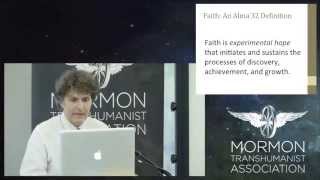
An Experiment Upon the Word
20:13

Don Bradley

An Experiment Upon the Word

Don Bradley analyzes Alma 32 as a post-biblical, post-Enlightenment reformulation of faith that draws on Jesus's parables while transforming their meaning through scientific language. He argues that whereas the New Testament presents "taking no thought" favorably as trust in God's providence, the Book of Mormon redeploys this phrase negatively—faith requires actively "arousing faculties" and conducting "experiments" rather than passive belief. Bradley identifies distinctly scientific vocabulary throughout Alma's discourse (experiment, dormant, particle, discernible) and proposes a working definition: "faith is experimental hope that initiates and sustains the processes of discovery, achievement, and growth." He suggests Latter-day Saints should learn to engage scripture through midrash—the Jewish tradition of creatively rewriting narratives to apply them to contemporary life.