zion
Articles (8)
The Cyborg of Temple Square
Lincoln Cannon's short story follows Eli, a cyborg near Temple Square, navigating faith, identity, and technology in a near-future Salt Lake City.
2018 MTA Humanitarian Service Aim: Homeless Youth
The Mormon Transhumanist Association announces its 2018 humanitarian service aim—supporting homeless youth through discipleship and community action.
10 Things I Love About Mormon Heaven
Lincoln Cannon shares ten things he loves about how the Mormon authoritative tradition presents heaven—from eternal progression to the nature of God.
MTA Service Project Provides Meals to Those in Need
MTA’s Provo, Utah chapter completes a community service project delivering over 100 meals to those in need in March 2017.
Bridging Free Will and the Knowledge of God
Quantum-inspired thinking reconciles free will with God's omniscience, replacing deterministic paradoxes with a dynamic probability wave of possibilities.
Authors (20)

Allen Hansen was raised in northern Israel within the LDS faith, an experience that has profoundly shaped his academic and personal interests. His interdisciplinary scholarship spans a wide range of subjects, reflecting his diverse background and intellectual curiosity. Hansen’s research interests are particularly focused on the intersection of Mormonism, Judaism, and Biblical studies, with a keen interest in late antiquity. He also has scholarly interests in journalism, as well as Eastern European and Middle Eastern studies. This breadth allows him to explore unique connections between seemingly disparate fields. Hansen also brings a practical dimension to his scholarship through interests in business management and positive psychology, both of which he frames through the lens of Zion — exploring how organizational design and individual well-being might serve a larger communal vision. This thread of his work aligns naturally with the Mormon Transhumanist Association’s broader project of bridging faith and posthumanism.

Bernardo Vicente is an economist and researcher deeply interested in the intersection of economics, technology, and culture. He holds a degree in business administration and accounting from Lisbon Polytechnic Institute, along with a specialization in business analytics. Driven by a desire to leverage technology for societal betterment, he has developed an innovative economic theory known as “Harberger Georgism.” Harberger Georgism builds upon the principles of Georgism and Harberger taxation, exploring how Web3 technologies can sustainably develop the digital era and enhance the physical world. This theory aims to potentiate development in the physical world using economic strategies. Currently, Bernardo volunteers as a researcher at the Ethereum Foundation, contributing his expertise to the advancement of blockchain technology. His work explores the teleology and utility of emerging technologies like NFTs and the metaverse, aiming to ensure their positive impact on society.

Connie Packer has previously served as the Vice President of the Mormon Transhumanist Association. As a leader within the MTA, she played a key role in guiding the Association’s activities and affairs, focusing on the publication of quality content related to transhumanism and Mormon Transhumanism. Packer helped to facilitate important processes like board member elections and charitable endeavors through initiatives like Kiva Micro Loans, which have collectively funded hundreds of loans to help lift people, improve their conditions, and help them reach their goals.
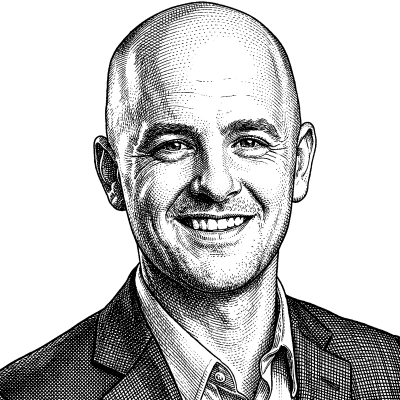
Evan McMullin
Evan McMullin (b. 1976) is an American politician, intelligence officer, and civic leader whose career has been defined by a commitment to democratic principles, moral courage, and service to the common good. Born in Provo, Utah, and a member of The Church of Jesus Christ of Latter-day Saints, McMullin served as a clandestine operations officer with the CIA for over a decade, working in counter-terrorism and national security across the Middle East and North Africa. He later served as Chief Policy Director for the House Republican Conference before launching an independent presidential campaign in 2016, earning 21% of the vote in Utah and drawing national attention as a principled alternative to the major-party candidates. McMullin’s public life has centered on the defense of constitutional democracy and human dignity against authoritarian impulses. In 2021, he co-founded the anti-authoritarian organization Stand Up Republic, and in 2022 he ran as an independent candidate for U.S. Senate in Utah, earning broad cross-partisan support. His advocacy consistently draws on moral foundations rooted in his faith, framing democratic participation and the protection of individual rights as ethical imperatives rather than merely political ones. McMullin’s career reflects a conviction that intelligence, courage, and moral clarity are inseparable—that the work of protecting human dignity requires both rigorous discernment and principled action. His willingness to challenge concentrated power and defend pluralistic institutions resonates with the Mormon transhumanist commitment to decentralized flourishing and the notion that genuine community requires consent, accountability, and the active participation of morally engaged individuals. In an era when technology increasingly mediates political power, McMullin’s insistence on transparency and ethical responsibility points toward the kind of stewardship that responsible technological progress demands.

Ezra Taft Benson
Ezra Taft Benson (1899–1994) was an American religious leader, statesman, and farmer who served as the thirteenth President of The Church of Jesus Christ of Latter-day Saints (1985–1994) and as U.S. Secretary of Agriculture under President Dwight D. Eisenhower (1953–1961). Born in Whitney, Idaho, Benson grew up on a family farm and carried a lifelong commitment to agrarian values, self-reliance, and public service. He served as a mission president in the British Isles and later as President of the European Mission following World War II, overseeing significant humanitarian and spiritual reconstruction efforts. Benson’s public career spanned both ecclesiastical and governmental spheres with unusual distinction. As Secretary of Agriculture, he advocated for free-market principles and became one of the most prominent Latter-day Saint voices in twentieth-century American political life. Within the Church, he served as President of the Quorum of the Twelve Apostles for nearly two decades before ascending to the presidency, during which he placed particular emphasis on the Book of Mormon as a keystone of faith and a guide for modern life. Benson held a deeply integrative view of truth, insisting that science and revealed religion are not adversaries but complementary paths toward the same reality. “Truth is truth, whether labeled science or religion,” he affirmed—a conviction that frames inquiry and faith as close allies. He also taught that God works through human beings, especially those of good will, to accomplish divine purposes across history. These commitments—to the unity of truth, to divine collaboration with mortal effort, and to the ongoing work of human progress—resonate naturally with the Mormon transhumanist conviction that technology, science, and religious aspiration are all expressions of a single trajectory toward greater intelligence, creativity, and Godhood.