rights of women
Articles (8)
The Story of Stolen CryptoPunk V1 1234
Lincoln Cannon recounts how CryptoPunk V1 1234 was stolen from him in a scam—sharing a cautionary tale about NFT security and digital asset vulnerability.
Humanity+ and the Transhumanist Declaration
An elaboration of the Transhumanist Declaration—one of MTA's two official position documents—with commentary on each of its eight core points.
Web3 and the Promise of Decentralized Governance
Carl Youngblood at MTAConf 2022 explores Web3 as a path to decentralized governance—how blockchain technology could balance power and enable collective agency.
Why Decentralization Is Essential to Human Thriving
Lincoln Cannon argues decentralizing power is essential to a thriving human—or superhuman—future in an age of accelerating technology.
Transhumanist Holy Week: Holy Monday
Caleb Jones explores Holy Monday's themes of anointing and sacred service—illuminating a transhumanist vision of ordaining our technologies for Christlike purposes.
Authors (9)

Ada Lovelace
Ada Lovelace (1815–1852) was a British mathematician and writer widely regarded as the world’s first computer programmer, a visionary who glimpsed the computational future nearly a century before the machines that would realize it. Born Augusta Ada Byron, the only legitimate child of the poet Lord Byron, Lovelace was raised by her mother Anne Isabella Milbanke, who deliberately cultivated in her a rigorous education in mathematics and science—partly, it is said, to guard against the romantic temperament of her absent father. That tension between poetic imagination and mathematical precision became her defining characteristic rather than her contradiction. Introduced to Charles Babbage in 1833, she became captivated by his proposed Analytical Engine. In 1843 she translated Luigi Menabrea’s account of the Engine from French, appending her own notes—nearly three times the length of the original—that described, among other things, an algorithm for computing Bernoulli numbers. This is now recognized as the first published algorithm intended for execution by a machine. Lovelace’s most striking contribution was not the algorithm itself but the conceptual leap it represented. She understood that the Analytical Engine could manipulate symbols according to rules, not merely numbers—that it was, in principle, a general-purpose engine of thought. She also recognized its limits: the machine, she wrote, could only do what we know how to order it to perform. That sober, precise boundary-drawing between tool and mind was itself a kind of philosophical precision that still shapes how we think about artificial intelligence. Her imagination ranged freely across what such an engine might compose, calculate, and create, anticipating by more than a century the questions that animate the intersection of computation and human cognition. From a Mormon transhumanist sensibility, Lovelace’s life embodies the conviction that intelligence—cultivated, disciplined, and applied to the highest tools available—is itself a sacred work. Her synthesis of mathematical rigor and imaginative reach, her insistence that the engines of computation might serve art and music as readily as arithmetic, resonates with a theology that treats creativity and intelligence as attributes of divinity in which humans genuinely participate. She died at thirty-six, leaving a legacy that took more than a century to be fully recognized—a reminder that the seeds of transformation are often sown long before the harvest is visible.

Chelsea Shields is a biocultural anthropologist, TED Fellow, and researcher whose work explores the evolutionary foundations of religious belief and the physiological power of social connection. Raised in a Latter-day Saint family in Utah, she went on to earn dual PhDs in biological and cultural anthropology from Boston University in 2017. Shields’ academic research focuses on the concept of social susceptibility—how human bodies have evolved to be deeply responsive to social interaction and meaning-making. Over the course of a decade, she conducted extensive fieldwork with Asante indigenous healers in central Ghana, studying the evolution and elicitation of placebo and nocebo effects in ritual healing ceremonies. Her dissertation, “The Social Life of Placebos,” argues that grounding human behavior in social adaptations reveals important discoveries across placebo studies, religion, pain, stress, and empathy. She presented at the 2014 Conference of the Mormon Transhumanist Association on the evolutionary psychology of religion, examining how religious belief functions as a powerful biocultural force—shaping neural development, social bonding, and coping mechanisms—and how understanding these processes is essential for anyone thinking seriously about the future of the human brain and body. Shields is a three-time TED speaker, an advocate for gender equality within religious communities, and founder of Brandthropologie Agency, where she applies her research in social susceptibility and nonverbal communication to brand strategy and consumer research. She lives in Salt Lake City with her family.

Cynthia Bailey is a lecturer in computer science at Stanford University. A dedicated educator, her research focuses on best practices in computer science education, with a particular emphasis on promoting inclusiveness in the tech industry. She is known for her thoughtful and well-researched contributions to discussions surrounding women in technology and the queer community. Beyond her work in computer science, Cynthia Bailey has been actively engaged in exploring the intersection of Mormonism and modern life. For a time she blogged about Mormon life on By Common Consent , providing insights and perspectives on faith in a contemporary context. Her presentation at the Sunstone West 2016 highlighted her interest in bringing together her professional expertise and her engagement with Mormon themes, specifically addressing the underrepresentation of women in technology within the Mormon community and exploring the potential of gospel principles in empowering girls’ coding initiatives. Cynthia resides in Palo Alto. She is esteemed for her quiet dedication to life-altering ideas, community building, and insightful contributions to discussions related to technology, social issues, and faith.

Elvira S. Barney
Elvira Stevens Barney (1832–1909) was a physician, missionary, and advocate for women’s rights in early Utah. Born in Gerry, New York, to a merchant father and schoolteacher mother, she was baptized in 1844 and arrived in the Salt Lake Valley with the Brigham Young pioneer company in 1848. In 1851, Barney was called on a mission to the Sandwich Islands (Hawaii), where she taught the gospel and basic education while learning the Hawaiian language. She later pursued her long-held dream of becoming a doctor, studying at Wheaton College in Illinois and serving a mission to Philadelphia, where she continued her medical studies. She graduated as a doctor of medicine in 1883. Barney practiced obstetrics and taught medicine classes to women in Utah. She served as a visiting physician at Deseret Hospital and spoke at mass meetings defending Latter-day Saint women’s voting rights. Active in the Utah Woman Suffrage Association, she also authored The Stevens Genealogy , published in 1907.
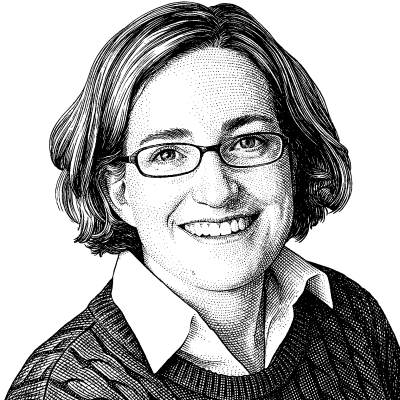
Jessica Finnigan is a scholar and project consultant operating at the intersection of social systems, technological innovation, and organizational health. Originally recognized for her academic work at the University of Cambridge and King’s College London, Jessica’s research explored how religious frameworks and technological access impact human progress in the developing world. Today, she translates those high-level insights into high-impact results as a Fractional Project Manager and the founder of Project Startup LLC. Jessica’s research highlights the critical, yet often overlooked, role of technology in alleviating suffering and fostering sustainable development in the developing world. Drawing upon her experience working with international databases focused on women’s issues, she emphasizes the need for culturally sensitive and nuanced approaches to technological implementation, advocating for solutions that acknowledge the complexities and tensions inherent in diverse cultural contexts. Jessica bridges the gap between technological innovation and the realities of the developing world, seeking to understand and address the “Great Divide” between technological access and implementation in developed and developing nations. Her work emphasizes the importance of considering sustainable food security and other fundamental needs when introducing technology into communities facing significant challenges.
Quotations (3)
 Elicia A. Grist
 Martha H. TingeyElvira S. Barney