Authors
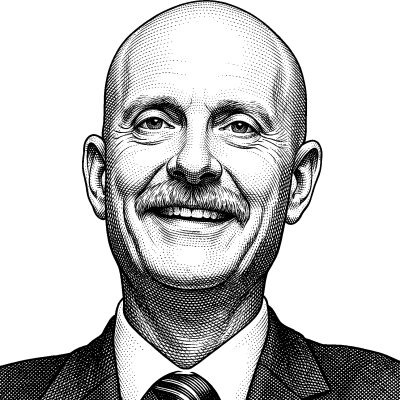
Robert Walden Kurtz is a Seventh-day Adventist minister, psychologist, and advocate for the convergence of religious faith and transhumanist aspiration. He holds a Master of Divinity from Andrews University (1990) and a Ph.D. in Psychology from Saybrook University (2022), and has served in roles spanning pastoral ministry, law enforcement, and academia—including service as a dean and professor of philosophy. Kurtz is perhaps best known within the life-extension and transhumanist communities for his insightful reflections on the intersections of technology, health, and Adventist theology. At the Religion and Transhumanism 2014 Conference, he delivered a compelling synthesis of his faith tradition’s history and transhumanist philosophy. Kurtz draws a poignant parallel between the origins of Adventism—born out of the “Great Disappointment” of 1844, when early believers deeply mourned the delay of their expected spiritual deliverance—and the overarching transhumanist hope of escaping death through technological advancement. Central to his thesis is the observation that Adventism’s foundational emphasis on health and longevity aligns naturally with transhumanist goals. He points to his denomination’s legacy of medical innovation—including pioneering smoking cessation programs, advancing proton therapy, and exploring xenotransplantation—as practical manifestations of the drive to push back against human biological limits. In his 2022 article, Transhumanism and the Future of Humanistic Psychology , Kurtz expands on these themes, asserting that humanity is no longer viewed simply as an isolated pinnacle being on Earth, but rather as an entity embedded in nature while inextricably intertwined with the technology its culture creates. While Kurtz acknowledges that not all members of his faith tradition share his enthusiasm for radical technological integration—often confronting skepticism regarding the blending of machinery with the human body—he remains a steadfast advocate for progress, dialogue, and civil liberty. He consistently calls on believers from every background to keep religious agendas out of government and champions the strict separation of church and state. Ultimately, Kurtz envisions a collaborative destiny for humanity, urging both secularists and the faithful to work together toward a future where we might “argue as immortals rather than die as rivals.”
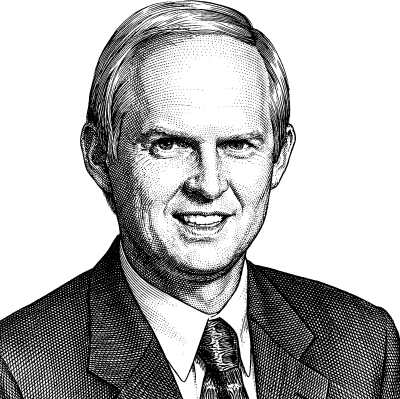
Robin Hanson is an economist and researcher known for his work on topics ranging from prediction markets and signaling theory to the potential societal impacts of future technologies, particularly artificial intelligence. His work often involves applying economic principles to understand and forecast long-term trends in growth and technological development. He is known for taking a ‘big picture’ approach to history, studying the history of the human economy over long timescales. Hanson’s presentations often explore the possibility of dramatic future economic transformations driven by advances in AI and automation. He examines historical patterns of exponential growth, suggesting that the rate of growth is accelerating, and that this acceleration could lead to massive changes in the economy. He believes artificial intelligence represents a major possibility. He was formerly an AI researcher and asks AI researchers about how far we have come in the last 20 years. His analyses provoke discussions about the future of work, the nature of intelligence, and the potential consequences of technological singularity.

Rosalynde Welch is a scholar of English literature, focusing on the intersection of private conscience and early modern literature. She holds degrees in English literature from Brigham Young University and the University of California, San Diego, where she completed her dissertation. Her academic interests also extend to Mormon literature and philosophy, reflecting a broader engagement with faith and intellectual inquiry. Beyond academia, Welch contributes to public discourse as a writer on interreligious issues for the *Saint Louis Post-Dispatch* and as a blogger on Mormon topics at timesandseasons.org. She also serves as the managing editor of *The Mormon Review*, demonstrating a commitment to fostering critical conversation within and beyond the Mormon community. During her presentation at the Mormon Transhumanist Association, Welch presented “A Material Girl in a Material World: Mormonism, Materialism, and Gender.” The talk, and much of her work, navigates complex terrains of gender, religion, and philosophy. Welch has noted her interest in feminist theory and evolutionary psychology.
Ross Richey is the owner of FTL Strategies, a software company specializing in rapid application development and lean software methodology. With a focus on efficient and agile software solutions, Ross leads his company in delivering impactful results for clients. Beyond his professional endeavors, Ross is an active commentator on the intersection of technology, religion, and politics. He maintains a blog and podcast where he shares his perspectives on these diverse topics, engaging with a wide audience on complex and thought-provoking issues. His presentation at the MTA conference reflects this broad range of interests, particularly his concern for AI risk and how it connects to the Plan of Salvation. Ross resides in Salt Lake City with his wife and four children. He uses his platform to explore the challenges of emerging technology and how principles of the Plan of Salvation might apply to the future.
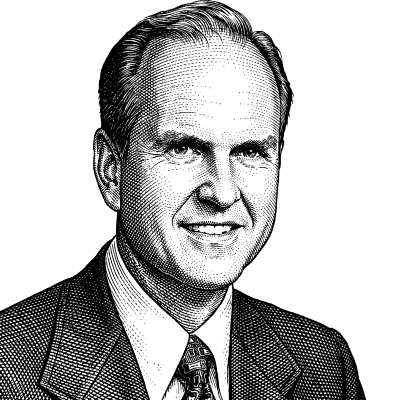
Russell M. Nelson
Russell Marion Nelson (1924-2025) is an American religious leader and former surgeon who served as the 17th President of The Church of Jesus Christ of Latter-day Saints. Before his calling to the Quorum of the Twelve, Nelson was a pioneering heart surgeon who performed Utah’s first open-heart surgery using a heart-lung machine. He earned his MD from the University of Utah and PhD from the University of Minnesota. He contributed to the development of cardiopulmonary bypass surgery. His teachings emphasize learning to listen to others, including those of diverse religious or political perspectives, promoting tolerance and understanding. He has taught that the wise listen to learn from neighbors, showing that spiritual growth includes openness to others’ experiences and sentiments.
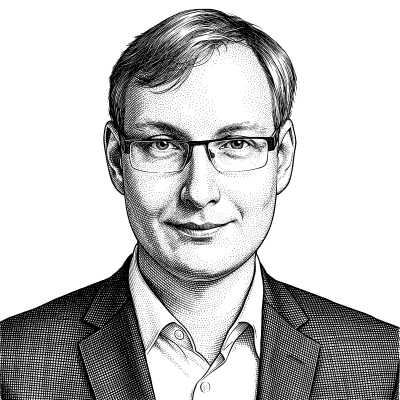
Samo Burja
Samo Burja is a Slovenian-American social scientist and entrepreneur best known for Great Founder Theory, an account of how institutions rise, decay, and occasionally renew themselves through the work of a small number of people who genuinely understand how those institutions function. He is the founder and president of Bismarck Analysis, a research firm that studies the hidden mechanics of governments, companies, and other organizations, and a contributing editor at Palladium Magazine, where much of his writing on civilization, elite competence, and institutional knowledge first appeared. Burja’s central distinction, between “live players” who actively grasp and can rebuild the systems they lead and “dead players” who merely execute inherited scripts without knowing why they work, has become a widely cited lens for understanding why organizations that look stable on paper can hollow out from within. He argues that formal structures, laws, and credentials often outlast the tacit, living knowledge that originally made them work, so that a society can appear intact while quietly losing the capacity to renew itself. Much of his public work, through essays, long-form interviews, and his Bismarck Brief newsletter, traces this pattern across empires, corporations, and scientific fields, asking what it takes for a civilization not merely to persist but to keep producing people capable of founding anew. That question of renewal through genuine understanding, rather than habit or formality, resonates with a Mormon Transhumanist conviction that progression requires active, informed stewardship rather than passive inheritance. Burja writes from a secular and institutional vantage rather than a theological one, but his insistence that civilizations survive only through people who truly comprehend and continue the work of creation offers a striking, if independently arrived at, echo of the call to be active participants in an ongoing restoration rather than custodians of a finished system.
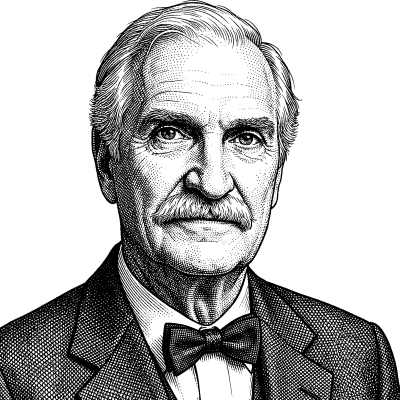
Samuel Richards
Samuel Whitney Richards (1824–1909) was an early Latter-day Saint leader who served missions to Great Britain and held various church callings throughout his life. His contributions to the Millennial Star and other publications explored the nature of prophets and revelation. He taught about the continuity of prophetic gifts and the importance of personal spiritual experience in understanding divine truth. Richards was part of the generation that helped establish the Church in the Mountain West and contributed to the theological development of Latter-day Saint thought on ongoing revelation.
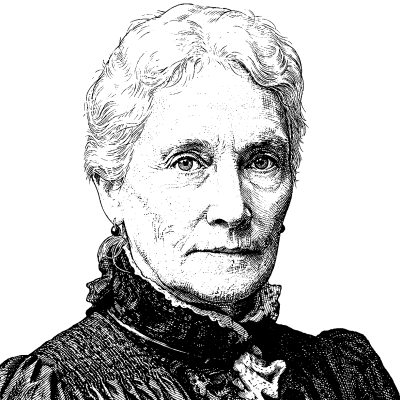
Sarah M. Kimball
Sarah Melissa Granger Kimball (1818–1898) was a pioneer advocate for women’s rights and an early leader in the Relief Society. Born in Phelps, New York, to a prominent family, she joined the Church in 1833 at age fifteen. She was one of twenty-three women known to have attended Joseph Smith’s School of the Prophets in Kirtland. In Nauvoo, Kimball organized a charitable sewing society that evolved into the Relief Society when it was officially organized on March 17, 1842. She believed this founding marked the beginning of a new era of opportunity for women worldwide. After crossing the plains to Salt Lake City in 1851, driving her own team, she was appointed Relief Society president of the Fifteenth Ward. Kimball served as ward Relief Society president for forty years while also holding positions as general secretary of the Relief Society and president of the Utah Woman Suffrage Association. Her gravestone reads “Strong-Minded and Warm-Hearted,” fitting tribute to a woman who declared that “education and agitation are our best weapons of warfare” in advancing women’s rights.
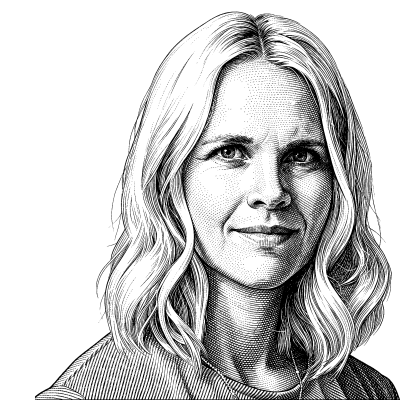
Sarah Wiley is the VP of Product Development at GenesisBlock, a Utah-based startup focused on building a consumer bank powered by Web3 technologies. With over 20 years of experience as a software engineer, Sarah brings a wealth of knowledge to the burgeoning field of decentralized finance. Prior to joining GenesisBlock, Sarah spent a significant portion of her career at Intuit. Three years ago, she discovered blockchain, decentralized development, and cryptocurrency, quickly becoming fascinated by their potential to revolutionize the financial landscape. She believes in the promise of DeFi to create censorship-resistant, permissionless, and peer-to-peer systems. At GenesisBlock, Sarah is dedicated to making DeFi accessible to everyone, addressing the current complexities and risks associated with navigating the decentralized finance world. She and the GenesisBlock team actively advise and influence legislation and regulation, build public awareness, and support projects that align with their values of democratic governance, transparency, and trustless transactions. She also enjoys mountain biking and hiking in the Wasatch Mountains. As a participant at the MTA (Mormon Transhumanist Association) conference, Sarah brings a unique perspective on the intersection of technology, faith, and the future of finance. She is particularly interested in how decentralized technologies can create systems that reflect shared values and enable a more equitable and efficient alignment of resources.
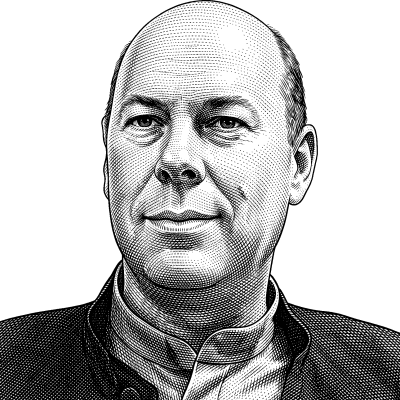
Scott Howe is a senior systems engineer at NASA Jet Propulsion Laboratory (JPL), where he is a member of the Constellation Architecture Team for the Lunar Outpost program. He brings a unique blend of architectural and engineering expertise to his work, having previously practiced as a registered architect in both California and Oregon. He spent five years with BWLC Architects in Rancho Cucamonga, California, and ten years with Kajima Corporation in Tokyo, Japan. In addition to his professional work, Howe has a strong academic background. He holds degrees from the University of Utah, the University of Michigan, and the University of Hong Kong. He has also served as an assistant professor at the University of Oregon for three years and at Hong Kong University for six years. Howe’s interests extend beyond the purely technical. At the MTA conference, he presented his initial ideas on quantifying morality, seeking to objectify moral decision-making. This project explores the intersection of engineering principles, theology, and the potential for self-assembling structures, using robotics, to inform an understanding of objective value and even the concept of the atonement. This reflects Howe’s personal belief that his religious views are intertwined with his professional and intellectual pursuits, forming a unified worldview.