Authors
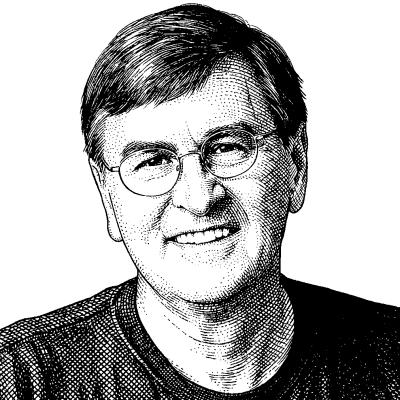
Dr. Scott Stornetta is a blockchain pioneer recognized for his foundational work dating back to 1991. He co-authored seminal papers and patents that predate and significantly influenced the development of Bitcoin and other digital currencies. His contributions are acknowledged within the Bitcoin white paper, with three of the eight citations referencing his research. Currently, Dr. Stornetta is a partner at Ugin Partners, a venture capital firm specializing in blockchain and AI technologies. He leverages his expertise to advise governments on blockchain policy and serves on multiple boards. He is also a fellow at the Creative Destruction Lab, associated with the Rotman School of Management at the University of Toronto, and a frequent lecturer at universities. He approaches his work and speaking engagements with a unique perspective, informed by his Latter-day Saint background. Dr. Stornetta holds a PhD in physics from Stanford University and has attended MIT, Harvard, and Brigham Young University.

Shannon Avana is an artist, technologist, and visionary thinker whose work explores the intersections of human consciousness, digital identity, and the future of humanity. She gained significant recognition within the Mormon Transhumanist community following her presentation at the 2014 Religion and Transhumanism Conference. Bridging the “Quantified Self” movement with the theological concept of resurrection, she proposed that our digital footprints and biological data serve as modern precursors to a technologically mediated form of eternal life. Central to Avana’s philosophy is the belief that art is a vital tool for capturing an individual’s unique essence. While raw data maps our physical trajectories, she posits that creative expression captures the subjective experience, suggesting a path toward a “technological resurrection” where human complexity can be reconstructed from the archives we leave behind. As a practicing artist, Avana continues to explore how LDS theology—with its emphasis on eternal progression—harmonizes with advancements in biotechnology and artificial intelligence. Her legacy is defined by her ability to humanize technical concepts, viewing technology not as a cold, mechanical force, but as a medium for profound spiritual and personal expression.

Sigmund Freud
Sigmund Freud (1856–1939) was an Austrian neurologist and the founder of psychoanalysis, a clinical method for treating psychopathology through dialogue between patient and analyst. His theories about the unconscious mind, defense mechanisms, and the structure of personality revolutionized the understanding of human psychology and influenced fields ranging from psychiatry to literature, art, and philosophy. Though many of his specific theories have been superseded, his broader insight—that unconscious forces shape human thought and behavior—remains foundational. Born in Freiberg, Moravia (now Příbor, Czech Republic), to Jewish parents, Freud moved with his family to Vienna at age four. He excelled academically and entered the University of Vienna medical school in 1873, eventually specializing in neurology. After studying with Jean-Martin Charcot in Paris, where he observed the use of hypnosis to treat hysteria, Freud began developing his own therapeutic techniques centered on free association and the interpretation of dreams. Freud ’ s landmark work The Interpretation of Dreams (1899) argued that dreams provide access to the unconscious mind and its repressed desires. He went on to develop a comprehensive theory of psychic structure, dividing the mind into id (primitive desires), ego (rational self), and superego (internalized moral standards). His theories of psychosexual development and the Oedipus complex, while controversial, opened new avenues for understanding childhood experience and its lasting effects. In later works such as Civilization and Its Discontents (1930), Freud explored the tension between individual drives and the demands of civilization. He suggested that human progress requires the sublimation of instinctual energies into socially constructive activities. While pessimistic about humanity’s prospects for happiness, Freud nonetheless believed that rational self-understanding could mitigate neurotic suffering and enable more authentic living. In 1938, following the Nazi annexation of Austria, Freud fled to London, where he died of cancer the following year. His legacy for transhumanist thought is ambivalent. On one hand, Freud emphasized the limitations imposed by unconscious forces and the difficulty of achieving genuine self-mastery. On the other hand, his project of bringing unconscious processes to conscious awareness—encapsulated in his maxim ‘Where id was, there ego shall be’—represents an early vision of using knowledge to enhance human autonomy and self-determination.
Silvanus was an early Christian teacher associated with the Nag Hammadi texts. The Teachings of Silvanus is a wisdom text that emphasizes moral instruction and the pursuit of divine knowledge. This text, discovered among the Nag Hammadi library in Egypt in 1945, represents a form of early Christian wisdom literature that combines Jewish, Greek, and Christian elements. It teaches that those who know themselves will know God, and knowing God, will become like God. The Teachings of Silvanus encourages readers to become the image of God, bearing nothing earthly, so that they may consort with God and become gods. This emphasis on human transformation and divine potential aligns with broader early Christian themes of theosis and has resonances with Latter-day Saint teachings on becoming like Heavenly Parents.

Spencer Cannon is a second-generation Mormon transhumanist, raised with these ideals from a young age by his parents—including his father who has presented at Mormon Transhumanist Association (MTA) conferences. His upbringing has fostered a unique perspective where his relationship to religion is very scientific, and his relationship to science is very religious. Spencer first attended an MTA meetup around the age of 13 or 14 and has found the community and intellectual banter particularly valuable for expanding his mind. Outside of his engagement with the MTA, Spencer is involved in the performing arts. He and his wife are both theater performers, working as actors. This involvement has provided him a unique perspective on the potential impact of emerging technologies like AI, particularly regarding anxieties within the artistic community. Spencer’s transhumanist views drive him to engage in the cultural discourse surrounding technological advancements to emphasize personal responsibility in building a beautiful future where technology can raise one another up, making the world more equitable, safer, smarter, kinder, more loving.
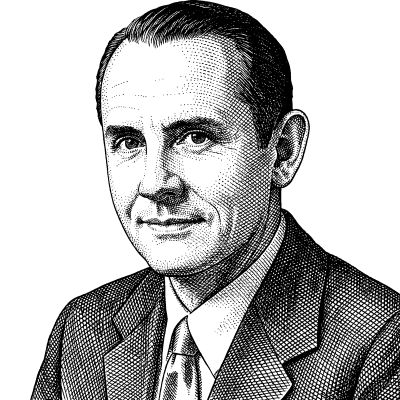
Spencer W. Kimball
Spencer Woolley Kimball (March 28, 1895 – November 5, 1985) was the twelfth president of The Church of Jesus Christ of Latter-day Saints, serving from 1973 until his death. A grandson of Heber C. Kimball, one of the original apostles called in 1835, Spencer was born in Salt Lake City, the sixth of eleven children. When he was three years old, his family moved to Thatcher, Arizona, where his father served as stake president. His mother died when he was eleven, and his childhood was marked by health challenges including typhoid fever and facial paralysis. After serving a mission in the central United States, Kimball married Camilla Eyring in 1917 and worked in banking, insurance, and real estate. In 1943, at age 48, he was called to the Quorum of the Twelve Apostles, where he served for thirty years with special assignments to Native American communities. His ministry was marked by remarkable resilience: throat cancer in 1957 required surgery that removed one vocal cord, leaving him with a distinctive soft, gravelly voice, and he underwent open-heart surgery in 1972 performed by future church president Russell M. Nelson. Despite becoming church president at age 78, Kimball led with extraordinary energy, embodied in his mottos “Do It!” and “Lengthen Your Stride.” Under his leadership, missionary numbers more than doubled. Most significantly, in June 1978, he announced Official Declaration 2, extending priesthood ordination to all worthy male members regardless of race—a revelation he described as coming after prolonged prayer in the Salt Lake Temple. He also added two revelations to the scriptural canon, reorganized the First Quorum of the Seventy, and expanded the number of operating temples from fifteen to thirty-one. Kimball’s leadership demonstrated that transformation remains possible regardless of age or physical limitation. His life exemplified the Latter-day Saint belief in eternal progression—the conviction that human beings are capable of infinite growth and eventual godhood through divine grace and persistent effort.
Stephen L. Richards
Stephen L Richards (1879–1959) was a prominent leader in The Church of Jesus Christ of Latter-day Saints who served as a member of the Quorum of the Twelve Apostles for thirty-four years and as First Counselor in the First Presidency under President David O. McKay. A trained lawyer with a keen intellect, Richards was known for his thoughtful approach to reconciling religious faith with scientific understanding and his emphasis on the practical application of gospel principles. Born in Mendon, Cache County, Utah, Richards was the son of a local bishop and grandson of Willard Richards, an early apostle and church historian. He graduated from the University of Utah and the University of Chicago Law School, practicing law in Salt Lake City before his call to full-time church service. His legal training shaped his analytical approach to theological questions and church administration. Richards was ordained an apostle in 1917 at age thirty-seven. Over the following decades, he became known for addresses that addressed the relationship between science and religion with nuance and openness. He taught that if the evolutionary hypothesis of creation is ultimately found correct, the biblical account is sufficiently comprehensive to include the whole process. This perspective reflected his broader conviction that truth is truth, whether discovered through revelation or scientific inquiry. In 1951, when David O. McKay became church president, Richards was called as First Counselor in the First Presidency. He served in this capacity until his death eight years later. During this period, the church experienced significant growth and modernization. Richards contributed to efforts to professionalize church administration and expand its educational programs. Richards’s approach to faith and reason reflects themes central to Mormon transhumanist thought. His willingness to embrace scientific findings as compatible with religious truth, his emphasis on human agency and moral development, and his conviction that the gospel encompasses all truth anticipated later discussions about the harmony between religious and scientific worldviews. His teachings suggest that human progression—intellectual, moral, and spiritual—is central to the divine purpose.
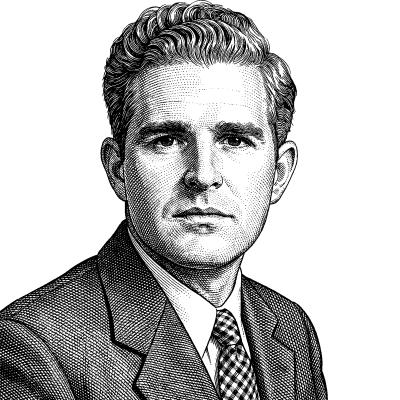
Sterling M. McMurrin
Sterling Moss McMurrin (1914–1996) was an American philosopher, educator, and public intellectual who served as United States Commissioner of Education under President John F. Kennedy. Born in Woods Cross, Utah, he spent most of his career at the University of Utah, where he was the E. E. Ericksen Distinguished Professor of Philosophy. McMurrin’s philosophical work focused on the intersection of religion and philosophy, particularly examining Mormon theology through the lens of Western philosophical traditions. His books “The Theological Foundations of the Mormon Religion” and “The Philosophical Foundations of Mormon Theology” remain influential analyses of LDS thought. Known for his intellectual independence and sometimes controversial views within Mormon circles, McMurrin emphasized the progressive and humanistic elements of Mormon theology, particularly its teachings about human potential and the relationship between humanity and divinity.

Steven Christiansen holds a PhD in biochemistry from Brigham Young University and spent over a decade teaching chemistry and neurobiology in academia. He is Associate Director of Commercialization at the University of Utah Technology Licensing Office, where he leads technical and commercial diligence on therapeutics, diagnostics, medical devices, and emerging AI technologies. He served as Medical Strategy Director for the Utah Patient Coalition and delivered the keynote at the 2025 Psychedelic Society Conference. He is Chief Operating Officer and Vice President of the Mormon Transhumanist Association.
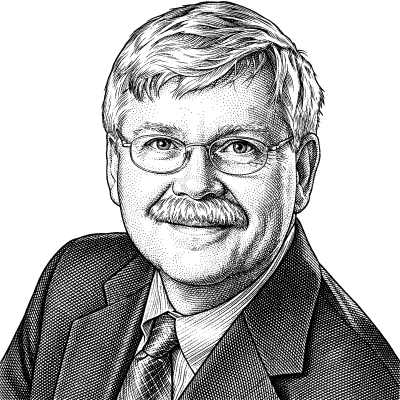
Steven Dick
Steven J. Dick (born 1949) is an American astronomer, author, and former NASA Chief Historian. He has written extensively on astrobiology, cosmology, and the philosophical implications of extraterrestrial life. Dick served as NASA’s Chief Historian from 2003 to 2009 and has held positions at the U.S. Naval Observatory and various universities. His books include The Biological Universe and Life on Other Worlds. His work on “cosmotheology” explores how the discovery of extraterrestrial intelligence might affect religious thought. He has argued that such a discovery would have profound theological implications, potentially transforming human understanding of our place in the cosmos and our relationship to the divine.