Authors

Ramez Naam
Ramez Naam (born 1973) is an Egyptian-American computer scientist, futurist, and author whose work explores the potential and perils of human enhancement technologies. A former Microsoft executive who helped develop Internet Explorer and Outlook, Naam has become one of the most prominent voices in discussions about the future of humanity’s relationship with technology. His writing spans both nonfiction analysis and science fiction that imagines the social implications of emerging technologies. Born in Cairo, Egypt, Naam immigrated to the United States as a child and later earned degrees in computer science from the University of Illinois. At Microsoft, he spent over thirteen years leading teams that developed widely-used software products. He holds nearly twenty patents related to search, information retrieval, and machine learning. This technical background informs his analysis of how technology might transform human capabilities. Naam ’ s nonfiction book More Than Human: Embracing the Promise of Biological Enhancement (2005) surveys the landscape of human enhancement technologies, from genetic engineering to neural interfaces. He argues that such technologies, properly governed, could dramatically improve human wellbeing and capabilities. The book addresses common objections to enhancement while advocating for thoughtful development of these powerful tools. His Nexus trilogy of science fiction novels— Nexus (2012), Crux (2013), and Apex (2015)—imagines a near future where a nanotechnology drug allows direct brain-to-brain communication. The series explores how such technology might transform human relationships, politics, and consciousness itself. The trilogy won the Prometheus Award for libertarian science fiction and has been praised for its realistic portrayal of both the promise and dangers of neurotechnology. Naam’s work embodies core transhumanist themes: the potential for technology to expand human capabilities, the importance of wise governance of powerful technologies, and optimism about humanity’s future. More recently, he has focused on climate and energy issues, arguing that technological innovation is essential to addressing environmental challenges. His vision integrates technological optimism with attention to the social and ethical dimensions of human enhancement.
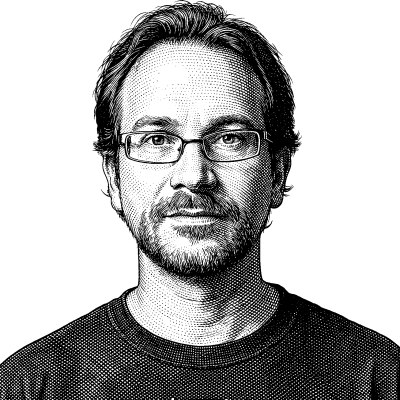
Randal A. Koene , Ph.D., is a Dutch neuroscientist, neuroengineer, and a foundational figure in the field of whole brain emulation. He is the co-founder of Carboncopies.org, a non-profit organization dedicated to the outreach and roadmapping of Substrate-Independent Minds (SIM). His work is centered on the scientific and technological challenges of mind uploading—the hypothetical process of transferring a human mind from its biological substrate to a digital or synthetic one. Born with an early passion for science fiction and space exploration, Koene was deeply influenced at age thirteen by Arthur C. Clarke’s The City and the Stars , which depicted a future where human minds were preserved and re-embodied by a central computer. This early exposure catalyzed a lifelong pursuit to overcome biological limitations through technology. He earned his M.Sc. in Electrical Engineering with a specialization in Information Theory from the Delft University of Technology, where he focused on extracting rule sets from neural networks. He subsequently completed a Ph.D. in Computational Neuroscience at McGill University, researching the functional requirements for modeling context-dependent memory. In 2007, he was a key member of the Oxford working group that convened to create the first formal roadmap toward whole brain emulation. His research focuses on “system identification”—the process of mapping and emulating the specific neuronal circuitry and activity of an individual brain to create high-resolution, patient-specific neuroprostheses. Beyond his technical contributions, Koene is a prominent voice in the transhumanist movement, frequently speaking on the ethics and philosophy of digital immortality. He posits that for humanity to remain adaptable and thrive in the face of future existential risks, we must develop the ability to function on a variety of hardware platforms. Through his development of NETMORPH —a computational framework for simulating the morphological development of neuronal circuitry—and his leadership at Carboncopies, Koene continues to advocate for a future where the essence of human identity is no longer tethered to a fragile biological vessel, but can be preserved and enhanced through rigorous scientific advancement.
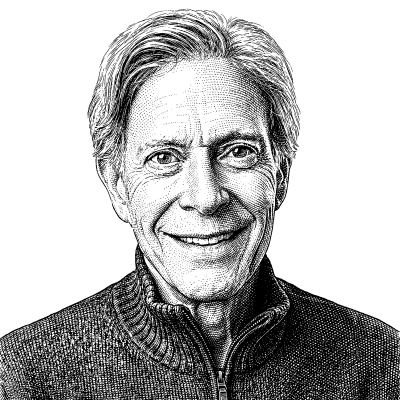
Randall Paul is a theorist deeply engaged with questions of value alignment, particularly within the context of Mormon cosmology and transhumanist thought. His work explores the nature of intelligence, divine purpose, and eternal sociality, drawing on Latter-day Saint theology while also critically examining its relationship with traditional Christian influences. Paul’s perspective is rooted in the belief that intelligences have always existed as individual, self-aware entities with infinite memories and a capacity for dynamic social interaction. Paul challenges conventional interpretations of the glory of God, positing that it lies not merely in intelligence itself, but in the capacity of intelligences to freely love and interact with one another. He suggests that our current mortal existence is an experiment designed to improve our ability to trust and love, preparing us for a more harmonious eternal life. He frames the Mormon Transhumanist Association (MTA) as a microcosm of this process, a space for superhuman entities—or gods—to learn how to better interact and foster mutual love. In his explorations, Paul questions the uncritical embrace of transhumanist ideals of longevity and enhanced capacities, arguing that the fundamental challenge lies in navigating the complexities of freedom and mutual influence within eternal societies. He emphasizes the importance of freely given and received love as the most valuable—and most scarce—resource in the cosmos, suggesting that intelligences exist in societies to expand the possibilities for these experiences. His aim is to provoke reflection on the deeper purposes of existence and the nature of divine love in a transhuman future.
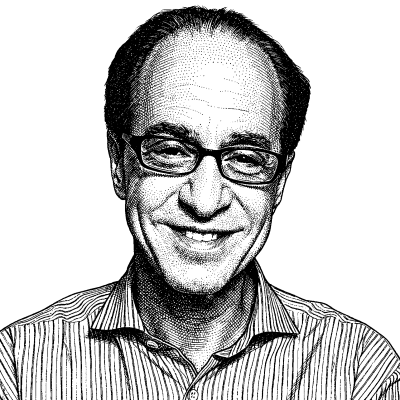
Ray Kurzweil
Raymond Kurzweil , born February 12, 1948, in Queens, New York, is an American inventor, futurist, and author who has been described as “the restless genius” by The Wall Street Journal. He graduated from MIT in 1970 with degrees in computer science and literature. Kurzweil is the principal inventor of numerous groundbreaking technologies, including the first CCD flatbed scanner, omnifont optical character recognition, the first printtospeech reading machine for the blind, the first texttospeech synthesizer, and commercially marketed largevocabulary speech recognition software. He has received the National Medal of Technology, was inducted into the National Inventors Hall of Fame, and holds 21 honorary doctorates. Kurzweil is best known for his writings on the technological singularity—the predicted moment when artificial intelligence will surpass human intelligence, leading to unprecedented transformation. His influential book The Singularity Is Near (2005) articulates his vision of humanity’s merger with technology, predicting this transformation will occur around 2045. Currently serving as a Principal Researcher and AI Visionary at Google, Kurzweil continues to shape our understanding of exponential technological change and its implications for human potential, making his work foundational to transhumanist philosophy.
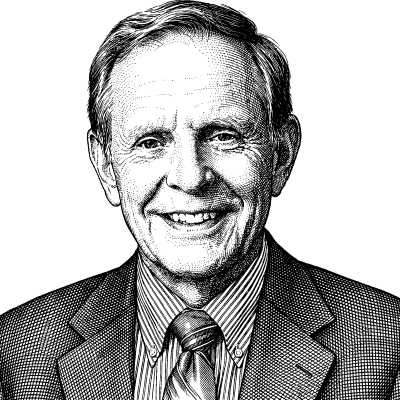
Richard Lyman Bushman is an American historian and the Howard W. Hunter Visiting Professor in Mormon Studies at Claremont Graduate University. He is widely considered one of the most influential scholars of The Church of Jesus Christ of Latter-day Saints, particularly for his work in reconciling rigorous academic history with a personal commitment to faith. Born in Salt Lake City and raised in Portland, Oregon, Bushman’s intellectual journey was shaped by an early tension between his religious upbringing and the secular demands of the academy. Bushman received his B.A., M.A., and Ph.D. from Harvard University, where he studied under the mentorship of Bernard Bailyn. His academic career flourished at several prestigious institutions, including Brigham Young University, Boston University, and the University of Delaware. In 2005, he published his magnum opus, Joseph Smith: Rough Stone Rolling , a landmark biography that challenged traditional hagiography by addressing the complexities and controversies of Smith’s life while maintaining a sympathetic, belief-oriented perspective. His other major works, such as From Puritan to Yankee (which won the Bancroft Prize) and The Refinement of America , further established him as a premier historian of early American cultural and religious life. In his presentation at the MTAConf 2013, titled “From Humanity to Fulness the Mormon Way,” Bushman explored the intersection of LDS theology and the transhumanist quest for human enhancement. He framed the Mormon concept of “eternal progression” as a theological precursor to the desire for radical self-improvement and the attainment of divine attributes. Bushman posited that the Restoration’s emphasis on the “fulness” of the human soul—integrating the physical and the spiritual—provides a unique framework for understanding the potential of technology to aid in the exaltation of humanity. Beyond his writing, Bushman has been a pivotal figure in the development of Mormon Studies as a legitimate field of secular inquiry. He served as the co-editor of the Joseph Smith Papers project and has mentored a generation of scholars seeking to navigate the “middle ground” between polemical skepticism and uncritical devotion. His legacy is defined by a commitment to “faithful history,” an approach that insists on total transparency regarding the past while remaining open to the possibilities of the divine.
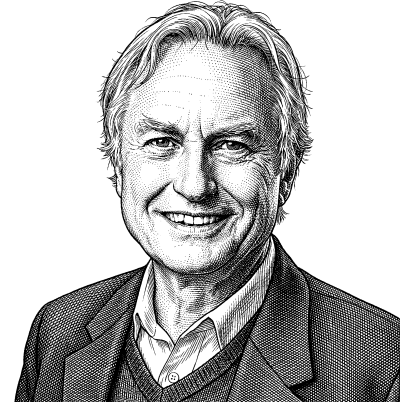
Richard Dawkins
Richard Dawkins (born 1941) is a British evolutionary biologist and author. His books on evolution and the philosophy of science have had significant influence on public understanding of biology and the relationship between science and religion. Born in Nairobi, Kenya, Dawkins studied at Oxford and became its first Charles Simonyi Professor of the Public Understanding of Science. His book The Selfish Gene popularized the genecentered view of evolution and introduced the concept of memes. While known for his criticism of religion, Dawkins has acknowledged that the universe reveals “something stunningly close to the God of the physicists”—a deep structure and beauty that evokes awe. His engagement with questions of cosmic meaning continues to be relevant to discussions of science and transcendence.

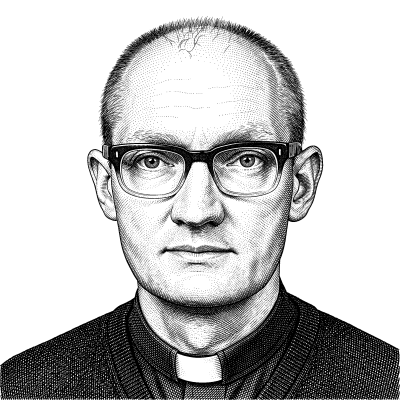
Richard Holloway
Richard Holloway, born 26 November 1933 in Alexandria, Scotland, served as Bishop of Edinburgh from 1986 to 2000 and as Primus of the Scottish Episcopal Church from 1992 until his retirement. He built his reputation as one of the most theologically restless bishops of his generation, willing to say in public what many clergy confessed only in private. Holloway trained at Kelham Hall and Union Theological Seminary before parish work in Glasgow, England, and the United States led him back to Scotland and eventually to Edinburgh’s cathedral pulpit. As bishop he championed the ordination of women and the full inclusion of gay clergy well before either position found wide acceptance in the Anglican Communion, and he wrote steadily for a public audience rather than only for fellow clergy. Godless Morality argued that ethics needs grounding sturdy enough to hold without appeal to supernatural sanction. Doubts and Loves and his memoir Leaving Alexandria trace a mind that kept its reverence for ritual, mystery, and the moral seriousness of religious life while shedding claims to metaphysical certainty he no longer found credible. He resigned his see in 2000, worn by internal church conflict, and continued writing, broadcasting, and lecturing into his nineties, publishing Last Words at ninety-one. Holloway’s core instinct, that faith is a stance taken toward uncertainty rather than a settled possession of answers, parallels how Mormon Transhumanists understand pancritical rational faith: trust that motivates work and stays open to revision rather than trust that forecloses inquiry. His insistence on grounding morality in something that functions independent of supernatural guarantee resonates with an ethic built on compassion and consequence. Holloway’s ideas have also influenced Mormon Transhumanist reflection. Carl Youngblood’s 2013 essay “ Demythologizing Mormonism ,” for example, draws heavily on Holloway’s Gresham College lecture series “The Myths of Christianity.” His legacy is less a system than a disposition: hold your tradition’s rituals and moral demands seriously, subject its metaphysical claims to honest scrutiny, and let the two commitments coexist without pretending the tension is resolved. That disposition offers a genuine resource to any postsecular effort to keep religious depth and intellectual honesty in the same room, Mormon Transhumanism included.

Rio Harvey is a dynamic speaker celebrated for her expertise in genetic technologies. Her work focuses on understanding genes—instructions for making polypeptides—and exploring the diverse applications of genetic technologies. At the MTAConf 2020, she delivered an impactful presentation, titled Genetic Technologies and Biodiversification , that offered fresh perspectives in this rapidly evolving field. Harvey’s interests span a range of topics within genetics, including personalized medicine, germ cell selection, and gene editing techniques like somatic and germline therapies. She acknowledges the potential of genetic modification in agriculture, while also expressing concerns about the concentration of ownership within a small number of organizations. She’s passionate about the ethical implications of individual genetic sequencing.
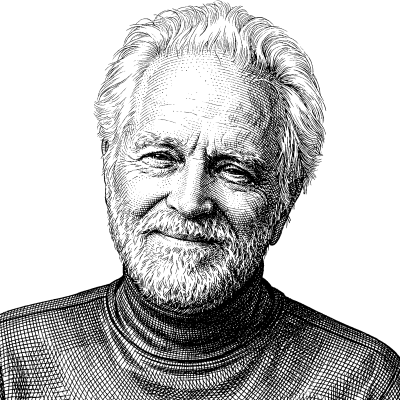
Robert A. Rees is a dynamic speaker who has previously presented at the Sunstone West 2016 Conference. He possesses experience as an educator, evidenced by his teaching in the former Soviet Union, where he developed techniques to encourage student participation and expression. His presentation at the conference explored the dual nature of technology, examining its potential for both progress and peril, drawing parallels to historical examples like Cain’s use of tools and contemporary issues like military weaponry and the accessibility of both beneficial and harmful content through modern technology. Rees’s presentation drew on his understanding of literature and history. He referenced Richard Eberhardt’s poem, “The Fury of Aerial Bombardment,” to illustrate humanity’s slow moral development, lagging behind technological advancements. He also connected the potential for good and evil inherent in technology to the wide dissemination of General Conference alongside the spread of harmful content such as pornography and the use of computer systems for genealogy and criminal schemes. This demonstrates his insightful perspective on how technological advancements intersect with moral and societal issues.