Elle Griffin on the Mormon Welfare State | Pioneers Ep. 4
In 1915, Henry Ford ran a working assembly line on the floor of the San Francisco world’s fair, and crowds watched a car come together every ten minutes. Elle Griffin wonders what we would be building today if artificial intelligence had arrived like that, instead of with warnings from the people making it.
Elle writes The Elysian, a newsletter that imagines a better future, read by more than twenty thousand people. A former editor-in-chief of Utah Business, she is writing her next book, We Should Own the Future, in public, funded by her readers. Her recent series include Let Cities Build Utopia and the Elysian Manifesto.
Carl Youngblood sat down with her in Provo in November 2026. They talk about why novelists reach the future before anyone else and why so much of today’s fiction is dystopian; what Mondragon, Rolex, and Scotland’s community land trusts show about who should own what; her proposal that every Utahn hold a share of the data centers being built in the state; and the research Elle, who is not a Latter-day Saint, has been doing on the Church’s welfare program, from the pasta plant and the cannery to the storehouses and the reserve fund, and what it would mean to run a welfare state without a government. She closes with the first step she thinks anyone can take.
Pioneers is the podcast of the Mormon Transhumanist Association: long-form conversations with the people pushing on today’s frontiers in science, technology, history, and theology, and what drives them. Every episode, with video and a full transcript, lives at https://transfigurism.org/news-and-podcasts/podcasts/pioneers
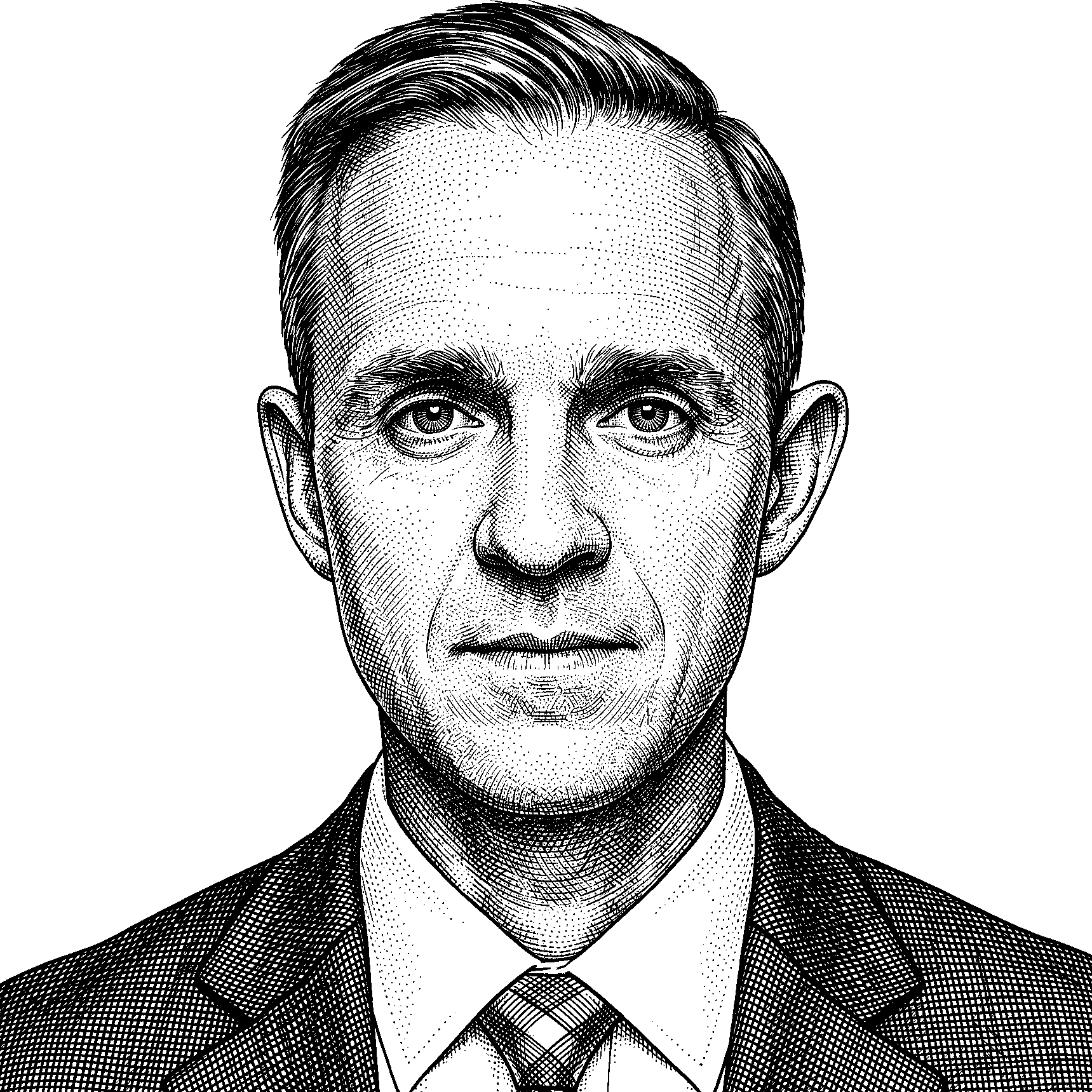
Carl Youngblood co-founded the MTA in 2006 and has served as its President and CEO since 2021. He is engaged with the Association’s efforts to explore the intersection of Mormon theology and transhumanist philosophy. Among the many initiatives that Carl has been involved with, he has designed and built the Association’s current website, which unifies all prior content in a single location using inspiring visuals and animations. ¶ Youngblood’s professional career spans more than two decades of full-stack software development at the intersection of Silicon Slopes and Silicon Valley. He was an early employee at Omniture (acquired by Adobe), a founding engineering leader at Divvy (a Utah-based unicorn startup), co-founder of Blockscale LLC (a blockchain services firm eventually contracted into Coinbase), and Senior Solutions Architect for Amazon Managed Blockchain at AWS. His technical fluency ranges from scalable web architecture to blockchain infrastructure—the kind of deep engineering experience that grounds his theological speculation in working knowledge of the systems he writes about. ¶ Under his leadership, the Association has developed its mission of promoting abundant human flourishing through the compassionate use of science and technology, fostering dialogue across secular and religious audiences and arguing that each has something essential to learn from the other. His writing, collected on his blog From the Depths, spans over a decade of conference presentations and theological essays: meditations on participatory resurrection, the alignment of artificial intelligence read through the Grand Council narrative, intelligence as eternal and multifaceted, and religion as social technology. He writes, as a colleague has observed, with warmth and accessibility on questions of momentous practical consequence—how to navigate faith crisis without losing faith’s power, how to think about resurrection as something we actively participate in rather than passively receive. ¶ Youngblood’s distinctive contribution to transhumanism is the integration of serious technical expertise with serious theological reflection. He embodies the Mormon transhumanist conviction that scientific and spiritual development are not parallel tracks but a single path—that the learning required to build better systems is continuous with the exaltation Mormon theology envisions, and that human ingenuity, rightly oriented, is itself a divine imperative.
Keep going
Related talks
 56:24
Samo Burja on Old Institutions and New Frontiers | Pioneers Ep. 3
Carl Youngblood, Steven Christiansen, Samo Burja
Introducing the MTA’s new podcast: Pioneers
Carl Youngblood
 17:01
Algorithmic Advent
Carl Youngblood
 25:39
Conference Intro and Web3 and the Promise of Decentralized Governance
Carl Youngblood
 1:51:46
MTA podcast
Carl Youngblood
 18:14
Reframing Environmentalist Narratives
Carl Youngblood
Pioneers podcast
Long-form conversations with the people pushing on today's frontiers. All episodes
Next event: The Life of a Young Cosmist · 2026.12.13 20:00 MST
Transcript
Elle Griffin
In San Francisco at the World’s Fair, Henry Ford had set up like an assembly line at the World’s Fair where they would make a car in 12 minutes and you could buy the car right there.
Elle Griffin
The church spent $1.58 billion on human welfare in 2025. $1 billion of that went to humanitarian aid totally outside the church. And that makes it more than Finland, which spent $1.4 billion, or New Zealand, which spent $781 million. And they stockpile one year worth of finished food and goods. No country does that.
Elle Griffin
What if the church owned a data center in space?
Carl Youngblood
This year, a non-Mormon journalist found herself volunteering regularly at the church’s pasta plant and cannery in Salt Lake. What Elle Griffin found on her journey to understand the LDS welfare program surprised even lifelong members like me. Elle writes The Elysian, a newsletter that imagines a better future and has grown to more than 20,000 readers. She was the editor-in-chief of Utah Business and she is now writing a book called ‘We Should Own the Future,’ funded by her readers and drafted in public as she goes. She has lived in Salt Lake City for a decade. For years, she has been looking for better ways people might organize themselves, in fiction first and then in the real world. And lately, that search has led her to the Latter-day Saints.
Carl Youngblood
Every kind of trailblazer is welcome on Pioneers, and some of them do their pioneering on paper. Where there is no vision, the proverb says, the people perish. A future nobody can picture is a future nobody will build, and for most of the last century, the pictures on offer have been of ruin. Elle writes the other kind. And then she asks how we would actually get there.
Carl Youngblood
We talked about why the novelists always seem to get to the future first, and about the crowds at the 1915 World’s Fair in San Francisco who watched Henry Ford’s assembly line turn out a car every 10 minutes, and what that has to do with the way artificial intelligence has come to pass; about Mondragon, the network of worker-owned cooperatives in Spain’s Basque country; about towns that own their own land, and about what it would mean for every Utahan to own a share of the data centers being built here; also, about the church’s welfare program, which she studied the way a reporter studies a country. When I asked her how any of this begins, she didn’t point to Washington or to Silicon Valley. The first step, she thinks, is to change what people read before anyone tries to change what they build. And she has already started on foot in her own neighborhood. Here’s my conversation with Elle Griffin.
Carl Youngblood
Well, Elle Griffin, thank you so much for being on the Pioneers podcast.
Elle Griffin
Yeah, thanks for having me. This is fun.
Carl Youngblood
Great. Well, tell me a little bit about yourself, if you would, like where you grew up and what some of your interests have been as you came of age.
Elle Griffin
Yeah, I kind of grew up all over. I was born in Germany, and then my parents were in the military, and we moved around a lot. My husband and I, soon after college, left for San Francisco and lived there for about a decade. And then we moved to Salt Lake, and we’ve lived here for about a decade now. And I’ve been a writer most of that time, not always for a living. But in my early days, I worked in tech and wrote a blog on the side, and then just kind of slowly transitioned into a career in journalism, which I’ve now been doing for about 15 years.
Carl Youngblood
Yeah, and in your journalistic work, you’ve highlighted some interesting topics to our audience, which include things like utopianism and other ways of structuring society and government, also some things about optimism. What draws you to these topics? Why do you find them fascinating?
Elle Griffin
I mean, I think if you look at anything anybody is doing right now, whether it’s like putting a submarine in the ocean or a spaceship on Mars or even electric car, you will see any of these people talking about these things. And they will refer to Jules Verne and 10,000 Leagues Beneath the Sea or, ‘Oh my gosh, this is just like,’ insert book, you know, of your choice. I think, what was it when Elon Musk debuted the Cybertruck? He was like, ‘This looks like this is the car from Foundation,’ you know, a sci-fi series. And I think that it’s always been the writers who have had to think through what the future could look like. And what’s cool about when you come at it from the standpoint of fiction is that anything is possible. So you’re not starting with where the world is now, which a lot of nonfiction journalism does, or worse, most journalism just reports on all the problems and doesn’t imagine what could be.
Elle Griffin
But fiction is like, ‘Well, okay, like, if I’m going to,’ I mean, even think about Andy, we’re trying to decide how to grow potatoes on Mars for ‘The Martian.’ He had to do all of that research and come to those conclusions and come to scientific explanations for how that could work. And so you kind of start with the outlandish thing, and then you come back to how could we actually get there. And that’s always interested me as a writer. I didn’t want to report on the problems. I wanted to, like, think through the solutions and all of the insane things, insane directions that I could take.
Elle Griffin
Because if you look at the last 1,000 years of humanity, it’s insanely different from how the, I mean, we didn’t have the same countries. We didn’t have the same styles of government. We, everything is different. We didn’t have the same religions. So, like, we could have totally different things in the next 1,000 years, and we’re just not even thinking about them because we can only think of our short worldview. Or we can think of all the ways it could go wrong. And we have this huge era of dystopian fiction that’s like, ‘Oh, what if AI overtakes us all?’ Or, you know, kind of all the bad things that could happen, the ‘Minority Report’ kind of style thing.
Carl Youngblood
Yeah. To what extent do you think that those stories that people tell about what the future might be actually influence the outcomes?
Elle Griffin
100%. Even the narrative of ‘AI could kill us all’ is just a self-reinforcing thing in humanity. And I was thinking about this the other day because in San Francisco at the World’s Fair, and I want to say it was in the 1920s, Ford, Henry Ford, had set up, like, an assembly line at the World’s Fair where they would make a car in 12 minutes, and you could buy the car right there and buy it coming off the assembly line. And so people were, like, watching the cars get made, like, outside in public and just buying them right off the assembly line. And I was thinking about that, and I was thinking how people watching that would be so excited by that and, like, ‘Wow, look what we can do with the car, and I want to buy it right here.’ And meanwhile, the AI rollout has been, like, everybody who’s building AI is, like, ‘It’s going to kill us all.’ And I was imagining what it would have been like if AI rolled out with a kind of World’s Fair attitude of, like, ‘Let’s build a future for the World’s Fair of what AI could do to make the world a better place.’ And people could see it, you know, see it for themselves and be excited about it rather than, like, scared. Then that would create very different outcomes for society, and we would try to build it that way.
Carl Youngblood
Yeah. What do you think maybe caused that shift between the optimism of the prior century and the state we find ourselves in now?
Elle Griffin
Well, it’s literally the media we’ve been reading. It is this cycle of dystopian literature we’ve had, journalism. I mean, if you think about the history of writing, what is writing today? I would say most writing is journalism, meaning, ‘I’m reporting on the problems, here’s what happened, here’s what the facts say happened.’ If you think about all of the writing that was happening during the Enlightenment, it was like, ‘What if we had socialism? What if we had communism? What if the government looked like this? Let’s write pamphlets about them and put them in everybody’s door and sell them for a penny on the corner.’
Carl Youngblood
So very exploratory. ‘Common Sense’ by Thomas Paine.
Elle Griffin
What if this was its own country? What if the United States becomes its own country and is not a part of a monarchy? This was like crazy utopian thought. It was radically reimagining society. And we just don’t have a lot of journalism like that today. It’s super limited to the scope of the problems we’re currently facing. And I think that is limiting everybody’s mindset to thinking that’s the only way it can be.
Carl Youngblood
Yeah. I was just thinking about this funny sort of yet another dystopian trope where people are talking about how a startup will say something like, ‘We just invented the torment nexus based on the book “Don’t Create the Torment Nexus,” right?’
Carl Youngblood
Yes.
Carl Youngblood
And it strikes me that you have there in that funny little joke a dystopian view of the future and then this idea of like, what if we’re realizing those dystopian nightmares that we imagine, right?
Elle Griffin
Isn’t that weird?
Carl Youngblood
Yeah, that is really odd. We’re like, let’s build the dystopian novels. Well, yeah, and there is this, I agree, there’s this tendency to dwell on that. And I’m just wondering how we can get, you know, back to at least a little more cautious optimism about the future and the possibilities.
Elle Griffin
Yeah. I was thinking about this because I have a pretty strong perspective that more of the women need to be building the companies and stuff that take us into the future rather than just all boys, um, because if you, even if you look at the fantasy genres or sci-fi genres right now, there’s like boy fantasy and sci-fi and there’s like girl fantasy and sci-fi. And boy fantasy and sci-fi is like spaceships and metal and generation ships to other planets, like a lot of the posters on the wall here. And girl sci-fi is like, oh, like fantasy world with castles on hills and rolling landscape, like Lord of the Rings cities and everything. And I think that’s really fascinating.
Elle Griffin
In fact, I actually reached out to, um, Ramsey Avery, who is a production designer for, he, he designed the worlds in Minority Report and Lord of the Rings Rings of Power. And so I was like, how did you create, you know, most dystopian city in the world and most utopian cities in the world? And he was like, oh, easy. You just, for Minority Report, you just add metal, add lots of metal, um, add lots of technology. And for the utopian world, you just add lots of nature and water and everything. And then, I don’t know if you’ve seen the film, The Pod Generation.
Carl Youngblood
I haven’t.
Elle Griffin
It was a Sundance film a couple of years ago, and it was a sci-fi written and directed by a woman, and it was a near future fiction. And it’s based on, it’s based on a couple who decide to have a baby and they have it in this like pod, like an artificial womb. Yeah, an artificial womb. Yeah. And its perspective on the future is so much more beautiful than any sci-fi I’ve seen, even though it’s kind of concerning this kind of stark subject.
Elle Griffin
And, you know, all of the, all of the, I remember watching a Q&A with the director and she was like, all of the shapes of the furniture in the homes is rounded. The color palette is from Georgia O’Keeffe, the painter. So like everything is this beautiful pinks and greens. All of the, the, even like the Apple, like corporate, corporation, that’s kind of the evil antagonist in the film, the, filled with plants, so many plants, you know. And it’s, the future city looks like the country almost. Yeah.
Carl Youngblood
Because it’s so beautiful. So the aesthetic matters a lot. The aesthetic matters a lot. This is really interesting.
Elle Griffin
And I, what I wanted to come around to with this was the Cybertruck I thought was the most boy car I’ve ever seen. And then I remember, have you seen the Jaguar? It’s like the Jaguar 00 or something.
Carl Youngblood
I’m not sure. I mean, I’ve seen several of their car models. It’s like their newest, it’s pink in all the pictures. It’s like pink colored. Uh-huh.
Elle Griffin
And they debuted it and I was like, oh my gosh, if I was going to design the future of the car, like the futuristic car, it would be that one, not the Cybertruck. And it’s like these sleek lines and it’s very feminine and it’s like pretty. Mm-hmm. The aesthetic is more, is like nicer to me. Yeah. And I think that is kind of like missing from modern, yeah, future building.
Carl Youngblood
When we were redesigning the website, our website about five years ago, we adopted a solar punk kind of concept.
Elle Griffin
Yeah.
Carl Youngblood
Which you may have heard of.
Elle Griffin
Yeah.
Carl Youngblood
And very much similar, along similar lines where you’re trying to be positive about the use of technology in the future, but not have it be so front and center, right? Yes. Yeah. And more organically blended into the background and stuff like that. Right. I’ve thought about this a lot as well. It’s really cool that you’re interested in that. So you have been exploring several actual alternative structures for governance in the world and other possible structures that maybe haven’t been fully realized yet.
Elle Griffin
Yeah.
Carl Youngblood
Tell me more about that, if you would.
Elle Griffin
I mean, it’s been really fun because I’m not limiting my writing to where we are today. I try to think, you know, what would governance look like in a thousand years or 10,000 years? What would humanity be like? What are the systems we like and don’t like? And I think that there’s a lot that we could totally redo. And some of my subscribers will get in really interesting debates in my comment section because they’ll be like, her work is socialist. No, her work is anarchist.
Carl Youngblood
Oh, my gosh. She’s purely capitalist. I’ve noticed this. Nobody knows where to place my work because, yeah, it could kind of be all of those things. But it’s great to be able to explore and just try it on without making prior judgments, right? Right, exactly.
Elle Griffin
The point is to bring that literature, that kind of literature back so that we can debate new future ideas because those old ones aren’t the ones we’re limited to either. Right, right. So, anarchism, as Marx derived it or devised it, is not like the only thing we can come up with.
Carl Youngblood
And we’ve come up with way better things since then.
Elle Griffin
So, yeah, it’s fun to brainstorm. Yeah.
Carl Youngblood
And what are some of the actual, you know, alternate governance models that are in the real world that you looked at?
Elle Griffin
I think there’s a lot of interesting ones. For example, Mondragon in the Basque country. Yeah, I was thinking about that one. Yeah, they could basically be an anarchist country or a capitalist country if you want to think about it that way. But the company is basically 90-some companies that are all employee-owned. Cooperative model. They’re all cooperatives. It’s like a co-op of cooperatives, which is really interesting because you can have a little 20-person cooperative or you can have a big, you know, 20,000-person cooperative. And they’re part of the same umbrella organization that takes some of the profits and recycles them back into all of them.
Elle Griffin
So you can be, I mean, even 10 years ago, they closed one of the companies. And there were some 2,000 employees that, if this was a normal capitalist society, would have all been laid off. But because they have this network, they just moved them to the other companies in the portfolio. And if they needed to be trained for a different job, well, one of the companies in their portfolio is a university, Montague Island University. They just sent them to the university, trained them, put them in the companies, and just reordered everyone.
Carl Youngblood
It seems like such a humane structure, you know, really looking at how we can optimize for many different types of thriving, right? Right, exactly. That strikes me as really a wonderful ideal, but I’m sort of wondering how they achieved it and how, under what conditions they were able to pull it off. And did it constitute a large shift from what was happening in Spain before that time?
Elle Griffin
Yeah, it is really interesting. All of the places where cooperatives are the most common, they developed during periods of intense dictatorship.
Carl Youngblood
Oh, okay.
Elle Griffin
So Italy was the same way, Spain. And it kind of makes sense because you don’t have a democracy at the country level.
Carl Youngblood
Okay.
Elle Griffin
And so then people are like, ‘Well, if the country is not going to take care of us, we have to take care of ourselves.’ So like, will you put in some money? Will you put in some money? Will you put in some money and we’ll start a company and your kids can all work in it and they’ll be part owners of it rather than the factory owner down the street, you know? So it’s kind of born out of that, which is really interesting because this was the same time period as 1950s that Silicon Valley was developing. You know, you think of Fairchild and that was 1950s too, but they invented a totally different kind of capitalism because they were like, ‘Hey, big, you know, investor guy with a lot of money, give you, one person, give me money and we’ll start the company.’
Carl Youngblood
Right.
Elle Griffin
And that creates a very different model where the one investor is the owner rather than everybody that’s the workers in the town.
Carl Youngblood
Yeah, it is also quite interesting how you still see some interesting similarities. Obviously, the sort of economic model is very different in those two scenarios, but there was also this way in which they felt like the existing corporate model also wasn’t doing something right in the Fairchild situation. And they wanted to sort of do something a little more egalitarian, at least from the perspective of the founders of the company of like, we want all of, all of us to be involved, you know, shoulder to shoulder and not have a strong hierarchy between us. And, you know, we can take talent, however it comes at whatever age it’s at. And just if you can do it, you can be a part of this, you know, I know.
Elle Griffin
And but that still persists in both places to this day.
Carl Youngblood
Yeah.
Elle Griffin
Like the Silicon Valley model is like, ‘Oh, well, I’m the genius that started the company,’ or, ‘I’m one of the first 100 employees. Therefore, we are the people that built this. And so it’s ours.’ Oh, and, you know, 60% of the company belongs to the investors. It’s theirs, too. Yeah, yeah, yeah, yeah. And so that model still persists. I think we still feel that.
Carl Youngblood
Oh, absolutely.
Elle Griffin
Whereas like in Spain or Italy, and I was just in Italy for a couple of weeks researching my book and they’re like, ‘We’re, oh, this is for all of us. You know, the economy we’ve built, it benefits us.’
Carl Youngblood
Yeah, it is also quite interesting how, you know, you may start on terms that seem somewhat similar footing, but the economic model does ultimately change things quite drastically in the far flung future of these organizations. Right?
Elle Griffin
Yeah, exactly.
Carl Youngblood
And that’s something you’ve studied a lot. It’s like how certain rules that are baked into the system really influence the outcomes.
Elle Griffin
Well, that’s what, I mean, one of the things I’m researching now is, I mean, data center debates are so fascinating to me because I think the U.S. has it all backwards. We’re like, the governors of states are like, ‘We’ll give you a tax break. You can come.’ And therefore, the person that benefits from these AI data centers the most are the investors and the companies that own the data centers.
Carl Youngblood
Yeah.
Elle Griffin
Whereas like you could have a foundation on the data center and the foundation equity is owned by everybody in Utah that lives in Utah. And therefore, everybody that lives in Utah gets a dividend for being part owner of the data center that’s here and using our resources. You know, like I think that I think there’s you could use that collective ownership model in a lot of different and unique ways. Equity ownership, we’ve not been nearly creative enough with how that could be owned. Like it is really crazy that Patagonia is like the most exciting thing we can come up with. We’re like, oh, the equity is held by a nonprofit. And, you know, it’s like there’s so many more cool models than that. And we’re just like, those are the options that can be owned by a nonprofit or it can be owned by an investor or it’s all just the workers. You know, there’s you could get really creative with that.
Carl Youngblood
Be sure to check out our Transfigurist artwork series with posters, framed prints, puzzles, and apparel portraying inspiring glimpses of what future pioneers might achieve in a vibrant retrofuturist style. Buy them on our website at transfigurism.org slash store. Every purchase helps us to make more of this kind of quality content. The other most important thing you can do to show your support is to like and subscribe and leave us a rating on Apple podcasts.
Elle Griffin
Now, back to the show.
Carl Youngblood
What are some of the things that we haven’t tried yet that you think might, you know, help us to do something more interesting and humane, I guess?
Elle Griffin
I think flipping the script on like, ‘We’ll give you a tax break if you come here and then our economy will benefit in these kind of peripheral ways,’ that we do right now. Flipping that script and saying, ‘Can we invest in your company to come here and we become part equity in it?’ So, I mean, think of some things that are really unique. Rolex, for example. Rolex is, the equity of that company is owned by a foundation, and the foundation has to give those returns 100% back to the Canton of Geneva, the state of Geneva where Rolex is headquartered. And so the equity is benefiting everybody that lives there because it’s going right back into the community. And there are so many versions of this in Europe, like different ways that foundations are owned and then put their foundations on the equity and then they pour it back into different things. I mean, if you think of an example in the US as kind of a lightweight example, but like Eli Lilly and the Lilly Foundation and how they own some stock in the company and then put that back into scientific research. So I think every company could have some kind of structure like that where maybe the exit event is you sell to a foundation and the foundation has to use that equity and those gains for some purpose. It doesn’t have to be a controlling stake in the company. It doesn’t have to mean that’s how the company is run. It’s just how the company is benefiting society.
Carl Youngblood
Yeah, it may be that there’s a scarcity element here as well, where if everyone is in this scarcity mindset of like, ‘If we don’t provide the incentives to the corporations, then some other state is going to get it.’
Elle Griffin
Foundation ownership can be used for that.
Carl Youngblood
I mean, that’s how Ikea does it.
Elle Griffin
Yeah, Ikea is owned by a foundation and they’re not, this doesn’t have a charitable vision. It’s just an asset lock in place to ensure it can’t ever be sold to private equity or stripped for parts. You know, it keeps, it keeps the ownership structure intact. And I think even that is enough of an incentive for, for people like people don’t want to just fully lose control of their companies or just let it, you know, let it slide down the, down the road.
Carl Youngblood
I remember mentioned some things about some communities that had, you know, housing and other things as well, and how those have been structured with a governance model that preserved the character of the community in certain ways. Can you tell us more about that? Yeah, yeah.
Elle Griffin
So I wrote a series earlier this year called Let Cities Build Utopia. And the concept was basically cities that own themselves. And this has been done quite a lot through history, but mostly in the UK. The UK after World War II built 32 brand new cities in order to build new housing. The biggest example would be City of London, which is technically a one square mile piece of land in the middle of London’s like commercial district. And it’s weird because, so in the US we have municipalities and in the UK they have councils and in, and this is a council. So it’s a local government that, that has this, governs this one square mile territory of land. But unlike most places in the UK, most councils in the UK, it actually owns some of the land. So it has the traditional structure in which businesses, they earn taxes, they earn taxes, like corporate taxes from all the companies that are based there.
Carl Youngblood
And they just lease their offices.
Elle Griffin
But they also have offices that they lease.
Carl Youngblood
Oh, okay.
Elle Griffin
And they make more, they make more money from the properties that they own, like basically being a property development company, than they make from tax dollars.
Carl Youngblood
Oh, wow.
Elle Griffin
And so if every council did that, if every municipality did that, they would be way, way, way, way richer. The weird thing about cities, and especially in the United States, is that as cities become the place where everybody lives and where all of the jobs are, the land value goes way up, right? And so houses become more expensive and corporate real estate becomes more expensive. And when you buy a property and then you sell it later, the benefits of that gain is the person, the private property owner, right? So in the case of residential real estate, it’s the person who sold their house. In the case of commercial real estate, it’s whoever owns all the buildings downtown. But if your town owns it, the town actually owns the land and then releases it out, then the town can be really rich. And that goes back to all the people that live there.
Carl Youngblood
Right. Benefiting them however the town sees fit to do so, right?
Elle Griffin
So in like City of London, it’s commercial real estate, but Scotland has 500 of these and they’re community-owned pieces of land. And if you buy a home in one of these, it’s a land trust. If you buy a home from the land trust, you own the house and you lease the land under it from the trust. And then the trust takes those leases and recycles them back into the community. And the trusts also own commercial stuff. So, you know, Stornoway is a trust on the island of Stornoway and it has a wind farm. And everybody uses the wind farm for electricity, so they make money. And then the trust puts that back into other uses, like let’s build a bigger marina or gussy up the castle for tourism, and can kind of economically develop itself rather than property developers economically developing a place. So it just changes who the land value benefits.
Carl Youngblood
Yeah. Well, speaking of other additional ways of governing and structuring things, one of the things I’m most excited to ask you about is your recent research on the Mormon welfare state, which obviously is a topic that’s of interest to our audience. And I remember hearing your presentation on that at the Wayfair Festival that took place this last summer and just being fascinated even, I mean, I kind of knew that my own church had a lot of welfare programs, but the way you laid things out just was even more striking than I actually thought it was. And so I’d love to hear you tell us a little bit more about that and how you got started, what you saw and, you know, what impressed you the most.
Elle Griffin
I think the Mormon Church. Can I use that word?
Elle Griffin
Yeah, absolutely.
Elle Griffin
I think the Mormon Church is one of the most incredible forms of welfare states in the world. And I have some, I brought some numbers, just I wanted to put it into perspective of like how countries spend money. So the church spent $1.58 billion on human welfare in 2025. $1 billion of that went to humanitarian aid totally outside the church. And that makes it more than Finland, which spent $1.4 billion, or New Zealand, which spent $781 million, more than Portugal and Luxembourg. If you look at it per capita, like based on the number of active members, the church spends $200 per active member on humanitarian aid, which is on par with Austria, the U.S., Canada, New Zealand, and Japan. And so the church is operating a welfare state at the level of the country, at least when it comes to humanitarian aid. That is just the things that it can compare with a country on. The church also does things no country or humanitarian aid organization would do. For example, it’s like the fifth or sixth largest landowner in the U.S. And that that land is mostly farmland and that farmland is being used to grow food. And then that food is going to church-owned canneries and pasta, pasta plants.
Carl Youngblood
Lots of us have to occasionally are we’re asked to kind of like volunteer in these canneries and stuff like that. Yes, I’ve been volunteering. Oh, good for you. As part of my research. And so, shoulder to shoulder with Mormons there. Yes, yes.
Elle Griffin
I’ve been going and working at the pasta plant and at the cannery. And then that’s all going to these enormous warehouses, like basically like an Amazon distribution center style warehouse. I went and toured it in a golf cart trying to drive the whole expanse of the one in Salt Lake City. There’s five of them in the U.S. And they stockpile one year worth of finished food and goods. No country does that. No country. The, the, I think China is the, the only one that stores like six months worth of grain, and that’s raw grain. So like if they have an emergency scenario, you’re pretty rough. Yeah. Yeah. They still have to finish it.
Carl Youngblood
Grind your grain.
Elle Griffin
Yeah. Yeah. And I think Saudi Arabia has three or six months of grain as well. And so no country has that. And then the church has its whole, its own logistics trucking company with oil and gasoline right on site at the warehouses. And so they can truck those finished goods anywhere in the country they’d like. And that’s very unusual because most humanitarian aid organizations, they will buy goods from Amazon or Walmart or wherever, and then they will use a shipping company like Amazon or Walmart or Costco to ship it to wherever they need it. So they’re basically like buying goods from the market and, and then trucking them using the market. But the church is not doing that at all. It has its own, its own organization, which is so wild, because if economies collapse or even governments collapse, they can’t do any of their. They’re all reliant on, on the market.
Carl Youngblood
Right.
Elle Griffin
But the church isn’t at all. And we even saw that during the pandemic, which was really crazy. We saw like Tyson shutting down, like these kind of big plants, a lot of like vegetable producers and stuff were shutting down because workers were getting sick. And then there was a big supply chain disruption.
Carl Youngblood
So the trucks couldn’t like get out. I also heard of like some of the immigration challenges also affected Tyson and others like that. Yeah.
Elle Griffin
But the church plants kept going because it was all volunteer run. So they were all, people could work if they were not sick or not work if they were not sick. And they had their own trucking company, so they didn’t have to wait for the other trucking companies to get back on business. And they had their own gasoline and diesel, so they, they didn’t need, it doesn’t matter if there’s fuel shortage all of a sudden. And there was a, there was a tin shortage. There was like a can shortage during, during COVID. They just couldn’t get the materials to the right place in time. And so there was all these food producers who couldn’t can, that they had prepared food, but they couldn’t can it.
Carl Youngblood
Oh, wow. And the church, meanwhile, had a year’s worth of canned food. Oh, wow.
Elle Griffin
Ready to go out and could send it all out. And so they’ve created this. When you say a year, like a year for whom? Like they, they, so they do it based on need. So they have like a current, you know, they’re like, there’s this amount of natural disasters that happen in a year. Oh, I see.
Carl Youngblood
And they kind of, they kind of prepare for that.
Elle Griffin
And then if they deplete their resources, like, for example, during Hurricane Katrina, and they were selling a ton of goods there. They were like, ‘OK, we’re depleting more of this. That means we need to make more.’
Carl Youngblood
And so, you know, make. So when they increase the number of canning volunteer, you know, shifts, then maybe it’s because they need to replenish the supply.
Elle Griffin
Yeah, yeah. They don’t need to make more, but they can make more themselves. It’s just nuts. Yeah, yeah. Yeah. And I think that’s super, that is super wild because, you know, the, the world could crumble around them and the church could still operate this program.
Carl Youngblood
And most people don’t even, don’t even know that it’s coming from the church. Sorry to interrupt. Yeah, I was going to. Not that I’m of an apocalyptic bent, but like if there were some sort of breakdown in law and order and things like, do you know if they have any plans for how to protect their facilities and things like that?
Elle Griffin
I mean, I kind of brought up the doomsday scenario a few times in some of my interviews. And they were like, ‘Yeah, that’s why we do it. We have to be self-reliant in case, you never know.’ And I think there is, you probably know better about this than me, but I don’t know if I do. I think there’s a, isn’t there a theological, like the end of times being especially severe and that therefore we need to prepare for that?
Carl Youngblood
Well, there definitely is this sense that there will be calamity in the last days, right? Or at least that there may be and that we should prepare for that. Okay. One of the things here in the MTA we’re trying to do is help people to understand that that still depends on human agency. And so it’s not this foregone conclusion that everything’s going to go to hell in a handbasket, right?
Elle Griffin
Okay, I like that.
Carl Youngblood
Which we’re trying to, you know, encourage more optimistic visions of what the future might hold with the contingency plan as well, right? Yeah. Which, as you mentioned, the church has a huge one and it’s really amazing. It’s impressive.
Elle Griffin
I mean, that’s, they have the, an enormous, we haven’t even talked about that, that have an enormous, basically a sovereign wealth fund.
Carl Youngblood
Oh, wow. Okay. Tell me more about this. Yeah.
Elle Griffin
I mean, their, their investments. That’s right.
Carl Youngblood
Yeah.
Elle Griffin
Are going to reach the trillions in the next decades.
Carl Youngblood
Okay. Yeah. I mean, last I heard it was valued at somewhere over 200 billion, but maybe it’s increased since then. I don’t know.
Elle Griffin
So yeah, it keeps going up and they keep investing more every year.
Carl Youngblood
What are your thoughts on that? By the way, there have been some folks both inside and outside the church that have expressed concern that it might be like too much money and they should, you know, divest more or spend more or whatever. What do you think about that?
Elle Griffin
Well, I have seen, and that’s why I talked about like the end times, because when I was researching this fund, a lot of, I’ve seen a lot of quotes from prophets and various people in the church that have said that is for the end times and some kind of calamity that they will need it for. That said, I think it’s really cool that they have it because a lot of nations have that. The difference is that, you know, Norway, Norway has a sovereign wealth fund, but they pull down 3% of their earnings every year and invest it into Norwegians. The church right now is not pulling down anything. So it’s just sitting there and accruing and accruing and accruing, but they could, why couldn’t they pull down 3% or 5% every year?
Carl Youngblood
Well, they have been increasing their humanitarian expenditures, right?
Elle Griffin
Yeah, significantly. So they could pull from that, just a portion of it every year, invest it into the humanitarian aid organization. Really go gangbusters.
Carl Youngblood
And I mean, I thought that’s kind of what they were doing. I don’t know where they’re pulling the funds that they put into the humanitarian work that they do.
Elle Griffin
100% donations.
Carl Youngblood
Oh, okay. So it’s not coming from that sovereign wealth fund.
Elle Griffin
It’s not coming from the sovereign wealth fund.
Carl Youngblood
Okay.
Elle Griffin
Or from tithes.
Carl Youngblood
And this was all kind of explained to you as you were doing your research and stuff? Okay. How did you get access for all this?
Elle Griffin
So I got really, I tried really hard to get people to talk to me with no success because I know there was some really bad journalism, I think, around the fund.
Elle Griffin
I see.
Elle Griffin
Like five years ago or something that caused a big stir. I’ve probably been trying to get a source in there for like five years or something. And then finally, Zach introduced me.
Carl Youngblood
Oh, yeah.
Elle Griffin
And I told Zach about this project who he runs Wayfair.
Carl Youngblood
Executive Director of Faith Matters.
Elle Griffin
And Faith Matters.
Carl Youngblood
Yeah. Yeah.
Elle Griffin
And a reader of my work. So he was like, ‘You’re trustworthy.’
Carl Youngblood
Yeah, he sent me some of your books, actually.
Elle Griffin
Yeah, yeah. That’s cool. So he introduced me to someone. And I think she didn’t even know when I went in to meet her. She didn’t even know like why I was there. She was like, wait, you’re not a member of the church and you want to do a story? Like, are we approving this or whatever? And I was like, I’ll do anything. I’ll let you read all the drafts before. I’ll let you check all the quotes. Like, I don’t care. Like, I’m not writing about the religion at all.
Carl Youngblood
You’re not doing a hit piece. I’m not doing a hit piece.
Elle Griffin
I’m writing about the welfare organization, which is 100% separate from the church. Yeah, yeah. Because the money, what’s really crazy is the whole humanitarian aid and welfare program is funded by two sources. They’re funded by direct humanitarian aid donations, which I donate to the humanitarian aid fund. Yeah, excellent. And then the fast offerings, which fast offerings are from the ward. Yeah. And so as I understand it, the fast offerings are some portion of which recycled back into the individual ward, some portion of it recycled back into the stake. And then the surplus goes to the humanitarian aid and welfare situation. Humanitarian aid funds go directly to the humanitarian aid, you know, international and domestic support.
Elle Griffin
And what’s cool is, so first of all, none of that’s coming from tithes. And second of all, the church funds all administration, all administrative expenses. So that means usually when you donate to a charity, it’s like… There’s a lot of overhead. A lot of overhead that you have to cover. So your dollar might go 50% to everyone’s salaries at the company before it goes to, you know, mosquito nets in Africa.
Carl Youngblood
In fact, sometimes those nonprofits that are most effective at getting donations are not always the ones that are most efficient at using them, right? Right, exactly. They maybe have better marketing or more appealing ads or whatever.
Elle Griffin
Yeah. Yeah.
Carl Youngblood
So with the church, 100% is going to. There’s no overhead. It’s literally subsidized. I know they also work with partner organizations in administering some of these things in certain countries. Can you tell me more about that?
Elle Griffin
The church makes all of the goods, stores all of the goods, ships all of the goods, but the distributors are usually on the ground. So soup kitchens, Red Cross, Catholic community services, Jewish community services, Islamic funds. So a lot of times you might be getting aid and you have no idea it’s coming from the church because it’s Catholic community services handing it out to you or whatever.
Carl Youngblood
There was this funny story that this reminds me of where someone was talking about a natural disaster and their house had been damaged and volunteers were coming out to help them. And they’re like, yeah, the only two groups that we saw were the LDS Church and the Mormons, you know? Yeah. And they didn’t realize, of course, that they were one in the same. But yeah, I guess they often are known for kind of being first on the ground in some of these scenarios. Yeah.
Elle Griffin
It’s wild.
Carl Youngblood
So they work with other organizations. I guess that means that in some of these countries, they just don’t have as strong of a presence and so it’s easier to collaborate.
Elle Griffin
And some countries, like the U.S. is obviously the most cared for by the church because we have five warehouses here and all of them. But if the problem is in Africa or Europe, they might buy things locally the way a humanitarian
Carl Youngblood
organization does.
Elle Griffin
It just depends on where they are. So it’s not the case for the U.S. and Canada, but internationally it can change.
Carl Youngblood
Be sure to check out our Transfigurist artwork series with posters, framed prints, puzzles, and apparel portraying inspiring glimpses of what future pioneers might achieve in a vibrant retrofuturist style. Buy them on our website at transfigurism.org slash store. Every purchase helps us to make more of this kind of quality content. The other most important thing you can do to show your support is to like and subscribe and leave us a rating on Apple Podcasts. Now, back to the show.
Carl Youngblood
As you studied all this and learned more about it, looking bigger picture here, what does it tell you about, you know, different ways that people can organize and in terms of like openness to new formats and new structures?
Elle Griffin
Well, what I think is super fascinating is the church, we’ve talked about doomsday scenarios, oh, if economies and governments collapse, the church can still keep going, but that means the church is also independent from those things and is its own version of those things. And I think that’s very interesting because that means we could theoretically create welfare states without governments. I mean, I wouldn’t call the Mormon church an anarchist country because of the top down level of governance.
Elle Griffin
Sure, it’s very hierarchical.
Elle Griffin
Very hierarchical, but like, it could be its own country with that structure. And I think that is very interesting. And we’ve seen religion kind of do this in a lot of unique ways. For example, the Amish or Mennonites being able to get out of military service or certain taxes because they don’t have those beliefs and they’re kind of this own created their own little pocket of sovereignty because of this.
Carl Youngblood
And in that case, religious freedom is a big thing that allows them to do that, right? Our country’s sort of constitution protecting those religious rights very zealously, right? Right.
Elle Griffin
And I think what’s so cool about the Mormon church, and this is different from other churches, I came from a Catholic background and the Catholics have their own kind of version of a welfare state, but it was like, we’re building all the hospitals and orphanages and that’s just kind of alongside the governments and we’re providing welfare when they’re before state welfare existed. But the Mormon church was the first one I’ve seen that was like, we’re creating one without the government. We don’t even need it.
Elle Griffin
And in fact, you can kind of see that in the history of Utah where they were like, we’re going to create our own state and we’re creating our own cities. And I have a piece in my series about all of the utopian city building experiments that were happening in Utah that were all Mormon, but they were like, we’re doing a full cooperative city and we’re doing it. There was like four different kinds. I love these. Yeah. And they were experimenting with different utopian forms of government, basically. And they were trying to have their own state.
Carl Youngblood
I mean, in fact, if you look at like, wasn’t it Deseret called Deseret or something? Well, yeah. So there was, Deseret was used in a lot of different contexts, but Zion’s Cooperative Mercantile Institution as well is another one. If you look at like a map of the Western United States, even today, the representation of Latter-day Saints in all of the West is quite large. And I think a lot of it had to do with their just rapid expansion and willingness to settle in so many, to actually build so many new cities so quickly. Right?
Elle Griffin
Yeah. And they were kind of interested, like similar to Spain and Italy. They were like, well, we’re being persecuted. So we’re going to just have to self-support ourselves. So what are we going to do? And that’s when they were experimenting with all these unique ideas.
Carl Youngblood
In fact, we’re working on mod to the civilization franchise that allows you to play the state of Deseret and Brigham Young is like your leader, you know, and your civilization has certain bonuses that it gets on the basis of it being like highly expansive and, you know, having like lots of missionaries, things like that. So it’s quite a fun little experiment we’re running here.
Elle Griffin
Okay. I want to try that.
Carl Youngblood
Yeah. Well, it’s sort of almost ready. We’re working on the 3D modeling of Brigham Young at the moment. That’s fun.
Elle Griffin
Okay.
Carl Youngblood
That’s cool. Wow. Well, it’s really a fascinating topic for research, you know, such an interesting community that still exists to this day. Are these experiments over? Is this still going to happen in the future? And what do you think about that?
Elle Griffin
I hope not. I think that we’ve gotten into a little bit of our rut and we’re just like, oh, well, we’ve kind of established state lines and now here’s all the borders and here’s all the countries and we can kind of have some mild changes based on elections or reforms and things like that. But I’m very, very big on things to returning more local rather than kind of, you know, over humanity expanded to larger and larger. Like it was like you have city states and then you have a state and then you have a nation state and I think we made our nation states too top heavy. The United States as an organization does what our health care and our,
Carl Youngblood
Too much federal,
Elle Griffin
Yeah. Disaster relief and social security and literally everything you can think of, it’s federal. So I think that should all come down local, I think.
Carl Youngblood
Have you heard of the term called subsidiarity? So as I understand it, Catholicism emphasizes this, but it says that the smallest possible organization and locality should always be used to resolve issues before you move to a higher locality, right?
Elle Griffin
Totally agree with that.
Carl Youngblood
Yes.
Elle Griffin
I think the smaller should have the most power and the most money. And then as you go up, you get lighter weight, less power, less money.
Carl Youngblood
And of course, that was sort of the original model of the United States, right?
Elle Griffin
I know. I know. But we ruined it all.
Carl Youngblood
Right. In fact, earlier you talked about how the Mormons were sort of suspicious of federal welfare programs in our history, right? During the 30s and the Great Depression. Part of the hesitation on our part was that we already had a welfare model. We already had something that was working. And there was a lot of concern about the idea that there might be federal bureaucrats coming in who did not understand our culture, didn’t quite, maybe didn’t have the same values who were trying to impose a certain program on us, you know?
Elle Griffin
Exactly. I think that’s the thing is if every US state was operated more like an EU country, they would do very, very different things than they’re doing now.
Carl Youngblood
And there’d be more room for experimentation. There’d be a lot of experimentation.
Elle Griffin
And if you take that even down to the city level, a lot of cities would operate very, very differently than they operate today. And even, you know, we’ve seen, we’ve seen like, you know, New Mexico try to carve out universal child care from their tiny little, you know, oil tax. And, but that’s all the money they can get because most taxes go to the federal government.
Carl Youngblood
Right, right.
Elle Griffin
And if they had their full power of taxation, then they could do whatever they wanted. And some states would have less of that and some states would have more and you would create, you could, you could.
Carl Youngblood
I mean, of course, right now the states can petition the federal government to get special programs and budget allocation and stuff. But as you point out, if all the budget is being allocated by a central authority, then it’s unlikely that it’s going to be doing radical experiments that the states would, you know, maybe want to try or whatever. Right, right. And I like this idea of just like, okay, you don’t like it around here? Well, okay. There’s this neighboring state that does things very differently, right?
Elle Griffin
Right.
Carl Youngblood
Let’s try it.
Elle Griffin
Right. Why not? Yeah, sure. They would. And what’s interesting about the Mormon church in this model is they’ve created a welfare state that is international and global. So people have always wondered what would network states look like? What would it look like if countries were cross borders? That’s a super effective version. Internationally, people are tithing 10%. Internationally, people are getting benefits from that and being supported by that, by their local ward or their local storehouse.
Carl Youngblood
I mean, that’s wild. I mean, maybe the elephant in the room here is the sort of deeply held belief that is holding this whole network together, right? And that’s, I think, one of the challenges that a lot of people have discussed is like, how do we foster this kind of camaraderie and solidarity in our modern culture that’s so atomized and so, you know, solitary, I guess.
Elle Griffin
Yeah, exactly.
Carl Youngblood
And I don’t know what the exact answer is. I’m glad and proud to be a part of a group like that, but I realize that it’s hard to reproduce, you know? I know.
Elle Griffin
And even, it’s been interesting because part of my research is like, can we build this without a nation or without religion? And that gets really tricky. And what is binding you together? Is it your location where you live and your friends and your community? Is it something beyond that? And you’re part of a larger community internationally. I think those experiments have to happen, not within the nation state, but around it. Yeah. Like we’re building this, even though the nation state still exists, we’re building this.
Carl Youngblood
By like individual groups that have new ideas who want to do this.
Elle Griffin
Yeah, yeah, exactly. So the church is one way you could do it, but maybe there are other ways. I was really into for a while the Salinas resorts. Have you heard of those?
Carl Youngblood
No, I haven’t.
Elle Griffin
It was basically some 20 or so resorts around the world, but they are specifically for digital digital nomads.
Carl Youngblood
Oh, yeah.
Elle Griffin
And so you can pay a thousand dollars a month and that’s your rent and you can live at any of them. And when you’re there, it has a co-working space and yoga studios with gym and everything and living quarters and kitchens and everything. So you, you can live, you know, automatically, but you can still get all of the resources that you would get in one place and all of the places. So I think there’s some kind of unique things you could do with that, but I don’t know. I think as far as like actually providing welfare for people, I haven’t seen a lot outside of
Carl Youngblood
religion or nation states. So I’m looking forward. One more question about the future. We seem to be entering potential era of greater decentralization with technologies like solar and renewables and with commercial space exploration really coming online and becoming cheap enough for private organizations to do. Do you see a kind of new era of sort of radically decentralized flourishing for humanity because of some of these technologies?
Elle Griffin
I mean, not the way that our technologies are currently being developed. I’m actually very annoyed that we keep saying, look, these are all the utopian things that these technologies could be used for, but we’re literally not developing any of them.
Carl Youngblood
So what’s the concern there? Is it that they’re just like only one provider of the, of each thing?
Elle Griffin
Yeah. Consolidation of power.
Elle Griffin
I see.
Elle Griffin
Where the power and the money is. So it’s just, it’s not community benefiting because the money and the power is not in the community.
Carl Youngblood
Yeah. So I, I definitely see this concern and I share it, but it is also this thing where you can just kind of like buy some solar panels and like, you know, you can sort of like do little things at least. Yeah, for sure. And who knows, maybe as these things come down in price, like maybe we can have our own little space habitat or something like that. Yeah.
Elle Griffin
I mean, I think you could get to a world where we do put all of our ugly stuff in the sky, the data centers and the solar panels. Not sure I’m looking forward to that, but. But I mean, I mean, so that the earth could be more beautiful.
Carl Youngblood
Oh, I see what you’re saying. So it’s like so far in the sky that we’re not going to see it. Yeah, exactly.
Elle Griffin
You’re doing all your mining on the moon or whatever. And you’re doing all your solar panels and your data centers.
Carl Youngblood
Well, Jeff Bezos has said this as much. And she said like, ‘Oh, yeah, we should like make the earth this kind of like Garden of Eden or something.’ Yeah, yeah. You could do that. And like do all the manufacturing in space or whatever. I don’t know. That seems a little bit remote at this point.
Elle Griffin
Yeah.
Carl Youngblood
Yeah.
Elle Griffin
But if you are, I mean, what is the, what is it called? Orbital? The company? Yeah, I think I’ve heard of that.
Carl Youngblood
That has the mirrors in space that, yeah, they can kind of point down onto the.
Elle Griffin
Point the sun onto like a field to make it grow better or, so like, I think stuff like that is very interesting. But yeah, I don’t think like, ‘Oh, we all want to go live in space.’ And the problem is if all of that infrastructure is owned by certain entities and they have all the power on the earth, the green, the green Eden we’re supposed to have is, is not had.
Carl Youngblood
Yeah.
Elle Griffin
So I think there needs to be some distribution of power.
Carl Youngblood
Yeah. I share this concern and I hope that in the future we can like those who really want to influence these outcomes, like we’ll pursue these things so that they can provide these alternative models we’re talking about, you know?
Elle Griffin
Like what if the church owned a data center in space? Like what would that do versus like a company?
Carl Youngblood
Oh, I mean, I’ve, I’ve thought a lot about also the need for sovereign AI. The church has recently done some research around just seeing how a lot of the frontier AI models respond to questions about religion, partnering with other religions as well in this. And so some of the concern is like for individual nations and minority groups and other kinds of just various organizations, they might want more sovereignty over how their models work and the goals that they share and those kinds of things, you know?
Elle Griffin
I was just in London and I’m a really huge fan of this, this industrial designer, Max, Max Park. And he, he made me my own AI that I have in my home.
Carl Youngblood
And it’s, it’s only trained on William Morris. Oh, wow. Anti-technology. Yeah. And you have to hand crank it to get your response. Oh, no, I did read this. Yeah. This post of yours. Fully self-contained.
Elle Griffin
And I really love it. And I just went to, in London, he was presenting his next AI and his next one.
Carl Youngblood
How long does it go on one cranks? It takes like 50 cranks to get my answer. And then it’s like a one paragraph answer from William Morris. I love it. That’s fun. I love it so much.
Elle Griffin
But his new one is, he like, is like the problem with AI is that if you ask Claude a question or Chachi Beach a question, they’re aggregating from all of these sources and it will spit out something the same, like you.
Carl Youngblood
Sort of like a blend of all of them.
Elle Griffin
Yeah. Yeah. And think about how the sources are uneven. And so he was saying like, for example, what if you, he turns a knob on his little AI, he turns a knob on the soft power index and now it can’t use any sources from the US or the UK and only has to use from the other, you know, 96%. And so he has like these unique ways of tweaking the AI where it can not be so conformity, not conformist, and instead can put out weird or unusual results. And I think exactly what you’re saying, like what if groups want to fine tune their AI? Like that’s what we should be able to do. Like use it for certain purposes to see different things. It would come out differently.
Carl Youngblood
Yeah. And I do see that the industry is getting, it’s getting easier to do this. So hopefully we’ll see more of that. Yeah. So in conclusion, like what are your hopes and aspirations for the future of humanity and, you know, maybe closer to home here, what would you like to see happen? And what are some directions we could go that would help us to realize more of these like flourishing future human societies?
Elle Griffin
First step, infiltrate the media to be more imaginative.
Carl Youngblood
Right. Okay.
Elle Griffin
Yeah. So that’s a big part of my mission. We just need to get people to think outside the box and really radically reimagine the world. So I want to see a lot more manifestos. I want to see a lot more utopia novels. I want to see a lot more people being like, ‘This is how the world could be.’
Carl Youngblood
And maybe more films and other entertainment that is like more. Exactly.
Elle Griffin
Sci-fi fantasy.
Carl Youngblood
Optimistic or?
Elle Griffin
Yes. Not, not even just optimistic, just like visionary.
Carl Youngblood
Yeah.
Elle Griffin
Visionary. Really radically unique. It is crazy that we do not have like a communist manifesto like of today. The best we get is like the little tech manifesto from, you know, Mark.
Carl Youngblood
What would that look like today? Like the, whatever manifesto of like, uh, what, what thing, you know, when you say the Communist Manifesto, I think, I assume you mean like some sort of re like reframing of whatever, whatever the hopes were of that cult, that, uh, century right now.
Elle Griffin
Exactly. Like we need that now. Like Marx was like, what if, first of all, the factory owners shouldn’t own the factory, the state should. And then eventually the state shouldn’t own it.
Carl Youngblood
We should. Um, it was like, you know, capitalists, socialists, then anarchists. He didn’t quite connect the dots.
Elle Griffin
He didn’t quite, he didn’t quite do it all, but he, but that’s a crazy, that’s crazy from
Carl Youngblood
Where you are, where they were now, regardless of whether it was functional or not. It was at least an imagination of what things could be.
Elle Griffin
Exactly. So we, we need like a ton more of that. And that’s why I print pamphlets and I put them in all the little libraries in my neighborhood.
Carl Youngblood
I love it.
Elle Griffin
And infiltrate the world with pamphlets again.
Carl Youngblood
And we need pamphlets back. I do think it needs to be in print media. We can’t do everything online.
Elle Griffin
I think everyone’s too absorbed online. And then once we have infiltrated the media, I think that we need to like actually start building some of this stuff and, and building. And when I say building some of this stuff, I mean building governments in tandem with the ones that already exist. Like we’re creating new ones.
Carl Youngblood
Like these alternate structures that we’ve just talked about today. Yeah.
Elle Griffin
We’re talking about it and we’re going to do it. I mean, even if you think of, of the Communist Manifesto, that was okay. Radical, crazy idea. But then, you know, huge socialist revolution in Germany is forced to be like, okay, I’ll give you all health care. And so socialist, social medicine came from the Communist Manifesto. And like some communist experiences did bad and we shouldn’t be replicated. Of course, yeah. We learned from those and we’re not going to do it that way anymore.
Carl Youngblood
But some good things came out of it.
Elle Griffin
But a lot of good things came out of it. Social, all like the Nordic models all came from that. And so, and it was the same thing. You go back to Thomas More’s Utopia, same thing, like super radical novel. But he was a lawyer actually trying to make equality happen at the state level.
Elle Griffin
And so, I think you need a radical idea. And then you’re like, okay, how do we actually do that? Like, what parts of this can we actually do? You know, Thomas Paine’s Common Sense, like, let’s not have monarchy in the U.S. Okay, well, what should we have instead? Then everyone had to be like, democracy? What is that? What does that look like? What is our constitution? It will make them more likely to opt for the middle way, right? Yeah, yeah, yeah. So, we need more of that.
Carl Youngblood
Well, Elle Griffin, thank you so much for being on the Pioneers Podcast and sharing all these radical pioneering ideas with us.