Samo Burja on Old Institutions and New Frontiers | Pioneers Ep. 3
What would it take to make the Saudi desert look like Yosemite? Samo Burja has done the arithmetic: desalinate a Nile’s worth of water a year, pump it inland, bring in soil, plant redwoods. He thinks it would pay for itself.
Samo is the editor-in-chief of Palladium Magazine, founder of Bismarck Analysis, and author of Great Founder Theory. He coined the term “live player” for a person or group able to do things they have not done before, a phrase the Mormon Transhumanist Association has borrowed for its own work.
Carl Youngblood and Steve Christiansen sat down with him on the sidelines of the Reproductive Frontiers Summit in June 2025. They talk about whether America’s institutions have grown old rather than mature, what charter cities and new universities might do about it, the surge in demand for skilled blue-collar work and why the opportunities to build physical frontiers are greater than ever, and what humans are for in a universe this large. Near the end Carl asks whether there is anything like theosis in Samo’s vision of a spacefaring humanity. Samo answers that God may have set humanity a challenge, sharing hopes for his own posterity.
Pioneers is the podcast of the Mormon Transhumanist Association: long-form conversations with the people pushing on today’s frontiers in science, technology, history, and theology, and what drives them. Every episode, with video and a full transcript, lives at https://transfigurism.org/news-and-podcasts/podcasts/pioneers
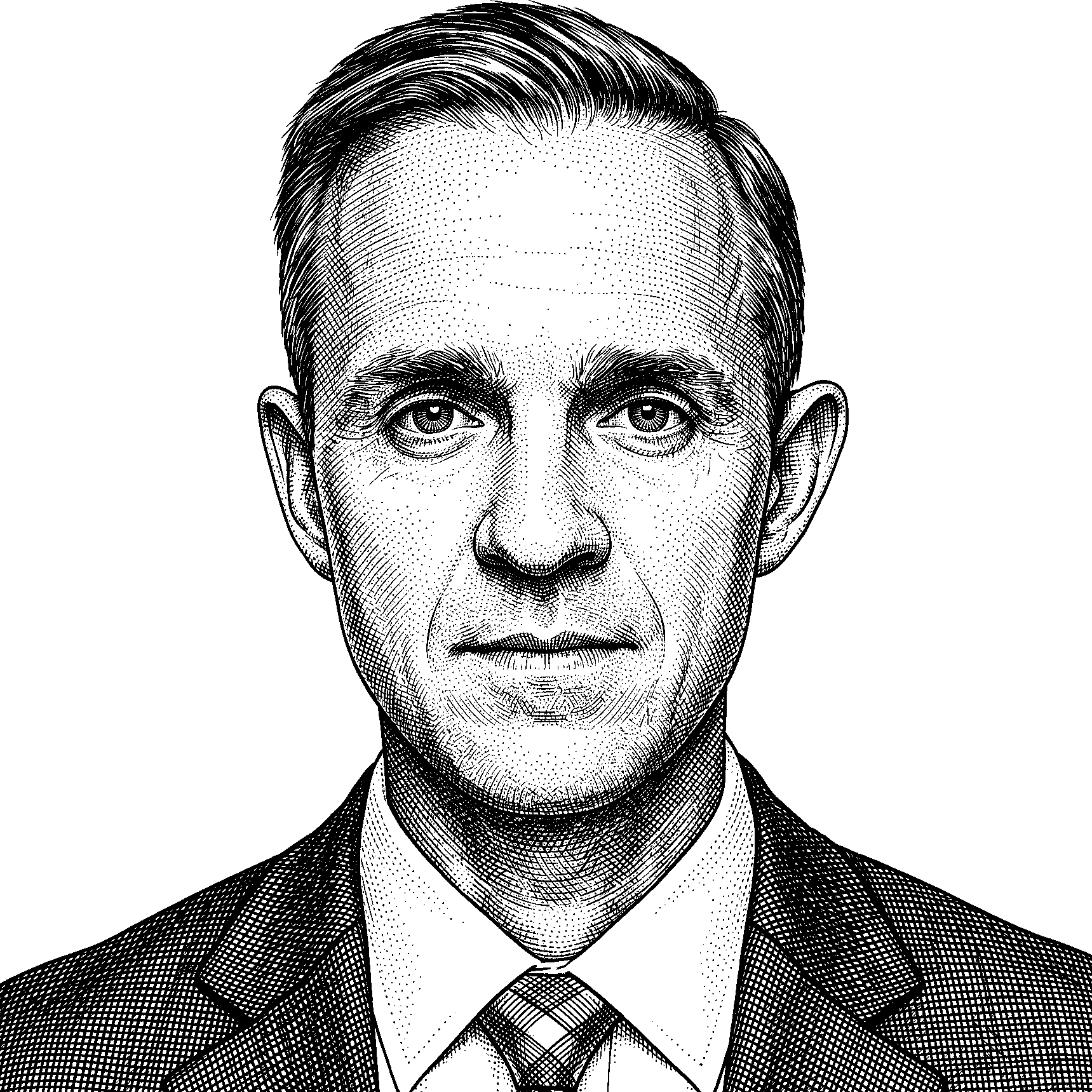
Carl Youngblood co-founded the MTA in 2006 and has served as its President and CEO since 2021. He is engaged with the Association’s efforts to explore the intersection of Mormon theology and transhumanist philosophy. Among the many initiatives that Carl has been involved with, he has designed and built the Association’s current website, which unifies all prior content in a single location using inspiring visuals and animations. ¶ Youngblood’s professional career spans more than two decades of full-stack software development at the intersection of Silicon Slopes and Silicon Valley. He was an early employee at Omniture (acquired by Adobe), a founding engineering leader at Divvy (a Utah-based unicorn startup), co-founder of Blockscale LLC (a blockchain services firm eventually contracted into Coinbase), and Senior Solutions Architect for Amazon Managed Blockchain at AWS. His technical fluency ranges from scalable web architecture to blockchain infrastructure—the kind of deep engineering experience that grounds his theological speculation in working knowledge of the systems he writes about. ¶ Under his leadership, the Association has developed its mission of promoting abundant human flourishing through the compassionate use of science and technology, fostering dialogue across secular and religious audiences and arguing that each has something essential to learn from the other. His writing, collected on his blog From the Depths, spans over a decade of conference presentations and theological essays: meditations on participatory resurrection, the alignment of artificial intelligence read through the Grand Council narrative, intelligence as eternal and multifaceted, and religion as social technology. He writes, as a colleague has observed, with warmth and accessibility on questions of momentous practical consequence—how to navigate faith crisis without losing faith’s power, how to think about resurrection as something we actively participate in rather than passively receive. ¶ Youngblood’s distinctive contribution to transhumanism is the integration of serious technical expertise with serious theological reflection. He embodies the Mormon transhumanist conviction that scientific and spiritual development are not parallel tracks but a single path—that the learning required to build better systems is continuous with the exaltation Mormon theology envisions, and that human ingenuity, rightly oriented, is itself a divine imperative.

Steven Christiansen holds a PhD in biochemistry from Brigham Young University and spent over a decade teaching chemistry and neurobiology in academia. He is Associate Director of Commercialization at the University of Utah Technology Licensing Office, where he leads technical and commercial diligence on therapeutics, diagnostics, medical devices, and emerging AI technologies. He served as Medical Strategy Director for the Utah Patient Coalition and delivered the keynote at the 2025 Psychedelic Society Conference. He is Chief Operating Officer and Vice President of the Mormon Transhumanist Association.

Samo Burja is a Slovenian-American social scientist and entrepreneur best known for Great Founder Theory, an account of how institutions rise, decay, and occasionally renew themselves through the work of a small number of people who genuinely understand how those institutions function. He is the founder and president of Bismarck Analysis, a research firm that studies the hidden mechanics of governments, companies, and other organizations, and a contributing editor at Palladium Magazine, where much of his writing on civilization, elite competence, and institutional knowledge first appeared. ¶ Burja’s central distinction, between “live players” who actively grasp and can rebuild the systems they lead and “dead players” who merely execute inherited scripts without knowing why they work, has become a widely cited lens for understanding why organizations that look stable on paper can hollow out from within. He argues that formal structures, laws, and credentials often outlast the tacit, living knowledge that originally made them work, so that a society can appear intact while quietly losing the capacity to renew itself. Much of his public work, through essays, long-form interviews, and his Bismarck Brief newsletter, traces this pattern across empires, corporations, and scientific fields, asking what it takes for a civilization not merely to persist but to keep producing people capable of founding anew. ¶ That question of renewal through genuine understanding, rather than habit or formality, resonates with a Mormon Transhumanist conviction that progression requires active, informed stewardship rather than passive inheritance. Burja writes from a secular and institutional vantage rather than a theological one, but his insistence that civilizations survive only through people who truly comprehend and continue the work of creation offers a striking, if independently arrived at, echo of the call to be active participants in an ongoing restoration rather than custodians of a finished system.
Transcript
Samo Burja
The human brain is the only supercomputer we can make with unskilled labor. We’re moving a trillion tons into orbit. Currently, we do not yet know whether we can carry a human pregnancy to term in lower than Earth gravity. Why not have a million people live on the moon? We will rise to the challenges of the future.
Carl Youngblood
What would it take to make the Saudi desert look like Yosemite? Samo Burja has done the arithmetic. Desalinate a Nile’s worth of water a year, pump it inland, bring in soil, plant redwoods. He thinks it would pay for itself. Samo is the editor-in-chief of Palladium, a San Francisco magazine about the future of governance and society. He founded Bismarck Analysis, a firm that studies how institutions work and why they fail. And he wrote Great Founder Theory. His newsletter, Bismarck Brief, has a sharp eye for where technology and money are headed.
Carl Youngblood
The companies it has profiled since 2021 have beaten the stock market by a wide margin. If you’ve heard someone called a live player, a person or group able to do things they haven’t done before, that is his phrase. And we’ve borrowed it ourselves. He’s not a Latter-day Saint, and you will hear how much common ground there is anyway. Not every pioneer carries a shovel. Some draw up the plans. And that is the kind of trailblazer Samo is.
Carl Youngblood
Isaiah promised that the desert shall rejoice and blossom as the rose. And the saints who settled the Great Basin took it as a work order. Zion has always been a project, and Samo is still thinking at that scale. Steve Christiansen, the Association’s Vice President and Chief Operating Officer, joined me on the sidelines of the Reproductive Frontiers Summit in Berkeley in June of 2025. We asked whether America’s institutions have grown old rather than mature, and what charter cities might do about it.
Carl Youngblood
Then, what humans are for in a universe this large? Which took us, by way of the moon, to the question I most wanted to ask. Whether there is anything like theosis in his vision of a space-faring humanity. He answered with a story about his sons, and I think it applies to all of us. Here are Steve and I in conversation with Samo Burya. Samo, thanks for coming on the Pioneers Podcast. It’s great to have you on the show.
Samo Burja
It’s great to be here with you.
Carl Youngblood
So you are the founding, or not the founding, but one of the editors.
Samo Burja
Yes, the Editor-in-Chief of Palladium Magazine.
Carl Youngblood
Excellent. This has been a really interesting new publication with a slogan of something around governance futurism. Can you tell us more about that?
Samo Burja
Yes, it’s a San Francisco-based magazine. We explore the future of technology, politics, and culture. Our view is that the main barriers to a better future are that people have not thought through what a society of the future could be like. You occasionally see this in science fiction. Every new technology, as it emerges, is automatically politicized. No one really proposes a way to productively integrate it in a way that solves fundamental contradictions. To give an example, every quarterly print issue of Palladium Magazine focuses on developing a concept in depth, one of them being the garden planet issue, which was issue 07. That one proposed that instead of sort of a degrowth environmentalism, where humanity’s impact on the planet is simply bad, and we should reduce energy consumption, we should reduce resource consumption, we should just shrink and, like, pretend we don’t exist, right, unmake ourselves in some way.
Carl Youngblood
That contrasted with simply not caring about the environment or simply, you know, polluting everything as can be polluted, the kind of stereotype of that, honestly, is not unfounded, right? If you have zero regulation, you end up seeing extreme pollution, as you saw, let’s say, 10 years ago in China, when many places, you know, the water was undrinkable, or in the 1970s in the Western world, where air was actually so bad that, you know, children had more problems with asthma than was typical.
Samo Burja
So what’s sort of the synthesis there?
Carl Youngblood
Like, our thesis was the garden planet, where we use technology to both manage the ecosystem and develop the ecosystem, as well as the industrial process. The thesis was that we over-optimized sort of industry, but we under-optimized the stewardship of the entire natural world, presenting a different version to mere conservationism, one where it is further developed, for example,
Samo Burja
by greening the deserts, or by, say, pro-nuclear was one of the positions, or another position was that, you know, if you consider something like the green and pleasant landscape of modern-day England, people don’t think of that as an artificial ecosystem, but it is. It took centuries of cultivation, of selection of species. Actually, some species were removed, right? Certain predators were removed and replaced with, say, a hunting tradition. So that’s what also people miss, right? If you now removed that hunting tradition, actually the ecosystem’s unbalanced. You have to introduce the predators for the megafauna. So I think there’s a lot of options here. And I think if we thought this way, the planet could be both much greener, much richer, and also more technologically advanced. And that’s just one quarterly issue, right? Every quarterly issue has a cohesive philosophical thesis.
Samo Burja
We believe that it is important to write, even though we’re writing about the future and the technologies might be obsolete soon, the sort of evaluation of what do these things mean for, you know, humanity? What do these things mean for the future of our society? Those should be timeless. A good reflection on, say, I don’t know, the nature of nuclear power from 1955 on its energy abundance, it should actually be timeless even today, even if we’ve made some modest progress. Or, more surprisingly, if you read, say, Vannevar Bush’s How We May Think essay from, I believe, 1946, you know, that was on computers and information technology, and it really hasn’t aged that badly at all. You could update it for current technology, and the core philosophical view that we should have machines that assist human thinking actually would be great. Many of the features he describes and wishes for in 1946 are still not available in 2025. So, really, if you go to, like, a foundational view of, like, what is needed, actually, then technological progress does not obsolete but adds to these reflections on technology.
Carl Youngblood
Yeah, one of your observations there that’s fascinating to me is the idea that we’re not factoring in the influence of humans themselves as a species as potential conservators of the environment and stewards over the environment. And this appeal to a historical example like the British hunting culture is an interesting one. I remember recently reading an article by your founding editor, Wolf Tivy, who also spoke at our last conference, called something about the Bison Sphere rather than the Dyson Sphere. Kind of fun, clever, play on words. So, that’s an example of, like, reviving megafauna, or at least benign megafauna, shall we say, like beneficial megafauna, and this concept of rewilding the environment that goes along with that. You’ve also spoken about some massive earth-building kinds of projects like cultivation of deserts and things like that. Could you tell us more?
Samo Burja
Well, one of the proposals and one of the views that has been explored both by thinkers around Palladium and myself have been the observation that the cost of desalination has dropped massively over the past few decades. Now, the desalination technology was mostly developed so far in two countries, Israel and Spain, and then applied productively both in those countries and in several Middle Eastern countries to supply basically fresh drinking water shortfall. So, occasionally, when there’s, like, a bit of a drought or the water planning wasn’t, like, quite good enough, they saw, “Okay, we need this much capacity to be built.” And that very small, incremental process over time drove down the cost of desalination significantly. So, we’re now at the point where if you are near the sea and if you have stable electricity, drinking water is not a problem anywhere in the world. We’re talking about cents per thousands of liters, right? Really, really low prices, but these prices are nowhere near the prices we would have if the volume were greatly expanded. The main reason currently, in most places around the world, desalination is not used to, like, you know, say, fertilize crops or perhaps extend natural parks is that, you know, reclaiming wastewater tended to be easier. However, no amount of reclaimed wastewater could make, say, the Saudi desert bloom with the American West bloom.
Samo Burja
However, I think it’s one of those cases where you increase the scale and the unit costs go down, right? One of the secrets of industrial civilization or the overlooked features is, you know, actually, per one car, that car becomes much cheaper if you buy 50 million cars than if you buy 50,000 cars. The manufacturing process has beautiful economies of scale. And the same would be true, honestly, of desalination. And further, it would produce a real incentive to develop the technology further. People have a misconception that desalination, it’s like, you know, gated by technology. No, we just so far don’t actually have demand anywhere in the world for that much water. But if we did, we could actually quite easily terraform large parts of the surface of the planet. You know, terraform is usually used for other planets. It means to make them more Earth-like, to say, make Mars or other worlds more like our own. But really, if we think about on Earth, a sufficiently large transformation of the natural landscape could be attempted. And I honestly think this might be the biggest draw for things like countries or regions rebranding or developing real estate.
Samo Burja
You know, there’s the Saudi Arabian project, The Line, which is this very futuristic city. And, you know, I never critique ambition. I never critique, you know, I respect the ambition. But let’s say, like, technical implementation could be quibbled with. It’s not clear the city’s design is actually a good idea. On the other hand, if, say, Saudi Arabia desalinated a Nile river’s worth of water a year, pumped that into the desert, planted, brought soil from elsewhere, planted trees. I don’t know. Let’s do something crazy. Let’s say redwoods. Let’s say they plant redwoods in a part of, you know, Saudi Arabia, call it the world’s second Yosemite park or something. They find some beautiful canyon. I’m sure they have it somewhere there. And, you know, they name it after Mohammed bin Salman or whichever king wants to have, you know, credit for it.
Samo Burja
And at first you might be like, oh, people won’t be attracted to this fake nature. No, they will be. And people love Central Park in New York. Lots of people don’t even realize that that’s fake nature. That’s not a preservation of a real part of nature. Right. That was just totally changed. It’s very crafted. Exactly.
Steve Christiansen
Yeah.
Samo Burja
People love a blooming, free, wild landscape. They don’t mind if humanity has a helping hand in bringing that be. And then consider the real estate prices around that park. Maybe it would pay for itself. Would Europeans want to live in green Saudi Arabia? Maybe, right? Maybe they would want to retire there or be tourists there or work there. I think they would prefer that to living in a gleaming blue skyscraper in the middle of the desert.
Steve Christiansen
Yeah.
Samo Burja
I think that would be more appealing than Dubai, actually. And, of course, in the United States, perception of a state like New Mexico or Utah would be profoundly transformed by vast green forests. And would people care that, you know, water is being pumped, I’d say salt water is being pumped through California or somewhere else, or is being desalinated through some source, and that, you know, that beautiful river they see there’s literally being water, fresh water pumped into it? No, they wouldn’t. No, they wouldn’t. Not after a while. Yeah. At first they might protest as it’s set up, but then they wouldn’t care. And when I said a Nile’s river worth of water, you might imagine that’s so expensive, right? That’s one of the world’s biggest rivers by flow. Well, it turns out to desalinated take something like 35% of Egypt’s GDP to desalinate the same amount of water at current prices, which sounds like a lot until you remember that 100% of Egypt’s GDP is there because of the Nile River. And also it’s a very poor country, so actually quite affordable for Saudi, quite affordable for the Western US. Yeah. I bet it would be much, much cheaper because, again, no one in history has had a reason to desalinate regularly that amount of water. Coincidentally, this is actually a pressing issue in Utah right now.
Steve Christiansen
And there’s a joke that I heard when I was a kid, but the end of the joke is that somebody’s showing somebody the craziest desert, the most desolate place in the world. And they walk up to the edge of a cliff and they look out and it’s like, oh, wow, this is like a thriving, beautiful, green landscape. Now what happened? And it’s like the LDS community moved into this Utah Valley and they irrigated. So as I say that, like the original LDS faith, as they moved across the country and went to Utah, their irrigation was a terraforming, right? And it’s in its own way. And, but Utah right now is like, they’re looking for more ways to get water. That it’s so interesting to me. Yeah. The things that you’re bringing up in terms of how they could. Yeah. Yeah. It’s related to this one as well.
Carl Youngblood
And I think a combination of cloud seeding and desalination could be really effective perhaps. And another thing worth mentioning is that that would probably alter the ecosystem in that area in terms of the, you know, precipitation cycle and all that other stuff. So, yeah, you might end up getting a lot more precipitation as a result of
Samo Burja
Of course. The, yeah. Yeah. Well, everything, the water you desalinate, if you were to use it in this, like a landscape scale way, instead of say drop irrigation or something like that, of course there would be more of it would evaporate, right? And that water, it’s added to the local water cycle, right? Some of it of course goes everywhere, but some of it’s trapped by the mountains and so on. It stays in the same place. Yeah. Yeah. Yeah. I, I would imagine that, well, it depends on the geology of the area as well. It tends to be easier to do the closer it is to the coast, but fundamentally pumping water uphill, it’s like, it’s just an energy abundance question.
Carl Youngblood
Right. So there’s where nuclear might come in as well. Completely. And also at the end of the day, you know, everyone talks about the uses of solar, right, of solar power.
Samo Burja
Well, it doesn’t really matter if you only pump water uphill during the day now, does it?
Carl Youngblood
Right. Right.
Samo Burja
So you could potentially. It stays where you put it. Exactly. Yeah.
Carl Youngblood
Be sure to check out our transfigurist artwork series with posters, framed prints, puzzles, and apparel, portraying inspiring glimpses of what future pioneers might achieve in a vibrant retrofuturist style. Buy them on our website at transfigurism.org/store. Every purchase helps us to make more of this kind of quality content. The other most important thing you can do to show your support is to like and subscribe and leave us a rating on Apple podcasts. Now, back to the show. I was wondering if you could tell us more about some of the philosophies of governance that have been promoted in your magazine.
Samo Burja
Yeah. We, you know, open to a wide variety of perspectives. There’s both the view that sort of when one does have straightforward government management of something, it has to be functional and competent. There were many case studies, many articles written on a wide range of governance topics: things like, you know, the development of Singapore; things like studies into the early 20th century or the middle of the 20th century when the US competently carried out projects such as, you know, the Apollo project; looks at, you know, the, say, the talent identification mechanisms that a country like Israel has today to like tap national talent and so on. So that’s on the one hand. And then on the other hand, we’ve looked at and published pieces by people who have undertaken efforts of governance that come from the civic community or even an individual basis.
Samo Burja
Vitalik Buterin wrote an article titled Why I Built Zuzalu, which was his, you know, somewhat whimsical name for, you know, basically this gathering, a month long gathering of all the thinkers he found most interesting in, you know, small Mediterranean town. And there were a number of overlapping conferences. And he proposed that this was a model in which online communities of like interest could cohere and could gather in this digital era, which, again, is very interesting, right? You have a connection of ideas. People get to know each other. But more than a conference, they get to know each other through a month or so of living in the same place. That’s actually kind of interesting and tricky to engineer, right?
Samo Burja
Of course, you know, people from New York might go to like Cape Cod and meet their Cape Cod friends or whatever. Vacation destinations exist. Religious pilgrimages, of course, exist. But that was kind of a new innovation and upgrade to something like that: the pop-up city. Exactly. The pop-up city was the concept. Right. And implicitly in it is the idea that maybe some pop-up cities become permanent.
Samo Burja
There were other concepts such as Prospera. And at that point, you start talking about ideas like charter cities where governments devolve a lot of their autonomy to these new local self-governing communities that might do things differently than, say, I don’t know, the government of Honduras would, right? And that produces then the economic prosperity. The question of deregulation is more than just lobbying the government and asking very nicely for deregulation. It’s figuring out mechanisms such as charter cities that have been shown in history to preserve spaces of different regulatory environments, even in the presence of very strong governments.
Samo Burja
And one of the things that Palladium does not hesitate is to look at the entire world as is. You know, in the U.S., we, of course, think of China as a rival. However, when they get something right, we do ourselves no favors when we ignore it. And, you know, it’s not that communism suddenly started working. It’s that they built, they made special economic zones in their coastal areas where the central government intentionally ceded kind of its authority on economic matters. And that’s where their prosperity came from.
Samo Burja
So, might the U.S. be ready for special economic zones? And how would you frame that or propose that, right? And these charter cities are mostly imagined for, say, third world countries, countries that are developing countries that have, like, immature institutions. But we should consider them in the world where our institutions are not just mature, but perhaps senescent, right? Or need of renewal, rejuvenation. And the concept was framed as freedom cities, which is also a term that has been promoted by the current administration. And Mark Lutter wrote an article on a freedom city right next to San Francisco where it would be very needed, made on federal land, right? Where some of the parks and naval bases that are owned by the federal government, they’re not currently used, could be by the federal government opened up for development and kind of bypassed this gridlock of San Francisco city politics and California state politics. And these are all things that are worth considering and thinking about. And we try to publish and curate such perspectives.
Samo Burja
So, everything from country level governance, city level governance, what an entrepreneur like Vitalik can do with his own initiative, small communities, alternate education environments, right? We had issues on university education and the problems of current university culture in places like Yale, Harvard. What would it look like if we re-imagined the university system and, I don’t know, replaced it with something like high-skilled apprenticeship in like very demanding professions? It might just be that we have overtaxed the university, right? The university is in a way this wonderful cultural, civilizational legacy from the high Middle Ages, right? We’ve had universities in the Western world from 1100 AD basically. They have changed and transformed over time. But every institution, if you apply it beyond its intended scope, if instead of being this place where a small number of scholars gather and maybe, you know, highly specialized humanistic skills are developed like law, medicine, etc., and then you make it the main way you distribute talent in your society, make it this very important credential, this super financialized product, maybe the university is just, it’s not the tool for the job, right?
Samo Burja
So even when people are sort of hating on the concepts and the shortcomings, the very well documented shortcomings of modern universities, which are both, you know, intellectual because the freedom of speech problem. They’re also intellectual in the sense that they’re very narrow and follow the latest political fad rather than the full legacy of human knowledge, such as, you know, in their attempts to fix this, such as St. John’s, like, you know, in a great books program and so on. There’s intellectual shortcomings, but then there’s also an economic shortcoming. Student debt in this country runs in the many trillions of dollars and it’s by this point, you know, almost like a national financial crisis. And then there’s also the pernicious political effect where every single person that holds student debt that they cannot repay is now basically like a lifelong voter for more government transfer. So in a way you’ve made the most talented people in your society in a way like, you know, like kind of debt slaves. I mean, I exaggerate a little bit, but I honestly think the universities were complicit. The current universities were complicit in that. But again, it was sort of government that even mandated this whole system of student debt and, you know, the fifties and so on. So really we’re using this institution for the wrong purpose.
Samo Burja
And that’s actually true of many layers of our society, right? We’re using federal government for, which has an important role, for wrong purposes. We’re using international institutions, which again have a role in peacekeeping, for the wrong purposes, right? They shouldn’t be managing the world economy through green energy credits. Like that’s just, they’re just not good at that, right? There’s no reason they would become good at that. There’s no reason they would even track when, say, the carbon credits are actually resulting in a notable improvement in, you know, carbon sequestration.
Samo Burja
There’s a world of difference. If you are paying carbon credit, you’re paying companies to experiment and sequester new technologies versus if you’re paying companies to just like, you know, abandon farmland, grow some forest. And that forest sequesters the carbon for 10, 15 years. And then it’s back in the air because, you know, the trees like you harvest them or they rot or whatever. So there are tricky things there where it’s like not even clearly good for the environment in any real sense. Yeah. So I think a misapplication of these like basic civilizational fundamentals, some of it is honest mistakes, right? We didn’t know how to adapt to a world, you know, with the 1950s, the Sputnik moment, we didn’t know necessarily how to allocate our best and brightest, how to identify them, how to find them. How much could education do? How many people could learn calculus? We just, we never tried it. We didn’t know.
Samo Burja
But then on the other hand, there’s also under the technocratic surface, there’s always a deeper political fight. And our perspective at Palladium is that these are fights fundamentally of worldview and philosophy. And if mistakes in your perspective on the world, your perspective on human nature, if they are unaddressed, no amount of merely data driven technocratic perspectives can fix that. Right. Right. It has to be together qualitative and quantitative reasoning. And we’re optimistic in that sense. We think that the future to come into being has to be governed by, you know, again, by either individuals or like institutions, because unless you seek, right, to seek to decide what the future will be, you’re just going on autopilot. And I think the autopilot does not go anywhere very good.
Samo Burja
We kind of feel, and this is the editorial perspective, that technology is sort of driven by human creativity and will. And the autopilot is just the sort of decoherence of society where it’s like more and more clashing, less and less capable of discussing things. We have sort of the scenes like we’re seeing right now in Los Angeles of, you know, the self-driving car, a miracle of technology set on fire. Right. As an act of protest. Isn’t that interesting? What is that car a symbol of? Why is torching that car rather than a different expensive car? Why is that the expression? Right. Political anger. That’s worth considering, right?
Samo Burja
Because the answer is deeper than one of the things. It’s not just that they, you know, didn’t go torch Lamborghinis, though they could. They didn’t even, they did not even torch Cybertrucks, though they could. Right. Of all things, Waymo and Google are probably significantly to the left of, you know, Elon Musk, right, like politically, even the average person. So, okay, what’s happening there? Well, on some level, maybe the view is that, you know, that self-driving car is bad for low-wage workers or for illegal immigrants, right? Okay. Like it may be a symbol of human obsolescence, essentially. Exactly.
Samo Burja
I don’t see it that way. Right. I think it’s a wonderful service and, in a way, could be one day an upgrade to, you know, the hassle of going everywhere and finding parking in an urban environment. That’s a problem. In a suburban lower density, that’s also a problem. You know, you’re in your safe, air-conditioned little bubble. You can have a phone call and perfect, you know, privacy. I mean, not privacy from Google, but, you know, you never have privacy from Google. You have apps installed on your phone already. So, and you are, you know, freed up to do other things. And some of those things are still things we do with our hands. There’s no lack of things to do with our hands, really. The demand for highly crafted, for handcrafted goods, for such luxury items, for, like, antique furniture and so on. These things have only been going up.
Carl Youngblood
Right. Right.
Samo Burja
And these are things with, like, a relatively low barrier to entry. So, I think the richer society is, the more there will be a need for such services.
Carl Youngblood
Right.
Samo Burja
And then, of course, you know, you have personal trainers, you have chefs and so on. And then, you might say, oh, but will not the chefs be obsoleted by, I don’t know, the optimist robot, right? But our society, you know, we actually adapt pretty well. When we want to, when we want people to work, when we want them to develop themselves, we find new things for them to do quite well, right? It’s just on a fundamental level, we maybe don’t want that anymore. And there are structural reasons where we’re uncomfortable with, like, you know, whole classes of self-development, right?
Samo Burja
I think part of our problem, and this has been explored by some authors, and I do want to emphasize, while I’ve spoken about an editorial perspective, we have a wide range of opinions. Say, you could read more AI skeptical and more AI endorsing articles on Palladium magazine, right? We try to inhabit this sort of neutral perspective of the flourishing future. Exactly. We discover it through the conversation between the pieces.
Samo Burja
With that caveat, I’m going to convey my own opinion, which is that we have devalued inappropriately certain kinds of work that are very valuable, mm-hmm, where things that are, like, you know, high-skilled blue-collar work of various kinds, such as maintaining or operating certain kinds of machinery, highly skilled, you know, service sector things, such as, like, you know, being a chef and so on. Manufacturing is a great example. Manufacturing is a great example. Yeah. Manufacturing, construction. Construction is, you know, of course, there’s lots of use of heavy machinery. Like trade jobs, welding. There’s so much. Yeah.
Carl Youngblood
There’s so much.
Samo Burja
There’s so much in construction that is not automated and will not be automated for the next half a century, right? If it was, the Amish could never be competitive. But they actually are. Yeah. Right. They moved into the construction sector in many of the states that they’re in because it’s very, you know, it’s very heavy. But I think we’ve devalued it because we pretend, oh, that’s not the real economy.
Carl Youngblood
Right.
Samo Burja
Building the buildings. The real economy is apps. Well, you know what? Those apps, you know, startup has to raise many more millions of dollars, maybe even hundreds of millions of dollars to pay its software engineers to live in San Francisco because it doesn’t have enough houses.
Carl Youngblood
Right.
Samo Burja
So actually the houses matter. Like literally the rate of housing in San Francisco and in these other cities where you do have the congregation of talent and capital probably shows up in US GDP numbers, right? So actually those hands, very valuable. It’s just, you know, perhaps we, I don’t know, as a society need to confront some problems. Why do we have difficulty cultivating talent in the US? And again, you know, this is not even a statement on immigration. This is a statement directly on why are the stats so bad for development of talent in the United States outside of the university pipeline on these other demonstrably valuable sectors of the economy where you note the, say, drug abuse rates among workers at Boeing. That’s not a theoretical problem. I think there was just another crash recently. No, that’s a real problem.
Carl Youngblood
Yeah.
Samo Burja
Why do we have, why do we have, you know, the opioid addiction problem, but all of these other substances? I think part of it is we’re sort of, you know, we’re allowing people to, all else equal, of course, in favor of personal freedom. But I think we have made fundamental mistakes where we sort of, we kind of think humans are obsolete or maybe the humans are actually bad because they’re, you know, humans. They’re the source of pollution. They’re bad for the planet. We should have fewer of them. Yeah. There’s all of this kind of anti-humanist, yeah, there’s kind of misanthropy in a lot of our rhetoric.
Carl Youngblood
Totally. Why not let them be childless and take some opioids? Uh-huh. It’s crazy. No, really. Wait, wait, wait.
Samo Burja
Yeah.
Carl Youngblood
That’s actually what’s in the back of the mind when some of these technocratic policies are crafted. And that’s why I think that, no, actually, you can be a misanthropist if you want good policy.
Samo Burja
Yeah. These are topics I’m passionate on, so I hope you did not have an extended monologue.
Carl Youngblood
No. Absolutely. Great for many follow-up questions that I have. So, you mentioned charter cities. In fact, there’s a summit going on in Nairobi right now that our operations manager is attending. And Curtis Lockhart, sort of another partner with Mark Lutter, spoke at our 2022 conference. Cool. So, we’re very excited about some of those efforts in special economic zones. And I was wondering, there’s two big questions that I’d love to hear more from you on. Yeah.
Carl Youngblood
So, this concept of optimism, I think, is really exciting and interesting because it does seem that so much about the capacity of the state and of our culture to produce great works really does seem to depend on these very ephemeral cultural, you know, sentiments. And there are ways in which optimism or pessimism can be a kind of self-fulfilling state, right? And then this ties into, I hope you don’t mind if I ask both the questions, see if you can figure out how to square the circle. But this really ties into some concepts that are near and dear to the Mormon Transhumanist Association, which are involved with theosis, this notion of humanity and humanity’s destiny as one of attaining godhood. And I especially was interested in your most recent issue and some of the kind of vision that you presented for future spacefaring humanity. It’s both an optimistic vision and it also has some connotations of theosis in there as well. I’d love to hear you talk more about that.
Samo Burja
Well, it’s a challenging vision, but I think true optimism is not like, you know, we’re not going to have to do anything. It’s more that we will rise to the challenges of the future. The issue title, issue 17, which we, you know, launched in March, we had a wonderful Washington DC event where some of the authors and others came. So the universal man issue had the concept of the sheer scale of the universe. The sheer scale of the cosmos is such that people often do not have a good answer as to what should humans even do there. And that actually is a frequently brought argument against human spaceflight and has been since its very inception in the 60s. These arguments were already made, you know, why sort of, why sort of… Why go there? Why go there? Why go there?
Samo Burja
Exactly. Exactly. Well, you know, there’s a funny quip that avoids the question by Von Braun when he says, you know, the human brain is the only supercomputer we can make with unskilled labor. It’s kind of funny, but I think we, again, we sell ourselves short. It’s kind of amazing how many, how large does the data center have to be to train the optimist robot to walk? And then my two-year-old, like, master that. That’s a great tie-in with the conference we’re at today as well. The Reproductive Frontiers Conference, yes. And the upcoming issue of Palladium Magazine, issue 18, which will be titled A Biological Inheritance. But before we go into that, I just want to, like, say a bit more about the vision.
Samo Burja
So, the universe is vast. There are entire worlds to fill. Even if faster than light travel is not possible, there are other alternatives. For example, there was an article by Tim Lenton on the case for human hibernation, where it points out that there’s a number of technological and biological approaches. And it actually, even in human biology, it seems that a lot of the prerequisites that say, I don’t know, the grizzly bear uses for hibernation, we actually share a lot of those prerequisites. And there’s been research on other species of mammals that do not natively hibernate that is possible to induce in them hibernation. That’s fascinating, right? So, if one could hibernate, then, you know, the speed of light being what it is, where it takes years or decades or centuries to reach another star, perhaps, you know, at one point, that is no longer something that cannot be overcome. One goes into a deep sleep and goes there as a community of people. You cast the old world behind you. You are committed to this life a few hundred years in the future. You will make it this other star. There’s something romantic and interesting about it.
Samo Burja
It’s also not something that a civilization could do if it’s too monolithic. It actually requires a civilization with internal variety, right? That’s right. Yes.
Steve Christiansen
Yeah.
Samo Burja
And it is something that both requires, like, individual ambition, but it’s not hyper-individualist. Because if you’re hyper-individualist, well, I can decide to go there, but how am I going to convince, like, 600 or 6,000 or 60,000 people to let their old life behind and go with me? And if I go on my own, well, I’m not a society, right? So, really, there’s something very important there. It’s a test, a challenge. The universe or, you know, again, and I do believe in God, God perhaps set us a challenge. You have to be yea high, yea tall to get there. And, you know, maybe that’s actually good. When I set a challenge, you know, for my sons, it’s usually for a good reason. I was like, you can do that, then you can do this other thing. Until then, not going to allow it, right? Pretty reasonable. But you don’t have to believe in God to think that. You just have to believe in this, in a pro-human vision or in a view where the challenges are not, they’re something we grow into.
Samo Burja
And there are other perspectives, such as, what is the best habitat for humans to live in? Perhaps it’s not even worlds. Perhaps it is megastructures, like O’Neill Cylinder. The O’Neill Cylinder, we have this, like, massive space station that’s a rotating cylinder. It’s made out of, say, steel. It’s thick enough that radiation is not a problem. So it radiation shields automatically. It has the structural integrity. It can spin fast enough that that force reproduces gravity, which is very important. Right?
Samo Burja
Currently, we do not yet know whether we can carry a human pregnancy to term in lower than Earth gravity. We assume it’s probably doable, but we’ve never tested it. We have actually more data on microgravity than we have on low gravity, right? Microgravity being what’s… Low Earth orbit. Low Earth orbit, basically. Yeah. It’s like, it’s zero G. It’s close to zero G enough. Sure. Technically, microgravity.
Samo Burja
We don’t know what it would be like to carry a pregnancy on the moon. Or we don’t even know what happens if a cat has, like, you know, little kittens on the moon. We’ve never done that. Right. We’ve been on the moon seven days, and we only brought men. So, you know, no pets, no women, nothing. Right? It’s just a very limited data set. Right? We at best know what the radiation on the moon did to the astronauts for those few days when they were there. And again, like, I don’t even think those problems can’t be overcome. But even if those problems could not be overcome, which I don’t believe, you would still have the option of constructing these giant stations.
Samo Burja
And then the question is, how many tons? Well, a trillion tons. So then it’s like a trillion tons in orbit, which was, again, a title of a Palladium article published in that issue by one of our authors, Brian Balkus, who’s, you know, very interested in aerospace. He’s written other excellent pieces on aerospace, on the golden age of US aerospace engineering. You know, he points out, and this is a case made by others, such as Casey Hadner in his article, Why Starship Matters. You would not design Starship to corner the global satellite launch market. You design SpaceX’s Starship to be able to carry people to Mars. But having fulfilled that technical challenge and having developed it for that, accidentally, you end up dominating the satellite market anyway. And that says something interesting about the nature of discovery and design.
Samo Burja
Many things can be made just to win the global market share. But really, if you just want SpaceX to dominate all satellite launch, Falcon 9 is good enough. You actually already did that, already beat everyone else. The Chinese are working in reusability. They don’t have it. The Russians haven’t even really started working on it. The Europeans haven’t really started working on it. So actually, you’ve already cornered the global market. From a profit maximizing perspective, you’re done. But from a perspective of a greater vision of what’s possible, both things like the defense market or things like reaching the other planets, you’re not done. So you develop Starship, and then Starship, when successful, reduces the cost even further below the Falcon 9. You just obsoleted your own product, right? I think that’s, you know…
Carl Youngblood
It’s true. From a pragmatic standpoint, a lot of SpaceX’s decisions don’t seem to make exact sense. But when you look at it with a grander vision…
Samo Burja
It really does.
Carl Youngblood
Yeah.
Samo Burja
So I think that, you know, much is like, you know, if you go to the gym to be stronger, you end up like, you know, maybe doing better work generally in life. You have some furniture to move. You go to the gym three times a week to look good, maybe, or to be healthy. You’re going to move that furniture more easily, too. So what kind of furniture are we moving? Well, we’re moving a trillion tons into orbit, right? To build those O’Neill cylinders and megastructures where thousands of people can live in like picturesque, natural-like landscapes and buildings in space around orbit around Jupiter or around, you know, Venus or wherever, right? Wherever we need to be.
Samo Burja
If you were to do that, that incentivizes the next technological leap. In my opinion, Starship has already solved all the difficult technical challenges of going to Mars. It seems like it will work. It’s still last few testing economics might not quite work out, but I think it’s a 90% bet that it will work out. We achieved that lift, taking that mass all the way to some place like Mars or a lot of mass to low Earth orbit. We don’t have a next challenge. And I think these megastructures, if one were to, if a nation, right, or an extremely wealthy individual, like literally maybe, you know, Jeff Bezos and Elon Musk might be the only ones that are rich enough to do that in the tech world, were to set the challenge of building such a megastructure and then there would be an incentive to develop even better launch vehicles than Starship, right?
Samo Burja
Then there would be a reason to do that or to do completely new things, such as, for example, set up mining on the moon. The moon has no atmosphere. It has low gravity. There’s abundant solar power potentially on the moon. You could use a concept called a rail gun, which is basically magnets to accelerate something until you get most of the velocity needed for it to escape the moon’s orbit and escape the moon’s like gravity and go into orbit around Earth. You could set up lunar mining. And then as a side effect of setting up lunar mining to put a trillion tons of steel manufactured on the moon, launched into low Earth orbit assembled there, you just corner the global satellite market again, because why not just also build the satellites on the moon? Right. Actually, when we’re talking about that, why not have a million people live on the moon? Why not build big domes on the moon, big steel domes, fill them with oxygen, enjoy some high jumping sports or something like that?
Samo Burja
I once heard a fun calculation that if you had Earth pressurization, right, one bar Earth pressure of air on the moon, a human powered flight is possible. And that would be a fun sport. Wow. You could just literally get big wins and like flap your arms and you’d fly because the gravity is so low. Some of Da Vinci’s machines would actually work. Yeah. And look, you know, you’d never go to the moon to enjoy new extreme sports, but once you’re there, you might as well. You might as well. Yeah, exactly. And I think that says a lot about the human condition. Right. And I think this is this is kind of the basic thesis of the issue. And it’s sketched out through like, you know, like nine articles that, you know, it once we meet these challenges, if we do not shy away from them, if we feel ourselves worthy of reaching these challenges, we thrive in all these other ways that if we shied away from the challenges, we never could.
Carl Youngblood
Be sure to check out our transfigurist artwork series with posters, framed prints, puzzles and apparel, portraying inspiring glimpses of what future pioneers might achieve in a vibrant retrofuturist style. Buy them on our website at transfigurism.org/store. Every purchase helps us to make more of this kind of quality content. The other most important thing you can do to show your support is to like and subscribe and leave us a rating on Apple podcasts.
Samo Burja
Now back to the show.
Steve Christiansen
There’s this concept called the Dunning-Kruger effect, which is that, you know, when you don’t know too much, you’re very confident. And then you as you progress through stages of learning, right, you you go through a phase of low confidence and then you slowly get it back. I bring this up only because your, your, your perspectives are so holistic and well-rounded and, and so exceedingly creative as well. Right. It’s not just, you know, they’re well thought through it. I’m assuming that this is within the role at Palladium and all of these, these theses that you’re diving into and, and thinking into for the, the people that will be listening to this, like members of the MTA, but also like members of the like LDS community. There, there’s a huge swath or like range of people and, and I feel how, how do you help someone get from where they are to where you are in terms of thinking about problems more creatively like this?
Steve Christiansen
I’m sure there’s, I guess part of the, sorry, just the one last thing. Like there’s a, there’s a story behind like driving you towards this level of like creative problem solving. And like, like what, what was your process and what would you say to, to listeners about how, how they might be able to engage in problems with more, more optimism and more like, like there’s a lot of ways to, to get to this resolution. Yeah.
Samo Burja
You asked a big question.
Steve Christiansen
Yeah, kind of.
Samo Burja
Um, I, I can give like the broader, uh, history because even, you know, before I became the, uh, editor of palladium, palladium magazine, I already had written for it. I actually like donated to it. It’s, it’s nonprofit sustained by its members. Uh, you know, there’s no, again, there’s no mass market demand to make something like palladium, but once having been made, it’s then like, you know, a beautiful print issue of this one on scientific authority. Right. So if you appreciate this material, we encourage you to support organizations. To, to subscribe if possible and, uh, join our community and come to our events and speak to our writers, which is now that I’ve, uh, plugged it to make the intellectual effort sustainable. Yeah. It’s also one of the ways that I have continued to learn. So, like I said, I, I, I, I did, um, uh, I did a lot of historical writing. I have a whole, um, like a book titled great founder theory. I did a lot of, um, economic and political analysis in my career at the consulting and research for my founded Bismarck analysis. I oriented my life around this kind of intellectual problem solving. And then, uh, when I met, you know, and became good friends with Wolf Tivy, the founder of palladium, I immediately saw the like immense potential of both as a writer first and a community member and supporter, uh, being active in it.
Samo Burja
I got to meet many more writers outside of the professional space or outside of the already existing foundations of historical knowledge that I had pursued where, you know, well, books are excellent and like, you know, uh, something like a feedback loop from, you know, if your investor newsletter, the one that we, that I published at Bismarck and still published Bismarck brief. If, if it’s not good, then people won’t subscribe and they’ll be unhappy with their investments, et cetera, et cetera. So that’s a good feedback loop. But the best nootropic is really other intelligent people who have strong interests. Now, while, while I crafted say the vision for a universal man issue 17, I could not have done that without the intellectual inputs of every single writer there. I did not thoroughly on my own understand yet the economics of say starship. I kind of had a guess that something in this space was true just on the basis of things said by Elon Musk, who on SpaceX, at least is like very reliable when he says something about the physics of it or whatever. It’s almost always true, which is honestly impressive for a CEO, you know, the CEO of, uh, Boeing or Lockheed Martin would not be capable. They don’t have an engineering background. And maybe that’s a problem they used to write. Right. Like when, uh, you know, Northrop Grumman was, uh, able to build excellent cutting edge, still fighters. They had a CEO with an engineering background still. So Casey, Casey’s article as I edited, as we fact checked, as we researched it, not just as I read it, it, uh, caused me to ask questions. I wouldn’t have and caused me to consult other friends in, in undergrad.
Samo Burja
I, I’d studied physics. So that came in handy even, but more importantly, I had an intuition of like, okay, who, who knows what they’re talking about in this domain that went much further down that path than I did. Uh, so, you know, knowing how to knowing enough about a field to evaluate experts in the field and then consult them when needed. Say when you need to fact check an article by, uh, you know, someone that has a PhD in the relevant subject work for NASA, you know, regularly writes about, uh, you know, even beyond palladium, right? Regularly writes on space X and, and space. Okay. Well, it’s good to know who can fact check that guy. Right. Like that’s good to know. And, uh, so the editing and the creation of every single issue, immensely educational for me and the other editors.
Samo Burja
Uh, and you know, hopefully the writers themselves, like they’re often very, uh, you know, happy when they’re published in, in, uh, palladium. Many of the articles, you know, we publish on the website weekly. Uh, sometimes the articles are released first on the website and then in print, but often they’re print first. And when people receive that and it’s like their word and they know that, oh, this has gone to like a few hundred people in this beautiful format that’s meant to be collected and treasured. Many people like, uh, go to the higher subscription tiers and they just want to collect all, all 18 of them soon. Right. Or at least all 17 right now. And they try to finish their collection. Right. So we, we appreciate that and we write for it to be worth reading on the longer term, because again, the print is also a form of distraction free reading. And that is something that Wolf, uh, independently came to, but I also noticed that when I read, uh, an ebook and I do read ebooks, it feels like screen time. Yeah. It exhausts the same mental and emotional, maybe even spiritual energy as checking my phone, even though, of course, like you, when you’re checking your phone, that’s, I’m not checking my messages when I’m say reading it on a Kindle or something, but still screen time exhausts. And I found that reading a physical book or a physical print that gives me a whole extra hour or two reading a day.
Carl Youngblood
Yeah. Thank you so much, Samo, for your, uh, insights and your contributions to building this beautiful and, uh, enlightening community. And we appreciate you being on the show and would love to hear any of your final recommendations to our audience in terms of reading. I, I’m sure you would recommend this particular publication, but if you have any other, uh, final thoughts about, uh, some of the most influential books in your life, uh, love to hear your thoughts there.
Samo Burja
Well, you know, I think that there are so many, but, uh, I think the, uh, Anabasis is an underrated book. Uh, this is, uh, Xenophon’s, uh, March of the 10,000. Yeah.
Samo Burja
So when Greek mercenaries, uh, soldiers found themselves deep in Persian territories, having won a battle for the Persian prince, they were hired to fight for. However, the Prince died losing the war because then the claim to the throne went away. They needed to organize themselves with no preexisting structure to march from modern day Iraq to the shores of the Black Sea, where other Greeks lived, who could help them, uh, find safe passage back to their homes in the other Greek city states in Greece proper. And in Western, what is today, Western Turkey, what is then Anatolia, is this remarkable document where it’s like, you know, he’s telling the story of their travel. Uh, Xenophon was elected their leader on the spot, right? Uh, telling how they self-organized to make this happen.
Samo Burja
Because think about it. If you took 10,000 people today, even 10,000 soldiers, and there was no formal command structure, how would they self-organize? If they were like, you know, 10,000 soldiers from like random Western countries, it’s not clear that would be quite easy. Right. And if you see that people, then you understand, oh, of course that people could help self-governing policies, like a city-state. They practiced it all the time. They became a traveling new community in city-state.
Samo Burja
And, uh, you know, soon he also talks about the geography of the area, reflects on the ruined walls of, I think, Nineveh. They passed Nineveh and they don’t know that it’s Nineveh. Just like these ruined walls predate the Persians by so long. And the city gives me shivers because maybe my home city will one day be a ruin. And, of course, today his home city is a ruin. Right.
Samo Burja
So I think that’s a great book, I think. And it’s by someone who, you know, is living through the period and is a practitioner of politics, of war, of human organization. And, uh, I think, you know, I think it’s important to, uh, to read on concrete episodes of history just to ground your intuition of what is and is not possible.
Samo Burja
And then, uh, in addition to this, it’s, you know, it’s going to be boring, but I think sort of, uh, Plato’s Republic is underrated. Uh, you can actually read it almost as a self-development guide, not just as a, as a philosophical work. You know, if you’re in technology like Zero to One by Peter Thiel, it’s become a foundational work, but it’s actually a lot of subtle insight there about sort of the nature of technology and progress. I guess I need to consult my own reading list, but I think three books is enough.
Carl Youngblood
That was pretty good given the impromptu nature of my question. Yes. Thank you, Samuel Burja. It’s been great to have you on our show and I wish you every success with Palladium and with Bismarck and your other future endeavors.
Samo Burja
Yeah.
Carl Youngblood
Thank you. Thank you very much.
Samo Burja
Thank you so much.