4 Reasons I Don't Identify as a Singularitarian

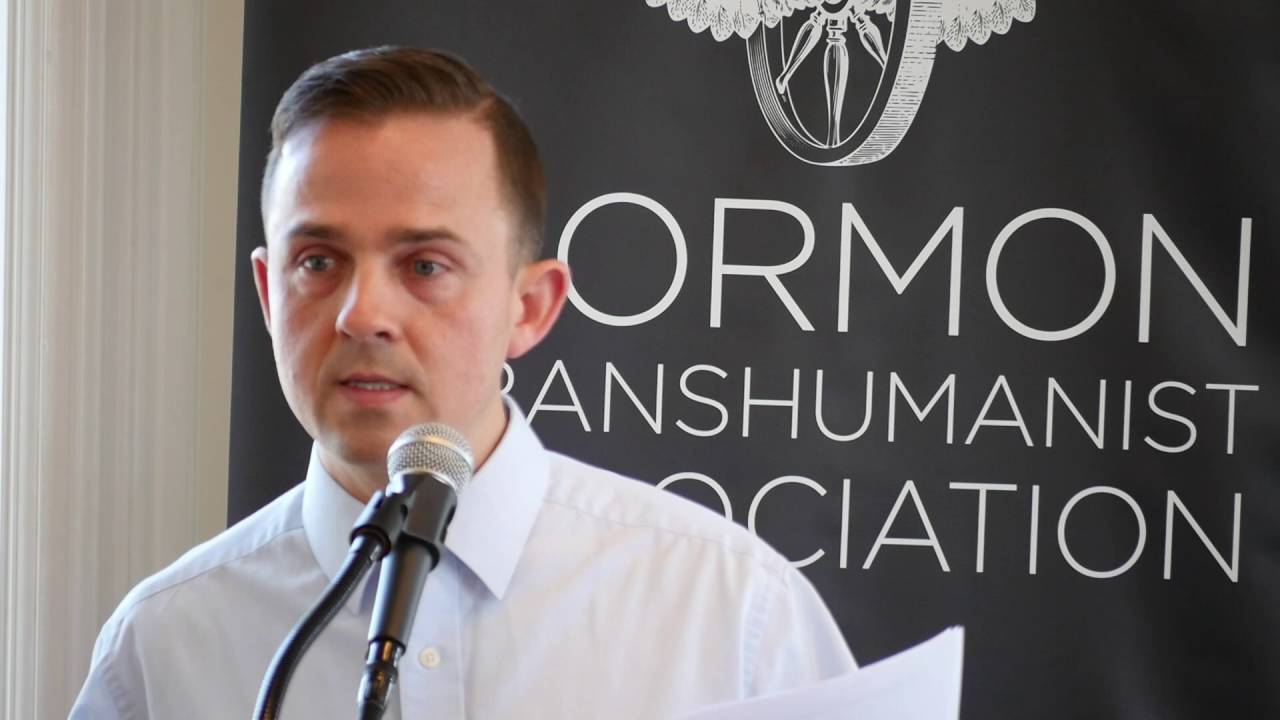
Lincoln Cannon is an American philosopher and technologist who co-founded the Mormon Transhumanist Association in 2006, serving as its president from 2006 to 2016. He is a leading advocate of technological evolution and postsecular religion, combining software engineering expertise with degrees in philosophy and business. ¶ Cannon is also a founder and board member of the Christian Transhumanist Association. He formulated the New God Argument, a logical argument for faith in God that has become popular among religious transhumanists. His academic work includes “Mormonism Mandates Transhumanism” published in Religion and Human Enhancement: Death, Values, and Morality (Palgrave Macmillan, 2017) and “Transfigurism: A Future of Religion as Exemplified by Religious Transhumanists” published in The Transhumanism Handbook (Springer Verlag, 2019). ¶ Mormon transhumanism, as articulated by Cannon, holds that humanity should learn how to be compassionate creators. This idea is central to the Mormon theological tradition, which provides a religious framework consistent with naturalism and supportive of human transformation. Cannon’s work bridges religious faith with scientific advancement, advocating for the ethical use of technology to extend human abilities in ways consistent with a religious worldview.
When others learn that I identify as a Transhumanist, or when they see me reference Moore’s Law or Kurzweil’s Law with enthusiasm, they often assume that I identify as a Singularitarian. That is, they often assume I’m someone who advocates the idea of the Technological Singularity. It’s an idea that persons interpret and express in different ways. Basically, though, we could say that the Singularity would be a time when technological change is so rapid that, given our present intelligence, humans would be unable to predict or control the change. However, despite those assumptions, I do not identify as a Singularitarian. Here are four reasons why.