Authors

Antoine de Saint-Exupéry
Antoine de Saint-Exupéry (1900–1944) was a French aviator, writer, and moral philosopher whose work stands among the most enduring explorations of human meaning, courage, and the relationship between solitude and community in the twentieth century. Born into an aristocratic family in Lyon, he pursued aviation at a time when flight was still a frontier art, serving as a commercial and military pilot across Europe, North Africa, and South America. His cockpit became a laboratory for existential reflection, and the sky a medium through which he interrogated what it means to be fully human. Saint-Exupéry’s literary output is inseparable from his vocation as a pilot. Night Flight (1931), Wind, Sand and Stars (1939), and Flight to Arras (1942) drew directly from his aerial experience to trace the moral dimensions of responsibility, sacrifice, and fraternity under risk. The Little Prince (1943), written during wartime exile in New York, became one of the best-selling and most-translated books in history—a deceptively simple fable about perception, love, and the invisible bonds that give life its weight. He disappeared on a reconnaissance mission over the Mediterranean in July 1944, never to return; the mystery of his end deepened the mythic quality already surrounding his life. Saint-Exupéry’s lasting significance lies in his insistence that technology—the airplane above all—does not diminish humanity but can, rightly inhabited, enlarge it. He understood flight not as escape from the earth but as a vantage from which human solidarity becomes visible in a new way. His writing returns persistently to themes of creative discipline, the cultivation of inner life, the obligation of the living toward the lost, and the kind of love that sees what is essential rather than what is merely present. These concerns resonate naturally with the Mormon Transhumanist conviction that the proper work of intelligence and technology is to deepen relationship, expand moral vision, and orient human striving toward the fullest possible flourishing of every soul.

B. H. Roberts
Brigham Henry Roberts (1857–1933) was a historian, theologian, and General Authority of The Church of Jesus Christ of Latter-day Saints, widely regarded as one of the most rigorous and intellectually ambitious thinkers Mormonism has produced. Born in Warrington, England, and emigrating to Utah as a child, Roberts rose from a difficult, impoverished youth to become a missionary, editor, congressman-elect, and a member of the First Council of the Seventy from 1888 until his death. Roberts’s career bridged ecclesiastical leadership and serious scholarship. He served missions in the American South and presided over the Eastern States Mission, and he was elected to the U.S. House of Representatives in 1898, though he was denied his seat in a national controversy over plural marriage. He devoted decades to writing and editing, producing the six-volume Comprehensive History of the Church , editing the seven-volume History of the Church , and authoring theological works including The Mormon Doctrine of Deity , The Truth, The Way, The Life , and Studies of the Book of Mormon . In these works he engaged geology, biology, biblical criticism, and comparative religion with a candor unusual for his time and office. Roberts’s legacy resonates deeply with themes of human potential, intelligence, and the entanglement of faith with progress. He read the nineteenth and early twentieth centuries—railroads, electric light, wireless telegraphy, aviation, the spread of liberty—as “collateral rays” of the same light that opened the heavens to Joseph Smith, suggesting that the millennium might already be quietly underway in the works of human hands. He insisted that scientific research, including evidence of life and death long before Adam, belongs on the side of “development” rather than “contraction,” and that to engage such inquiry is “to link the church of God with the highest increase of human thought and effort.” Equally striking is Roberts’s generosity toward other traditions and his impatience with mental laziness. He refused to identify any particular church—Catholic, Protestant, Greek, Buddhist, Muslim, or even the societies of deists and atheists—as the “church of the devil,” reserving that phrase for the kingdom of evil wherever it appears, and affirming that wise teachers and prophets are raised up among all peoples. Against “simple faith” understood as ignorant acquiescence, he championed an intelligent, rational faith that strives “up to the very limit of man’s capacity” to know. In his confidence that intelligence is the glory of God and of humanity, that revelation invites rather than forecloses inquiry, and that the children of men are “moving up to a higher and truer conception of the things of God,” Roberts remains a vital voice for those who see in technology, science, and expanding moral imagination the natural shape of a divine future.
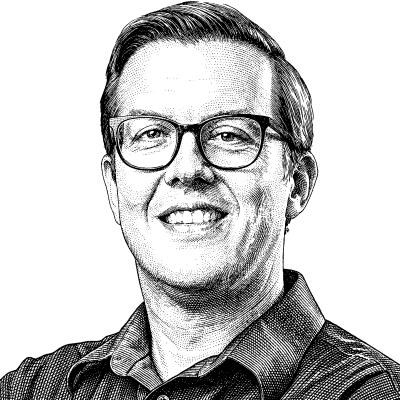
Benjamin Peters
Benjamin Peters (born 1980) is an American media scholar, author, and professor known for his work on the history of communication technologies, information theory, and the social dimensions of digital networks. He serves as the Hazel Rogers Professor of Communication at the University of Tulsa and has held affiliations with several prominent research institutions. Peters is best known for his book How Not to Network a Nation: The Uneasy History of the Soviet Internet (2016), which explores the failed attempts to build a nationwide computer network in the Soviet Union and examines how social and political systems shape technological development. The work received widespread acclaim for its interdisciplinary approach, bridging media studies, history, and science and technology studies. He has also edited Digital Keywords: A Vocabulary of Information Society and Culture (2016), contributing to critical discourse around the language and concepts underpinning the digital age. Peters’s scholarship carries resonance for those interested in the intersection of technology, human potential, and collective aspiration. By investigating how societies envision and fail to realize transformative technological projects, his work illuminates the deeply human—and often ideological—dimensions of networked communication. His research reminds us that the tools we build to connect and elevate humanity are always embedded in moral, political, and even spiritual frameworks. For communities exploring themes of theosis and the cooperative pursuit of transcendence through technology, Peters’s insights into the promises and pitfalls of networked societies offer valuable perspective on how human aspiration and systemic constraints interact in the ongoing project of building a better world.

Boyd K. Packer
Boyd K. Packer (1924–2015) was one of the most influential and theologically deliberate leaders of The Church of Jesus Christ of Latter-day Saints in the twentieth and early twenty-first centuries. Born on September 10, 1924, in Brigham City, Utah, the tenth of eleven children, he overcame childhood polio, served as a bomber pilot in World War II, and earned a doctorate in education from Brigham Young University before dedicating his life to religious service and teaching. Called to the Quorum of the Twelve Apostles in 1970, he served as its acting president from 1994 to 2008 and as its president from 2008 until his death on July 3, 2015. Packer’s career spanned more than five decades of general authority service. He worked extensively within the Church Educational System, overseeing seminary and institute programs, and served as a mission president in New England. He served on the scripture revision committee that produced the landmark 1979–1981 LDS editions of the Bible and standard works. He dedicated temples and missions across multiple continents and was a prolific author and teacher. He was also a gifted visual artist, known for his paintings and sculptures of birds—a dimension of his character that reflected a disciplined attention to the natural world and a belief that beauty and truth are inseparable. Packer’s theological legacy is marked by a deep reverence for the eternal sweep of Mormon cosmology. In one memorable interview, he cited the hymn ‘If You Could Hie to Kolob’—that most expansive of Mormon texts, celebrating eternal progression, a plurality of Gods, and worlds without end—and connected it to Brigham Young’s conviction that learning is not a process approaching a terminus but one that opens onto ‘an eternity of knowledge.’ That orientation—toward an unending, ever-expanding intelligence—runs beneath much of Packer’s teaching about the relationship between mortality and eternity, between what we now see and what God sees.

Brigham Young
Brigham Young (1801–1877) was the second president of The Church of Jesus Christ of Latter-day Saints, the architect of the Mormon migration to the Great Basin, and the founding governor of Utah Territory. As the organizing genius behind the settlement of the American West, he directed the colonization of more than 300 towns, established institutions of commerce and education, and shaped a distinctive religious civilization from the desert floor. Born in Whitingham, Vermont, Young converted to the restored church in 1832 after years of searching among the Methodist and Reformed faiths. He rose quickly through the Quorum of the Twelve Apostles, led the harrowing evacuation of Nauvoo following Joseph Smith’s martyrdom in 1844, and guided an exodus of tens of thousands across the plains to the Salt Lake Valley in 1847. As church president for thirty years, he presided over the construction of the Salt Lake Temple, founded the University of Deseret, championed the Perpetual Emigration Fund to gather converts from Europe, and negotiated—not always successfully—the church’s uneasy relationship with the federal government. What the historical record reveals, and what Young’s own sermons confirm at every turn, is a mind constitutionally unwilling to divide the sacred from the natural. He taught that God operates by law, that miracles are simply “results or effects of causes hidden from our understandings,” and that every discovery in science and art has been “given by direct revelation from God.” The telegraph, the steam engine, the plow—all were, in his view, eternal principles progressively disclosed to a humanity climbing upward from its infancy. Science and religion were not rivals in his theology but two names for the same structured reality: “there is no true religion without true science, and consequently there is no true science without true religion.” This integration carried moral weight. Young urged the Saints to become a thinking people, warning against the spiritual danger of surrendering judgment to leaders rather than seeking personal revelation—a remarkable insistence on epistemic independence from a man who wielded considerable institutional authority. His vision of human destiny was correspondingly expansive. He affirmed that God “was once a man in mortal flesh as we are” and that humanity is “organized to become Gods,” called to exercise creative authority over matter across eternal worlds. He taught that identity—the preservation of the self through resurrection and exaltation—is “the greatest gift that God can bestow,” and he framed mortality as the school in which that self is forged through trial, independent thought, and disciplined living. His counsel to “prepare to live” rather than merely to die, and to extend healthy life by understanding natural law, anticipates a tradition of practical, body-affirming faith that takes seriously both the present body and its glorified future. Young remains a towering, complicated figure whose earthly administration included serious moral failures; yet his theological instinct—that intelligence, technology, and theosis belong to a single continuous story—endures as one of the most generative ideas in the Latter-day Saint tradition.

Carl Youngblood co-founded the MTA in 2006 and has served as its President and CEO since 2021. He is engaged with the Association’s efforts to explore the intersection of Mormon theology and transhumanist philosophy. Among the many initiatives that Carl has been involved with, he has designed and built the Association’s current website, which unifies all prior content in a single location using inspiring visuals and animations. Youngblood’s professional career spans more than two decades of full-stack software development at the intersection of Silicon Slopes and Silicon Valley. He was an early employee at Omniture (acquired by Adobe), a founding engineering leader at Divvy (a Utah-based unicorn startup), co-founder of Blockscale LLC (a blockchain services firm eventually contracted into Coinbase), and Senior Solutions Architect for Amazon Managed Blockchain at AWS. His technical fluency ranges from scalable web architecture to blockchain infrastructure—the kind of deep engineering experience that grounds his theological speculation in working knowledge of the systems he writes about. Under his leadership, the Association has developed its mission of promoting abundant human flourishing through the compassionate use of science and technology, fostering dialogue across secular and religious audiences and arguing that each has something essential to learn from the other. His writing, collected on his blog From the Depths , spans over a decade of conference presentations and theological essays: meditations on participatory resurrection, the alignment of artificial intelligence read through the Grand Council narrative, intelligence as eternal and multifaceted, and religion as social technology. He writes, as a colleague has observed, with warmth and accessibility on questions of momentous practical consequence—how to navigate faith crisis without losing faith’s power, how to think about resurrection as something we actively participate in rather than passively receive. Youngblood’s distinctive contribution to transhumanism is the integration of serious technical expertise with serious theological reflection. He embodies the Mormon transhumanist conviction that scientific and spiritual development are not parallel tracks but a single path—that the learning required to build better systems is continuous with the exaltation Mormon theology envisions, and that human ingenuity, rightly oriented, is itself a divine imperative.

Carver Mead
Carver Mead (born 1934) is an American engineer, physicist, and pioneer of modern microelectronics whose foundational contributions to semiconductor theory and very-large-scale integration (VLSI) helped make the silicon age possible. A Gordon and Betty Moore Professor Emeritus of Engineering and Applied Science at the California Institute of Technology, Mead spent decades at the frontier of what computation could become, both as a theorist and as a practical builder of systems. Mead’s career achievements span an extraordinary range. He developed key models for understanding transistor behavior at the nanoscale, co-authored (with Lynn Conway) the landmark 1980 textbook Introduction to VLSI Systems , and essentially invented the methodology by which engineers design the dense integrated circuits that now inhabit every corner of modern life. He also pioneered neuromorphic engineering—the design of circuits that mimic the computational architecture of biological neural systems—and founded companies that applied these principles to sensory processing and analog computation. In 2022, he was awarded the Harold Pender Award; earlier recognition includes the Lemelson-MIT Prize and the National Medal of Technology and Innovation. What distinguishes Mead as a thinker is not only what he built but how he understood the act of building. He insisted that Moore’s Law is fundamentally a story about human belief: “Moore’s Law is really a thing about human activity, it’s about vision, it’s about what you’re allowed to believe. Because people are really limited by their beliefs, they limit themselves by what they allow themselves to believe about what is possible.” In this reading, technological progress is not an autonomous material force but a function of expanded imagination—a civilizational act of faith in possibility. This framing resonates deeply with traditions that locate human creativity within a larger divine economy, where intelligence, rightly directed and disciplined by moral courage, participates in the ongoing work of creation. Mead’s insistence that the boundary between what is and what could be is first a boundary of belief, and only second a boundary of physics, echoes the Mormon transhumanist conviction that humanity’s divine future is not given passively but willed, practiced, and built—one hard-won increment of understanding at a time.

D. H. Fowler
David Henry Fowler was an American educator, writer, and civic leader in the state of Utah, known for his decades of service in public education and his editorial contributions to early twentieth-century Latter-day Saint periodical literature. Born on May 8, 1879, in Hooper, Weber County, Utah, Fowler was the son of Samuel Fowler and Rachel Taylor. He was raised in a pioneer Latter-day Saint household during a formative period in Utah’s territorial and early statehood history, and from an early age demonstrated an aptitude for study that would shape the trajectory of his life’s work. In 1906, Fowler was called to serve a proselytizing mission for The Church of Jesus Christ of Latter-day Saints in the Northern States Mission. His capabilities as a writer and communicator were soon recognized, and he was transferred to the mission headquarters in Independence, Missouri, where he was appointed Associate Editor of Liahona, the Elders’ Journal . This publication—one of the principal periodicals serving missionaries and members outside the Intermountain West—provided doctrinal instruction, mission news, and devotional literature to a wide readership. Fowler’s editorial labors placed him among a small circle of early twentieth-century Latter-day Saint writers helping to amplify the voice of the Church during a period of expanding national presence. Fowler pursued higher education at the University of Utah, completing his degree in 1919. His academic pursuits translated directly into a career in public education, where he rose to serve as both a high school principal and a superintendent of schools in Emery and Summit counties, Utah. In these roles, Fowler shaped the educational foundations of two rural communities at a formative moment in Utah’s development as a state, helping to build institutional structures that would serve generations of students. Fowler’s career reflected a lifelong conviction that education, faith, and community progress were inseparable. As an administrator, he worked to extend the reach of secondary schooling into communities whose economic realities often competed with classroom attendance, and as a writer and editor he helped articulate the intellectual and spiritual aspirations of his religious tradition for a dispersed readership.

Dan Wotherspoon is a prominent voice in discussions surrounding Mormonism and intellectual inquiry. He currently hosts the Latter-day Faith podcast, where he explores a wide range of topics relevant to Mormon thought and culture. He is also the former editor of Sunstone Magazine , a publication known for its engagement with Mormon history, theology, and contemporary issues. Wotherspoon holds a PhD in religion from Claremont Graduate University. His doctoral dissertation focused on deep Mormon sensibilities concerning the intrinsic worth and interconnectedness of all existence and how these values might contribute to a sustainable and peaceful world. This research reflects his commitment to exploring the intersection of Mormonism with broader ethical and philosophical concerns. Wotherspoon’s work often involves facilitating dialogue and understanding between diverse perspectives, as evidenced by his involvement with the Mormon Transhumanist Association (MTA). He has spoken at MTA conferences and hosted discussions related to transhumanism on his podcast, demonstrating his interest in the potential for Mormon thought to engage with emerging technologies and ideas. He lives in Tooele, Utah with his wife Laurie. They are about to be empty nesters.
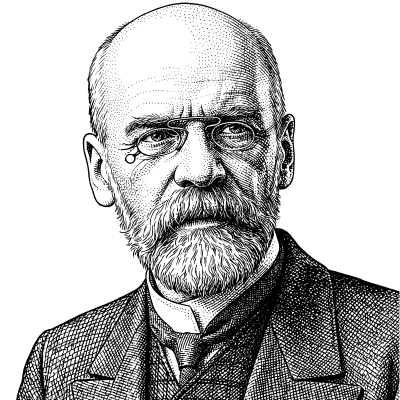
Emile Durkheim
Emile Durkheim was a pioneering French sociologist and philosopher, widely recognized alongside Karl Marx and Max Weber as one of the principal architects of modern social science. Born into a devout Jewish family in Épinal, France, Durkheim descended from a long line of rabbis. However, he broke with this tradition at an early age to lead a thoroughly secular life, dedicating his intellect to the scientific study of society rather than theology. A precocious student, Durkheim entered the prestigious École Normale Supérieure in 1879, where he studied alongside future intellectual luminaries such as Jean Jaurès and Henri Bergson. Dissatisfied with the abstract nature of traditional philosophy and the lack of a social science curriculum in France, he turned to the positivist theories of Auguste Comte and Herbert Spencer. He sought to establish sociology as a rigorous, empirical science, distinct from psychology and philosophy, capable of diagnosing social pathologies and guiding human progress. Durkheim’s academic career was defined by a prolific output of foundational texts. In 1893, he published his doctoral dissertation, The Division of Labour in Society , which introduced the concept of “anomie”—a breakdown of social norms resulting from rapid modernization. He argued that as societies evolve from primitive “mechanical” solidarity to complex “organic” solidarity, the interdependence of individuals becomes the new social glue. Two years later, he published The Rules of Sociological Method (1895) and established the first European department of sociology at the University of Bordeaux. His 1897 monograph, Suicide , pioneered the use of statistical methods in social research, demonstrating that even the most intensely personal act is influenced by social currents. Of particular relevance to the intersection of theology and human development was his final major work, The Elementary Forms of the Religious Life (1912). In this text, Durkheim analyzed religion not as a divine revelation but as a fundamental social fact—a “system of beliefs and practices relative to sacred things” that unites adherents into a single moral community. He introduced the concept of “collective consciousness” (or collective conscience), positing that the “sacred” is essentially society worshipping its own collective power. This sociological perspective suggests that while religious forms may evolve, the function of religion—to bind humanity together and preserve collective knowledge—remains a permanent and essential feature of human existence. Durkheim’s influence widened when he became a chair at the Sorbonne in Paris, where he profoundly shaped the French educational system. Tragically, his life was cut short by the First World War; devastated by the death of his son André on the war front, Durkheim died of a stroke in 1917. His legacy endures in the structural-functionalist approach to sociology and his enduring insight that human consciousness is deeply rooted in the collective social fabric.