Authors

Marianne C. Sharp
Marianne Clark Sharp (1893–1975) was a leader in The Church of Jesus Christ of Latter-day Saints who served in the Relief Society General Presidency from 1945 to 1974. She emphasized the importance of education and intelligence in spiritual progression, teaching that since knowledge and intelligence are the doorway to eternal life, Relief Society leaders should be zealous in gaining and sharing knowledge. Her teachings connected the pursuit of learning with Latter-day Saint doctrine about eternal progression, citing Joseph Smith’s teaching that “a man is saved no faster than he gets knowledge” and the Lord’s declaration that “it is impossible for a man to be saved in ignorance.”
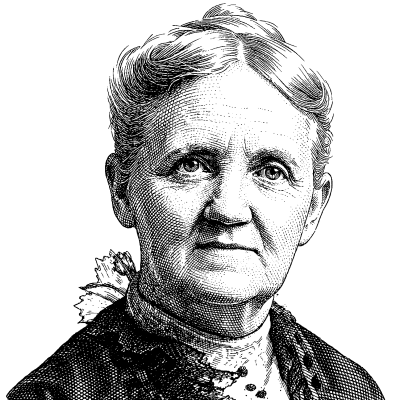
Martha H. Tingey
Martha Jane Horne Tingey (1857–1938) served as the second general president of the Young Ladies’ Mutual Improvement Association (YLMIA) from 1905 to 1929. Born in Salt Lake City to Mary Isabella Hales and Joseph Horne, she was baptized at age eight by her father. She attended private schools and Deseret University, developing gifts in music and elocution. Tingey was called as second counselor in the YLMIA at age twenty-two and served in the general presidency for an extraordinary 49 years. During her tenure as president, the organization instituted yearly slogans, roadshows, the Beehive program, leadership week, and camps for young women. In 1922, she selected green and gold as the official colors. She authored a handbook for young Mormon women and declared: “My heart is with the Mutual Improvement work. I love the youth of Zion, and I am anxious that they may become a mighty army for righteousness in the kingdom of God.” Two of her counselors, Ruth May Fox and Lucy Grant Cannon, later succeeded her as YLMIA presidents.
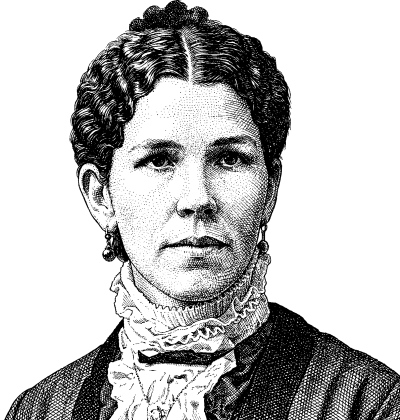
Mary Ann Freeze
Mary Ann Burnham Freeze was a leader in the Young Ladies Mutual Improvement Association and an early pioneer who crossed the plains to Utah in the 1840s or 1850s. She is documented in the Mormon Pioneer Overland Travel database under her maiden name, Mary Ann Burnham. Freeze served in leadership positions in the LDS Church’s women’s organizations during a formative period in their development. Her contributions to the Young Women’s organization helped establish patterns of service and education that would shape the organization for generations. Her life and service are documented in Augusta Joyce Crocheron’s Representative Women of Deseret (1884) and in the history of the Young Ladies’ Mutual Improvement Association. She died in 1912, having devoted decades to strengthening the young women of Zion.

Matt Gardner is a Seminary teacher in Lehi, dedicated to helping youth navigate the complex ethical and spiritual landscape presented by emerging technologies, particularly artificial intelligence. He approaches the subject from a pragmatic, faith-based perspective, drawing on principles of the Church of Jesus Christ of Latter-day Saints to guide his pedagogy. Recognizing both the potential benefits and potential risks of AI—the former promising a quasi-millennial era, the latter potentially apocalyptic—Gardner focuses on equipping students with the tools to critically assess and engage with these technologies. His teaching methodology is based on three core principles: acting in faith, examining concepts from an eternal perspective, and seeking understanding from divinely appointed sources. He emphasizes the importance of framing questions within a gospel context rather than a purely worldly one. Gardner’s presentations often incorporate real-world examples, such as the Tesla Bot Optimus, to stimulate discussion and encourage students to consider the implications of AI development. He is committed to providing practical teaching tools that empower youth and their parents to navigate the challenges and opportunities presented by AI in a thoughtful and informed manner.
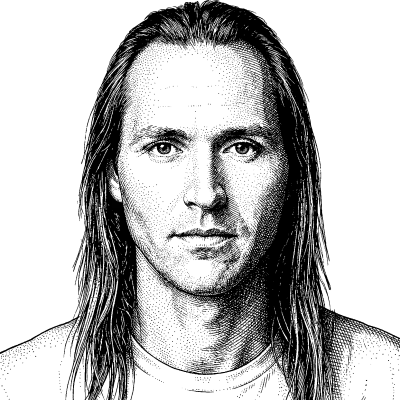
Matthew Lehmitz is a researcher focused on astrobotany, specifically the cultivation of plants in space environments. His work centers on developing sustainable methods for incorporating plant life into space missions and habitats, addressing the challenges of resource constraints and the need for self-sustaining ecosystems beyond Earth. Lehmitz’s current project involves utilizing Tillandsia ionantha (air plants) within a 3U CubeSat to simulate a micro-habitat in orbit. This approach aims to circumvent the complexities and weight limitations associated with traditional soil-based cultivation methods. By demonstrating the viability of air plants in space, he hopes to pave the way for more efficient and cost-effective strategies for creating plant-based ecosystems in extraterrestrial settings—a key consideration for long-duration space travel and colonization.

Dr. Matthew Memmott is a director and senior technical advisor for Alpha Tech Research, a technology startup focused on developing an advanced micro molten salt reactor. This innovative reactor design aims to provide twelve megawatts of inherently safe nuclear energy, while also producing valuable medical isotopes as a byproduct. His work positions him at the forefront of next-generation energy solutions. In addition to his role at Alpha Tech Research, Dr. Memmott is a professor in the chemical engineering department at Brigham Young University (BYU). He earned his bachelor’s degree in chemical engineering from BYU in 2005, and subsequently pursued advanced studies at MIT, where he obtained a master’s and PhD in nuclear science and engineering. His academic research centers on advanced nuclear reactor design, nuclear safety, and system modeling—all fields crucial for ensuring a sustainable and secure energy future. Dr. Memmott’s work aligns with transhumanist values by exploring how advanced technology can be leveraged to improve human well-being and sustainability. His exploration of nuclear energy, particularly inherently safe designs, reflects a desire to overcome challenges and create abundance. He is particularly interested in the distributed systems and blockchain applications in the energy realm.

Max More is a prominent figure in the transhumanist movement. While his recent work has focused on decision-making and guiding progress through policy, his early work explored the spiritual elements of transhumanism. He sees transhumanism as encompassing both technological advancement to overcome human limitations and a continuation of humanist ideals from the Enlightenment. More is known for his work on the concept of Extropy, defined as a metaphor for increasing order, information, intelligence, well-being, and creativity—the opposite of entropy. This concept embodies the idea of continuous improvement rather than static perfection. He explicitly addressed transhumanism within the context of religion, agnosticism, atheism, and the search for meaning in his 1989–1990 article, “Transhumanism: Towards a Futurist Philosophy,” published in Exodus Magazine . More views transhumanism as a dual endeavor: one aspect aims to transcend human limitations through technology, altering genes, biology, and neurology to overcome limits to lifespan, intelligence, and emotional capabilities. The other emphasizes transhumanism as an evolution of humanism, rooted in Enlightenment ideals.
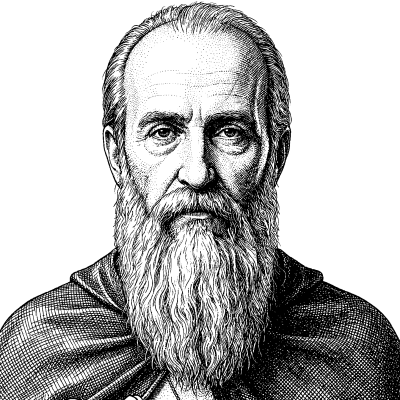
Maximus the Confessor
Maximus the Confessor (c. 580–662 AD) was a Christian monk, theologian, and scholar who developed sophisticated theology of theosis, teaching that humanity is destined to participate in the divine nature through Christ. Born to a noble Byzantine family, Maximus initially served as a court secretary before becoming a monk. He became the leading opponent of Monothelitism, the doctrine that Christ had only one will, arguing instead that Christ has both divine and human wills. His theological writings explore how God became the Son of Man so that humans might become sons of God. Maximus taught that through the Incarnation, Christ makes possible the deification of humanity without the loss of human identity. For his opposition to imperial theology, he was tried, mutilated (his tongue and right hand cut off), and exiled, dying shortly after in 662 AD.
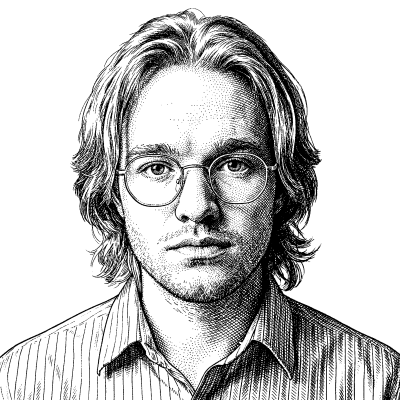
McKay Moore is a speaker and scholar affiliated with the Mormon Transhumanist Association (MTA), exploring the intersection of Mormon theology and transhumanist thought. His work delves into the theological implications of post-humanism, particularly within the unique context of Mormon beliefs about divine progression and the potential for humanity to achieve godhood. Moore’s research is deeply rooted in the Mormon concept of an eternal cycle of creation, where beings evolve into gods who then create new sentient beings. Moore’s presentations often address complex issues such as the ‘control problem’ in artificial intelligence (AI) and how Mormon theology might offer a unique perspective on aligning AI with human values. Drawing on the work of thinkers like Nick Bostrom, he analyzes capability and behavioral control methods for managing advanced AI, exploring how these approaches relate to the Mormon ‘plan of salvation’ as a post-human solution. His work seeks to bridge the gap between cutting-edge technological advancements and theological frameworks.

Melissa Wei-Tsing Inouye
Melissa Wei-Tsing Inouye was a scholar and historian who explored the intersection of religion and culture in Greater China, global Mormonism, and 20th-century Chinese Christianity. She received her PhD in East Asian languages and civilizations from Harvard University in 2011. Her major work, China and the True Jesus: Charisma and Organization in a Chinese Christian Church (Oxford University Press, 2019), provides a comprehensive history of the True Jesus Church and charismatic Christian movements in modern China. In addition to her academic research, Inouye was a prolific writer and essayist known for her candid reflections on faith, motherhood, and the global church. Her memoir, Crossings: A Bald Asian American Latter-day Saint Woman Scholar’s Ventures through Life, Death, Cancer, and Motherhood (2019), and her subsequent book, Sacred Struggle: Seeking Christ on the Path of Most Resistance (2023), examined the role of suffering and community within the Latter-day Saint experience. She was also a founding member of the Global Mormon Studies research network and served on the advisory board of the Neal A. Maxwell Institute for Religious Scholarship. Inouye passed away on April 23, 2024, at the age of 44, following a seven-year battle with colon cancer. She is remembered for her work bridging Chinese history, global religious movements, and transhumanist ideals, as well as for her commitment to fostering a more inclusive and globally-aware religious community.