Authors
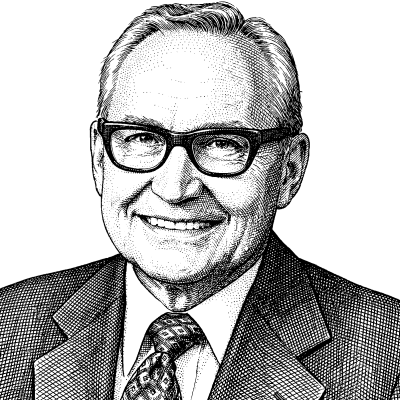
L. Tom Perry
Lowell Tom Perry (5 August 1922 – 30 May 2015) was an American businessman and religious leader who served as a member of the Quorum of the Twelve Apostles of The Church of Jesus Christ of Latter-day Saints for over forty years. Born in Logan, Utah, to a father who served as bishop throughout Perry’s childhood, he developed an early grounding in Church service. From 1942 to 1944, Perry served a mission in the Northern States Mission headquartered in Chicago. After returning, he joined the United States Marine Corps and was assigned to the 2nd Marine Division, landing on Saipan where he spent about a year and helped construct an LDS chapel on the island. He was among the American troops sent to occupy Japan after the war. Perry graduated from Utah State Agricultural College (now Utah State University) in 1949 with a bachelor’s degree in finance, having served as president of the university’s Associated Students. His professional career was spent in retail, climbing the corporate ladder to become a top executive in department stores across Idaho, California, New York, and Massachusetts before entering full-time Church service. Called as an Assistant to the Quorum of the Twelve Apostles in 1972, Perry was sustained as an Apostle on April 6, 1974, and ordained five days later. He married Virginia C. Lee in 1947; she died of cancer in December 1974. He remarried Barbara Dayton in 1976. Known for his optimism and big smile, Perry served faithfully until his death from thyroid cancer in 2015. His decades of service exemplified the integration of professional excellence with lifelong religious commitment.

Laura Shin is a prominent crypto journalist and the host of the popular podcast, Unchained . Her work focuses on the intersection of technology, finance, and decentralized systems, making her a relevant voice for the Mormon Transhumanist Association conference. She brings an understanding of DAOs (Decentralized Autonomous Organizations) and their implications for collective action and individual empowerment—a topic relevant to transhumanist ideals of distributed governance and community building. Shin was a senior editor at Forbes, where she distinguished herself as the first mainstream journalist to cover cryptocurrency full-time. She is the author of the book The Cryptopians: Idealism, Greed, Lies, and the Making of the First Big Cryptocurrency Craze , offering a deep dive into the early days of the crypto world. Her insights into DAOs, blockchain technology, and the future of decentralized systems are well-informed by her work. Laura Shin graduated Phi Beta Kappa with honors from Stanford University and earned a Master of Arts from Columbia University School of Journalism. Her academic background combined with her practical experience in the fast-evolving world of crypto positions her as an insightful commentator on the technological and societal trends shaping the future.

Leika Patch is an environmental scientist, educator, and advocate whose work explores the vital intersections of ecological stewardship, sustainable agriculture, and Latter-day Saint theology. A 2020 graduate of Brigham Young University in Environmental Science, Patch has emerged as a compelling voice within the Mormon Transhumanist Association (MTA), specifically addressing the cultural and psychological barriers to climate action within faith communities. Patch’s work focused on leveraging social media platforms, particularly Facebook, to disseminate information and promote climate action. She collaborated with the Mormon Environmental Stewardship Alliance (MESA) on a climate action campaign. Her research highlighted the significant impact of human activity on the environment, emphasizing the need for proactive measures to mitigate climate change. Patch also explores the intersection of LDS (Latter-day Saint) perspectives and environmental responsibility, referencing talks and symposiums where Church leaders have addressed climate change. She draws upon the research of scholars like Dr. Abbott to underscore the human impact on the planet and advocates for a moral imperative to address global warming.
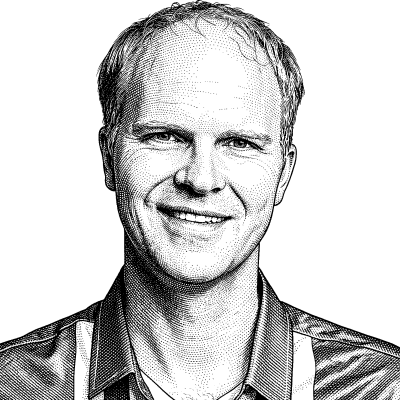
Leonard Reil is a Canadian diplomat and scholar whose professional and intellectual pursuits sit at the crossroads of international relations and transhumanist philosophy. With a career spanning several continents and cultures, Reil’s work explores the intersection of global conflict, diplomacy, and the potential for technological and spiritual evolution. Reil obtained a Bachelor of Arts in International Relations from Brigham Young University before moving to the United Kingdom to earn a Master of Arts in International Conflict Analysis from the University of Kent at Canterbury. This academic foundation prepared him for a distinguished career with Canada’s Department of Foreign Affairs and International Trade (now Global Affairs Canada). Beyond his diplomatic service, Reil is an active voice within the Mormon Transhumanist Association, where he applies his background in conflict analysis and global systems to theological and futurologist inquiries. At the 2012 MTA Conference, he delivered a compelling presentation titled The Gods of Eternity, in which he explored the concept of “Theosis” through the lens of modern science and the “Gods of the Gaps” theory. In this work, Reil posits that as human knowledge expands, the “gaps” traditionally filled by the divine are not merely shrinking but are being replaced by a more sophisticated understanding of our own potential for eternal progression. Reil’s contributions to the transhumanist community are characterized by a unique synthesis of Latter-day Saint theology and technological optimism. He often reflects on the nature of post-humanity and the ethical implications of advanced technologies, suggesting that the path toward becoming “as God is” involves a mastery of the physical and social laws that govern the universe. Through his writing and speaking, Leonard Reil continues to advocate for a future where technology is utilized to fulfill the highest aspirations of the human spirit. He remains a key figure in the MTA, embodying the association’s mission to explore the synergistic relationship between religion and science in the pursuit of human transcendence.
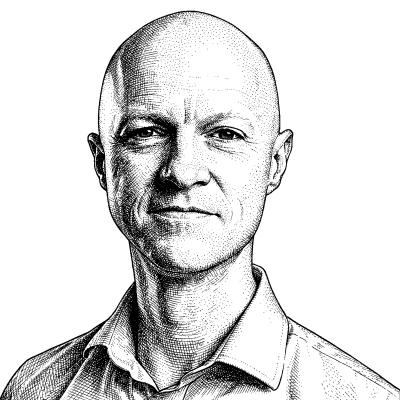
Lincoln Cannon is an American philosopher and technologist who co-founded the Mormon Transhumanist Association in 2006, serving as its president from 2006 to 2016. He is a leading advocate of technological evolution and postsecular religion, combining software engineering expertise with degrees in philosophy and business. Cannon is also a founder and board member of the Christian Transhumanist Association. He formulated the New God Argument, a logical argument for faith in God that has become popular among religious transhumanists. His academic work includes “Mormonism Mandates Transhumanism” published in Religion and Human Enhancement: Death, Values, and Morality (Palgrave Macmillan, 2017) and “Transfigurism: A Future of Religion as Exemplified by Religious Transhumanists” published in The Transhumanism Handbook (Springer Verlag, 2019). Mormon transhumanism, as articulated by Cannon, holds that humanity should learn how to be compassionate creators. This idea is central to the Mormon theological tradition, which provides a religious framework consistent with naturalism and supportive of human transformation. Cannon’s work bridges religious faith with scientific advancement, advocating for the ethical use of technology to extend human abilities in ways consistent with a religious worldview.
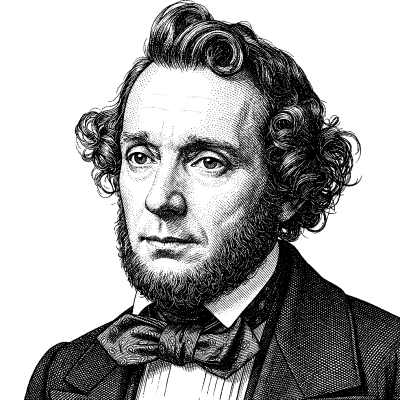
Lorenzo Snow
Lorenzo Snow was born in Mantua, Ohio, to a family that prioritized education and faith. Although he initially aspired to a military career, a pivotal conversation with Apostle David W. Patten in 1835 turned his heart toward religion. He was baptized in Kirtland, Ohio, in 1836 and soon dedicated his life to missionary service, preaching the gospel in the United States, Great Britain, Italy, and Hawaii. Ordained an Apostle in 1849, he later demonstrated exceptional leadership by establishing a successful cooperative community in Brigham City, Utah, blending his spiritual calling with practical industry. In 1898, at the age of 84, Lorenzo Snow became the fifth President of the Church of Jesus Christ of Latter-day Saints. His administration is best remembered for his response to the Church’s dire financial situation; following a divine manifestation in St. George, Utah, he fervently taught the Saints the importance of paying a full tithe. The members’ faithful response to this plea helped free the Church from debt and established a firm temporal foundation for the future. He served as President until his death in 1901, leaving a legacy of refined character and firm testimony of the gospel.

Luke Hutchison is a New Zealand-born computer scientist and researcher whose work explores the fundamental limits of computation, the architecture of biological systems, and the future of artificial intelligence. Known for his deep interest in the theoretical foundations of intelligence, Hutchison has spent his career at the intersection of high-performance computing and the quest to understand the nature of mind. Hutchison’s academic journey began in New Zealand before he moved to the United States to pursue advanced studies at the Massachusetts Institute of Technology (MIT). There, he completed his PhD in Computer Science and Computational Biology. His doctoral research reflected a fascination with the “software” of life, utilizing computational methods to decode complex biological patterns—a precursor to his later work in artificial neural networks and machine learning. Following his time at MIT, Hutchison joined Google, where he played a pivotal role in the company’s burgeoning AI initiatives. He co-founded a specialized AI research team within Google Machine Intelligence alongside renowned futurist and transhumanist Ray Kurzweil. During this tenure, he contributed to the development of technologies that bridge the gap between human language and machine understanding, helping to advance the capabilities of large-scale AI systems. Beyond his primary research, he is well known in the software engineering community as the creator of ClassGraph, a high-performance classpath and module scanner for the Java ecosystem. Hutchison is a frequent contributor to the dialogue surrounding the future of humanity and technology. In his presentation at the MTAConf 2024, titled “Is Intelligence Bigger than Computation?”, he challenged the prevailing materialist assumption that the human mind is merely a Turing-complete computer. Drawing on concepts from physics, information theory, and philosophy, he explored whether true intelligence requires a substrate that transcends traditional algorithmic computation, touching upon themes of consciousness and the potential for technological transcendence.
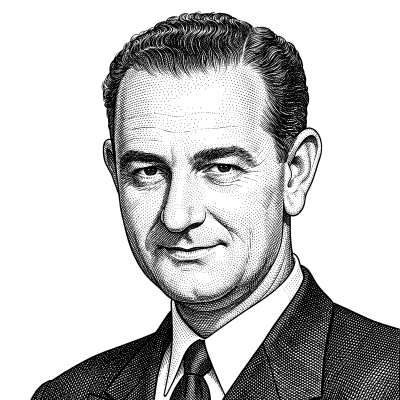
Lyndon Johnson
Lyndon Baines Johnson (1908–1973) was the 36th President of the United States, serving from 1963 to 1969. A towering figure in American political history, Johnson assumed the presidency following the assassination of John F. Kennedy and went on to win the 1964 election in a historic landslide. He is best remembered for his ambitious Great Society domestic agenda, which represented one of the most sweeping expansions of the federal government’s role in advancing human welfare since the New Deal. Johnson’s political career began in Texas, where he served as a congressional aide before winning a seat in the U.S. House of Representatives in 1937. He was elected to the U.S. Senate in 1948 and rose to become Senate Majority Leader, widely regarded as one of the most effective in history. His legislative mastery—rooted in deep personal persuasion, strategic brilliance, and an unrelenting will—enabled him to shepherd landmark legislation through Congress as president. The Civil Rights Act of 1964 , the Voting Rights Act of 1965 , Medicare, Medicaid, federal aid to education, and the War on Poverty collectively reshaped American society, extending opportunity and dignity to millions who had been marginalized. Johnson’s presidency was deeply scarred, however, by the Vietnam War . His escalation of American military involvement proved devastating both abroad and at home, eroding public trust, dividing the nation, and ultimately leading to his decision not to seek reelection in 1968. The tension between his profound domestic achievements and the moral catastrophe of Vietnam remains one of the most studied paradoxes in American political history. From a Mormon Transhumanist perspective, Johnson’s legacy resonates in significant ways. His Great Society programs reflected a deep conviction that human suffering is not inevitable—that poverty, ignorance, and disease could be addressed through collective action, institutional innovation, and the deliberate application of resources to elevate the human condition. This faith in human potential and societal transformation aligns with the Mormon Transhumanist commitment to using all available means, including social and technological, to pursue compassionate flourishing. Johnson’s vision was largely secular and statist in its mechanisms, which distinguishes it from a framework that integrates prophetic authority and divine grace, yet his underlying moral urgency—the insistence that a just society must actively work to lift every person—echoes the Gospel imperative to care for the poor and marginalized. His legacy serves as both an inspiration and a cautionary tale about the complexities of wielding immense power in pursuit of noble ends.
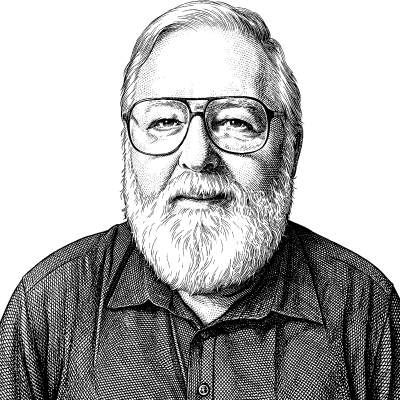
Malcolm Dean is a multi-disciplinary scholar and author whose research explores the fields of complexity science, cognitive neuroscience, and information theory. Currently a research affiliate within the UCLA Human Complex Systems Program and a member of the Higher Cognitive Affinity Group at the UCLA Brain Research Institute, Dean investigates the fundamental physical laws governing mental processes and social structures. His academic tenure at UCLA has been defined by both technical leadership and theoretical innovation, having served as a Principal Editor in the Department of Academic Computing and as a Principal Investigator for several scientific initiatives. At the core of Dean’s intellectual contribution is the development of “Cognitive Thermodynamics” and the Natural Philosophy of Information. He posits that human belief systems and cultural evolution are not merely social constructs but emergent properties of fundamental physics. In his 2020 work, Religion is Physics , Dean argues for a theoretical framework where social evolution is understood through the lens of entropy. He provides a thought-provoking link between the study of human meaning and the hard sciences by considering religion as a practical application of physical laws. Dean has been an influential figure in the discourse surrounding the intersection of spirituality and transhumanism. In his presentation at the Transhumanism & Spirituality 2010 Conference, titled “The End(s) of Mythology,” he explored the transition from traditional mythological narratives to a “scientific mythology” grounded in the reality of an information-based universe. His work suggests that as our understanding of the brain and information theory advances, the ancient human impulse toward transcendence will find its ultimate explanation—and perhaps its fulfillment—within the laws of thermodynamics and computation. Through his research and writing, Dean continues to explore how the emergence of consciousness and the structure of human societies are dictated by the flow of information. His professional versatility extends into the public sphere as a journalist and computer consultant, allowing him to translate dense scholarship for a broader audience.

Marcus Flinders is the founding attorney and managing partner of Flinders Bandy Attorneys at Law, specializing in corporate and business law, as well as tax planning and litigation. He brings over fifteen years of experience as an entrepreneur and businessman to his legal practice. At the MTAConf 2013, Flinders was responsible for arranging lunch and presented on the complex topic of the legal rights of sentient machines. Flinders holds a BS in philosophy from Utah Valley University, a JD from Valparaiso University, and an LLM in taxation from the University of Denver—making him a highly educated voice within the MTA community. He served a mission for the LDS Church in Côte d’Ivoire, demonstrating his commitment to his faith. He is married with three children. At the aforementioned conference, Flinders explored the history of rights arguments, referencing thinkers from Socrates and Aristotle to Bentham and Mill, and touching upon utilitarianism. He framed his argument for the rights of sentient machines within the context of constitutional law, highlighting the challenges and possibilities this presents for lawyers and society as technology advances.