Authors
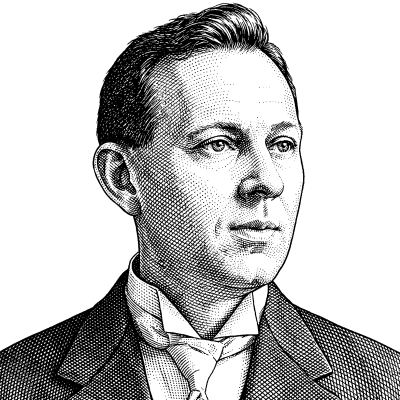
Joseph Fielding Smith
Joseph Fielding Smith (1876–1972) served as the tenth president of The Church of Jesus Christ of Latter-day Saints from 1970 until his death. He was the son of Joseph F. Smith, the sixth Church president, and the grandson of Hyrum Smith, brother of the Prophet Joseph Smith. By age ten, he had read the Book of Mormon twice. Smith served as an apostle for over 60 years, longer than almost anyone in Church history. He held positions as Church Historian, president of the Genealogical Society, and president of the Salt Lake Temple. As one of the Church’s most prolific writers, his works include Doctrines of Salvation , Essentials in Church History , and Answers to Gospel Questions . When he became Church President at age 93, he was the oldest person to assume that role. Though his presidency was brief, he led important administrative reforms that improved correlation of Church publications and brought the Quorum of the Twelve into more decision-making. He died peacefully on July 2, 1972, after attending church services that day.
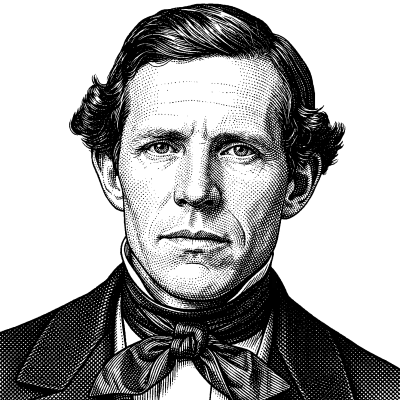
Joseph Smith
Joseph Smith Jr. (1805–1844) was the founding prophet of the Latter Day Saint movement, a religious visionary, translator, civic leader, and martyr whose theological imagination radically reshaped American Christianity. Born in Sharon, Vermont, and raised in the burned-over district of upstate New York, he reported a series of visions beginning in 1820 that culminated in the publication of the Book of Mormon in 1830 and the organization of the Church of Christ that same year. Over the next fourteen years, he led his followers from New York to Ohio, Missouri, and finally Illinois, founding the city of Nauvoo before being killed by a mob at Carthage Jail in June 1844. Smith’s contributions extend well beyond institutional founding. He produced an expansive body of revelatory texts—including the Doctrine and Covenants and the Pearl of Great Price —revised the King James Bible, introduced temple liturgy and proxy ordinances for the dead, and articulated a distinctive theology of embodied, progressing deity. He served as mayor of Nauvoo, lieutenant general of its militia, and a candidate for President of the United States in 1844, advocating religious liberty, the abolition of slavery, and prison reform. His public sermons, especially the King Follett discourse, set forth a cosmology in which God was once as humanity is now and humans may, through grace and growth, become as God is. Smith’s legacy resonates deeply with themes of human potential, intelligence, friendship, and divine becoming. He taught that “the first principles of man are self-existent with God,” that intelligences advance from grace to grace and from one small capacity to a great one, and that eternal life consists in learning to be Gods—language that anticipates a participatory and developmental account of theosis. He welcomed the inventiveness of the Gentiles as a means of building Zion, embraced truth from any source, and treated friendship as a principle designed to “revolutionize and civilize the world.” His insistence that revelation is ongoing, that prophecy belongs to all who hold the testimony of Jesus, and that happiness is the object and design of existence offers a generous foundation for those who seek to integrate faith, science, and technology in the work of human flourishing and exaltation.

Joseph West is a founding member, director, and secretary of the Mormon Transhumanist Association. He is deeply involved in exploring the crossroads of Mormonism, transhumanism, and technology. West is currently a PhD student in sociology at the University of Arizona, focusing his research on religion, culture, technology, and the family. He holds a bachelor’s degree in philosophy from the University of Utah. At the Parallels and Convergences Conference held in 2009, West presented on the “New God Argument,” co-authored with Lincoln Cannon, which explores potential reconciliations between religious perspectives and scientific materialism. The argument itself stems from secular assumptions and concludes with ideas resonating with Mormon perspectives on God and other religious matters. Beyond his academic and organizational work, West is a family man, a father of two children, and is married to their mother, Jessica.
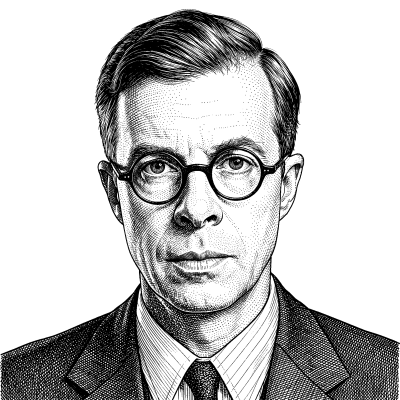
Julian Huxley
Julian Sorell Huxley (1887–1975) was a British biologist, philosopher, and humanist who coined the word “transhumanism” and gave the movement its first systematic articulation—making him, by any measure, one of the intellectual founders of the tradition the Mormon Transhumanist Association inhabits. Huxley came from one of Britain’s most distinguished intellectual families—grandson of T.H. Huxley, Darwin’s great defender, and brother of novelist Aldous Huxley—and built a career of remarkable scope. He was the first Director-General of UNESCO (1946–1948), a founding figure of the World Wildlife Fund, a prolific science communicator, and a pioneer of the Modern Synthesis that unified Darwinian evolution with Mendelian genetics. His scientific work spanned experimental embryology, ethology, and evolutionary biology, and he was elected a Fellow of the Royal Society in 1938. But Huxley’s most consequential contribution may be conceptual. In his 1957 essay “Transhumanism,” he argued that the human species can, if it wishes, transcend itself—not merely through occasional individuals but as a whole, through the deliberate application of knowledge, technology, and moral aspiration. He called this “transhumanism” and framed it as the next stage of evolutionary self-understanding: humanity taking conscious responsibility for its own development. His vision was secular in idiom but unmistakably teleological in structure—a species discovering its vocation to become more than it currently is. That teleological structure resonates naturally with Mormon theology’s insistence on eternal progression and theosis. Where Huxley grounded his vision in evolutionary biology and humanist ethics, Mormon Transhumanism adds theological depth: the process Huxley described is, in that reading, participation in the divine creative work that Joseph Smith called the purpose of existence. Huxley did not share that theological frame, but he shared the moral conviction underneath it—that intelligence, creativity, and compassion are not incidental features of the universe but its most important products, and that developing them further is our most serious obligation.

Karl Hale is a speaker at Mormon Transhumanist Association (MTA) conferences, known for his engaging presentations on topics such as the worship of extraterrestrial humanoid deities. His perspective is informed by his background as a member of the Church of Jesus Christ of Latter-day Saints and his reflections on the nature of God. Before turning his attention to philosophical and theological explorations, Karl spent 15 years in the software and web industries. He holds a master’s degree in information systems and worked as a programmer, manager, and executive. Currently, Karl dedicates a significant portion of his time to motivational juggling—another of his passions. Karl has been married to Anna Lisa Bradford Hale for 18 years and is the father of eight children. Together, they manage a small homestead, raising their family alongside a diverse collection of animals, including 27 chickens, six goats, six frogs, and one cat. Karl’s engagement with Mormon theology, coupled with his interest in transhumanist concepts—such as the potential for technologically advanced beings—provides a unique and thought-provoking perspective. He is an engaging and interesting speaker.
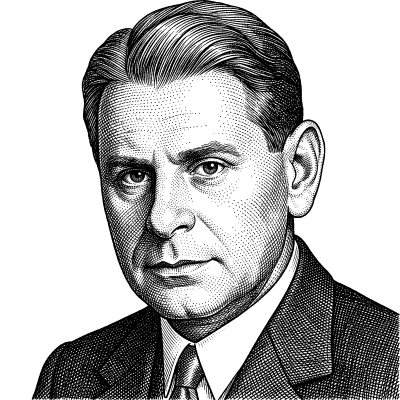
Karl Popper
Karl Raimund Popper (1902–1994) was an Austrian-British philosopher widely regarded as one of the most influential philosophers of science of the twentieth century. His work on the demarcation problem, epistemology, and the philosophy of the open society left a lasting mark on intellectual life across multiple disciplines. Popper is best known for his principle of falsifiability , which holds that for a theory to be genuinely scientific, it must be capable of being tested and potentially refuted. This criterion, articulated in his landmark work The Logic of Scientific Discovery (1934), fundamentally reshaped the philosophy of science and challenged the prevailing inductivist tradition. He spent much of his academic career at the London School of Economics, where he served as professor of logic and scientific method. His political philosophy, most notably developed in The Open Society and Its Enemies (1945), offered a vigorous defense of liberal democracy and a critique of totalitarian ideologies rooted in historicism. Popper’s epistemology carries deep resonance with transhumanist and theological themes. His vision of knowledge as an unending, self-correcting pursuit—forever open to revision and growth—aligns with the transhumanist commitment to ongoing human improvement. His concept of critical rationalism suggests that humanity progresses not by claiming certainty but by humbly identifying and correcting errors, a posture that echoes religious traditions emphasizing humility, faith in future understanding, and the aspiration toward greater light and knowledge. For the Mormon Transhumanist Association, Popper’s insistence that an open society fosters human flourishing, and that our reach should always exceed our grasp, resonates with the vision of theosis—the idea that humanity is called to grow toward the divine through both reason and faith.

Kathryn Knight Sonntag earned a BA in English and a BS in environmental studies before earning her MLA in landscape architecture and environmental planning. Her thesis focused on the role of the transcendent in landscapes and greatly informs her creative pursuits. She works as a freelance writer and landscape designer, and serves as the poetry editor for Wayfare Magazine. Her work centers on language as a powerful technology capable of manipulating ideas, transforming concepts, and achieving a specific vision. Sonntag’s scholarship builds upon ideas related to the role of language in shaping our understanding of the world and our relationship to it. Sonntag’s research delves into the archetype of the Divine Mother and the necessity of returning to her wisdom for the planet’s restoration. Drawing from thinkers like Elaine Showalter, Ursula K. Le Guin, and Jungian analyst Clarissa Pinkola Estés, she examines the suppressed experiences of women and the consequences of disconnecting from what she terms “wild nature.” Sonntag argues that a limited, male-centric view of nature has contributed to environmental degradation and that amplifying the voice of women is crucial for healing the world.

Kathy Wilson is a dedicated advocate for responsible belief systems and a long-time participant in the transhumanist movement. Raised as a Mormon, she identifies as a mystic and appreciates the open-minded, boundary-breaking ethos of transhumanism, particularly within the Mormon Transhumanist Association. She sees the movement as a way to actively engage with and further explore the more unconventional beliefs within Mormonism, such as transfiguration and the Second Coming. For the past two decades, Wilson has traveled extensively in India, witnessing firsthand the country’s rapid transformation and the complex realities of its growing population. She has spent time in the slums of Delhi and Mumbai, confronting issues of poverty, gender inequality, and corruption. This experience has profoundly impacted her perspective, expanding her understanding of what is possible on planet Earth and reinforcing the interconnectedness of global challenges. Wilson collaborates with NGOs in Delhi to assist marginalized communities, particularly widows and children in slums. She aims to raise awareness about the problems in developing countries and encourages others to use their technology, education, and resources to support positive change. She believes that the quality of life and interconnectedness of countries means everyone must be aware of problems facing other countries and cultures.

Kristine Haglund is a writer, editor, and speaker on Latter-day Saint topics. She has served as editor of Dialogue: A Journal of Mormon Thought .

Kurtis Lockhart is an urban development leader, researcher, and the Founder and Director of the Africa Urban Lab (AUL). He holds a PhD in political science from the University of Oxford, where his research examined the impact of institutional reforms on public goods provision in sub-Saharan Africa. He also obtained an MSc in Development Management from the London School of Economics—where he graduated top of his class—and a BA in Economics and Development Studies from McGill University. While at Oxford, he taught both quantitative methods and African politics, seamlessly bridging rigorous academic theory with real-world development challenges. Before focusing on urban innovation, Lockhart built extensive on-the-ground expertise managing developmental research and randomized control trials. He served as a Research Manager for the International Growth Centre and Warc Africa in Sierra Leone, and for the ELIMU Impact Evaluation Center in Kenya. These early roles across varied sectors solidified his understanding of the complex bottlenecks facing developing regions and underscored the urgent need for scalable, structural solutions. A prominent advocate for innovative governance, Lockhart previously served as Executive Director and Head of Research at the Charter Cities Institute (CCI), a Washington, D.C.-based think tank. There, he championed the development of charter cities—new urban centers granted special jurisdiction to enact institutional reforms—as a mechanism to address Africa’s rapid urbanization. Expanding on this mission in 2024, he launched the Africa Urban Lab in Zanzibar. Operating as a “teaching hospital” for urban professionals in partnership with the African School of Economics and CCI, AUL trains the next generation of municipal leaders and planners to transform urban growth into economic prosperity. Lockhart’s broader vision aligns deeply with themes of human progress, emphasizing how institutional evolution can lift communities out of poverty and foster long-term resilience. At the MTAConf 2022, he made a presentation on Charter Cities: Empowered Cities for the Urban Age, illustrating how decentralized, empowered cities can overcome traditional development hurdles. By reimagining city governance as a catalyst for human flourishing, Lockhart continues to shape the future of urban resilience and economic freedom across the Global South.