Authors
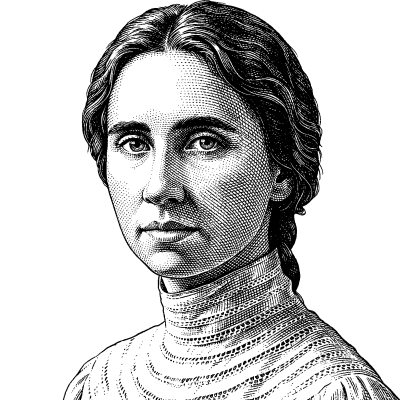
Helen Keller
Helen Adams Keller (1880–1968) was an American author, disability rights advocate, political activist, and lecturer who became one of the most celebrated figures of the twentieth century. The first deafblind person to earn a Bachelor of Arts degree, Keller’s life demonstrated the extraordinary capacity of the human spirit to transcend seemingly insurmountable limitations. Born in Tuscumbia, Alabama, Keller lost both her sight and hearing at nineteen months of age due to an illness—likely scarlet fever or meningitis. For the next five years, she lived in an isolated world, able to communicate only through crude gestures. Her life transformed in 1887 when Anne Sullivan, a partially blind teacher from the Perkins School for the Blind, arrived as her instructor. Sullivan’s breakthrough came when she spelled ‘w-a-t-e-r’ into Keller’s hand while pumping water over it—a moment that awakened Keller to the power of language and opened her world to understanding. Under Sullivan’s guidance, Keller learned to read, write, and eventually speak. She attended the Perkins School for the Blind and later the Cambridge School for Young Ladies. In 1904, she graduated cum laude from Radcliffe College, becoming the first deafblind person to earn a bachelor’s degree. Her education was supported in part by Mark Twain, who introduced her to Standard Oil magnate Henry Huttleston Rogers. Keller became a prolific author, publishing twelve books and numerous articles. Her autobiography, The Story of My Life (1903), written while she was still a student, became an international bestseller translated into fifty languages. She was also a committed political activist, advocating for women’s suffrage, labor rights, and socialism. She helped found the American Civil Liberties Union (ACLU) and worked tirelessly for the American Foundation for the Blind from 1924 until her death. Keller’s legacy extends far beyond her personal achievements. She met every U.S. president from Grover Cleveland to Lyndon B. Johnson and was awarded the Presidential Medal of Freedom by President Johnson in 1964. Her life embodies themes central to transhumanist thought: the enhancement of human capabilities through technology and education, the transcendence of biological limitations, and the relentless pursuit of human flourishing. She famously wrote, “Alone we can do so little; together we can do so much,” reflecting her belief in collective human progress and the power of compassion to transform society.
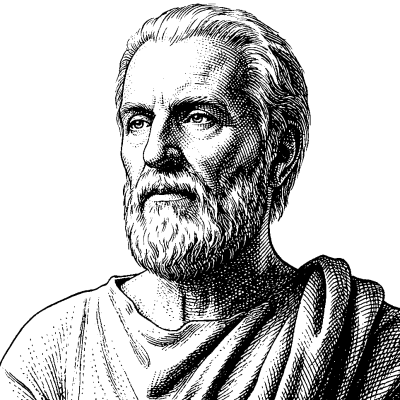
Hippolytus
Hippolytus of Rome (c. 170–235 AD) was an early Christian theologian, prolific writer, and ecclesiastical leader whose work represents one of the most ambitious attempts to systematize Christian doctrine in the ante-Nicene period. His precise origins are debated, but he was active in Rome during the late second and early third centuries, where he functioned as a prominent teacher and, according to some sources, may have served as a rival bishop during a period of schism. He is venerated as a martyr and saint in both the Roman Catholic and Eastern Orthodox traditions, and he is believed to have died in Sardinia following exile under the Emperor Maximinus Thrax. Hippolytus was extraordinarily productive. His surviving works include The Refutation of All Heresies , The Apostolic Tradition (a crucial early source on Christian liturgical practice), biblical commentaries, and a range of theological and polemical writings. He wrote in Greek at a time when Latin was beginning to dominate Western ecclesiastical culture, placing him at a transitional moment in the history of Christian thought. His engagement with philosophy, scripture, and the competing religious movements of his day reflects the intellectual intensity of a community still working out the implications of its own claims. What gives Hippolytus particular resonance for those interested in the theology of human transformation is the directness with which he articulated the Christian doctrine of theosis—the teaching that human beings are called not merely to serve God but to become divine. His writings speak of the human person as capable of being “deified and begotten unto immortality,” of becoming a “companion of God” and “co-heir with Christ.” He frames this not as a distant abstraction but as the actual destination of faithful human development: obedience and fidelity in small things open the way to the entrusting of greater ones, a logic that binds moral growth to ontological transformation. In this, Hippolytus stands in the same broad current as Irenaeus and Athanasius, carrying forward the ancient Christian conviction that the gap between humanity and divinity is meant to be closed—not by abolishing the distinction between Creator and creature, but by the creature’s genuine participation in divine life. That conviction, ancient as it is, resonates with the Mormon transhumanist understanding of theosis as a real, progressive, and ultimately practical aspiration.
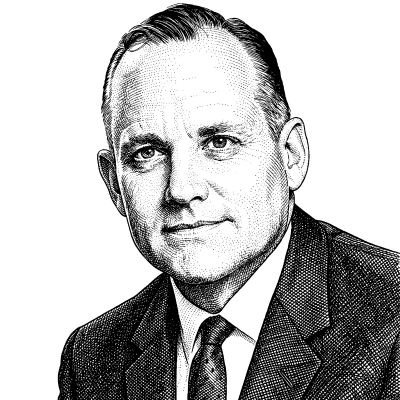
Howard W. Hunter
Howard William Hunter (1907–1995) was the fourteenth President of The Church of Jesus Christ of Latter-day Saints, serving the shortest presidential tenure in Church history—just nine months from June 1994 until his death. Born in Boise, Idaho, he was the first Church President born in the twentieth century and the last to die in it. Hunter grew up in a part-member family; his mother was an active member while his father did not join until Howard was an adult. He begged to be baptized and was finally permitted at age twelve, becoming the first Church President to be baptized in an indoor font. He was the second person to earn Eagle Scout in Idaho. He met Clara May “Claire” Jeffs in 1928; they married in the Salt Lake Temple in 1931 and had three sons, though their first son William died in infancy. After graduating with a law degree in 1939, Hunter served as the first president of the Pasadena California Stake. In 1959, President David O. McKay called him as an Apostle, prompting him to leave his law practice for full-time Church service. He served for over 35 years as a general authority, contributing to the establishment of the Polynesian Cultural Center, the Orson Hyde Memorial Garden in Jerusalem, and the BYU Jerusalem Center. From 1964 to 1972, he oversaw the Genealogical Society of Utah’s first computerization of records. As Church President, Hunter emphasized Christlike living and temple attendance. Despite numerous health challenges including a heart attack, tumor surgery, and quadruple bypass, he dedicated the Orlando Florida and Bountiful Utah temples before his death. His ministry, though brief, called Latter-day Saints to make the temple the great symbol of their membership.
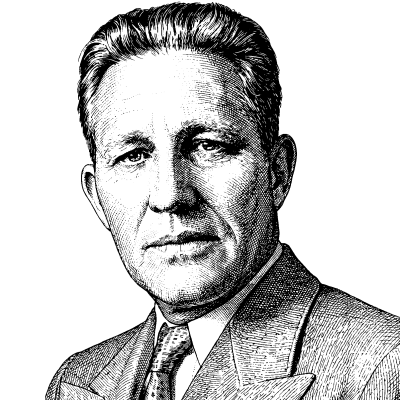
Hugh B. Brown
Hugh B. Brown (1883–1975) was a Canadian-born Latter-day Saint leader, attorney, military officer, and one of the most intellectually courageous voices in twentieth-century Mormon thought. Born in Revelstoke, British Columbia, Brown pursued law and served as an officer in the Canadian military before committing to full-time Church service. He presided over the British Mission, taught at Brigham Young University, served as a member of the Quorum of the Twelve Apostles, and ultimately as First and Second Counselor in the First Presidency under David O. McKay. Across all of these roles he carried the habits of a trained legal mind: careful in distinction, insistent on evidence, and unwilling to confuse provisional policy with settled doctrine. Brown’s ecclesiology was notably democratic. He argued that official statements not ratified by common consent remain matters of temporary policy, subject to revision as conditions and understanding change—a position that places theological humility and participatory governance at the center of how the Church ought to work. He was also a persistent advocate for civil rights at a time when that advocacy required personal courage within institutional Mormonism, and his speeches on intellectual freedom remain among the most forthright defenses of open inquiry ever delivered by a senior Church leader. The deepest thread running through Brown’s legacy is his conviction that science and religion are not rivals but converging expressions of the same fundamental drive toward truth. He articulated what he called a “scientific spirituality”—a mind that brings the discipline and candor of science to bear on faith without extinguishing faith’s warmth or power. Revelation, in his view, could come through laboratories and inquiring souls as readily as through vision or prayer. Every scientific discovery, he held, illuminates the divine plan in nature; the universe’s harmony across scales implies an architect whose work invites rather than resists investigation. God, he insisted, is not capricious—all is law, all is cause and effect, and that lawfulness is itself a form of reverence. These commitments map directly onto the Mormon transhumanist understanding of a naturalist God whose purposes are advanced through disciplined intelligence, free inquiry, and the willingness to let the best ideas prevail.
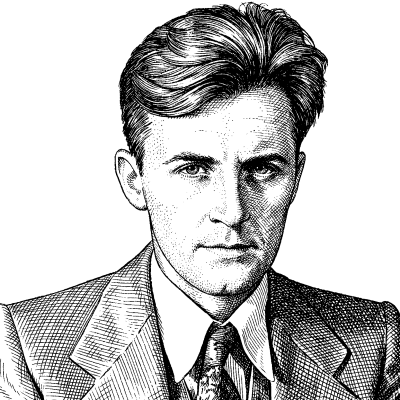
Hugh Nibley
Hugh Winder Nibley (1910–2005) was an American Latter-day Saint scholar, polyglot, and intellectual widely regarded as the most erudite defender and interpreter of Mormon scripture and theology in the twentieth century. Born in Portland, Oregon, Nibley demonstrated exceptional linguistic ability from an early age and ultimately mastered more than a dozen ancient and modern languages. He earned his doctorate in history from the University of California, Berkeley, served in military intelligence during World War II, and joined the faculty of Brigham Young University in 1946, where he taught for four decades and produced an extraordinary body of scholarship on early Christianity, ancient Near Eastern texts, the Dead Sea Scrolls, Egyptian papyri, and Latter-day Saint scripture. Nibley’s scholarly output was staggering in both volume and range. His works—collected across nearly twenty volumes in the Collected Works of Hugh Nibley series—engaged ancient texts with rigorous philological and historical method while consistently arguing that the restored Gospel of Joseph Smith finds deep resonance with the earliest layers of Christian and Jewish tradition. He was equally comfortable with Greek patristics, Coptic manuscripts, and Mesoamerican archaeology, and his willingness to follow evidence wherever it led made him a singular figure in Mormon intellectual life: a committed believer whose faith was inseparable from disciplined scholarship. Nibley’s treatment of Zion reveals the practical and communal urgency at the heart of his theology. Drawing on Brigham Young, he argued that Zion is not a destination to be passively awaited but a project to be actively built—that the Saints are called to prepare themselves and the earth so that a heavenly Zion and an earthly one can meet as equals. Zion, in his reading, is “an eternal and universal type,” a pattern realized across the eternities that must nonetheless be constructed here, by human hands and human hearts, one person at a time. This insistence that transcendent ideals become real only through consecrated human work—that “Zion is still our business”—resonates directly with the Mormon transhumanist conviction that theosis is not a gift received in passivity but an achievement pursued through intelligence, compassion, and the long labor of becoming.
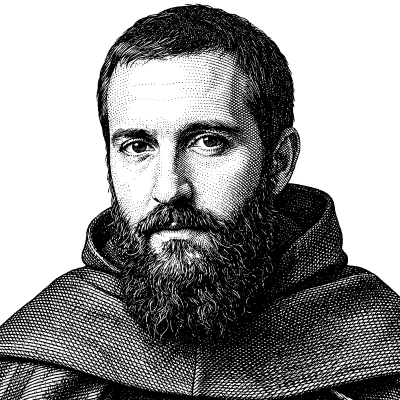
Irenaeus
Irenaeus of Lyon (c. 130–202 AD) was a Greek-speaking bishop, theologian, and anti-heretical writer who stands as one of the most consequential figures in early Christian intellectual history. Born likely in Smyrna in Asia Minor, he studied under Polycarp, who had known the apostle John, giving him a direct link to the first generation of Christian witness. He eventually settled in Gaul and served as bishop of Lyon, where he wrote his monumental work Against Heresies ( Adversus Haereses )—a systematic refutation of Gnostic movements that became a foundational text of orthodox Christian theology. He is venerated as a saint and martyr in both Eastern and Western Christian traditions. Irenaeus’s theological achievement was twofold: he defended the unity of the Hebrew scriptures with the Christian Gospel against Gnostic attempts to sever them, and he articulated a sweeping vision of salvation history as the gradual education and elevation of humanity toward God. His concept of recapitulation —the idea that Christ sums up and restores all of humanity’s history, reversing the fall of Adam and opening the path to eternal life—gave early Christianity one of its most coherent and hopeful frameworks for understanding human destiny. At the center of Irenaeus’s legacy is his unambiguous teaching on theosis: that human beings are created not as finished products but as works in progress, destined through faithfulness and time to share in the very life of God. He argued that the Son of God became human precisely so that humans might become divine—a logic he pressed with remarkable directness. He understood mortality itself as a stage, not a sentence: the mortal nature must first be exhibited, then conquered and swallowed up in immortality. Humanity begins as merely human, he insisted, and then advances toward Godhood through a process that cannot be rushed but also cannot be stopped. This developmental, progressive, and deeply hopeful anthropology—in which creation, time, obedience, and transformation are all constitutive elements of the path to divinity—resonates with striking depth alongside the Mormon transhumanist understanding of eternal progression and the long work of becoming.
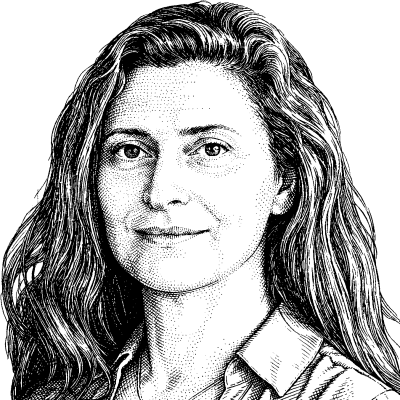
Irina Rish is a prominent researcher in the field of Artificial Intelligence, with a particular focus on achieving Artificial General Intelligence (AGI). She leads the Canada Excellence Research Chair in Autonomous AI, overseeing a large team of students, postdocs, interns, and collaborators. Her work explores the challenges and possibilities of creating AI systems that can generalize to a wide range of tasks and problems, mirroring human-level adaptability and learning capabilities. Rish’s research delves into the complexities of out-of-distribution generalization, aiming to develop AI agents capable of learning and performing tasks significantly different from their training data. She draws upon principles from statistics, machine learning, and classical AI to create systems that are not only capable of mastering specific skills but also demonstrate the capacity for continuous learning and adaptation, akin to human cognitive flexibility. Her work resonates with transhumanist themes by exploring the potential for AI to augment human intelligence and solve complex global challenges. Her presentation at the MTAConf 2024 focused on the technical aspects of AGI, emphasizing the importance of creating autonomous, multi-tasking systems capable of performing economically valuable work. Her engagement with the MTA highlights the intersection of AI research with philosophical and theological considerations regarding the future of humanity and the potential for technology to shape human evolution.

Jacob Baker is a scholar of philosophy of religion and theology who completed his doctoral studies at Claremont Graduate University’s School of Religion. His dissertation explored the inherent unthinkability of the problem of evil in philosophy and theology, arguing that this unthinkability is central to its status as a problem. Baker’s graduate work spans an impressive range of philosophical and theological traditions. He studied continental philosophy under Ingolf Dalferth, examining figures such as Heidegger, Wittgenstein, Nietzsche, Kierkegaard, and Tillich. His paper Heidegger and Wittgenstein: Worldliness and Surveyable Representation in the Architecture of the Ordinary argued that both philosophers share a fundamental orientation toward allowing phenomena to show themselves without philosophical interference. His work on Nietzsche explored how the philosopher’s critique of truth was ultimately in service of affirming and enhancing life itself. In phenomenology, Baker engaged deeply with Jean-Luc Marion’s work, arguing that love is the privileged theme of phenomenology and that Marion’s phenomenology of givenness can reveal how love enables the other to give herself as herself in particularity and unsubstitutability. His paper on Badiou and Zizek’s readings of St. Paul explored how these atheist philosophers converge on understanding Pauline love as work, labor, and struggle—far removed from sentimental notions. Baker has contributed significantly to Mormon intellectual discourse. His article The Grandest Principle of the Gospel: Christian Nihilism, Sanctified Activism, and Eternal Progression appeared in Dialogue: A Journal of Mormon Thought (Vol. 41, No. 3, 2008), examining how early twentieth-century Mormon intellectuals developed eternal progression as an existential response to what they perceived as the nihilistic stasis of traditional Christian heaven. In Element (Vol. 4, Issue 1, 2008), his essay The Shadow of the Cathedral argued that “open system” approaches to systematic theology can accommodate Mormon continuing revelation. His work on Joseph Smith, written under Richard L. Bushman, explored the connection between Smith’s personal experiences with friendship and his developing theology of sealing, arguing that the “welding link” concept emerged from Smith’s vision of uniting all humanity across time through bonds of love. Baker also examined whether Mormon theology can be meaningfully articulated within panentheistic discourse, suggesting that “pansyntheism”—meaning “God with us” rather than “God in us”—better accommodates Mormon emphases on divine personhood and the distinct identities of God and humans. In process theology and medieval theology, Baker examined how panentheism provides a framework capable of unifying disparate experiences—religious and secular, scientific and theological—into a coherent whole. His work on medieval atonement theory argued against contemporary calls to subordinate atonement to incarnation, demonstrating through Anselm, Abelard, Aquinas, and Bonaventure that these doctrines are mutually interdependent. During his presentation at the MTAConf 2016, he offered philosophical challenges to transhumanist thought through the lens of cosmic pessimism. His engagement with transhumanist literature reflects his broader interest in how philosophy and theology address questions of human potential, meaning, and transcendence.

Jake Spurlock is a software engineer with a passion for the intersection of technology and culture. He previously worked at Wired Tech, where he oversaw digital publishing, content management, and web performance. Prior to his role at Wired, Jake led web development at Maker Media, managing the digital presence of Make Magazine and Maker Faire . He is a graduate of Utah Valley University, where he earned a degree in digital media. Originally from Utah, Jake now resides in the Bay Area with his wife and three children. He presented on “Mormons and Tech” at the Sunstone West 2016 conference, exploring the potential impact of emerging technologies—such as augmented reality devices like Microsoft’s HoloLens—on modern living and Mormon culture. Jake was encouraged to speak at the event by Lindsay, who also works with Sunstone. He originally presented at the Sunstone Symposium in Salt Lake.