Authors
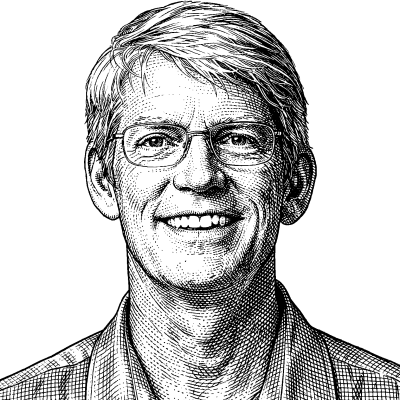
George Handley
George Handley (b. 1964) is an American scholar, essayist, and professor of humanities at Brigham Young University, where he has taught for over two decades. Born and raised in the United States, Handley earned his doctorate from the University of California, Berkeley, and has built a distinguished career at the intersection of environmental humanities, comparative literature, and Latter-day Saint thought. He is the author of several books, including Home Waters: A Year of Recompenses on the Provo River (2010) and The Hope of Nature: Our Care for God’s Creation (2020), works that weave together ecological attentiveness, theological reflection, and personal memoir. Handley’s scholarship is characterized by a sustained effort to hold together what contemporary culture often separates: scientific understanding of the natural world and the religious imagination that finds meaning within it. His work in comparative literature ranges across the Americas, with particular attention to Caribbean and Latin American traditions, and he has written extensively on the moral obligations that arise from genuine encounter with the living world. At BYU he has been a central voice in efforts to bring environmental stewardship into serious dialogue with Latter-day Saint theology. Handley’s deepest contribution may be his insistence that creation is not a mere backdrop to human history but an active element of moral and spiritual life. His writing calls readers toward a more reverent, attentive, and responsible relationship with the earth—one grounded not in fear or nostalgia but in the conviction that caring for the world is itself a form of worship and a practice of discipleship. This posture of creative stewardship, where faith, science, and love of the natural world converge, resonates with the Mormon transhumanist vision of humanity as co-creator with God, called to participate wisely and compassionately in the ongoing work of a living cosmos.
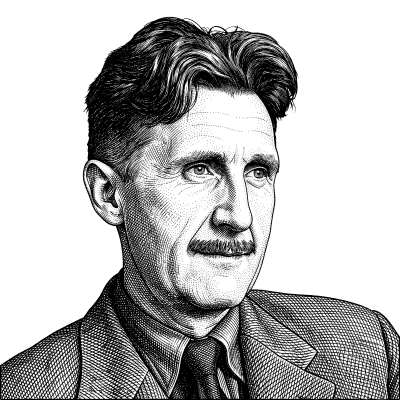
George Orwell
GEORGE ORWELL, the pen-name of Eric Arthur Blair, was born on 25 June 1903 in Motihari, Bengal, where his father, Richard Walmesley Blair, was working as an Opium Agent in the Indian Civil Service, into what – with the uncanny precision he brought to all social judgments – he described as ‘the lower-upper-middle classes’. In fact the Blairs were remote descendants of the Fane Earls of Westmoreland. Like many a child of the Raj, Orwell was swiftly returned to England and brought up almost exclusively by his mother. The Thames Valley locales in which the family settled provided the background to his novel Coming Up For Air (1939). Happily for the family finances – never flourishing – Orwell was a studious child. From St Cyprian’s preparatory school in Eastbourne, a legendary establishment that also educated Cyril Connolly and Cecil Beaton, he won a King’s Scholarship to Eton College, arriving at the school in May 1917. Orwell left a caustic memoir of his time at St Cyprian’s (‘Such, Such Were The Joys’) but also remarked that ‘No one can look back on his schooldays and say with truth that they were altogether unhappy.’ At Eton he frankly slacked, leaving the school in December 1921 after only a term in the sixth form. The following June he passed the entrance examination of the Indian Imperial Police and was accepted into its Burma division.
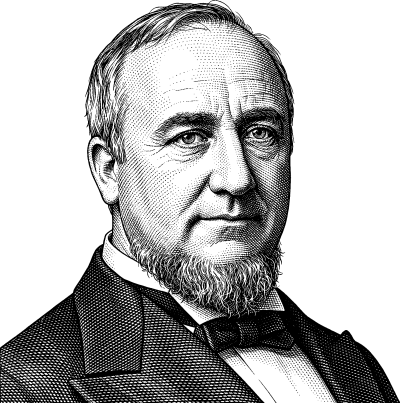
George Q. Cannon
George Quayle Cannon (1827–1901) was one of the most influential leaders in the early history of The Church of Jesus Christ of Latter-day Saints, serving as a member of the Quorum of the Twelve Apostles and later as First Counselor in the First Presidency under four successive church presidents. A skilled orator, prolific publisher, and astute politician, Cannon shaped the church’s public image and theological discourse during a critical period of its development. Born in Liverpool, England, Cannon immigrated to the United States with his family at age fifteen following their conversion to the LDS faith. After his parents’ deaths, he was raised by his uncle John Taylor, who would later become the third president of the church. Cannon crossed the plains to Utah in 1847 and soon demonstrated exceptional abilities as a writer and leader. In 1849, he was called on a mission to California, and later served in Hawaii, where he learned the Hawaiian language and translated the Book of Mormon into Hawaiian. Cannon’s publishing career began in San Francisco, where he edited the Western Standard. Returning to Utah, he founded the Deseret News and later established the Juvenile Instructor magazine. He served as editor of the Millennial Star in England and built a publishing empire that produced books, pamphlets, and periodicals defending and explaining Latter-day Saint beliefs. His editorials and writings helped articulate church doctrine on subjects ranging from plural marriage to the nature of God. In 1860, Cannon was ordained an apostle at age thirty-two. He also served six terms as Utah’s delegate to the U.S. Congress (1872–1882), where he advocated for Utah statehood while defending the church against anti-polygamy legislation. Though he was eventually denied his congressional seat due to polygamy charges, his political experience proved invaluable to church leadership during the difficult years of federal prosecution. Cannon’s theological contributions reflect themes resonant with transhumanist thought. He taught extensively about human deification and eternal progression, declaring that ‘the object of man’s existence is that he might become like God.’ He envisioned humanity’s potential for infinite development and wrote of the transformative power of knowledge and technology in advancing God’s purposes. His writings on the resurrection emphasized the perfection and glorification of the human body—ideas that anticipate contemporary discussions of human enhancement and transcendence.
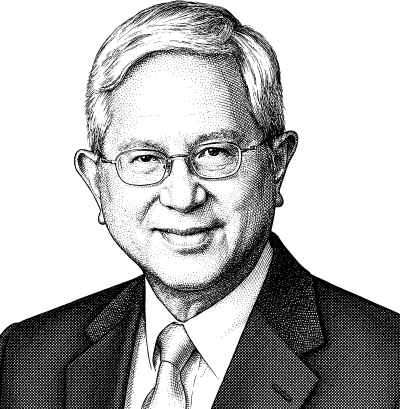
Gerrit W. Gong
Gerrit W. Gong (b. 1953) is an American religious leader, diplomat, and scholar who serves as a member of the Quorum of the Twelve Apostles of The Church of Jesus Christ of Latter-day Saints—a calling to which he was ordained in 2018. Born in Los Angeles, California, Gong grew up in a family that bridged Chinese heritage and Latter-day Saint faith—a bicultural formation that has shaped his lifelong interest in the meeting points of diverse traditions, civilizations, and ways of knowing. He earned his doctorate from Oxford University as a Rhodes Scholar and built a distinguished career as a China specialist, serving in various capacities at the U.S. State Department and at the Center for Strategic and International Studies before his full-time ecclesiastical service. Gong’s scholarly work focused on the standards and norms of international society, the dynamics of civilization, and the conditions under which peoples with different histories and values can find common ground. His book The Standard of ‘Civilization’ in International Society (1984) remains a notable contribution to international relations theory. Within the Church, he served as President of Brigham Young University--Hawaii and as a General Authority Seventy before his call to the Twelve, bringing to his apostolic ministry a rare combination of diplomatic experience, cross-cultural fluency, and intellectual depth. What distinguishes Gong’s public voice is a consistent attentiveness to the way personal memory, family bonds, and shared stories carry people across generations and toward greater wholeness. He speaks often of the power of belonging—to family, to community, to God—as a living force that shapes identity and sustains hope. This vision of covenant relationship as something that grows, deepens, and ultimately transcends mortality resonates naturally with the Mormon transhumanist conviction that eternal progression is not an abstraction but a present practice, woven from intelligence, love, and the patient work of becoming.
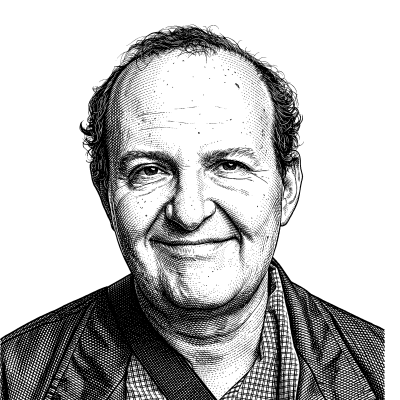
Giulio Prisco is a writer, technologist, futurist, and transhumanist. He is based in Budapest and is a frequent speaker and writer on topics related to science, technology, and the future. A former manager in European Science and Technology Centers, Prisco’s interests span a wide range of subjects, including information technology, emerging technologies, virtual worlds, space exploration, and future studies. He is especially interested in the convergence of science, technology, and spirituality—a theme he explores through his work with the Turing Church of Transcendent Engineering. Prisco is deeply interested in concepts like mind uploading, cryonics, and brain preservation, and how these technologies intersect with philosophy and religion. He is an advocate for the potential of technology to transcend human limitations and explore spiritual possibilities, dedicating his work to advancing these ideas within the broader transhumanist community.
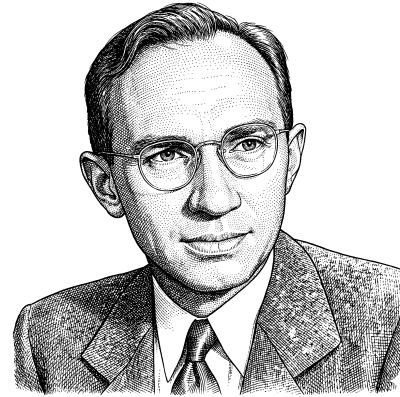
Gordon B. Hinckley
Gordon Bitner Hinckley (1910–2008) was an American religious leader who served as the fifteenth President of The Church of Jesus Christ of Latter-day Saints from 1995 until his death in 2008. Born in Salt Lake City, Utah, Hinckley graduated from the University of Utah in 1932 with a degree in English and a deep interest in classical languages and ancient history. After serving a mission to Great Britain during the difficult years of the early 1930s, he returned to a career in Church communications, helping pioneer the use of radio, film, and later television to extend the reach of the Latter-day Saint message. Hinckley spent more than six decades in full-time Church service, rising from secretary to the Radio, Publicity, and Mission Literature Committee in 1935 to apostle in 1961, counselor in the First Presidency, and ultimately Church president. His tenure as president was marked by an unprecedented expansion of temple building—nearly doubling the number of operating temples worldwide—and by a confident, public-facing engagement with media that brought him into wide-ranging interviews with journalists across the globe. He oversaw the construction of the Conference Center in Salt Lake City, issued The Family: A Proclamation to the World with his counselors and the Quorum of the Twelve, and traveled more extensively than any of his predecessors, meeting members in scores of nations. Hinckley was notable for his unguarded optimism about the modern world and the fruits of human inquiry. He spoke of the twentieth century as “the best of all centuries,” celebrating extended lifespans, expanded knowledge, and the miracles of modern medicine, travel, and communication as gifts to be “grasped and used for the advancement of the Lord’s work.” He encouraged members to leave biology, archaeology, and anthropology to scientific research, and recalled his own study of geology and anthropology with characteristic equanimity: it had not worried him then, and it did not worry him as prophet. His vision of revelation was likewise generous and practical—a still small voice consulted in council, a relationship sustained by daily prayer, a sacred but ordinary feature of working through hard problems together. And his teaching on temple work cast every disciple as a participant in something larger than personal salvation: literally, in his words, “saviors on Mount Zion,” laboring on behalf of those who have gone before. Taken together, these emphases—on the dignity of science, the reality of ongoing revelation, the obligation of vicarious love across the veil, and the open horizon of human progress—mark a legacy that resonates deeply with the Mormon transhumanist conviction that faith, intelligence, and consecrated work belong together in the long project of becoming.

Hank Pellissier is a freelance writer, speaker, and humanitarian activist whose work explores the intersections of cognitive enhancement, secular ethics, and global mutual aid. He is the author of Brighter Brains: 225 Ways to Raise or Injure IQ and Invent Utopia Now: Transhumanist Suggestions for the Pre-Singularity Era , as well as the editor of the essay collection Human Destiny is to Eliminate Death . Pellissier earned a Bachelor of Arts in History from the University of California, Santa Barbara, and a Master of Arts in Humanities from California State University, Dominguez Hills. His journalistic contributions have appeared in a variety of prominent outlets; he served as the “Local Intelligence” columnist for the New York Times (San Francisco edition) and has written extensively for Salon , SFGate , and GreatSchools.org . A significant portion of Pellissier’s career has been dedicated to the transhumanist and futurist movements. In 2012, he served as the Managing Director of the Institute for Ethics and Emerging Technologies (IEET). He later founded the Brighter Brains Institute (BBI), through which he organized the Transhuman Visions conference series in the San Francisco Bay Area. His work often emphasizes “transhumanitarianism”—a term he coined to advocate for the integration of radical generosity and humanitarian action within the transhumanist philosophy. At the Religion and Transhumanism Conference in 2014, he furthered this dialogue by exploring how technological progress can be harnessed to alleviate human suffering on a global scale. In recent years, Pellissier has shifted his focus toward international philanthropy through the Humanist Mutual Aid Network (formerly Humanist Global Charity). As its founder and director, he oversees projects that provide secular support to at-risk populations in Africa and South Asia. Through his writing and activism, Pellissier remains a vocal advocate for the use of technology and secular humanism to “create paradise on earth,” focusing on the tangible improvement of human intelligence and the eradication of poverty and disease.
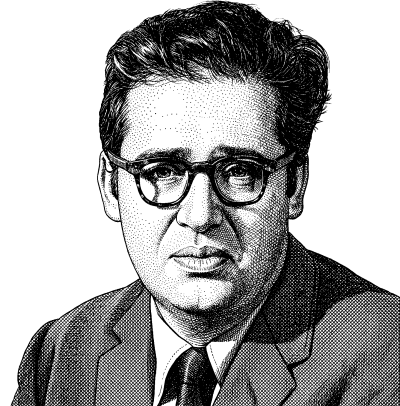
Harold Bloom
Harold Bloom (1930–2019) was an American literary critic and scholar widely regarded as one of the most formidable and provocative intellectual voices of the twentieth century. Born in the East Bronx, New York, to Yiddish-speaking Jewish immigrant parents, Bloom demonstrated an astonishing memory and appetite for literature from childhood. He earned his doctorate from Yale University in 1955 and remained associated with Yale for the rest of his career as Sterling Professor of Humanities, also holding appointments at New York University and other institutions. Over decades he produced a body of work remarkable in both volume and ambition, including The Anxiety of Influence (1973), The Western Canon (1994), and The American Religion (1992). Bloom’s critical signature was a theory of literary creativity as agonistic struggle: strong writers achieve originality not by ignoring their predecessors but by creatively wrestling with and misreading them, clearing imaginative space through what he called the “anxiety of influence.” This framework, drawn partly from Romantic poetry and partly from Kabbalistic thought, gave his criticism an almost mythological intensity. He was a fierce defender of the literary canon and a tireless champion of imaginative difficulty against what he saw as the ideological flattening of humanistic study. Bloom brought the same intensity to American religious history, and his engagement with Mormonism produced some of his most captivating writing. In The American Religion he argued that Joseph Smith was a religious genius whose revelations constituted one of the most original theological achievements in the history of the West. Bloom located the deepest nerve of authentic religion in the confrontation with mortality, and he judged early Mormonism the tradition that most vehemently and persuasively refuses to accept death as final. That judgment, coming from an outside observer with no stake in belief, carries its own kind of testimony. It points toward something that Mormon transhumanists recognize at the core of the Restoration: the conviction that death is a problem to be overcome, that human beings are destined for something far greater than biological limits suggest, and that this aspiration is not wishful thinking but a serious theological and ultimately practical claim about the nature of intelligence, embodiment, and divine possibility.
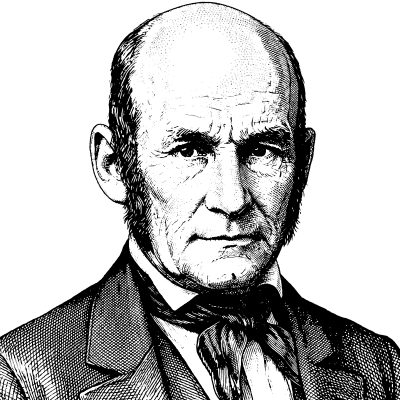
Heber C. Kimball
Heber Chase Kimball (1801–1868) was an American religious leader, missionary, and settler who served as one of the original members of the Quorum of the Twelve Apostles of The Church of Jesus Christ of Latter-day Saints and, from 1847 until his death, as First Counselor to President Brigham Young. Born in Sheldon, Vermont, Kimball worked as a potter before joining the Church in 1832 and quickly becoming one of its most energetic and effective early missionaries. He led the first Latter-day Saint mission to Great Britain in 1837, a journey that resulted in thousands of conversions and established a transatlantic gathering movement that would shape the demographic character of early Utah. Kimball was a central figure in the organizational and physical building of the Latter-day Saint community across its most turbulent decades—the Missouri persecutions, the Nauvoo era, the martyrdom of Joseph Smith, and the overland exodus to the Salt Lake Valley. As Brigham Young’s closest counselor he helped govern the territory of Utah through its formative years, wielding both ecclesiastical and civic influence. His personal loyalty to Joseph Smith was absolute, and his preaching style was earthy, unpolished, and remarkably direct—qualities that made him beloved among pioneer settlers. Kimball’s theological instincts ran deep. His sermons returned repeatedly to the radical naturalism at the heart of early Mormon theology: God is not a being apart from nature but a being within it, who acquired knowledge through experience and inheritance, just as human beings do. His image of an infinite chain of fathers—each connected to one still further back, stretching without arbitrary terminus into the cosmos—anticipates the kind of open-ended, naturalistic cosmology that Mormon transhumanism takes espouses. Where others might invoke divine mystery to close off inquiry, Kimball pressed the logic of eternal progression outward, suggesting that the universe is populated with intelligences in various stages of development, and that humanity’s own trajectory extends without ceiling toward greater knowledge, greater power, and greater kinship with God.
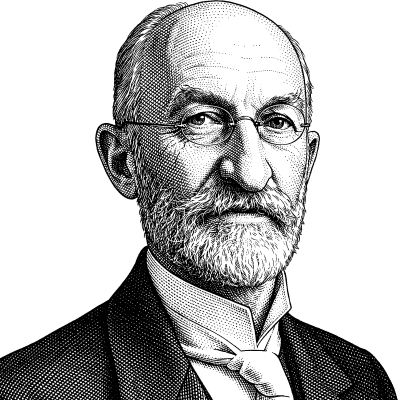
Heber J. Grant
Heber Jeddy Grant (1856–1945) was an American religious leader and businessman who served as the 7th President of The Church of Jesus Christ of Latter-day Saints from 1918 until his death. Born in Salt Lake City to Rachel Ridgeway Ivins and Jedediah Morgan Grant (who died nine days after Heber’s birth), Grant overcame poverty and a weak constitution through determination and hard work. He became a successful businessman and was called to the Quorum of the Twelve Apostles at age 25. Grant emphasized self-reliance, practical faith, and industry. First Presidency statements during his administration addressed the relationship between science and religion, noting that the Church’s fundamental doctrines do not conflict with scientific inquiry into questions of how creation occurred.