No Small and Cramped Eternities
Terryl Givens explores how Mormon theology, particularly as developed by Parley P. Pratt and articulated in Joseph Smith’s King Follett discourse, offers a “transcendent humanism” that collapses the traditional divide between the material and the spiritual. By naturalizing deity and placing God within a universe governed by comprehensible laws, this cosmology positions human beings not merely as creatures but as creators with divine potential. Givens argues this framework—with its vision of an unencumbered God who delights in human advancement rather than jealously guarding divine prerogatives—may offer unexpected common ground with scientific naturalists and provide a compelling alternative to the materialist-supernaturalist impasse that characterizes contemporary debates about religion.
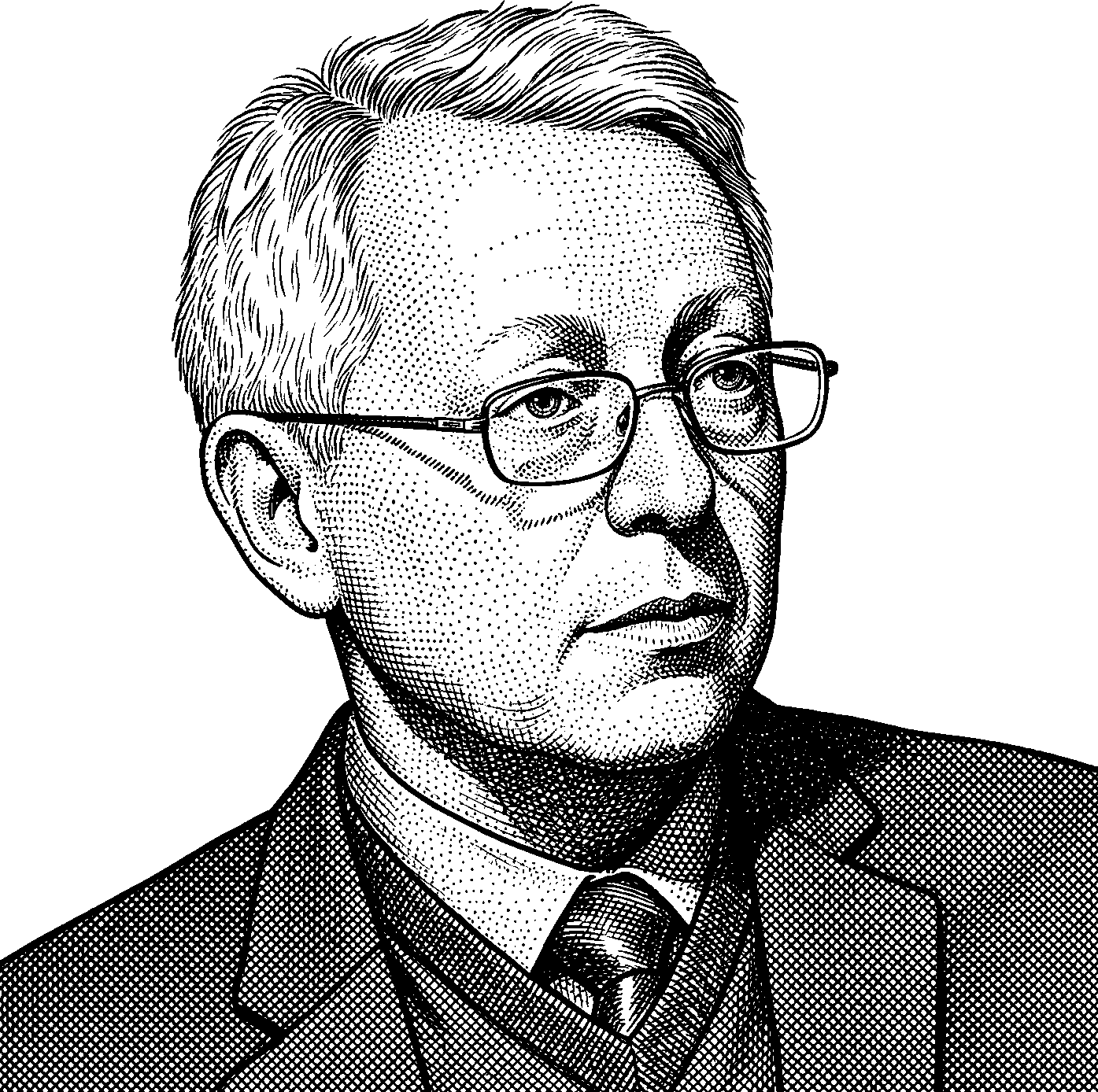
Terryl Givens is a distinguished scholar of Mormon culture and is perhaps the preeminent explicator of Mormonism’s relationship to American and global culture. He has authored an impressive number of books during his career, with more forthcoming. His work is noted for its originality of insight, native eloquence, and command of world literature, making his speeches and writings rhetorical masterpieces. His publications have significantly influenced Mormon thought, particularly the concepts of dialogic revelation and the understanding of Mormon doctrine as a series of paradoxes. ¶ Givens is widely known for his works, including Viper on the Hearth, a study of Mormonism in American culture; By the Hand of Mormon, which examines the reception and understanding of the Book of Mormon; and People of Paradox, a book which suggests a new way of looking at Mormon thought. His forthcoming book on the Book of Mormon with Oxford University Press promises to offer fresh insights into this foundational text. ¶ Givens’s work explores the intersections of Mormon cosmology, scientific speculation, and philosophical inquiry. He delivered the keynote address “No Small and Cramped Eternities” at an MTA (Mormon Transhumanist Association) conference, reflecting his understanding of the affinities between Mormonism and transhumanist thought. His work contributes to a broader understanding of Mormonism’s place in Western culture, from the Greeks to the present day, and engages readers to re-evaluate familiar concepts.
Transcript
Speaker 1
We could think of no one better to keynote this conference than Terryl Givens. who is one of our most distinguished students of Mormon culture and perhaps the preeminent explicator of Mormonism’s relationship to the culture of this country and of the world. He’s published an astonishing number of books. in his young career with still more books in the offing. I first came across his work ten years ago. Viper on the Hearth, which is a study of the place of Mormonism in American culture and thinking. I think most Latter-day Saints know him from his book By the Hand of Mormon, which is a book about how the Book of Mormon has been received and understood by the various audiences that have read it. And one of the most stimulating and innovating books in our corpus of Mormon studies, People of Paradox, which suggests a new way. looking at Mormon thought as not a set of principles, but a set of paradoxes which define the tensions of our lives. If you wait six months, you’ll be able to buy his study of pre-existence in Western culture. I don’t mean Western American culture. I mean Western culture from the Greeks right down to the present. There are others out and on the way that I won’t mention here, but this output is truly inspirational in my opinion. This, the number of books in itself is awe-inspiring, but what impresses me is the quality of Terrell Gibbons’ work. He has a native eloquence. and a command of world literature that makes his speeches and his writings really rhetorical masterpieces. On top of that, however, he has an originality of insight. that engages your mind like few of our writers today. Dialogic revelation The idea that conversations with God go both ways has become a fixture of Mormon thinking about Revelation. And the same with thinking of our doctrine as a series of paradoxes. And I think his forthcoming book on the Book of Mormon For Oxford University Press, you will find studded with fascinating insights about a text that Ha is familiar to Mormons, but he makes unfamiliar and re-engages us to it. The organizers thought that Terrell was the ideal keynote speaker because he has always sensed the affinities of scientific engineering speculation and Mormon cosmology. I think you will get some idea of where he is headed tonight from the title of his address. No small and cramped eternities. So please welcome Terrell Gibbons.
Terryl Givens
Thank you very much for that introduction. Can I have a copy of that for my mother? She doesn’t know what it is I’m doing.
Terryl Givens
In a book perhaps ironically titled Orthodoxy, the great Christian apologist G. K. Chesterton resists the diminishment of man consequent upon a thoroughly Darwinized universe. He writes No philosopher denies that a mystery still attaches to the two great transitions, the origin of the universe itself and the origin of the principle of life itself. Most philosophers have the enlightenment to add that a third mystery attaches to the origin of man himself. In other words, a third bridge was built across a third abyss of the unthinkable. When there came into the world what we call reason and what we call will, man is not merely an evolution, but rather a revolution. It is the simple truth, he continues, that man differs from the brutes in kind and not in degree. And the proof of it is here. That it sounds like a truism to say that the most primitive man drew a picture of a monkey. And it sounds like a joke to say the most intelligent monkey drew a picture of a man. Something of division and disproportion has appeared, and it is unique. Art is the signature of man. This creature was truly different from all other creatures because he was a creator as well as a creature. I want to explore the implications of this last phrase. For in defining man as Homo erector rather than Homo sapiens, we may find a potent link between what this conference calls Mormon thought And engineering vision.
Terryl Givens
When Church Father Origen wrote one of the earliest treatises on Christian belief in the early third century. He noted that some articles of faith were delivered, quote, with the utmost clearness on certain points, which they believed to be necessary to everyone. Ever since, theology has largely been concerned with articulating and elaborating those foundational tenets of religious faith. Such tenets consist of, quote, the character and attributes of God, the doctrines we are to believe and the duties we are to practice, according to the 1828 Webster. A more recent authority, surveying the historical scope of theology, describes its purview as the whole complex of the divine dispensation from the fall of Adam. to the redemption through Christ. The limitations of theology are implicit in that very formulation: fall through redemption. But they are made even more explicit in the greatest Christian epic in the West, John Milton’s Paradise Lost. Milton pushed the boundaries of God’s science further than most, at least he claimed he did. when he determined to soar above the Aeonian mount, to pursue things unattempted yet in prose or rhyme. Yet even in his audacious claim to justify the ways of God to men, he knew when to recognize the limits of appropriate inquiry God sends the angel Raphael to impart further light and knowledge to Adam, but ends by counseling the overcurious human with these words. Solicit not thy thoughts with matters hid Heaven is for thee too high to know what passes there. Be lowly wise Think only what concerns thee and thy being. Dream not of other worlds, what creatures there live, in what state, condition, or degree be content with what thus far hath been revealed.
Terryl Givens
The questions that Christian theology has by and large resisted the urge to adjudicate are legion. What of the time before creation? What was God doing then? Preparing hell for such as would ask such impudent questions, Augustine was tempted to respond. What of God’s other dominions? Another mystery it falls not to theology to explain. Why is there man at all? For Milton, the boldest exponent of theodicy before Parley Pratt It was to deprive Satan of bragging rights in having suborned a third of heaven’s angels. The scriptures, however, are silent. What of human destiny in the worlds beyond? What exactly is man being saved for? Dante thought a state of eternal rapture is contemplation, and few have proffered more specifics than that. Post-redemption theology seems an oxymoron. So, traditional theology, in other words, confines itself to defining the terms and conditions of a very limited concept of salvation. Of a soul of unknown beginnings, from an evil of unknown origin, to prepare for a future of unknown nature, all in accordance with the inscrutable will of a God who is beyond human comprehending. What it does elaborate are the articles of faith demanding assent and the sacraments necessary to comply with in the course of human life. The focus is decidedly, emphatically, on the time frame and the personal transformations that lead, quote, from the fall of Adam to the redemption through Christ.
Terryl Givens
Against this conservative Christian background, the major work of Parley P. Pratt stands in sharp relief. No Mormon thinker, Pratt included, would exceed Joseph Smith’s own audacity as a Christian iconoclast. Speculating on heavenly councils, gods that were once human, humans that could attain to godhood, these and other doctrines blasted asunder the creedal conceptions of God and man alike. But it fell to Pratt to assemble these ideas for the first time into something like a systematic form, in some cases apparently giving public expression to them even before Joseph Smith. Here is perhaps the prime instance of Pratt playing Paul. To Joseph’s Jesus. If Joseph Smith was the instigator of Mormonism’s essential beliefs Harley Pratt organized them, elaborated them, and defended them in a manner that gave them the enduring life and the complexion they had in the early church. Pratt was, in this sense, the first theologian of Mormonism.
Terryl Givens
Precedents for Parley Pratt’s atypically boundless theologizing were recent. The writer Thomas Dick defended his philosophy of a future state as consistent with if not affirmed by holy writ, and took his fellow theologians to task for their reticence in plumbing the nature of heavenly felicity and the employments of the future world. Dick lamented the vague and indefinite manner in which such subjects have been hitherto treated, and the want of those expansive views of the divine operations which the professors of Christianity should endeavor to attain. Like Pratt, Dick was consumed by the spectacle of a scientific juggernaut that was already opening worlds in the early 19th century, both immense and minute. to human knowledge, and which would leave in its wake any theology too timid to follow. Consider the boundless extent of the starry firmament, Dick rhapsodized. the scenes of grandeur it displays, the new luminaries, which in the course of ages appear to be gradually augmenting its splendour, and the countless myriads of exalted intelligences which doubtless people its expansive regions. In regard to the latter, he felt ennobled rather than diminished by the titanic scope of creation involved. And if the multiplicity of objects in one world overwhelms our powers of conception and computation, he wrote, how much more the number and variety of beings and operations connected with the economy of millions of worlds? At a bare minimum, he concluded, men and angels in a future state would continue their intellectual progress in the realms of mathematics and astronomy. as a simple precondition for understanding the glory and majesty of the heavens they were to inherit. But why stop with those two disciplines? he argued. And he goes on to enumerate natural philosophy, anatomy, and physiology, history, and other subjects As some of those branches of science which will be recognized and studied by the righteous in a future state. This was Hetty Doctrine, and it came Only a decade or two before Pratt’s own work in the field of Mormon theology, Pratt would reaffirm and expand upon these ideas in at least two regards. First, he wrote on the basis of what he believed was authoritative revelation rather than simple inference, and he wedded his system to a young but flourishing institution which assured its dissemination and survival.
Terryl Givens
The real key to understanding the first great synthetic work of Mormonism, consummated in Pratt’s Science to the Key of Theology, is to be found in the implications that he draws from one of Mormonism’s most radical claims. Jesus Christ and the Father are in possession of not merely an organized spirit, but also a glorious immortal body of flesh and bones. Such extreme anthropomorphosizing is startling in and of itself, but the inference that follows is what shatters the boundaries of traditional theologizing. If the father and son have physical tabernacles, he reasons, then they are subject to the laws that govern of necessity even the most refined order of physical existence. Because all physical element, however embodied, quickened, or refined, is subject to the same general laws necessary to all existence. What this means is that by naturalizing deity, the entire universe of God and man, heaven and hell, body and spirit, the eternal and the mundane, is collapsed into one sphere. The paradigm to which this stands in opposition is neatly formulated by Pratt’s contemporary, the famous amateur theologian Samuel Taylor Coleridge, who stated the matter simply. The very ground of all miracle, he insisted, is the heterogeneity of spirit and matter. On that distinction stands the viability of miracles, the sacred and God’s immunity to the babble tower of scientific materialism and the hubris of philosophical materialism. Pratt does not only declare the distinction erased and the spheres conflated into one. but insists that that sphere is governed by laws fully conformable to and accessible by human reason.
Terryl Givens
In the aftermath of Sir Isaac Newton’s momentous decipherment of the laws of the universe, the French scientist Pierre-Simon de Laplace famously told Napoleon in his Philosophical Euphoria that he no longer had need of God to make sense of creation. Secular science could henceforth exile God from his universe. In Pratt’s theological euphoria, God was reinscribed in this universe, but as a part of it rather than outside it. For this reason, it would be more accurate to say that for Pratt, science encompassed theology, rather than simply coexisted harmoniously with it. That is the important sense in which we must understand Pratt’s title, Key to the Science of Theology.
Terryl Givens
In an earlier work dating to 1838, Pratt had already signaled his intention to reinterpret all theology within the construct of a kind of scientific materialism. Matter and spirit are the two great principles of all existence, he had written. Both constitute the eternal and material constituents of the universe. But the resulting interaction between the physical and the spiritual, the earthly and the divine, could be jarring. As the physical universe was directly affected by the fall of man. so must Christ’s atonement be seen as entailing the salvation and durability of the physical world, the renovation and regeneration of matter, and the restoration of the elements to a state of eternal and unchangeable purity. This is more than simply innovation or heterodox speculation. This represents perhaps the most significant reconceptualizing of religious cosmology in Christian history.
Terryl Givens
I’m reminded in this regard of a much circulated essay by the iconoclastic theorist of computer science, Edgar Diekstra. He wrote, The usual way in which we plan today for tomorrow is in yesterday’s vocabulary. We do so because we try to get away with the concepts that we are familiar with. And that have acquired their meaning in our past experience. It is the most common way of trying to cope with novelty. By means of metaphors and analogies, we try to link the new to the old, the novel to the familiar. In the case of a sharp discontinuity, however, the method breaks down. Though we try to glorify it with the name Common Sense, our past experience is no longer relevant. One must consider one’s own past, the experiences collected, the habits formed, as an unfortunate accident of history. And one has to approach the radical novelty with a blank mind. Consciously refusing to try to link it with the familiar, because the familiar is hopelessly inadequate. Coming to grips with a radical novelty Amounts to creating and learning a new foreign language that cannot be translated into one’s mother tongue. This applies perfectly to Mormonism, with this ironic qualifier. Mormonism’s most striking discontinuity with Christian theology is in the radical continuity it establishes between the material and the eternal. the transcendent, even the supernatural. The result is a worldview that is shockingly and yet refreshingly blithe in its indifference to its own oddness.
Terryl Givens
When the elements melt with fervent heat, said Brigham Young, the Lord Almighty will send forth his angels who are well instructed in chemistry, and they will separate the elements and make new combinations thereof. Orson Pratt would elaborate this view a few years later. The study of science is the study of something eternal. If we study astronomy, we study the works of God. If we study chemistry, geology, optics, or any other branch of science, every new truth we come to the understanding of is eternal. It is a part of the great system of universal truth. It is truth that exists throughout universal nature, and God is the dispenser of all truth, scientific, religious, and political. Man and God, building bridges and creating worlds, practicing chemistry and endowing the earth with its celestial glory, the mundane and the miraculous, are but different degrees. on an eternal scale of knowledge acquisition.
Terryl Givens
The most audacious Mormon principles followed inescapably from this monistic cosmology, and they pertained to man’s relationship to the deity. One of the most surprising aspects to my mind of Mormon culture was the ease with which early members, most from evangelical backgrounds reared in strict Methodist and Reformed Baptist traditions, Segued into a faith that demolished some of Christendom’s most sacred precepts. An immortal man, perfected in his attributes in all the fullness of celestial glory, is called a God. wrote Pratt without apology, and then without blinking, it may then consistently be said that there are, in a subordinate sense, a plurality of gods. This is in eighteen thirty eight, six years before King Follett. Anglo-Saxon Protestantism had shown, since England’s Toleration Act of 1689, a remarkable effort to countenance dissent and heterodoxy in Christian faith. as long as they fell within a few non-negotiable parameters. Notably, religious freedom was decreed in the 1689 Act for almost all dissenters from orthodoxy, providing they accepted the creedal definition of the Trinity. And here is Pratt unabashedly professing Mormonism to be, in an essential regard, polytheistic. Certainly, a case could be made and has been made that Latter-day Saints are monotheistic in the only way that matters. They worship God the Father in the name of Christ. The point is, Pratt did not stoop to make that claim because he was not interested in passing muster with the guardians of Christian Orthodoxy. It would have sounded too apologetic. And if there is one thing that Pratt never condescended to, it was apologies for Mormon heterodoxy.
Terryl Givens
The fullest expression of this idea, of course, would come in Joseph Smith’s famous discourse shortly before his death. King Follett presents us with two catastrophes for conventional theology, which may not be a bad thing. The first is the humanizing and temporalizing of God. I know thoughtful and faithful Mormons who rejoice that King Follett was never canonized for that reason. It does have one virtue, however, as a sermon. And perhaps this is one that we will have the boldness someday to plumb, in that it lends itself to the world’s best hope for a naturalistic theology. Stripped of all invocations of transcendent entities and transcendent eternities, such a universe should be at least potentially appealing to some of the hardcore materialists Currently working the anti-God and Anti-Religion Circuit. One of Mormonism’s greatest strengths, surely unexplored and untapped until now. is its potential to offer an alternative to the materialist, supernaturalist impasse that stymies productive discourse in this age of increasing polarization and rhetoric that reduces to caricature proponents of each cosmology.
Terryl Givens
I would point out that positions that bridge this gap have been taken at times by some of the more unconventional of the philosophically minded. The Cambridge philosopher John MacTaggart, for example, considered himself an atheist insofar as he found nothing intellectually compelling about the god of religions East or West. The human soul, however, he found too powerful a paradigm to reject. In fact, he argues, there are better grounds for skepticism about the reality of matter than to doubt the reality of spirit. And incidentally, he found its premortal existence vastly more compelling a belief than its purported immortality. But that’s another talk.
Terryl Givens
William James also famously proposed a religious paradigm that avoided the materialist, supernaturalist alternatives. Scientific naturalism is inadequate, he concludes, because there are resources in us. that naturalism with its literal and legal virtues never wrecks of possibilities that take our breath away of another kind of happiness and power And these seem to show a wider world than either physics or Philistines can imagine. On the other hand, he argues, the problems with positing a God equivalent to the Absolute Are utterly untenable, or make belief in God absolutely untenable. Among other problems, satisfying as the concept of the absolute is, He says it satisfies only intellectual rationality. It does not successfully address what he labels aesthetic or moral rationality. At any rate, the only solution he finds would be a God who is in some sense finite. That is, he is in the universe and subject to its laws. He believes, in accordance with biblical theism, but at variance with creedal Christianity. that it would be hard to conceive of anything more different from the Absolute than the God of, say, David or of Isaiah. That God, he writes, is an essentially finite being in the cosmos, not with the cosmos in him. But then he says this. If it should prove probable that the Absolute does not exist, it will not follow in the slightest degree that a God like that of David, Isaiah, or Jesus may not exist. Or may not be the most important existence in the universe.
Terryl Givens
As a third example, I would point to the avowed atheist philosopher Thomas Nagel. who found both theism and scientific physicalism with its Darwinian evolution wholly inadequate to the task of giving a general account of the human self. I am denying, he writes, that what rationality is can be understood through the theory of natural selection. To the question of just what this selfhood is, he confesses, I don’t have a proper response. But the physical story, without more, cannot explain the mental story, including consciousness and reason. But he is loath to invoke the specter of religious belief. Yet, he concludes after his wrestle with the non-God. We are simple examples of minds, and the existence of mind is certainly a datum for the construction of any world picture. At the very least, its possibility must be explained, and it hardly seems credible that its appearance should be a natural accident, like the fact that there are mammals.
Terryl Givens
Positions like these should be of acute interest to Mormons, it seems to me, because all of them begin with what Nagel calls the datum of the human soul. In a universe where a transcendent God is not an a priori, reversing the usual sequence, the soul is in these cases not the emanation. Not the temporal or logical consequence of a creator God. It is the starting point for the development of cosmology, precisely as it is in King Follett.
Terryl Givens
The second of King Follett’s assaults on orthodoxy, of course, is its premise that a man may become a god. Now, this I find the most exciting prospect that Mormonism holds out to us. It is also, of course, the most feared theological tenet in the whole history of Christendom and even beyond. The earliest creation myth of which we have record, the Mesopotamian Atrahasis. In this record, the man created at the instigation of a divine assembly is made to forget his origin in the heavens. Lest he aspire to return to his place among the gods. The Church Father Tertullian gave fullest expression to the horror with which guardians of orthodoxy guardians of God’s sanctity face down the possibilities of theosis. In these early Christian centuries The pre-mortal soul provided by far the most compelling solution to numerous dilemmas associated with human incarnation. But in preexistence lurked one cardinal danger as well. The church father Tertullian attributed the idea to the pagan philosopher Plato. And Plato, he wrote, gave to the soul so large an amount of the divine quality as to put it on a par with God. He makes it unborn, which single attribute I might apply as a sufficient attestation of its perfect divinity. He then adds that the soul is immortal, incorporeal. Invisible, rational, and intellectual. What more could he attribute to the soul? He asked, if he wanted to call it God. We, however, who allow no appendage to God in the sense of equality, by this very fact, reckon the soul as very far below God. We suppose it to be born. And thus he foreshadowed the demise of the doctrine of preexistence.
Terryl Givens
Like much else in Mormonism, the prospect of theosis or deification Can appeal for vainglorious and ignoble, as well as for more pure-hearted reasons. I would like to think that given the context of Enoch’s weeping God and the Christ of Gethsemane, Mormons know that acquiring the divine nature is much more about infinite vulnerability than about infinite power. At the same time, I would argue the God of Joseph Smith and the God of Parley P. Pratt is a god of power and a god of unprecedented power at that. And here is why.
Terryl Givens
The heavens are for Pratt, as they were for the Jewish thinker Philo of Alexandria and church father Origen, great defender of premortality, seething with activity. Populous with humans, spirits, and gods, all coming and going, ascending and descending like the angels on Jacob’s ladder. The differences among them derive from the varied grades of intelligence and purity, and also in the variety of spheres occupied by each in the series of progressive being. So wrote Parley Pratt. This is theology that comes fittingly out of the age of Thomas Malthus and Hegel, conformable to Darwin’s universe of flux and aegon and dynamism. If by Pratt’s day the dour face of Puritanism had long been in retreat, and Calvinism fast becoming a one-horse chaise, the Christianity of yesteryear was not receding quickly enough to suit him. The gospel Pratt taught and embraced was, like the age of progress, one of unfettered optimism and boundless possibilities. He urged upon his contemporary religionists the importance of, quote, ceasing to teach and impress upon the youthful mind the gloomy thoughts of death and the melancholy forebodings of a long slumber in the grave. The wayward and buoyant spirits of youth were already too weighed down and oppressed. His embrace of human theosis, this doctrine of equality, as he called it His more general application of the Appalachian gods all are susceptible to the charge, if not of blasphemy, then of a dangerous collapse of sacred distance. A risky diminution of the grounds for reverence and awe that constitute reverence before God’s transcendent holiness. But for Pratt, The invitation to fellowship with the gods was cause for unalloyed celebration of God’s superabundance. What a glorious field of intelligence now lies before us yet partially explored What a boundless expanse for contemplation and reflection now opens to our astonished vision What an intellectual banquet Spreads itself invitingly to our appetite, calling into lively exercise every power and faculty of the mind. All the virtuous principles of the human mind may here expand and grow and flourish unchecked by any gloomy fears.
Terryl Givens
As for God’s motive in giving earthly existence and eternal salvation to man, Pratt outlines the meaning and purpose of life in one eloquent paragraph, reminiscent of the God that Plato described in the Timaeus. Pratt wrote, Wisdom inspires the gods to multiply their species and to lay the foundation for all forms of life to increase in number and for each to enjoy himself. in the sphere to which he is adapted, and in the possession and use of that portion of the elements necessary to his existence and happiness. Plato, I will remind you, had said this about God and his motives. The Creator was good, and one who is good can never become jealous of anything. And so being free of jealousy, he wanted everything to become as much like himself. as was possible. That is why the god of Plato created the world and human souls to people it. Similarly with Pratt. God creates those conditions most favorable for the endless advance of his progeny through every form of life, birth, change, and resurrection. This great work of the Father, like the universe itself, will be endless and eternally progressive. Thus, in the progress of events, unnumbered millions of worlds and systems of worlds will necessarily be called into requisition. to be filled by man, beast, fowl, tree, and all the vast varieties of beans and things that ever budded and blossomed in Eden.
Terryl Givens
I will end as I begin with a quotation from Chesterton There is such a thing, he wrote, as a small and cramped eternity. You may see it in many modern religions. The cosmology revealed by Joseph and explicated by Parley Pratt is no small and cramped eternity. And the possibilities that it bestows upon the human family. The divine potential with which it endows a fallen race is no blasphemy. It is, in fact, the highest tribute that one could pay to their God. Because it presumes the worship of a god as unencumbered by jealousies and insecurities as the capacious god of Plato. Such a conception of God should invite an equally unencumbered imaginative response. Thank you very much.
Terryl Givens
We don’t have any time for any hard questions, but we have time for easy ones.
Speaker 3
In terms of, I mean, I guess how I took it was in terms of countering some. Of these pervasive arguments of sort of like the new atheist movement. I was wondering why you think that’s the case. Why have we yet to take advantage of these theologically?
Terryl Givens
Well, I think it’s because every I’m sorry. The question was why have we yet to take advantage of the implications, for example, of a theory like King Follett? when they may be so appropriate as a way to respond to many of the criticisms, the critiques of the new atheist movement. And I think that’s pretty easy to analyze. I mean, we always have taught the gospel, always seem to teach the gospel, assuming that an evangelical audience is listening over our shoulder. And Richard gave a wonderful paper some years back about the colonization of the Mormon mind, in which he talks about how we always construct our identity in reference to and in response to a dominant culture. But I think the dominant culture that we tend to be intimidated by is that of evangelical America. I think that there may be very good reasons for building bridges with the evangelical community. But what I’m suggesting is that we The pattern has been to downplay differences in order to do that. And yet, you know, Rodney Stark and so many other sociologists of religion will tell you: look. Conventional religions aren’t working. They’re not succeeding very well. People aren’t looking for more of the same. They’re looking for alternatives. And it seems to me that there’s a whole community out there who have predicated their hostility toward religion. On the notion of the kinds of creedal gods that underlie those Christian conceptions. We don’t begin with that kind of a creedal god. And so it seems that the groundwork is already there for this huge commonality that we share with many of these people. I don’t really anticipate that we’re going to change the missionary discussions to go out and talk to the Sam Harris’s of the world. But I do think that as individuals and as scholars and as a church community, we ought to think with less nervousness and unease about the bridges that could be built in that regard. Yes.
Speaker 4
Just sort of a follow-up to that question. So do you really think that a strong, what I call a radical anthropomorphic conception of God. has the potential of being more convincing to individuals like the Sam Harrises and the Hitchens and the Dopples of the world than some other possibilities.
Terryl Givens
Well, I’m not thinking of them as individuals. I’m thinking of the general orientation they represent. And in an increasingly secularist society The presuppositions increasingly of the educated masses are going to be scientific naturalism. And what I’m saying is that King Follett is a theology that grows out of scientific naturalism. And And so, you know, the cases you cite, those are hardcore. You know, who knows? I don’t think they’re ever going to cross the bridge. But I think there’s a whole other audience out there that we haven’t spoken to. And that we have the material to get along ways with if we would just try going down that road.
Speaker 3
I guess that was kind of like what I was looking for, like, why haven’t we? Why haven’t we done that?
Terryl Givens
Well, part of it is because the church has sent up such mixed signals about King Follett over the years, right? I mean, I was talking about some of these issues with the BYU Religion Department. Of course, you know, one of the more radical groups of free thinkers in the country. And, you know, someone was very quick to say, well, that’s not canonized, that’s not doctrine. And I said, well, you know, parts of the King Follow Discourse were in the Joseph Smith Manual for Priesthood, right? So, but it’s those mixed signals. Is it doctrine? Is it not doctrine? Can we quote from it and teach it? Can we not? But you know, the thing I love about Joseph Smith is that this ambivalence is clear in him from the very, very beginning, right? Article of faith number one: God, the Father, Jesus Christ, the Holy Ghost. We’re just like you, don’t be threatened. Feel comfortable with us. Article of Faith number two: we are the only church in the United and the world, right? Denying entirely the doctrine of original sin. So there’s this oscillation. Build the bridge, no, we’re distinct. We’re just like you, no, we’re radically different. And right now we know which way public affairs is, you know, which one of those two they emphasize. You know, it all reminds me of a. . . I was driving to Boston this summer and I passed a little tiny country church and there was a little marquee out in front and it said Soft pews, no hell. I don’t think that’s the road we want to go down. No, your questions are always too hard. Anybody else?
Speaker 5
Go ahead. I’ve gotten mellower as I’ve gotten older. I’m just interested to know what your What would your assessment be of how much of this 19th century King Fawlett kind of Pratt Smith kind of stuff survives? And in what form, if it does, in B. H. Roberts, especially Truth, the Way, and the Life. What’s your sense of that?
Terryl Givens
My sense is that B. H. Roberts saw himself in many ways as continuing and bringing to completion the work of the Pratt brothers. I think that’s what his great magnum opus was. I think the opposition that he ran to at the highest levels of the church put the kibosh on that, and no one has returned to that kind of an effort in the years since. But I certainly think that he felt they laid the groundwork. He was just going to kind of bring it up to date, right, writing 75 years later.
Speaker 5
And his inability to get beyond that could be taken as the marker. of the end of any possibility for canonization, it seems to me, of that tradition, of that earlier tradition.
Terryl Givens
I think you mean right. Yeah. I heard I shouldn’t quote this out of context or without a source, but it’s a fun story, even if it’s doubtful. Provenance. But one of the quorum of the twelve was speaking with a group at BYU recently, and he said You know, I wish the Quorum of the Twelve were as certain about church doctrine as typical high priest quorums. And so I’d like to think that there’s at least a kind of openness that is still there, even if there is a resistance to declare one way or the other. But I think in some ways that’s what our job is. And I don’t mean it’s our job to theologize for the church, but it’s our job to explore and creatively investigate these possibilities without presuming to declare doctrine.
Speaker 6
Charlie Fran and the process theologians or process philosophers, how would he fit in With that? Would he be a process theologian or process philosopher?
Terryl Givens
You know, I’m not going to answer that question just because I’m not conversant enough with The contemporary field of process theology. The little that I know suggests to my mind that, yeah, he would have a great deal of affinity with that movement. But there may be somebody here who could address that more competently than I. I’ll try to do my homework better next time.
Speaker 7
When you read Pratt’s book, he has a lot of old science in there. Pratt in his book, when you read it, things like well, and things that sound strange to us today, like pouring fluids, spirits and bodies and things like that. And so if you allie yourself with new science theory, what kind of danger do you run that you might hurt your theology? Because science is always changing. And so when the new theory comes along and you’re strongly aligned with what was new, you suddenly look possibly strange and not real.
Terryl Givens
Well, I don’t think in order to operate under the assumption that see I’ll give you an example. I’m reading in the history of Western culture right now about the It’s called Aristotle’s Children. I don’t know if any of you are familiar with that. It’s an intellectual history of the West that argues that it’s Christendom that is really responsible for the triumph of reason over faith. But one of the points that this author makes is that the entire tradition of medieval philosophy was predicated on the assumption that there had to be one set of principles and laws that pertained to truth and another set of principles and laws that pertained to revelation. And these two never came into contact. And I’m not saying that we have to embrace any particular scientific view or paradigm, but if our overall impression is that these aren’t two separate and discrete realms, then what that means is that we are working in a shared enterprise with the scientific and philosophical communities. And that’s as far as I would push that. Here, and then and then we’ll get back.
Speaker 4
I just wonder if you could say a few more words about this notion of the education or the osis, as you’re talking about. I take it you’re partially affirming as well as providing an account, an account of craft. In addition, my sense is from your comments, it’s more than appreciation that you’re describing. here. And I wondered if you could just talk a little bit about this, especially in terms of the question of how far you’re willing to go with that. The way you describe it makes it sound there. Something really comfortable and exciting and ambitious and something to be reached for. But I wonder, do you have in mind the notion of being worship worthy one day?
Terryl Givens
I don’t. And that’s why I I invoke the example of the weeping God of Enoch and the Christ of Gethsemane. To my mind, it would be much more fruitful and productive if we associated godliness with infinite capacity to suffer and to empathize than than to be empowered. Now I’m not an advocate of the of the King Follett discourse in terms of trying to make a case for the inspiration or truthfulness behind it. All I’m trying to suggest is that if we consider it intellectually rather than theologically or dogmatically and see where those possibilities lead us, then as I said, they create the basis, it seems to me. For a model of understanding God and the divine and human potential that is more amenable to scientific naturalists. That’s all I’m saying. Opens up a creative space rather than affirming a specific doctrine.
Terryl Givens
And it is intellectually appealing. I mean, you know, the idea of a God who we posit from, right, as an a priori, who precedes existence itself, who is the source of all being. That’s right. I mean, Kant said himself that that is right. It’s it’s impossible to ever get the mind around that kind of a concept. And what you have with King Follett is something that’s as natural and evolutionary as any other Darwinian example. There is this stuff we know, we look around, there is matter in the universe. Nagel says we can begin with the datum of the human soul. It’s here. And then you just ask the question: given what we know about evolutionary processes, what’s likely to happen a million, billion, trillion years from now if you start with that datum? There’s nothing intellectually repellent about that theory. There may be something theologically off-putting, you know, to the religious sensibility. But that’s okay because we’re not talking to the evangelicals about this. We’re talking to somebody else. Richard.
Speaker 8
Would you comment on the premise of this conference, which is that in exploring what engineers have done, are doing, and might do in future. And we begin to get into a realm that has theological implications. It doesn’t terrify us because of this human materialism that you’re talking about.
Terryl Givens
Yeah. Are you saying I didn’t address the topic? Is that what you’re saying, Michelle? Well, I will say something that may or may not be an answer to that. But it seems to me, what I was trying to suggest, and this is why I’m always quoting the God of Plato, of the Timaeus, and I could just as well quote the God of Aristotle, because. The point seems to me to be that Christianity is encumbered by this notion of this tiny little petty insecure God. Who loses his temper when he sees that Adam and Eve are going to become like him? And I think that we haven’t entirely escaped the burden of that model. And once we do, then we, you know, I don’t think God considers it an offense or a blasphemy for us to be exploring the full range of the divine potential with which He endowed us. So I don’t know if that’s a kind of a partial answer, but so what that means to my mind is that we don’t have to impose these artificial limitations and boundaries over where Human potential or human creativity can take us.
Speaker 8
And that would include sort of our scientific efforts to improve our world. What that is
Terryl Givens
And that’s why I love that quotation from Brigham Young about, you know, well, it’s angels who are well instructed in chemistry that are going to do the job. which suggests at no point is our earthly paradigms of knowledge acquisition going to be rendered irrelevant and suddenly we’re given the Harry Potter wand to do things. And so, yeah, it suggests to me that our only problem is that we haven’t been ambitious enough in taking seriously what, you know, I hear all kinds of defenses made of his, you know, the glory of God is intelligence. Well, he doesn’t mean intelligence in the sense of. Well, yeah, he does. You know, seek ye wisdom out of the best books. Well, best books mean scriptures. No, it doesn’t. They say scripture when they mean scripture. Talking about best books. And then the other thing is, you know, we’ve all gone down the rabbit hole. You know, we’ve all gone down the rabbit hole. And, you know, once you believe in gold plates, You’re there.
Speaker 9
I can see how the modest view behind it helps address things in relation to this conference. I guess what troubles me about the King Fallen is some of the speculation on how God came to be and exactly what it means for us to become God. Are we going to have our own little planets and all this sort of thing? But I hear discussed in typical high-priest group meetings and learn the best related doctrine is. Just a commercial here, the questions about process theology and process philosophy and some of the speculation of where you can go with the King Fall discourse are things that are discussed in the Society for Mormon. Philosophy and Theology, which is meeting here at the end of May. So I’m not a philosopher of theology, but I’m a philosophy. So just come back in two months, and I’ll answer that question.
Terryl Givens
Just one final comment that I would I would make about Joseph Smith himself. And I’ve argued this before in these kinds of forums, and that is: you know, Joseph Smith clearly, clearly treasured the opportunity to think out loud. And on numerous occasions, he expressed irritation with the fact that people always expected his pronouncements to carry the stamp of divine approval and authority. And I think he was trying to model for us a mode of intellectual inquiry where as long as we don’t make claims that are out of proportion to the certainty or authority that we have. Turn the time back over to you. All right, someone in the back, yeah?
Speaker 5
You spoke of infinite vulnerability. Could you expand on that?
Terryl Givens
Well, I’m talking about the episode in. . . In Moses chapter 7, right? Enoch has the theophany, and he beholds the heavens weeping, and he asks God how it is that he can weep. And God shows him a vision of the pain that he endures, and it’s a pain that is purely a pain of empathy, right? The pain of infinite empathy. And when Enoch sees that, he has this experience whereby he vicariously Experiences that same gift, and his bowels yearn wide as eternity. So, there again, you have that the reinforcement of that image. And we know we don’t have a very highly developed theory of atonement in the LDS faith. It’s the center of our religion and faith, but we haven’t really theologized atonement. But one, right, very. Potent possibility is that the pain that Christ was able to suffer was not a pain that some personified justice meted out to him. but it was his capacity to experience simultaneously the pain and grief and suffering of a virtually infinite human family. And so I think that what we see in Enoch is not just poetic imagery, but perhaps an actual key to understanding the nature of the divine and the nature of the suffering that’s at the heart of the atonement.