John Taylor on Naturalism
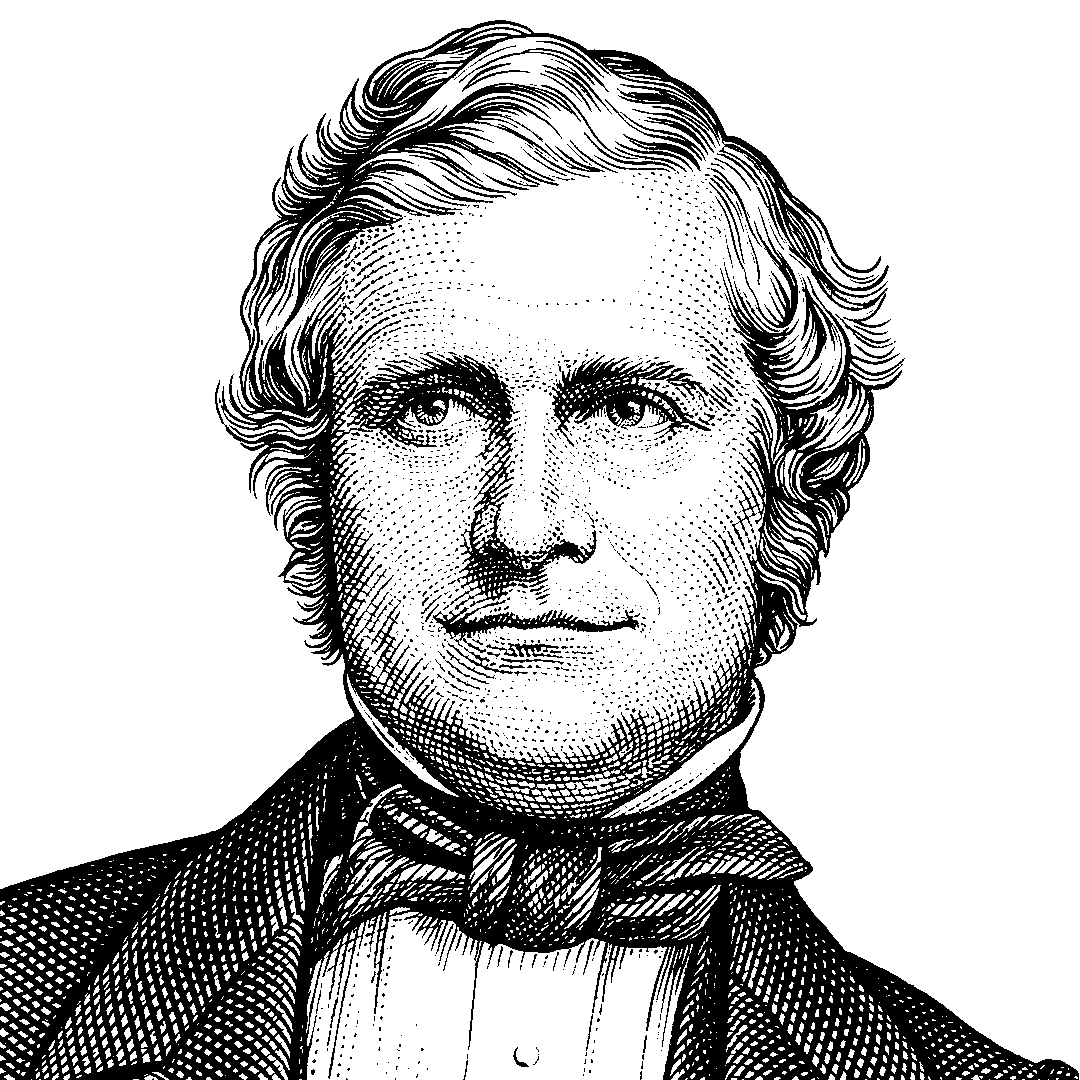
John Taylor

John Taylor

Science reveals the beauty and harmony of the world material; it unveils to us ten thousand mysteries in the kingdom of nature, and shows that all forms of life through fire and analogous decay are returned again to its bosom. It unfolds to us the mysteries of cloud and rains, dew and frost, growth and decay, and reveals the operation of those silent irresistible forces which give vitality to the world. It reveals to us the more wonderful operations of distant orbs and their relations to the forces of nature. It also reveals another grand principle, that the laws of nature are immutable and unchangeable as are all the works of God.

Journal of Discourses, vol 13, page 224, Liverpool, England: Latter-day Saints’ Book Depot, 1871
Related Quotes

John A. WidtsoeJohn A. Widtsoe

By recognizing our universe as one of law, order, and intelligence, science has driven fear from the hearts of men. Intelligence acts in intelligent ways. The intelligence at the head of all things may be trusted to act intelligently. There arises therefrom a trust in the things about us. The age-old horror, called fear, which has so long distracted humanity, vanishes. Superstition is laid low.

Steven DickSteven Dick

[Future religious thinkers] must be open to radically new conceptions of God, not necessarily the God of the ancients, nor the God of human imagination, but a God grounded in cosmic evolution, the biological universe, and the three principles: Why would a Messiah only come to us? Humans are likely not the center of anything. Nor the ultimate creation of God (likely not the head of the class when it comes to brainpower and intelligence) . . . A major effect of the concept of a natural God is that it has the capacity to reconcile science and religion. For those with a vested interest in the supernatural God of most standard religions, this may be too great a sacrifice for reconciliation. But consider the benefits. A natural God is an intelligence in and of the world, a God amenable to scientific methods, or at least approachable by them. A supernatural God incorporates a concept all scientists reject in connection with their science. For some, this may be precisely the point: that God cannot be, and should not be, approachable by science. But for Einstein and many other scientists (perhaps expressed in a different way for the latter) “the cosmic religious feeling is the strongest and noblest motive for scientific research.”

Johannes KeplerJohannes Kepler

The laws of nature are within the grasp of the human mind; God wanted us to recognize them by creating us after his own image so that we could share in his own thoughts.

More from John Taylor