David O. McKay on Eternal Progression
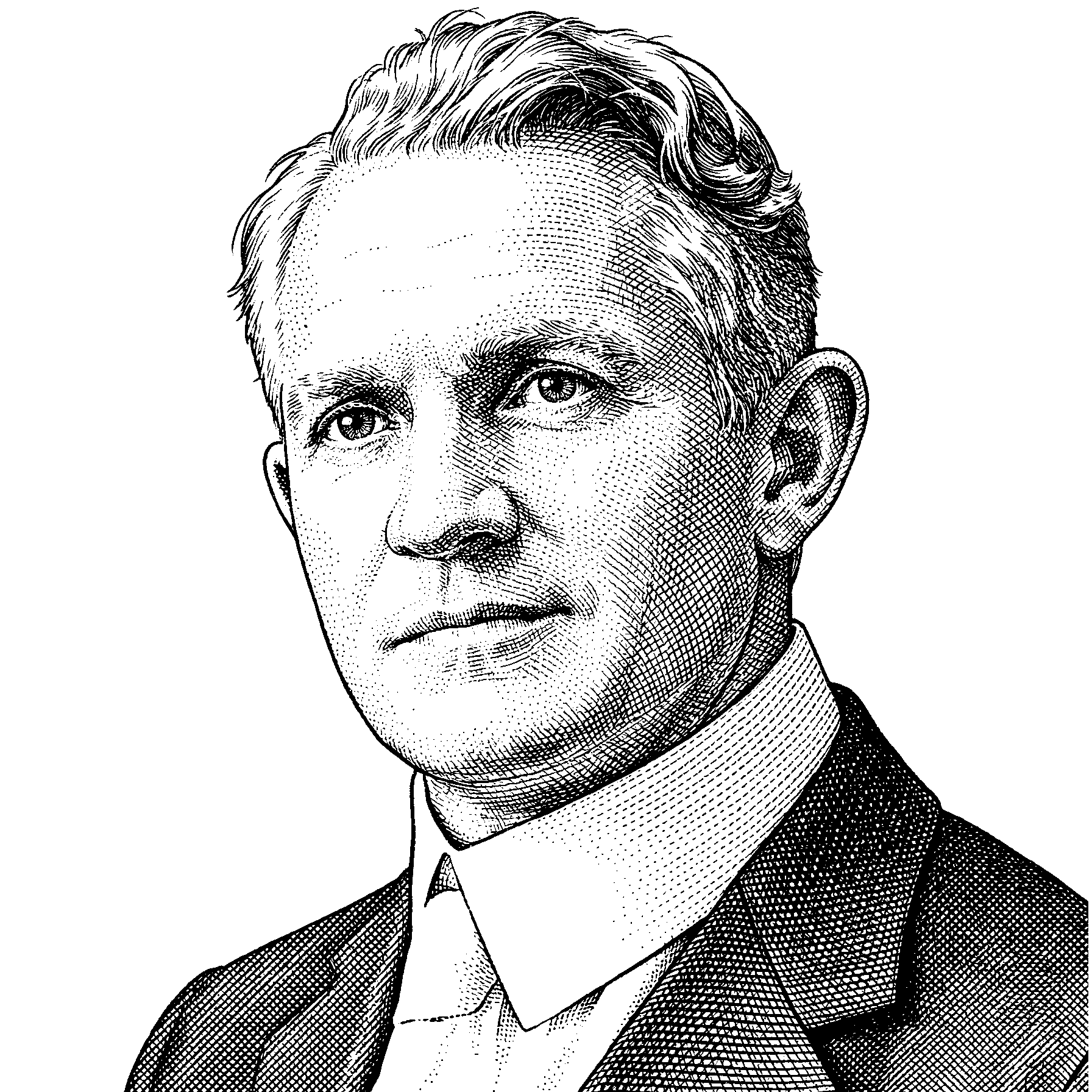
David O. McKay

David O. McKay

Among the generalizations of science, evolution holds foremost place. It claims: “Man is a creature of development; that he has come up through uncounted ages from an origin that is lowly.” Why this vast expenditure of time and pain and blood? Why should he come so far if he is destined to go no farther? A creature which has traveled such distances, and fought such battles and won such victories deserves, one is compelled to say, to conquer death and rob the grave of its victory.

Darwin said … “Believing as I do that man in the distant future will be a far more perfect creature than he now is, it is an intolerable thought that he and all other sentient beings are doomed to complete annihilation after such long-continued, slow progress. To those who fully admit the immortality of the human soul, the destruction of our world will not appear so dreadful.”
Funeral remarks for May Anderson, David O. McKay and the Rise of Modern Mormonism, page 46, Gregory A. Prince and Wm. Robert Wright, Salt Lake City, Utah: University of Utah Press, 2005

Related Quotes

Ezra Taft BensonEzra Taft Benson

God, the Father of us all, uses the men of the earth, especially good men, to accomplish his purposes. It has been true in the past, it is true today, it will be true in the future.

Brigham YoungBrigham Young

[For] the intelligence that is in me to cease to exist is a horrid thought; it is past enduring. This intelligence must exist; it must dwell somewhere. If I take the right course and preserve it in its organization, I will preserve to myself eternal life. This is the greatest gift that ever was bestowed on mankind, to know how to preserve their identity…

Brigham YoungBrigham Young

Be wise: be as wise as the generations of this world. In the days of Jesus, those who received this kingdom and the spirit of the kingdom seemed to lose all sight of a temporal salvation; and Jesus said to his disciples, “The children of this world are wiser in their generations than the children of light.” The children of light did not know how to sustain themselves; they did not understand how to preserve themselves and the kingdom with them.

More from David O. McKay

I would like to know just what it is that a man must be required to believe to be a member of this Church. Or, what it is that he is not permitted to believe, and remain a member of this Church. I would like to know just what that is. Is it evolution? I hope not, because I believe in evolution.

Whatever the subject may be, the principles of the gospel of Jesus Christ may be elaborated upon without fear of anyone’s objecting, and the teacher can be free to express his honest conviction regarding it, whether that subject be in geology, the history of the world, the millions of years that it took to prepare the physical world, whether it be in engineering, literature, art—any principles of the gospel may be briefly or extensively touched…

But science, dominated by the spirit of religion is the key to progress and the hope of the future. For example, evolution’s beautiful theory of the creation of the world offers many perplexing problems to the inquiring mind. Inevitably, a teacher who denies divine agency in creation, who insists there is no intelligent purpose in it, will infest the student with the thought that all may be chance.

The thing you need to remember about evolution is that the Lord has never revealed anything about the matter. People have their opinions but the Lord has not revealed the details of how He created the Earth.

[President McKay] said, “Brother [Ted] Jacobsen, the United States is trying to put a man on the moon. How would you like to be the first one to fly to the moon?” I [Jacobsen] had never thought about that question. I said, just quickly, “President McKay, I think maybe I’d rather be the second man to fly to the moon, so the first one would have some experience.” He spoke right up and he said, “You know, I’d love to be the first man to fly to the moon. How do you suppose we are going to travel from one planet to another in the hereafter unless we learn how to do some of it on this earth?” Then he quoted the old song in the hymnbook called “If You Could Hie to Kolob.” He quoted every word from memory, all verses of that song to me. And he said, “Now this is just not a figment of imagination. There’s a lot of truth in what this man has put in this song.” … He [McKay] was a kind of forward-looking man, and he was not one who didn’t think that it was possible for us to go to the moon. He wanted to be there also.”