Jesus and the Paradox of Church
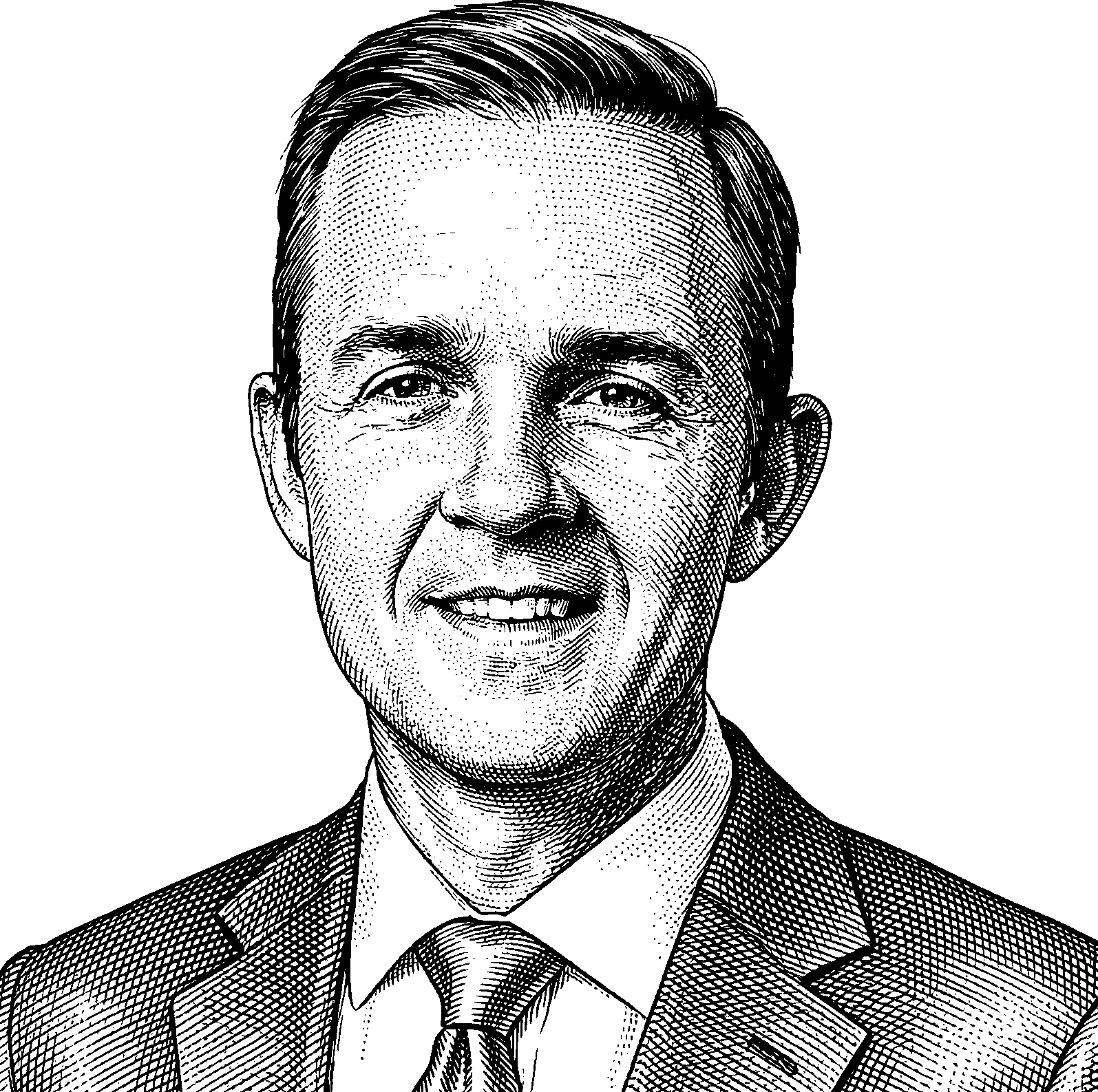
Carl Youngblood co-founded the MTA in 2006 and has served as its President and CEO since 2021. He is engaged with the Association’s efforts to explore the intersection of Mormon theology and transhumanist philosophy. Among the many initiatives that Carl has been involved with, he has designed and built the Association’s current website, which unifies all prior content in a single location using inspiring visuals and animations. ¶ Youngblood’s professional career spans more than two decades of full-stack software development at the intersection of Silicon Slopes and Silicon Valley. He was an early employee at Omniture (acquired by Adobe), a founding engineering leader at Divvy (a Utah-based unicorn startup), co-founder of Blockscale LLC (a blockchain services firm eventually contracted into Coinbase), and Senior Solutions Architect for Amazon Managed Blockchain at AWS. His technical fluency ranges from scalable web architecture to blockchain infrastructure—the kind of deep engineering experience that grounds his theological speculation in working knowledge of the systems he writes about. ¶ Under his leadership, the Association has developed its mission of promoting abundant human flourishing through the compassionate use of science and technology, fostering dialogue across secular and religious audiences and arguing that each has something essential to learn from the other. His writing, collected on his blog From the Depths, spans over a decade of conference presentations and theological essays: meditations on participatory resurrection, the alignment of artificial intelligence read through the Grand Council narrative, intelligence as eternal and multifaceted, and religion as social technology. He writes, as a colleague has observed, with warmth and accessibility on questions of momentous practical consequence—how to navigate faith crisis without losing faith’s power, how to think about resurrection as something we actively participate in rather than passively receive. ¶ Youngblood’s distinctive contribution to transhumanism is the integration of serious technical expertise with serious theological reflection. He embodies the Mormon transhumanist conviction that scientific and spiritual development are not parallel tracks but a single path—that the learning required to build better systems is continuous with the exaltation Mormon theology envisions, and that human ingenuity, rightly oriented, is itself a divine imperative.
I’m deeply inspired by the life of Jesus: his admonition to diligently seek after truth, and his promise that all those who seek shall find; his introduction of a higher moral code, the golden rule, teaching us to boldly respond to our enemies with love; his courage to publicly oppose religious arrogance and abuse of power at great personal cost; his willingness to bless and heal all those who came to him, especially the marginalized and the downtrodden.
I’ve tried to look to his life for inspiration and guidance on how to respond faithfully and righteously when I face challenges like we are experiencing today. A man I greatly admire shared some thoughts about this that I found helpful:
He explained that whenever new revelation breaks in upon the world, through messengers such as Jesus and Joseph Smith, it is necessary for this revelation to be organized into some kind of process for it to be carried through history. Without this process it can’t endure. The challenge is that it is never possible to take the brilliant message and perfectly codify it into a routine, so the same process that gives it ongoing life also weakens it. And to make matters worse, we who supervise the routine are often more interested in the process than in the purpose or vision it was originally meant to serve. We become fascinated by the process itself, and end up with the Church for Church’s sake. The institution becomes primarily focused on its own maintenance and preservation.
This happens to all institutions, but it is especially tragic when it happens at church.
The Church has the nearly impossible task of being an organization, with a necessary power structure, whose purpose is to preserve the memory of one whose whole mission in life was to oppose the processes and compromises of power, because they so often are made at the expense of the individual. It was individuals that Jesus was interested in, especially those who had been shunned and persecuted by the power structures and institutions of their day. Jesus left the ninety and nine to go after the one: the Samaritan, the heretic, the apostate, the one who didn’t fit in; the one who was lost by the wayside; the cripple and the leper; the outsider; the member of a minority political party; the uncool kid; the oddball; the weirdo and the queer. And yet one of the most poignant things about him is that he also understood the corrupting compromises that institutions and their leaders have to make. He had compassion on them and even forgave them his own crucifixion: “Father forgive them, for they know not what they do.” It is this uncompromising compassion that I find so beautiful and astounding, and the difficulty comes when we recognize that we are supposed to express this same compassion but the system we have for doing it is not up to the task because it is run by us. I’m reminded of Groucho Marx’s famous quip, “I wouldn’t want to belong to any organization that would have me as a member!” At our best moments, God guides and directs, but the inspiration must pass through earthen vessels.
Perhaps even more amazing and ironic is that without the Church, we would know nothing about the Jesus whose message it so often compromises.
I wouldn’t be lamenting the failings of the Church here today and my own complicity in those failings if the Church hadn’t first introduced me to this singular man from Nazareth. That is what makes it possible for me to share my belief in and commitment to Christ to you today. I’m bound to fall short, but I want to affirm that commitment to you today. Whether you are conservative or liberal, tall or short, fat or skinny, gay or straight, black or white, I will try my best to welcome and care for you and to be your friend.
I’ll Walk with You
Carol Lynn Pearson
If you don’t walk as most people do,
Some people walk away from you,
But I won’t! I won’t!
If you don’t talk as most people do,
Some people talk and laugh at you,
But I won’t! I won’t!
I’ll walk with you. I’ll talk with you.
That’s how I’ll show my love for you.
Jesus walked away from none.
He gave his love to ev’ryone.
So I will! I will!
Jesus blessed all he could see,
Then turned and said, “Come, follow me.”
And I will! I will!
I will! I will!
I’ll walk with you. I’ll talk with you.
That’s how I’ll show my love for you.
Syndicated from From the Depths.