Transhumanist Advent: The Divine Ledger and Taking up the Cross
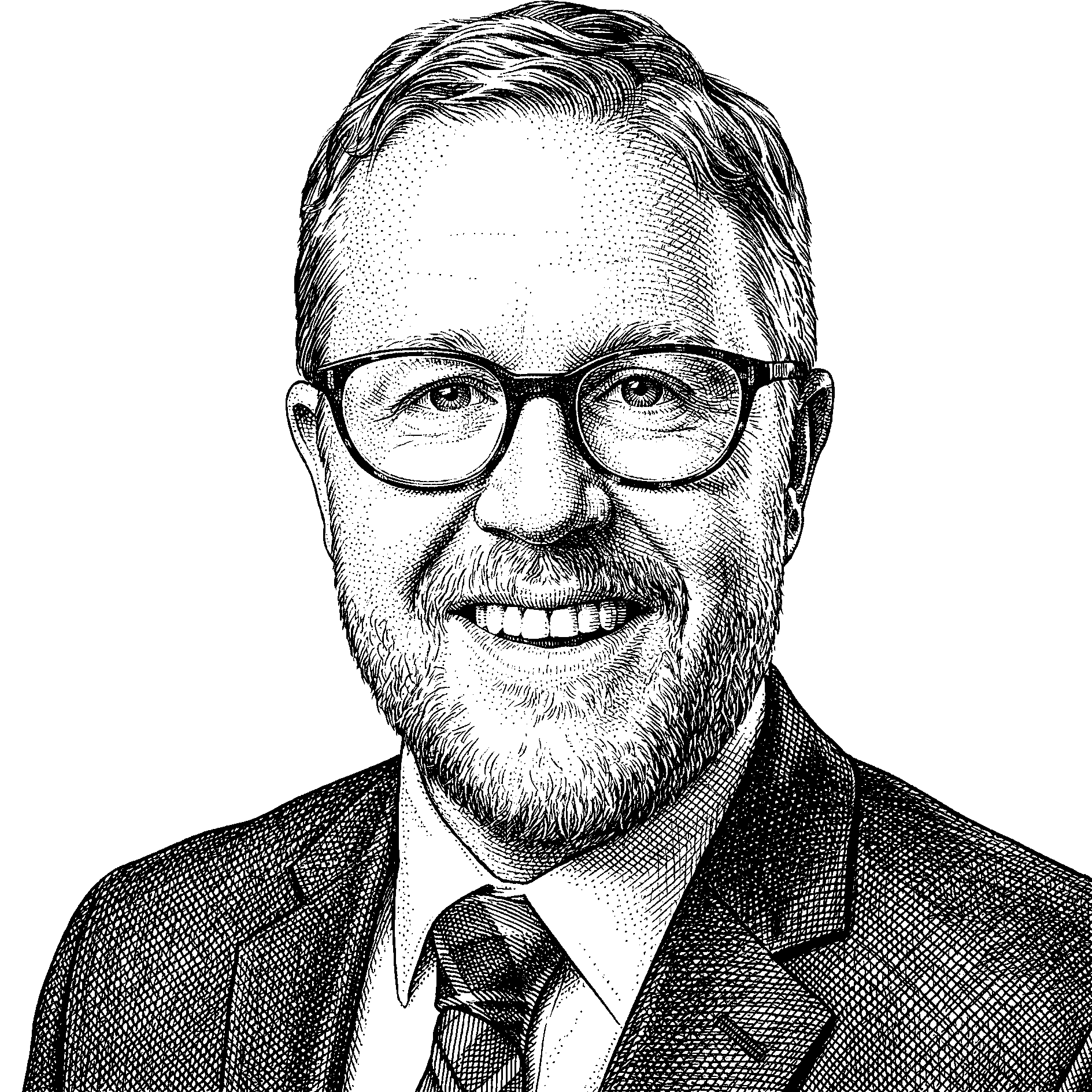
Ben Blair holds a PhD in philosophy and education from Teachers College, Columbia University. He is the co-founder of Newlane University—a platform focused on deinstitutionalizing education. ¶ An active member of the Church of Jesus Christ of Latter-day Saints, Blair’s work and perspective explore the intersection of religious community and secular ideals. He is particularly interested in how religious and post-religious communities can work towards shared goals, and he questions the equation of any particular organization with the broader concept of the 'kingdom of God'. ¶ Blair, along with his wife, Gabrielle Blair, resides in France and they are the parents of six children. He presented at Sunstone West and is an attendee and speaker at Mormon Transhumanist Association conferences, where he explores the philosophical implications of faith, community, and progress.
Statue on the grounds of The Bishop’s Palace in Wells (photo credit: Stewart Black)
The cross becomes present tense when wounds are ours to heal.
A beautiful Christmas video from the Mormon church describes a world without a savior--where we couldn’t take back mistakes; where every heartache lasted forever; where wounds never healed. Without Jesus’ acts, so the argument goes, humanity would be infinitely and permanently deficient on a divine ledger.
With Christians, I believe that Christ restores the balance on such a divine ledger. But this belief is not in reverence to past abstract metaphysical acts. If it were, I see no moral value in it. I can’t comprehend it; no one can. It’s strange to even try to be grateful. I take it the only way anyone can: I take it for granted. I trust He’s not offended by this. We can understand Jesus’ acts as past abstract metaphysical tasks (i.e. having compensated on a divine ledger), or as present motivation to join the work and take up the cross of the world. The two aren’t mutually exclusive, but only one moves us.
There were wounds that didn’t heal, such as polio and smallpox; but we learned to heal them. And there are mistakes that we are--if ever so slowly--learning to overcome, such as sexism, racism, materialism, and turning a blind eye to those we oppress or allow to be oppressed. And we can just now imagine a future where there will be no heartaches that will last forever; where death, the last enemy, may finally be swallowed up. But these improvements have not come about, nor will they come about simply because of ancient metaphysical acts, even if such acts were necessary.
As abstract ideas, Jesus’s acts to compensate on a divine ledger are by definition part of the setting or backstory; they are not characters in the current plot that we must continually prop up to remind the audience. It’s not blasphemy to claim that Jesus’ acts haven’t directly cured any diseases. Nor is it right to say that His acts--and the mindset that they introduced--had no influence on such progress. No, the progress has come from humans following the example of Jesus (in deed if not in word), and joining Christ by taking responsibility for wounds, mistakes, and heartaches.
There may be a metaphysical need for a savior, but the only work we need concern ourselves with is not adoring that savior from afar but with joining His current work of healing all wounds, overcoming all mistakes, and making all hearts whole, forever.
-Ben Blair