Authors

David A. Bednar
David A. Bednar (b. 1952) is a member of the Quorum of the Twelve Apostles of The Church of Jesus Christ of Latter-day Saints. Widely regarded as one of the most analytically rigorous teachers in contemporary Latter-day Saint leadership, he has shaped how millions of members understand the relationship between agency, covenant, and discipleship. Before his call to the holy apostleship in 2004, Bednar served as president of Ricks College (later BYU–Idaho) from 1997 to 2004, where he led a significant institutional transformation, including the college’s transition to a four-year university. His academic background is in organizational behavior, and he has brought that analytical sensibility to his theological teaching, consistently emphasizing patterns, principles, and the active responsibilities of covenant discipleship. Bednar’s legacy rests substantially on his insistence that discipleship is participatory rather than passive. His teaching frames human beings not as recipients of divine action but as agents commissioned in a shared work of redemption—what he has described as the Lord’s agents in the work of salvation and exaltation. That framing resonates with the Mormon transhumanist reading of theosis: Godhood is not bestowed but developed through active, willing participation in the work of God.
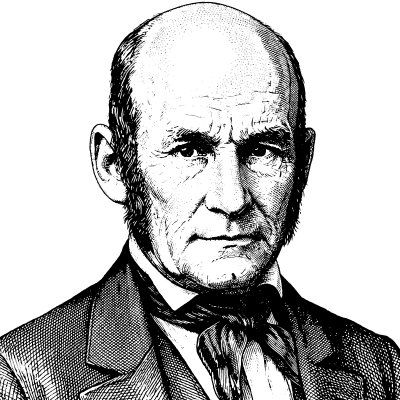
Heber C. Kimball
Heber Chase Kimball (1801–1868) was an American religious leader, missionary, and settler who served as one of the original members of the Quorum of the Twelve Apostles of The Church of Jesus Christ of Latter-day Saints and, from 1847 until his death, as First Counselor to President Brigham Young. Born in Sheldon, Vermont, Kimball worked as a potter before joining the Church in 1832 and quickly becoming one of its most energetic and effective early missionaries. He led the first Latter-day Saint mission to Great Britain in 1837, a journey that resulted in thousands of conversions and established a transatlantic gathering movement that would shape the demographic character of early Utah. Kimball was a central figure in the organizational and physical building of the Latter-day Saint community across its most turbulent decades—the Missouri persecutions, the Nauvoo era, the martyrdom of Joseph Smith, and the overland exodus to the Salt Lake Valley. As Brigham Young’s closest counselor he helped govern the territory of Utah through its formative years, wielding both ecclesiastical and civic influence. His personal loyalty to Joseph Smith was absolute, and his preaching style was earthy, unpolished, and remarkably direct—qualities that made him beloved among pioneer settlers. Kimball’s theological instincts ran deep. His sermons returned repeatedly to the radical naturalism at the heart of early Mormon theology: God is not a being apart from nature but a being within it, who acquired knowledge through experience and inheritance, just as human beings do. His image of an infinite chain of fathers—each connected to one still further back, stretching without arbitrary terminus into the cosmos—anticipates the kind of open-ended, naturalistic cosmology that Mormon transhumanism takes espouses. Where others might invoke divine mystery to close off inquiry, Kimball pressed the logic of eternal progression outward, suggesting that the universe is populated with intelligences in various stages of development, and that humanity’s own trajectory extends without ceiling toward greater knowledge, greater power, and greater kinship with God.

Hugh B. Brown
Hugh B. Brown (1883–1975) was a Canadian-born Latter-day Saint leader, attorney, military officer, and one of the most intellectually courageous voices in twentieth-century Mormon thought. Born in Revelstoke, British Columbia, Brown pursued law and served as an officer in the Canadian military before committing to full-time Church service. He presided over the British Mission, taught at Brigham Young University, served as a member of the Quorum of the Twelve Apostles, and ultimately as First and Second Counselor in the First Presidency under David O. McKay. Across all of these roles he carried the habits of a trained legal mind: careful in distinction, insistent on evidence, and unwilling to confuse provisional policy with settled doctrine. Brown’s ecclesiology was notably democratic. He argued that official statements not ratified by common consent remain matters of temporary policy, subject to revision as conditions and understanding change—a position that places theological humility and participatory governance at the center of how the Church ought to work. He was also a persistent advocate for civil rights at a time when that advocacy required personal courage within institutional Mormonism, and his speeches on intellectual freedom remain among the most forthright defenses of open inquiry ever delivered by a senior Church leader. The deepest thread running through Brown’s legacy is his conviction that science and religion are not rivals but converging expressions of the same fundamental drive toward truth. He articulated what he called a “scientific spirituality”—a mind that brings the discipline and candor of science to bear on faith without extinguishing faith’s warmth or power. Revelation, in his view, could come through laboratories and inquiring souls as readily as through vision or prayer. Every scientific discovery, he held, illuminates the divine plan in nature; the universe’s harmony across scales implies an architect whose work invites rather than resists investigation. God, he insisted, is not capricious—all is law, all is cause and effect, and that lawfulness is itself a form of reverence. These commitments map directly onto the Mormon transhumanist understanding of a naturalist God whose purposes are advanced through disciplined intelligence, free inquiry, and the willingness to let the best ideas prevail.

John Taylor
John Taylor (1808–1887) served as the third president of The Church of Jesus Christ of Latter-day Saints from 1880 until his death. Born in Milnthorpe, England, he immigrated to Canada in 1832 and converted to the Church in 1836. Known as the “Champion of Liberty,” he edited several Church publications and served multiple missions to England and France. Taylor was present in Carthage Jail when Joseph and Hyrum Smith were martyred in 1844. Shot five times, he survived and was thereafter known as a “living martyr.” He is remembered for singing “A Poor Wayfaring Man of Grief” at Hyrum’s request shortly before the attack. As Church President, Taylor led the Saints during intense federal persecution over plural marriage. The Edmunds Act of 1882 forced him into hiding for the last years of his life, during which he established colonies of refuge in Mexico and Canada. He died on July 25, 1887, still maintaining his convictions about religious liberty.
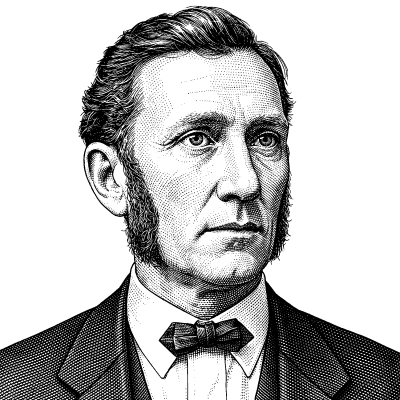
Joseph F. Smith
Joseph Fielding Smith (1838–1918) was the 6th President of The Church of Jesus Christ of Latter-day Saints, serving from 1901 until his death. He was the son of Hyrum Smith and nephew of Joseph Smith. Born in Far West, Missouri, Joseph F. Smith experienced the trials of early Church history firsthand. As a young child, he witnessed the aftermath of the Carthage martyrdom. At age nine, he drove an ox team across the plains to Utah with his widowed mother. At fifteen, he was called on a mission to Hawaii, where he had a transformative vision of the afterlife. He taught that Jesus’s work was not finished with his death and resurrection but continues until all who can be saved are redeemed. This expansive vision of salvation includes work for the dead and the promise that the faithful become saviors on Mount Zion alongside Christ.
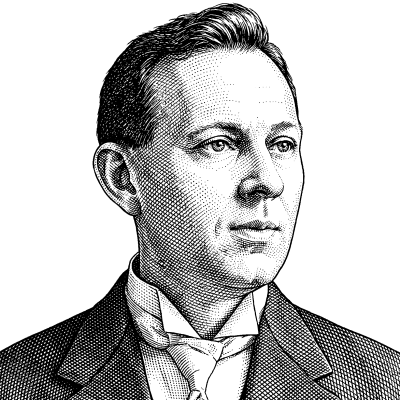
Joseph Fielding Smith
Joseph Fielding Smith (1876–1972) served as the tenth president of The Church of Jesus Christ of Latter-day Saints from 1970 until his death. He was the son of Joseph F. Smith, the sixth Church president, and the grandson of Hyrum Smith, brother of the Prophet Joseph Smith. By age ten, he had read the Book of Mormon twice. Smith served as an apostle for over 60 years, longer than almost anyone in Church history. He held positions as Church Historian, president of the Genealogical Society, and president of the Salt Lake Temple. As one of the Church’s most prolific writers, his works include Doctrines of Salvation , Essentials in Church History , and Answers to Gospel Questions . When he became Church President at age 93, he was the oldest person to assume that role. Though his presidency was brief, he led important administrative reforms that improved correlation of Church publications and brought the Quorum of the Twelve into more decision-making. He died peacefully on July 2, 1972, after attending church services that day.

Joseph Smith
Joseph Smith Jr. (1805–1844) was the founding prophet of the Latter Day Saint movement, a religious visionary, translator, civic leader, and martyr whose theological imagination radically reshaped American Christianity. Born in Sharon, Vermont, and raised in the burned-over district of upstate New York, he reported a series of visions beginning in 1820 that culminated in the publication of the Book of Mormon in 1830 and the organization of the Church of Christ that same year. Over the next fourteen years, he led his followers from New York to Ohio, Missouri, and finally Illinois, founding the city of Nauvoo before being killed by a mob at Carthage Jail in June 1844. Smith’s contributions extend well beyond institutional founding. He produced an expansive body of revelatory texts—including the Doctrine and Covenants and the Pearl of Great Price —revised the King James Bible, introduced temple liturgy and proxy ordinances for the dead, and articulated a distinctive theology of embodied, progressing deity. He served as mayor of Nauvoo, lieutenant general of its militia, and a candidate for President of the United States in 1844, advocating religious liberty, the abolition of slavery, and prison reform. His public sermons, especially the King Follett discourse, set forth a cosmology in which God was once as humanity is now and humans may, through grace and growth, become as God is. Smith’s legacy resonates deeply with themes of human potential, intelligence, friendship, and divine becoming. He taught that “the first principles of man are self-existent with God,” that intelligences advance from grace to grace and from one small capacity to a great one, and that eternal life consists in learning to be Gods—language that anticipates a participatory and developmental account of theosis. He welcomed the inventiveness of the Gentiles as a means of building Zion, embraced truth from any source, and treated friendship as a principle designed to “revolutionize and civilize the world.” His insistence that revelation is ongoing, that prophecy belongs to all who hold the testimony of Jesus, and that happiness is the object and design of existence offers a generous foundation for those who seek to integrate faith, science, and technology in the work of human flourishing and exaltation.
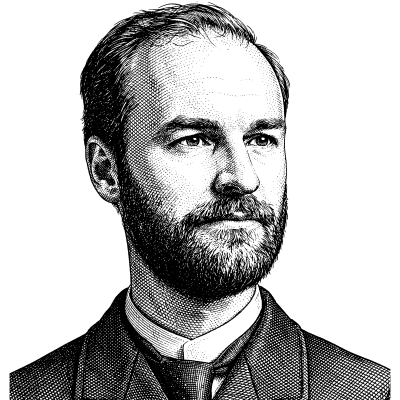
Orson F. Whitney
Orson Ferguson Whitney (1855–1931) was an apostle, historian, and poet who articulated an early vision for Mormon literature. Born in Salt Lake City, he was the son of Horace K. Whitney and Helen Mar Kimball, connecting him to both the Whitney and Kimball families prominent in early Church history. As a young man, Whitney aspired to be an actor, but during his mission to the Eastern States he discovered his calling as a writer and speaker. He served as bishop of the Eighteenth Ward for 28 years and as Assistant Church Historian before his call as an apostle in 1906. He also served in the Salt Lake City Council and as a State Senator. Whitney authored The History of Utah and biographies of Heber C. Kimball and Lorenzo Snow. His epic poem Elias, An Epic of the Ages represents a major work of early Mormon literature. His 1888 sermon “Home Literature” was the first to articulate a vision for distinctively Mormon literary arts. He also wrote hymns including “Savior, Redeemer of My Soul.”
Orson Pratt
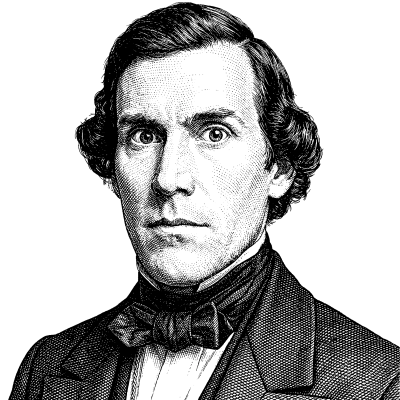
Orson Pratt (1811–1881) was an original member of the Quorum of the Twelve Apostles, a mathematician, and a prolific writer for the early Latter-day Saint movement. The younger brother of Parley P. Pratt, he was baptized on his nineteenth birthday in 1830 and ordained an apostle in 1835. He became the last surviving member of the original Twelve. On July 21, 1847, Pratt became the first Latter-day Saint to enter the Salt Lake Valley, arriving three days before the main pioneer company. He preached the first sermon in the valley and dedicated it to the Lord. He and William Clayton also invented a precursor to the modern odometer to measure their journey. Throughout his life, Pratt pursued his strong interest in mathematics and astronomy. He published New and Easy Method of Solution of the Cubic and Biquadratic Equations and Key to the Universe. He served as Church Historian and Recorder, edited Church periodicals, and divided the Book of Mormon and Doctrine and Covenants into verses with cross-references.
Parley P. Pratt
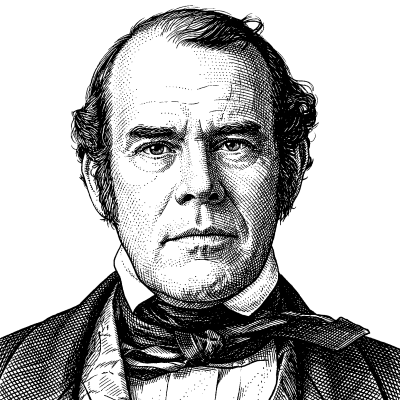
Parley Parker Pratt was among the most talented and influential figures in the formative period of The Church of Jesus Christ of Latter-day Saints: Apostle, missionary, theologian, poet, polemicist, prisoner, explorer, polygamist, and finally, in the view of many, martyr. Pratt was born in central New York State to Jared Pratt—a weaver thrown out of employment in his trade by the Industrial Revolution—and his wife, Charity. Like the Prophet Joseph Smith, who was two years his senior, Parley P. Pratt grew up in a family on the margins of the rural economy. Jared Pratt moved from place to place as a landless itinerant laborer whose “means to educate his children were very limited,” although they did have access to what Parley later termed an “excellent system of common school education.” Notwithstanding their limited opportunities, two of Jared and Charity Pratt’s five sons, Parley and his younger brother Orson, would become distinguished among the first generation of Latter-day Saints for their intellectual and rhetorical powers. Parley compensated for the deficiencies in his formal education through an early and avid appetite for reading: “I always loved a book; . . . a book at every leisure moment of my life.” Prominent among these readings was the Bible, which Pratt began to study at the age of seven under the direction of his mother. From this literary self-education, Pratt derived a broad and ready general knowledge and an uncommon facility in writing and public speaking. Following his 1830 conversion to the Latter-day Saint faith (characteristically, through reading the Book of Mormon ), Pratt devoted the remainder of his life to Church service. Although he was frequently absent from Church headquarters on numerous missions in the United States, Canada, Britain, and Chile, he still managed to play a prominent role in many of the key events of early Latter-day Saint history: the establishment of a body of Church members in the neighborhood of Kirtland, Ohio, in 1830; the settlement of Jackson County, Missouri, in 1832, and the forced expulsion the following year; the Zion’s Camp relief expedition; the crisis attending the collapse of the Kirtland realestate bubble and the failure of the Kirtland Safety Society in 1837; the Missouri troubles of 1838–39 (as a consequence of which Pratt was imprisoned for eight months, a longer period than any other Church leader); the leadership crisis following the assassination of Joseph Smith in 1844; the expulsion from Nauvoo in 1846; and the westward migration to the Great Salt Lake Valley in 1847. Most importantly, Pratt’s active pen generated a series of books and pamphlets that included the first and most influential systematic statement of Latter-day Saint beliefs ( A Voice of Warning , 1837), the defining Mormon persecution narrative ( History of the Late Persecution Inflicted by the State of Missouri upon the Mormons , 1839), and the foremost nineteenthcentury theological treatise ( Key to the Science of Theology , 1855). (Grow, Matthew J.; Armstrong, Gregory K.; Siler, Dennis J.; Geary, Edward A.; and Givens, Terryl L. (2012) “ Parley P. Pratt: The Apostle Paul of Mormonism and Parley P. Pratt and the Making of Mormonism ,” BYU Studies : Vol. 51: Iss. 2, Article 13.)