Authors
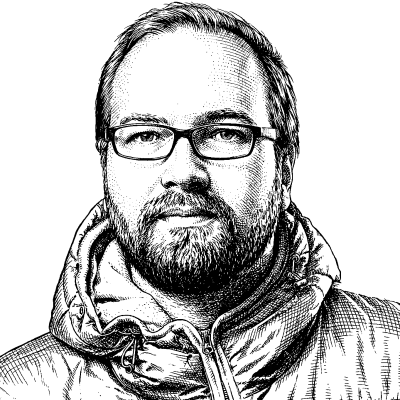
Alexei Turchin
Alexei Turchin (born 1973, Moscow) is a Russian independent researcher, author, and transhumanist thinker whose work concentrates on existential risk, life extension, and the theoretical and technological pathways to human resurrection. Educated in physics and art history at Moscow State University, he has been an active figure in the Russian transhumanist movement since 2007 and a contributor to the Arch Mission Foundation, which is dedicated to preserving human knowledge across deep time. Turchin has written extensively on what he frames as a multilevel strategy for immortality: Plan A (defeating aging), Plan B (cryonics), Plan C (digital immortality), and Plan D (multiverse or quantum immortality). His philosophical work engages questions of personal identity, the nature of the connectome, and the informational basis of human consciousness—arguing that death is, at its core, a loss of information, and that resurrection is therefore a project of information reconstruction. Drawing on the Russian cosmist tradition, especially Nikolai Fedorov’s vision of the universal resurrection of the dead, Turchin argues that a sufficiently advanced superintelligent AI could simulate all of human history in enough detail to reconstruct every person who ever lived, transferring them into personalized continuations of existence. This vision resonates deeply with Mormon transhumanist hopes for technological resurrection and the redemption of the dead. At the 2019 Mormon Transhumanist Association Conference, themed “Redeeming Our Dead,” Turchin presented these ideas directly, proposing that benevolent superintelligences—far outnumbering malevolent ones across the universe—would be the natural agents of such a project. His work treats moral seriousness as inseparable from technical aspiration: questions of consent, unnecessary suffering, and the ethics of simulated existence are not afterthoughts but load-bearing concerns. In this sense, Turchin exemplifies the cosmist conviction that intelligence, at sufficient scale, becomes a redemptive force—a conviction that Mormon transhumanism, with its own doctrine of eternal progression and compassionate creation, finds deeply familiar.
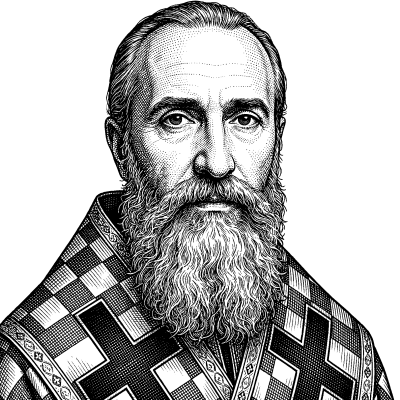
Athanasius
Athanasius of Alexandria (c. 296–373 AD) was one of the most influential theologians in Christian history, serving as the twentieth Pope of Alexandria and playing a decisive role in the development of Trinitarian doctrine. His lifelong defense of the Nicene Creed against Arianism earned him the title ‘Father of Orthodoxy,’ while his writings on the incarnation articulated a vision of human transformation that continues to resonate in Eastern Orthodox theology and beyond. Born in Alexandria, Egypt, Athanasius received a thorough education in Greek literature, philosophy, and Christian scripture. As a young deacon, he accompanied Bishop Alexander to the Council of Nicaea in 325 AD, where he witnessed the formulation of the creed that would define Christian orthodoxy. Three years later, at approximately thirty years of age, Athanasius succeeded Alexander as bishop of Alexandria—a position he would hold for forty-five years despite being exiled five times by various emperors sympathetic to Arianism. Athanasius ’ s most enduring theological contribution appears in his treatise On the Incarnation , written when he was still a young man. In this work, he articulated the doctrine of theosis—the belief that God became human so that humans might become divine. This concept, sometimes expressed as ‘God became man that man might become god,’ became central to Eastern Orthodox spirituality and has profound implications for understanding human potential and destiny. Throughout his tumultuous career, Athanasius faced opposition from Arian bishops, imperial persecution, and periods of exile in the Egyptian desert, Rome, and elsewhere. Yet he persisted in defending what he understood as apostolic faith against theological compromise. His friendship with the desert monks, including Anthony the Great, influenced his biography of Anthony, which became foundational for Christian monasticism and hagiography. Athanasius’s doctrine of theosis resonates profoundly with transhumanist themes. His vision of humanity’s potential for transformation and participation in divine nature anticipates contemporary discussions of human enhancement and transcendence. The idea that humans are destined for a radical elevation of their nature—not merely moral improvement but ontological transformation—connects ancient Christian theology with modern aspirations for human flourishing beyond current limitations.

Chris Bradford is a co-founder and former president of the Mormon Transhumanist Association. He has a background in helping people explore and understand their ancestral histories, having worked for a company dedicated to genealogy. He recognizes the powerful impact of understanding and shaping the stories of our past on our understanding of ourselves. His interests include the intersection of transhumanism, Mormonism, and historical narratives, particularly as they relate to themes of memory, identity, and community. Visiting from his home in Switzerland, Bradford brings an international perspective to the Mormon Transhumanist Association. His conference talks often explore the concept of “redeeming our dead,” drawing parallels between ghost stories, genealogical research, and the transhumanist aspiration to enhance and extend life.

Donald Bradley Jr. , affectionately known as Donnie, is a speaker and thinker exploring the intersection of transhumanism, art, and theology. Although chronologically 84 years old, Bradley has benefited from advanced life extension technologies that have rejuvenated his physical appearance to resemble someone closer to 18. He is a member of the Mormon Transhumanist Association. Bradley’s intellectual pursuits are wide-ranging, encompassing theoretical computer science, cybernetics, foundations of mathematics, algorithmic information theory, the psychology of creativity, literary studies, and cognitive poetics. His work explores the aesthetic sense of a god, and its relation to artistic practice and religious transhumanist quests. He is particularly interested in the works of Jorge Luis Borges, viewing Borges’ creations as a laboratory for godhood and an exemplary artist for transhumanists. He argues that in art, we are doing the work of a god in microcosm, training for eventual godhood. He points to Borges’ themes of eternity, and his ability to predict future developments in a way that is training for eventual godhood and a significant religious practice. Bradley explores the idea of literature and its relation to Mormon theology.

Elizabeth Parrish is the CEO of BioViva, a biotechnology corporation focused on combating cellular aging through the development of regenerative therapies for muscle and tissue. Driven by a humanitarian vision, BioViva strives to make these potentially life-saving therapies accessible to all. Parrish is recognized as a humanitarian entrepreneur, innovator, and a prominent voice advocating for genetic cures. As a strong proponent of education and advancement in regenerative medicine, she is a motivational speaker within the life sciences community and actively engages in international educational media outreach. She is also a founding member of the International Longevity Alliance. Further demonstrating her commitment to scientific discourse and discovery, Parrish is an affiliated member of the Complex Biological Systems Alliance (CBSA), a platform for highly gifted individuals. The CBSA’s mission is to advance scientific understanding of biological complexity and the origins of human disease. She also founded BioTrove Investments, LLC, and BioTrove Podcasts, initiatives dedicated to facilitating learning and funding research in the field of regenerative medicine. Though not raised religiously, Parrish expresses a reverence for nature and emphasizes the importance of self-reliance and action in achieving progress, urging individuals to actively utilize the tools available to them rather than waiting for others.
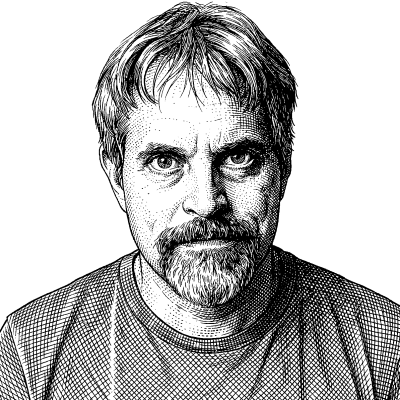
Eric Steinhart is a Professor of Philosophy at William Paterson University and the author of Your Digital Afterlives: Computational Theories of Life After Death . His work centers on metaphysics, employing contemporary analytical and logical methods, while also exploring historical metaphysical systems such as Neoplatonism and the philosophy of Leibniz. He is particularly interested in the intersection of formal sciences and theology, with a focus on alternatives to Abrahamic religions. Steinhart’s background is diverse. He grew up on a farm and initially trained as a computer scientist and mathematician, working as a software designer for several years, during which time he obtained patents for some of his algorithms. He later pursued advanced degrees in philosophy, and his earlier philosophical work included analyses of Nietzsche and metaphor, using possible world semantics. His research extends into the realms of metaphysics and computation, and he is featured in the documentary film Chronotrip , which deals with the concept of time travel. He affirms the existence of transfinitely endless hierarchies of sets, computers, languages, games, strategies, and minds. Steinhart’s current philosophical interests align with themes of eternal progression, alternative religious movements, and the application of evolutionary theory to cosmology.

McKay Moore is a speaker and scholar affiliated with the Mormon Transhumanist Association (MTA), exploring the intersection of Mormon theology and transhumanist thought. His work delves into the theological implications of post-humanism, particularly within the unique context of Mormon beliefs about divine progression and the potential for humanity to achieve godhood. Moore’s research is deeply rooted in the Mormon concept of an eternal cycle of creation, where beings evolve into gods who then create new sentient beings. Moore’s presentations often address complex issues such as the ‘control problem’ in artificial intelligence (AI) and how Mormon theology might offer a unique perspective on aligning AI with human values. Drawing on the work of thinkers like Nick Bostrom, he analyzes capability and behavioral control methods for managing advanced AI, exploring how these approaches relate to the Mormon ‘plan of salvation’ as a post-human solution. His work seeks to bridge the gap between cutting-edge technological advancements and theological frameworks.

Michio Kaku
Michio Kaku (born 1947) is an American theoretical physicist, futurist, and one of the most prominent science communicators of the contemporary era. A co-founder of string field theory, Kaku has spent his career exploring the fundamental nature of the universe while simultaneously making advanced physics accessible to millions through bestselling books, television programs, and public lectures. Born in San Jose, California, to Japanese-American parents, Kaku demonstrated exceptional scientific aptitude from a young age, reportedly building a particle accelerator in his garage as a teenager. He earned his Ph.D. from the University of California, Berkeley, and has held a long-standing professorship at the City College of New York. His academic work centers on string theory and its quest for a unified “Theory of Everything”—a single framework that would reconcile all fundamental forces of nature. Beyond the academy, Kaku has authored numerous popular science books, including Hyperspace , The Future of the Mind , Physics of the Impossible , and The Future of Humanity , which explore topics ranging from higher dimensions to the long-term trajectory of human civilization. Kaku’s futurism resonates strongly with several themes central to Mormon Transhumanism. He has articulated a vision of humanity’s future in which civilizations advance through progressively higher types on the Kardashev scale, eventually harnessing the energy of entire galaxies and potentially mastering the fabric of spacetime itself. His discussions of mind uploading, life extension, terraforming, and the colonization of space align with the transhumanist conviction that scientific knowledge and technological power can serve as means to realize extraordinary human potential. His concept of a “Type III” or even higher civilization—beings with godlike power over nature—echoes, in secular terms, the Mormon Transhumanist affirmation that humanity is invited to become compassionate creators. Where Kaku’s vision diverges from Mormon Transhumanism is primarily in its philosophical framing rather than its trajectory. Kaku generally approaches these questions from a naturalistic perspective, expressing admiration for Einstein’s impersonal “God of Spinoza”—a sense of cosmic order and harmony—rather than affirming a personal, relational God or the reality of divine grace working through human progress. Mormon Transhumanism would locate humanity’s extraordinary technological and creative future within a framework of covenant, prophetic authority, and trust in Christ, seeing these advances not merely as emergent properties of intelligence but as ordained means toward theosis. Nonetheless, Kaku’s expansive optimism about human potential and his insistence that the laws of physics permit civilizations of astonishing scope and power make his work a compelling conversation partner for anyone exploring the intersection of science, human destiny, and the divine.

Mike Perry
R. Michael Perry , PhD (1947–2026), was a computer scientist, author, and prominent figure in the cryonics and transhumanist movements. For nearly four decades, he served as Care Services Manager at the Alcor Life Extension Foundation in Scottsdale, Arizona, where he oversaw the stabilization and long-term maintenance of cryopreserved patients. On April 15, 2026, Dr. Perry was involved in a fatal motor vehicle accident as a pedestrian. True to his lifelong convictions, Alcor’s DART team immediately took him into care, and he received an excellent cryopreservation. He is now an Alcor patient, continuing his commitment to technological resurrection in the facility he served for so long. Beyond his technical role at Alcor, Perry was a prolific writer and philosopher. He is the author of Forever for All: Moral Philosophy, Cryonics, and the Scientific Prospects for Immortality (2000), a comprehensive work that argues for the ethical necessity and scientific feasibility of achieving physical immortality. His philosophical outlook, which he described as “Christian Atheist Universal Immortalism,” sought to bridge the gap between religious aspirations for an afterlife and the technological means to achieve it. He posited that a future superintelligence could utilize advanced simulations and information-recovery techniques to resurrect everyone who has ever lived, a concept rooted in the traditions of Russian Cosmism. Perry’s influence extended deeply into the organizational leadership of the transhumanist community. He was a cofounder and president of the Society for Universal Immortalism and an ordained minister for the Society for Venturism, where he performed ceremonies reflecting a commitment to the scientific conquest of death. Through his long-running column “For the Record” in Cryonics magazine, he became the primary historian of the cryonics movement, meticulously documenting its early failures and successes so that the lessons of the past could inform the technology of the future. Dr. Perry was a dedicated advocate for the “techno-psycho-cyber-heaven”—a future state dominated by benevolence and universal life extension. Gentle, soft-spoken, and principled, he was an anchor in the cryonics community for decades. He came in early, stayed late, and often remained at the facility for days at a time to ensure Alcor’s patients were always properly cared for. The cryonics movement owes him a debt of gratitude that cannot be overstated. Now, after watching over Alcor’s patients for nearly forty years, it is their turn to watch over him as he rests in cryopreservation, awaiting the future he worked so tirelessly to help create. His life’s work remains a testament to the belief that death is a problem to be solved through the rigorous application of science, mathematics, and a hopeful, rational philosophy.

Natasha Vita-More is a distinguished designer and theorist recognized for her pioneering work in transhumanism. She currently serves as a professor at the University of Advancing Technology and holds the position of Chairman of Humanity Plus. Furthermore, she is a fellow of the Institute for Ethics and Emerging Technologies, solidifying her standing as a key figure in the field. Vita-More’s academic pursuits culminated in a doctorate from the Planetary Collegium, University of Plymouth, where her research centered on human enhancement and radical life extension. She is the designer and author of the influential ‘Platform Diverse Body Substrate Autonomous Person.’ Her contributions extend to published works, most notably as co-editor of The Transhumanist Reader: Classical and Contemporary Essays on the Science, Technology, and Philosophy of the Human Future (2013). A driving force in the transhumanist movement, Vita-More authored the Transhuman Manifesto in 1983 and subsequently founded Transhumanist Arts and Culture in 1993. She has also held leadership positions, including chair of the Vital Progress Summit 2004, which fostered crucial dialogue on human enhancement, and president of the Extropy Institute from 2002 to 2006. Her work has been showcased at prestigious venues, including the National Center for Contemporary Arts and the Telluride Film Festival. While primarily involved in the secular transhumanist movement, Vita-More brings her considerable expertise to events like the Mormon Transhumanist Association conference, reflecting the broader relevance of her insights regarding the future of humanity and the ethical considerations surrounding technological advancements.