Authors

Alan Watts
Alan Wilson Watts (1915–1973) was a British-born American philosopher, writer, and speaker best known for popularizing Eastern philosophy—particularly Zen Buddhism, Taoism, and Hinduism—for Western audiences. He remains one of the most influential interpreters of Asian religious thought in the twentieth century. Watts began his career in England, where he was involved with the Buddhist Lodge in London. He later moved to the United States, briefly serving as an Episcopal priest before leaving the ministry to pursue a broader philosophical vocation. He became a professor and dean at the American Academy of Asian Studies in San Francisco and authored over twenty-five books, including The Way of Zen (1957), Psychotherapy East and West (1961), and The Book: On the Taboo Against Knowing Who You Are (1966). His lectures, many of which survive as recordings, continue to reach millions worldwide. Watts’s central teaching—that the individual self and the universe are fundamentally one—resonates with Mormon Transhumanist themes of theosis and the expansive potential of consciousness. His insistence that human beings are not merely in the universe but of it, expressions of a deeper cosmic process, parallels the tradition’s interest in humanity’s divine trajectory. However, significant differences exist. Watts generally rejected the concept of a personal God, viewing divinity as an impersonal process rather than a being with whom one could have a relationship. He was skeptical of doctrines of sin and moral depravity, seeing guilt as a psychological obstacle rather than a theological reality. He also questioned the Western emphasis on individual free will, favoring a view of spontaneous action aligned with Taoist wu wei . Despite these divergences, his lifelong project of dissolving boundaries between the sacred and the secular, the human and the divine, offers rich material for dialogue with Mormon Transhumanist thought.

Albert Einstein
Albert Einstein (1879–1955) was a German-born theoretical physicist whose work transformed humanity’s understanding of space, time, energy, and matter, making him one of the most consequential scientific minds in recorded history. Einstein developed the special theory of relativity (1905) and the general theory of relativity (1915), the latter offering a geometric account of gravity that replaced Newtonian mechanics at cosmological scales. His famous mass-energy equivalence, expressed as E=mc², opened new vistas in physics and eventually in energy technology. He was awarded the Nobel Prize in Physics in 1921 for his discovery of the law of the photoelectric effect, a cornerstone of quantum theory. Einstein held positions at the Swiss Federal Patent Office, the University of Zurich, the German University in Prague, ETH Zurich, and the Prussian Academy of Sciences before emigrating to the United States in 1933, where he joined the Institute for Advanced Study in Princeton until his death. Beyond equations and thought experiments, Einstein was a deeply reflective thinker on the relationship between human intelligence and ultimate reality. He resisted the label of atheist, describing his orientation instead as a posture of humble wonder before a universe marvelously arranged and obeying certain laws—laws our limited minds only dimly understand. He held that science without religion is lame, and religion without science is blind, insisting the two must work hand-in-hand. This is not the posture of a secularist who has set metaphysics aside; it is the posture of someone who treats the intelligibility of the cosmos as a moral and spiritual provocation. That sensibility finds natural resonance with the Mormon transhumanist conviction that creation, intelligence, and Godhood are continuous rather than severed—that the universe’s deep order is something we are called to investigate, participate in, and ultimately embody. Einstein did not share Mormon theology, but his insistence that wonder before the cosmos is practically indistinguishable from religious seriousness, and that the advance of knowledge is bound up with something larger than mere utility, speaks across that distance. His life’s work stands as a testament to the proposition that rigorous intelligence and reverent imagination are not opposites but partners in the long, unfinished project of understanding our place in a universe of staggering complexity and beauty.

Ally Isom is a business and community leader with a diverse background spanning public service, corporate strategy, and political engagement. Currently a Republican candidate for the United States Senate in Utah, she brings a wealth of experience to the political arena. Isom has demonstrated a commitment to fostering authentic human connection, a theme echoed throughout her work and personal interests. This dedication aligns with the Mormon Transhumanist Association’s focus on leveraging technology to enhance human potential and spiritual growth. Prior to her senatorial bid, Isom held prominent positions in Utah state government, including Deputy Chief of Staff and spokesperson for Governor Gary Herbert. She also served in public affairs, communication, and branding roles within the Church of Jesus Christ of Latter-day Saints. Her career transitioned into the private sector, where she served as Chief Strategy and Marketing Officer and, eventually, acting executive officer for Evok Nano, a company focused on innovation and technology. Isom’s presentation at MTAConf 2022 highlighted the vital importance of human connection, particularly in the wake of the COVID-19 pandemic. She explored the neuroscience behind connection, emphasizing its role in strengthening the immune system, promoting mental and emotional well-being, and fostering spiritual growth. This perspective resonates with transhumanist ideals of enhancing human capabilities and experiences through technology and community engagement. Outside of her professional life, Isom enjoys a variety of activities, including riding, hiking, cooking, and indulging in her favorite dish, mole poblano, preferably enjoyed on a beach with a good book. She is married to Eric and they have four children and five grandchildren.

Antoine de Saint-Exupéry
Antoine de Saint-Exupéry (1900–1944) was a French aviator, writer, and moral philosopher whose work stands among the most enduring explorations of human meaning, courage, and the relationship between solitude and community in the twentieth century. Born into an aristocratic family in Lyon, he pursued aviation at a time when flight was still a frontier art, serving as a commercial and military pilot across Europe, North Africa, and South America. His cockpit became a laboratory for existential reflection, and the sky a medium through which he interrogated what it means to be fully human. Saint-Exupéry’s literary output is inseparable from his vocation as a pilot. Night Flight (1931), Wind, Sand and Stars (1939), and Flight to Arras (1942) drew directly from his aerial experience to trace the moral dimensions of responsibility, sacrifice, and fraternity under risk. The Little Prince (1943), written during wartime exile in New York, became one of the best-selling and most-translated books in history—a deceptively simple fable about perception, love, and the invisible bonds that give life its weight. He disappeared on a reconnaissance mission over the Mediterranean in July 1944, never to return; the mystery of his end deepened the mythic quality already surrounding his life. Saint-Exupéry’s lasting significance lies in his insistence that technology—the airplane above all—does not diminish humanity but can, rightly inhabited, enlarge it. He understood flight not as escape from the earth but as a vantage from which human solidarity becomes visible in a new way. His writing returns persistently to themes of creative discipline, the cultivation of inner life, the obligation of the living toward the lost, and the kind of love that sees what is essential rather than what is merely present. These concerns resonate naturally with the Mormon Transhumanist conviction that the proper work of intelligence and technology is to deepen relationship, expand moral vision, and orient human striving toward the fullest possible flourishing of every soul.

Athanasius
Athanasius of Alexandria (c. 296–373 AD) was one of the most influential theologians in Christian history, serving as the twentieth Pope of Alexandria and playing a decisive role in the development of Trinitarian doctrine. His lifelong defense of the Nicene Creed against Arianism earned him the title ‘Father of Orthodoxy,’ while his writings on the incarnation articulated a vision of human transformation that continues to resonate in Eastern Orthodox theology and beyond. Born in Alexandria, Egypt, Athanasius received a thorough education in Greek literature, philosophy, and Christian scripture. As a young deacon, he accompanied Bishop Alexander to the Council of Nicaea in 325 AD, where he witnessed the formulation of the creed that would define Christian orthodoxy. Three years later, at approximately thirty years of age, Athanasius succeeded Alexander as bishop of Alexandria—a position he would hold for forty-five years despite being exiled five times by various emperors sympathetic to Arianism. Athanasius ’ s most enduring theological contribution appears in his treatise On the Incarnation , written when he was still a young man. In this work, he articulated the doctrine of theosis—the belief that God became human so that humans might become divine. This concept, sometimes expressed as ‘God became man that man might become god,’ became central to Eastern Orthodox spirituality and has profound implications for understanding human potential and destiny. Throughout his tumultuous career, Athanasius faced opposition from Arian bishops, imperial persecution, and periods of exile in the Egyptian desert, Rome, and elsewhere. Yet he persisted in defending what he understood as apostolic faith against theological compromise. His friendship with the desert monks, including Anthony the Great, influenced his biography of Anthony, which became foundational for Christian monasticism and hagiography. Athanasius’s doctrine of theosis resonates profoundly with transhumanist themes. His vision of humanity’s potential for transformation and participation in divine nature anticipates contemporary discussions of human enhancement and transcendence. The idea that humans are destined for a radical elevation of their nature—not merely moral improvement but ontological transformation—connects ancient Christian theology with modern aspirations for human flourishing beyond current limitations.

Aubrey de Grey is a biomedical gerontologist based in Cambridge, United Kingdom, and Mountain View, California. He is recognized for his work in combating the aging process and is a frequent speaker at events focused on the intersection of science, ethics, and longevity. De Grey serves as the Chief Science Officer of SENS Research Foundation, a California-based nonprofit dedicated to developing and promoting therapies to reverse aging. He is also the Editor-in-Chief of Rejuvenation Research , a leading peer-reviewed journal focused on intervention in aging. De Grey is best known for developing Strategies for Engineered Negligible Senescence (SENS), a comprehensive plan for repairing the accumulating molecular and cellular damage that constitutes mammalian aging. SENS breaks aging down into seven major classes of damage and identifies detailed approaches to addressing each one.

B. H. Roberts
Brigham Henry Roberts (1857–1933) was a historian, theologian, and General Authority of The Church of Jesus Christ of Latter-day Saints, widely regarded as one of the most rigorous and intellectually ambitious thinkers Mormonism has produced. Born in Warrington, England, and emigrating to Utah as a child, Roberts rose from a difficult, impoverished youth to become a missionary, editor, congressman-elect, and a member of the First Council of the Seventy from 1888 until his death. Roberts’s career bridged ecclesiastical leadership and serious scholarship. He served missions in the American South and presided over the Eastern States Mission, and he was elected to the U.S. House of Representatives in 1898, though he was denied his seat in a national controversy over plural marriage. He devoted decades to writing and editing, producing the six-volume Comprehensive History of the Church , editing the seven-volume History of the Church , and authoring theological works including The Mormon Doctrine of Deity , The Truth, The Way, The Life , and Studies of the Book of Mormon . In these works he engaged geology, biology, biblical criticism, and comparative religion with a candor unusual for his time and office. Roberts’s legacy resonates deeply with themes of human potential, intelligence, and the entanglement of faith with progress. He read the nineteenth and early twentieth centuries—railroads, electric light, wireless telegraphy, aviation, the spread of liberty—as “collateral rays” of the same light that opened the heavens to Joseph Smith, suggesting that the millennium might already be quietly underway in the works of human hands. He insisted that scientific research, including evidence of life and death long before Adam, belongs on the side of “development” rather than “contraction,” and that to engage such inquiry is “to link the church of God with the highest increase of human thought and effort.” Equally striking is Roberts’s generosity toward other traditions and his impatience with mental laziness. He refused to identify any particular church—Catholic, Protestant, Greek, Buddhist, Muslim, or even the societies of deists and atheists—as the “church of the devil,” reserving that phrase for the kingdom of evil wherever it appears, and affirming that wise teachers and prophets are raised up among all peoples. Against “simple faith” understood as ignorant acquiescence, he championed an intelligent, rational faith that strives “up to the very limit of man’s capacity” to know. In his confidence that intelligence is the glory of God and of humanity, that revelation invites rather than forecloses inquiry, and that the children of men are “moving up to a higher and truer conception of the things of God,” Roberts remains a vital voice for those who see in technology, science, and expanding moral imagination the natural shape of a divine future.

Ben Romney is a senior software engineer at Qualtrics. Outside of his professional career, he pursues his interest in moral philosophy. He presented at the MTAConf 2020 on his paper, “A Gradient Rubric for Human and Non-Human Utility,” available at bromney.com/ethicspaper.pdf. Romney’s work focuses on expanding ethical considerations beyond the human species to encompass animals, plants, and potentially robots, all in service of maximizing global happiness. He advocates for a utilitarian approach, proposing a gradient rubric to quantify various life forms’ capacity for happiness, aiming to prioritize efforts to improve the world for all sentient beings.

Benjamin Franklin
Benjamin Franklin (January 17, 1706 – April 17, 1790) was an American polymath, statesman, scientist, inventor, writer, printer, philosopher, and Founding Father of the United States. Among the most influential intellectuals of the Enlightenment, Franklin earned the title “The First American” for his tireless advocacy of colonial unity and his diplomatic efforts to secure French support during the American Revolution. Born in Boston, Massachusetts, Franklin received only two years of formal schooling before beginning work in his father’s candlemaking shop. At age twelve, he became an apprentice to his brother James, a printer, where he developed his love of reading and writing. By age seventeen, he had run away to Philadelphia, where he would build his fortune and reputation. Franklin’s scientific contributions were remarkable. His experiments with electricity, including the famous kite experiment, established the nature of lightning and led to the invention of the lightning rod. He also invented bifocal glasses, the Franklin stove, and the glass armonica. His curiosity extended to oceanography, meteorology, and demography. As a civic leader, Franklin founded the American Philosophical Society, the first lending library, the University of Pennsylvania, and the first fire department in Philadelphia. His wit and wisdom, expressed through Poor Richard’s Almanack, shaped American culture for generations. Franklin’s vision of human progress through science and reason resonates strongly with transhumanist thought. His belief that future generations would master nature, extend human life, and achieve powers beyond imagination prefigured modern discussions of technological enhancement and human flourishing.
Benjamin Peters
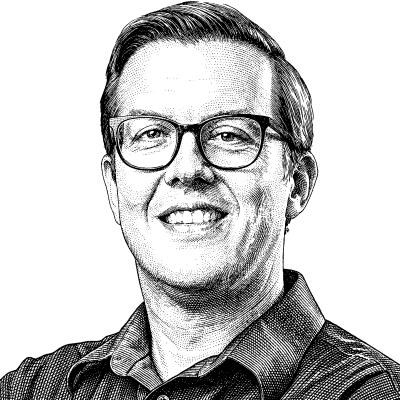
Benjamin Peters (born 1980) is an American media scholar, author, and professor known for his work on the history of communication technologies, information theory, and the social dimensions of digital networks. He serves as the Hazel Rogers Professor of Communication at the University of Tulsa and has held affiliations with several prominent research institutions. Peters is best known for his book How Not to Network a Nation: The Uneasy History of the Soviet Internet (2016), which explores the failed attempts to build a nationwide computer network in the Soviet Union and examines how social and political systems shape technological development. The work received widespread acclaim for its interdisciplinary approach, bridging media studies, history, and science and technology studies. He has also edited Digital Keywords: A Vocabulary of Information Society and Culture (2016), contributing to critical discourse around the language and concepts underpinning the digital age. Peters’s scholarship carries resonance for those interested in the intersection of technology, human potential, and collective aspiration. By investigating how societies envision and fail to realize transformative technological projects, his work illuminates the deeply human—and often ideological—dimensions of networked communication. His research reminds us that the tools we build to connect and elevate humanity are always embedded in moral, political, and even spiritual frameworks. For communities exploring themes of theosis and the cooperative pursuit of transcendence through technology, Peters’s insights into the promises and pitfalls of networked societies offer valuable perspective on how human aspiration and systemic constraints interact in the ongoing project of building a better world.