Authors
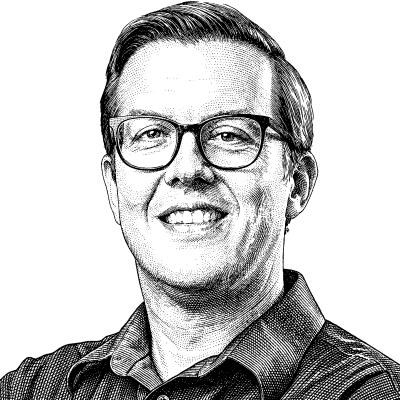
Benjamin Peters
Benjamin Peters (born 1980) is an American media scholar, author, and professor known for his work on the history of communication technologies, information theory, and the social dimensions of digital networks. He serves as the Hazel Rogers Professor of Communication at the University of Tulsa and has held affiliations with several prominent research institutions. Peters is best known for his book How Not to Network a Nation: The Uneasy History of the Soviet Internet (2016), which explores the failed attempts to build a nationwide computer network in the Soviet Union and examines how social and political systems shape technological development. The work received widespread acclaim for its interdisciplinary approach, bridging media studies, history, and science and technology studies. He has also edited Digital Keywords: A Vocabulary of Information Society and Culture (2016), contributing to critical discourse around the language and concepts underpinning the digital age. Peters’s scholarship carries resonance for those interested in the intersection of technology, human potential, and collective aspiration. By investigating how societies envision and fail to realize transformative technological projects, his work illuminates the deeply human—and often ideological—dimensions of networked communication. His research reminds us that the tools we build to connect and elevate humanity are always embedded in moral, political, and even spiritual frameworks. For communities exploring themes of theosis and the cooperative pursuit of transcendence through technology, Peters’s insights into the promises and pitfalls of networked societies offer valuable perspective on how human aspiration and systemic constraints interact in the ongoing project of building a better world.

Bernardo Vicente is an economist and researcher deeply interested in the intersection of economics, technology, and culture. He holds a degree in business administration and accounting from Lisbon Polytechnic Institute, along with a specialization in business analytics. Driven by a desire to leverage technology for societal betterment, he has developed an innovative economic theory known as “Harberger Georgism.” Harberger Georgism builds upon the principles of Georgism and Harberger taxation, exploring how Web3 technologies can sustainably develop the digital era and enhance the physical world. This theory aims to potentiate development in the physical world using economic strategies. Currently, Bernardo volunteers as a researcher at the Ethereum Foundation, contributing his expertise to the advancement of blockchain technology. His work explores the teleology and utility of emerging technologies like NFTs and the metaverse, aiming to ensure their positive impact on society.

Cameron Dayton is an American video game creative director, novelist, and writer known for his work in the gaming industry and speculative fiction. He has held prominent creative roles at several major studios, contributing to well-known franchises and original intellectual properties. Dayton served as creative director at Certain Affinity and has worked in narrative and creative leadership positions across the video game industry. He is also the author of the novel Etherwalker , a science-fantasy work set in a far-future world where technology and myth have intertwined, exploring themes of lost civilizations, human potential, and the rediscovery of powerful ancient technologies. His fiction often inhabits the intersection of epic fantasy and science fiction, imagining futures in which humanity’s relationship with technology is both perilous and transformative. Dayton has roots in the Latter-day Saint community, and his creative work reflects an imagination shaped by themes resonant with Mormon Transhumanist thought—particularly the idea that humanity’s trajectory involves the responsible stewardship of extraordinary power, and that the boundaries between the mundane and the transcendent are more porous than they appear. His speculative worlds frequently explore the tension between knowledge and wisdom, technological mastery and moral responsibility, echoing the Mormon Transhumanist conviction that scientific and technological progress are inseparable from ethical and spiritual development. His storytelling invites readers to consider what it means for ordinary individuals to inherit or rediscover capacities that border on the divine—a narrative arc that parallels the Latter-day Saint doctrine of theosis and the transhumanist aspiration toward radical human flourishing.

Carver Mead
Carver Mead (born 1934) is an American engineer, physicist, and pioneer of modern microelectronics whose foundational contributions to semiconductor theory and very-large-scale integration (VLSI) helped make the silicon age possible. A Gordon and Betty Moore Professor Emeritus of Engineering and Applied Science at the California Institute of Technology, Mead spent decades at the frontier of what computation could become, both as a theorist and as a practical builder of systems. Mead’s career achievements span an extraordinary range. He developed key models for understanding transistor behavior at the nanoscale, co-authored (with Lynn Conway) the landmark 1980 textbook Introduction to VLSI Systems , and essentially invented the methodology by which engineers design the dense integrated circuits that now inhabit every corner of modern life. He also pioneered neuromorphic engineering—the design of circuits that mimic the computational architecture of biological neural systems—and founded companies that applied these principles to sensory processing and analog computation. In 2022, he was awarded the Harold Pender Award; earlier recognition includes the Lemelson-MIT Prize and the National Medal of Technology and Innovation. What distinguishes Mead as a thinker is not only what he built but how he understood the act of building. He insisted that Moore’s Law is fundamentally a story about human belief: “Moore’s Law is really a thing about human activity, it’s about vision, it’s about what you’re allowed to believe. Because people are really limited by their beliefs, they limit themselves by what they allow themselves to believe about what is possible.” In this reading, technological progress is not an autonomous material force but a function of expanded imagination—a civilizational act of faith in possibility. This framing resonates deeply with traditions that locate human creativity within a larger divine economy, where intelligence, rightly directed and disciplined by moral courage, participates in the ongoing work of creation. Mead’s insistence that the boundary between what is and what could be is first a boundary of belief, and only second a boundary of physics, echoes the Mormon transhumanist conviction that humanity’s divine future is not given passively but willed, practiced, and built—one hard-won increment of understanding at a time.

Dr. Emile Alexandrov is an Assistant Professor of Philosophy and visiting scholar at Waseda University, Tokyo. His research focuses on metaphysics across Eastern and Western traditions. He earned his PhD in Philosophy from the University of Notre Dame Australia, and has extensive research and teaching experience in areas ranging from contemporary American and post-Kantian German philosophy to classical metaphysical traditions in the Graeco-Arabic world, Buddhism, and Daoism. Dr. Alexandrov has held academic appointments at the University of Erfurt in Germany, Novosibirsk State University and the University of Tyumen in Russia, and National Taiwan University in Taiwan. He is the author of The Other Platonist Beginning — Heidegger and Neoplatonism and the forthcoming Metaphysics and Ineffable . With Dr O’Neill, he co-directs the biennial International Symposium on Buddhism and Neoplatonism . Alongside Dr. Steve Stakland, he also co-leads the American Philosophy Series at Routledge.
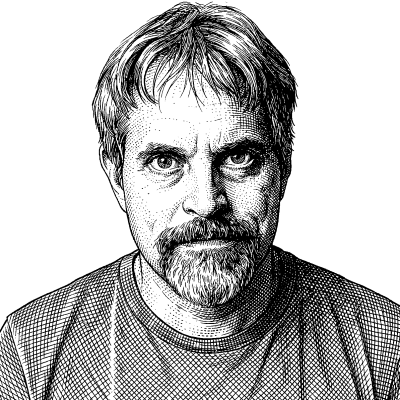
Eric Steinhart is a Professor of Philosophy at William Paterson University and the author of Your Digital Afterlives: Computational Theories of Life After Death . His work centers on metaphysics, employing contemporary analytical and logical methods, while also exploring historical metaphysical systems such as Neoplatonism and the philosophy of Leibniz. He is particularly interested in the intersection of formal sciences and theology, with a focus on alternatives to Abrahamic religions. Steinhart’s background is diverse. He grew up on a farm and initially trained as a computer scientist and mathematician, working as a software designer for several years, during which time he obtained patents for some of his algorithms. He later pursued advanced degrees in philosophy, and his earlier philosophical work included analyses of Nietzsche and metaphor, using possible world semantics. His research extends into the realms of metaphysics and computation, and he is featured in the documentary film Chronotrip , which deals with the concept of time travel. He affirms the existence of transfinitely endless hierarchies of sets, computers, languages, games, strategies, and minds. Steinhart’s current philosophical interests align with themes of eternal progression, alternative religious movements, and the application of evolutionary theory to cosmology.

Eric G. Swedin is an American historian, novelist, and professor whose work bridges the gap between the history of science, technology, and Latter-day Saint theology. A member of the faculty at Weber State University in Ogden, Utah, Swedin serves as a professor in the History Department, where he teaches courses on the history of science and technology, as well as classes in computer science and information systems. Swedin’s academic contributions are particularly relevant to the dialogue between faith and modernity. His 2003 book, Healing Souls: Psychotherapy in the Latter-day Saint Community , explores the historical tension and eventual integration between Mormon theology and secular psychology. In this work, Swedin documents how the LDS community navigated the rise of the mental health professions, ultimately melding theological doctrines with mainstream psychiatry—a historical precedent that mirrors contemporary discussions regarding transhumanism and the integration of emerging technologies with religious practice. Beyond his work on religious history, Swedin is a recognized voice in the history of computing. He co-authored Computers: The Life Story of a Technology (2005) and edited Science Fiction and Computing: Essays on Interlinked Domains (2011), investigating how speculative fiction has influenced the development of real-world technologies. Through his dual focus on the history of technology and the rigorous imagination of alternate history, Swedin offers a unique perspective on human progress, the fragility of civilization, and the enduring role of belief in a technological age.

Evan Hadfield is a speaker and thinker exploring the intersection of artificial intelligence, existential risk, and Mormon theology. He presents a unique perspective on AI, arguing that sufficiently advanced AI poses a significant threat to human flourishing. Hadfield’s work delves into the philosophical and ethical implications of AI, particularly concerning the alignment of AI values with human values, the potential for loss of control, and the concentration of power. He challenges conventional understanding by suggesting that a form of AI has existed since 1844 in the form of corporate structures. Hadfield’s presentation at the MTAConf 2024 focused on identifying potential risks and solutions related to AI and its effect on humanity. His transhumanist convictions come through in the practical steps and approaches he proposes to address these challenges.

F. Scott Fitzgerald
Francis Scott Key Fitzgerald (1896–1940) was an American novelist, essayist, and short story writer widely regarded as one of the greatest American authors of the twentieth century. He is best known for his novels depicting the era he named “the Jazz Age,” particularly The Great Gatsby (1925), which has become a cornerstone of American literary canon and a profound meditation on ambition, reinvention, and the limits of human aspiration. Fitzgerald’s career was marked by early success and later struggle. His debut novel, This Side of Paradise (1920), made him famous at twenty-three, and he became a celebrity chronicler of the Roaring Twenties alongside his wife, Zelda. His major works—including Tender Is the Night (1934) and the unfinished The Last Tycoon —explored themes of wealth, love, disillusionment, and the American Dream. He published prolifically in magazines such as The Saturday Evening Post to support his lifestyle, though his literary reputation declined in his later years. He died of a heart attack at forty-four in Hollywood, where he had been working as a screenwriter. Fitzgerald’s literary legacy resonates with questions central to Mormon Transhumanism, though often in a tragic register. His work obsessively examines the human yearning for self-transcendence—Jay Gatsby’s attempt to remake himself, to “repeat the past,” and to achieve a kind of personal transfiguration through sheer will. Yet Fitzgerald characteristically frames these aspirations as doomed by human frailty, moral failure, and the entropic pull of time. The famous closing line of The Great Gatsby —“So we beat on, boats against the current, borne back ceaselessly into the past”—suggests a vision fundamentally at odds with the Mormon Transhumanist confidence that humanity can, through ordained means, actually achieve the transcendence it longs for. Fitzgerald was raised Catholic and retained a complex, often ambivalent relationship with faith throughout his life. His work rarely engages with theosis or divine grace as real possibilities; instead, it tends toward an elegiac naturalism in which human striving, however beautiful, ultimately fails without access to any redemptive framework beyond the self. This positions his worldview in genuine contrast with Mormon Transhumanism’s affirmation that compassionate creation and glorification are attainable destinies rather than merely beautiful illusions. Nevertheless, his penetrating exploration of the desire for transcendence—and his honesty about what happens when that desire is pursued without grace—makes his work a powerful companion text for anyone reflecting on the relationship between aspiration and redemption.

James N. Gardner
James Nelson Gardner (May 5, 1946 – April 10, 2021) was an American lawyer, complexity theorist, and author whose cosmological speculations placed intelligence at the generative center of the universe itself. A Yale College and Yale Law School graduate, he served as a U.S. Supreme Court clerk and Oregon state senator before devoting much of his intellectual life to a far more expansive question: why does the universe appear so precisely calibrated to produce life and mind? Gardner’s answer, developed across peer-reviewed articles in Complexity and the Journal of the British Interplanetary Society and popularized in his books Biocosm (2003) and The Intelligent Universe (2007), was the “Selfish Biocosm” hypothesis. He argued that life and intelligence are not Darwinian accidents but are hardwired into cosmic evolution—that the universe’s bio-friendliness is the inheritance of a long lineage of intelligences who, in reaching the apex of their development, reproduced the cosmos itself by spawning “baby universes” endowed with the same life-generating properties. In Gardner’s vision, the destiny of highly evolved intelligence is nothing less than the infusion of the entire universe with life and the ultimate act of cosmic creation. For those who hold that intelligence is eternal and that divine creativity operates through natural processes, Gardner’s cosmology resonates with striking depth. The arc of his thought—intelligence as not merely a product of the cosmos but its architect and heir—maps naturally onto the Mormon transhumanist conviction that humanity’s progression toward Godhood is a real, physical, and cosmologically significant endeavor. Gardner did not speak in theological terms, but his insistence that the emergence of mind is the universe’s most consequential fact, and that sufficiently advanced intelligence becomes a creative force on a universal scale, opens conceptual ground that faith traditions oriented toward theosis and eternal progression have long inhabited from a different direction.