An Atheist Transhumanist Critique of Religious Transhumanism
Peter Wicks, a mathematician and policy researcher who describes himself as an atheist, offers a sympathetic but critical examination of religious transhumanism. While acknowledging that religious transhumanists can serve as valuable bridges to religious communities and as dissenting voices within the predominantly secular movement, he warns that religious language may lack the precision needed to navigate toward a transcendent future. Wicks identifies several “limiting beliefs” to avoid—including assumptions that faith must mean belief in God, that transcendent experiences require religious interpretation, and that aesthetics and emotion must be channeled through spirituality—and urges all transhumanists, religious or otherwise, to question even their most cherished beliefs.
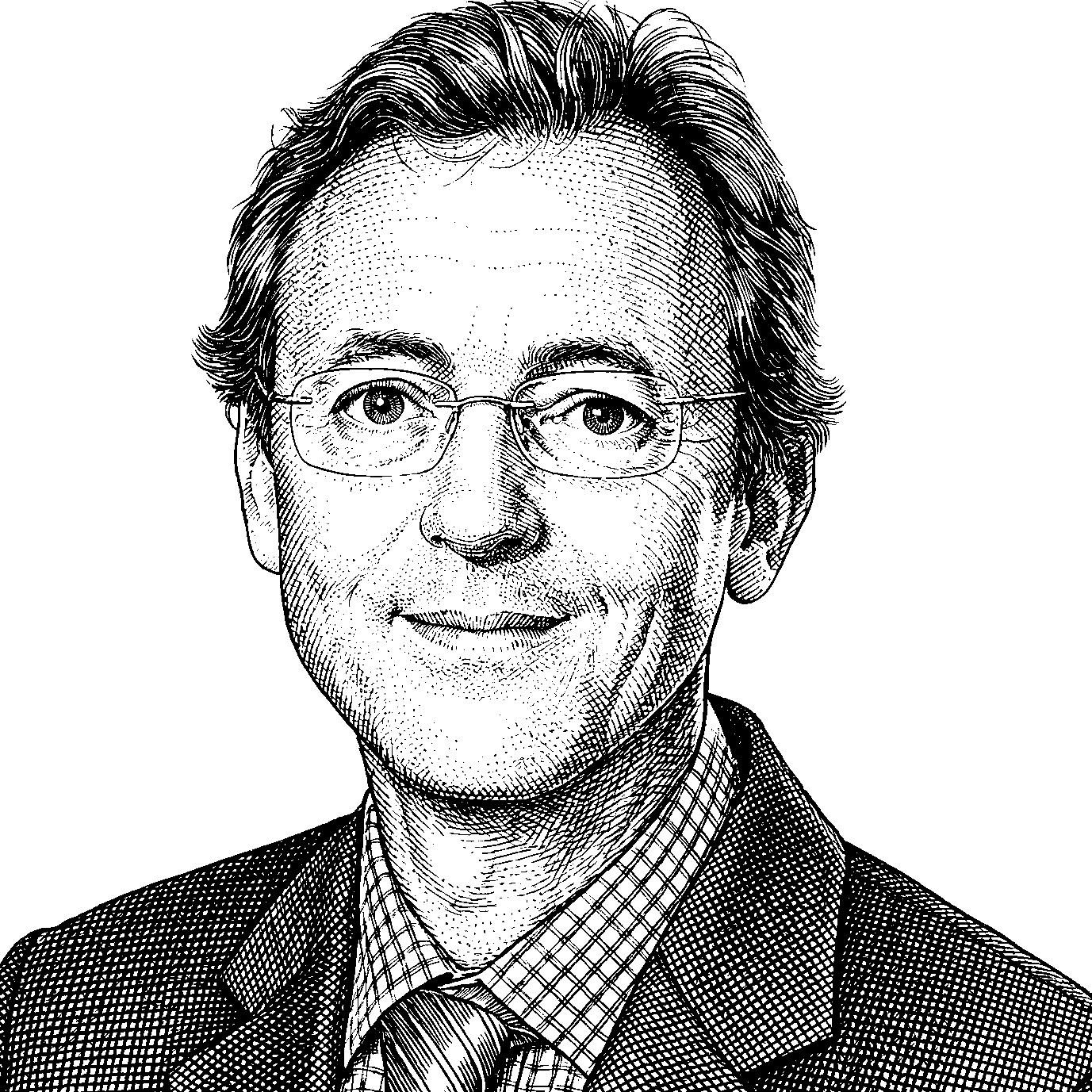
Peter Wicks is an atheist transhumanist who presented a critique of religious transhumanism at the MTAConf 2013. He holds a PhD in Mathematics from Cambridge, England, earned in 1991. ¶ Since receiving his doctorate, Wicks has worked primarily at the European Commission. His responsibilities there have encompassed a range of policy areas, from environmental policy to research on industrial accidents. In 2011, he took unpaid leave from the Commission to explore alternative career opportunities. ¶ In recent years, Wicks has developed a strong interest in the philosophical implications of emerging technologies. He broadly supports the goals of the transhumanist movement. Although raised as an Anglican Christian, he now identifies as an atheist.
Transcript
Speaker 1
I was very pleased as we were organizing the conference to see The complimentary nature of our special guest speakers. Earlier, we had a critique from a Christian Perspective and now will be treated to a critique from an atheist transhumanist perspective of religious transhumanism from Peter Wicks. Peter Wick studied mathematics at Cambridge, England, where he obtained his PhD in 1991. And since then, he’s worked mainly at the European Commission, where his responsibilities have ranged from Environment policy to research on industrial accidents. And in twenty eleven, he took unpaid leave from the Commission to explore alternative career opportunities. And in recent years, He’s become fascinated by the potential philosophical implications of emerging technologies and broadly supports the goals of the transhumanist movement. Though raised as an Anglican Christian, Peter currently regards himself, for all practical purposes, as an atheist.
Peter Wicks
Thank you very much. Before launching into a critique of religious transhumanism. I want to explore a little bit the question what is religion finally? Particularly after today’s discussions, I think one can be forgiven for wondering is it Is it, more than anything else, a kind of ethnic identity? If you look at the global distribution of religion, one could be forgiven for thinking so. Is it, as the author Jonathan Haight has suggested, a team sport? Our religion is the best. We’re going to prove that our religion does better? Is it more than anything else a way of life, a set of traditions and practices that we adhere to as a way of expressing that religion? Or do you have to believe certain things, articles of faith, they would often be called? Is it a way of using language? Is it the fact that we talk about we use words like God and Spirit and this kind of thing? Is it about metaphor? We’ve heard a lot about myth and poetry and metaphor. And if it’s about metaphor Is it recognized as a metaphor? Has it been demythologized? And above all, is it helpful?
Peter Wicks
Now Lincoln this morning said something I very much liked about science and ethics. Forgive me if I didn’t get this exactly right, but it was something like we will still need science to reconcile different people’s experiences, and we will need ethics to reconcile different people’s desires. And I thought that was a wonderful way of putting it. And I would also suggest that, that is rather a good way of summarizing what has always been the secular humanistic project to use science to reconcile different people’s experiences to see what is actually true, what is real, what we can trust. And ethics to get our heads around when we want different things. How do we reconcile that?
Peter Wicks
What I think transhumanism does a great job at doing is incorporating into that project the transformative potential of technology so that we can steer our way safely towards the glorious transcendent future that transhumanists like to imagine. But in that context, I would suggest that it is fundamentally a secular movement. that is founded upon critical reasoning and observation, free from the constraints of religious tradition. So the question is, what happens then when you combine religion and transhumanism into religious transhumanism? And I want to just throw out some of the kind of things that I’ve picked up during the day, some of the ideas that seem to come out.
Peter Wicks
One again from Lincoln, God as a post human projection. Great, I love that idea. But then I wonder Is that what most people on this planet understand by the term God? Religion as the power of aesthetics? But then why call it religion? And I’ll come back to that a little bit later.
Peter Wicks
I actually think that religious transhumanism can play a valuable role, both as a bridge to other religious groups, again bearing in mind that a large majority of people on this planet are in one way or another religious, and also as a dissenting voice within what is pre indeed predominantly a secular movement. So that’s on the positive side.
Peter Wicks
However, one concern I have is that bringing religious language and ideas into transhumanism can confuse the debate, and that religious language can lack the precision needed to steer our way safely to this glorious future. I also have a concern that bringing religion into transhumanism can lead us to give far too much weight to specific religious and scriptural traditions which may be of questionable value.
Peter Wicks
I think it was Donny Bradley that came up with the suggested that religion may be a m more chaotic form of thought. because it is more ambitious than science. And there’s actually a lot I like about that. Indeed, all human progress comes by the interplay of creativity and reason. So we certainly need the chaotic kinds of thinking and not only the very rational reductionist. forms of thinking. We need both. However, imagining that religion is the only or the main way to achieve that kind of creativity can reflect certain limiting beliefs, which I think we need to be aware of. And I’ve made a list of such beliefs, which I think we need to be careful of.
Peter Wicks
So one of them is to imagine that faith has to mean belief in God or a religious tradition. One of my beliefs is that we all need faith. You cannot get out of bed in the morning without faith that something good will happen if you do that. So we all have faith. It is not a specifically religious quality.
Peter Wicks
Another potentially limiting belief is the idea that emotion and aesthetics must be expressed through something called spirituality, and that spirituality must be done through religion. Spirituality for me is a word which has a nice resonance, but it’s not very well defined. And again, it comes back to this idea that some of the language that we use in religion lacks the kind of precision that we need.
Peter Wicks
Another limiting belief is that transcendent transcendent experiences I have a problem with that word transcendent experiences must be interpreted in a religious context or somehow as evidence of the truth of certain religious dogmas. Why not just accept them as transcendent experiences and be glad.
Peter Wicks
Another limiting belief, which we have heard a lot subliminally today, at least until Brad’s talk is that God is male. I have been struck, and again until Grant’s talk, about the consistency with which the male personal pronoun has been used even amongst this extremely progressive audience to refer to God. Why is God a He? And of course, we know why it comes from the paternalistic tradition that most current religions are children of.
Peter Wicks
Going back to the transcendent experience and emotion and chaotic thinking. We have a lot of essentially secular ways of expressing that. We have fiction, we have art, we have music. In fact, one could say that religion is a kind of fiction where the adherent is encouraged to take suspension of disbelief that little bit too far.
Peter Wicks
Another potentially limiting belief is that atheists are incapable of valuing religious and other myths as myths. We are not. We can adore religious scripture. We just don’t want to give them undue weight or take that suspension of disbelief too far.
Peter Wicks
Religion, of course, has historically played a role in providing a basis for morality. But do we still need it to play that role? Secular values can also provide a basis for morality. Charity does not have to be seen as a gift of God. It can be something that we simply decide.
Peter Wicks
Another danger with expressing transhumanism in a religious context is that we end up speculating a lot about God wants about what God wants or about what this or that religious tradition really means, rather than just focusing on clarifying what we want using ethics to reconcile the different answers we come up with, and using science to reconcile what we want with what is achievable, and figuring out how to get it.
Peter Wicks
So what do we conclude from that? And I think the first conclusion or rather before I give any conclusions I want to recognize that many people are going to have utterly compelling personal reasons not to abandon their religious beliefs. As an idea, God is certainly not dead. I think there is no question about that. However, I want to say three things in conclusion.
Peter Wicks
Firstly, I think it is essential for all of us, whether atheist, religious, transhumanist, techno-progressive, bioconservative, whatever to be prepared to question even our most cherished beliefs. We need to be get into the habit of asking ourselves questions like this If I were to wake up tomorrow morning and realize that I no longer held my most cherished beliefs what would I do? Because I think often we don’t question our beliefs because we haven’t thought about that and we don’t know. We are afraid that we would fall into some kind of existential depression or whatever. We need to find ways of dealing with the emotional reactions that we encounter. when we encounter ideas or thoughts that challenge those beliefs, we need to find ways of dealing with them that don’t blunt our curiosity or blind us to the truth.
Peter Wicks
For example, some people might focus on how some atheists are rude and bigoted and arrogant. which, okay, probably some of us are, but that that can also be a straw man and distract attention from you know, maybe we have a point about some of these things that you know you need to think about.
Peter Wicks
And my final comment. Draw inspiration from religion as much as you want. I have absolutely no objection to that. But as you do so Please take the utmost care to avoid those limiting beliefs. Thank you for your attention.
Speaker 3
We got a question from somebody online for you. Here’s the question. How could atheism have an ultimately optimistic outcome for life? And a follow up question is, I would be interested to hear what kind of ultimate goals in regards to eternal life atheism could have.
Peter Wicks
Okay. These are very good questions. I think what to answer, what I would throw back as a question is What is atheism really rejecting? And I would suggest that what atheism is really rejecting is the usefulness of the concept of God. In fact, arguably, God worldwide has become so corrupted with superstition and limiting belief. That even though there are some theistic interpretations that are wonderful, on the whole we would be better off without it. But if you reject the concept of God, that doesn’t mean that you reject transcendence. It doesn’t mean that you reject immortality it doesn’t mean that you reject self improvement or enhancement. So there is a whole bunch of optimistic goals that you can have, ultimate goals. You can I mean, there is a quasi religious drive behind ideas like the singularity, the omega point, all of this, which can be very optimistic kind of ideas, but they don’t have to involve an explicit concept of God.
Peter Wicks
If we were to abandon our religious institutions, what type of move would find our social morality? Yes, the question was if we were to ab abandon our religious traditions, what type of group would underpin our morality? And paraphrase a little bit. This is a very good question.
Peter Wicks
I think there are answers already today in the world. There are all sorts of associations interest groups and so on, that can provide the same kind of sense of community that religion has historically done. And also, I think groups, community and associations is one very powerful way to underpin morality, but it’s not the only way. We have, of course, laws, we have social mores. the language that we use, just what we tell our kids, what examples we set. These are all ways in which we ingrain good habits, good moral habits, into both our own behavior and those of others, which I think do not necessarily rely on religious communities as such.