The Religious Brain Project
Michael Ferguson introduces the Religious Brain Project, a collaborative research initiative at the University of Utah using functional MRI to study Mormon spirituality. He traces the philosophical history from Descartes’ dualism through Joseph Smith’s “queering” of the material-spiritual binary, positioning the project within William James’s pragmatist tradition of assessing religion by its fruits. Ferguson describes the study’s methodology—behavioral questionnaires measuring religiosity, empathy, and moral cognition alongside neuroimaging of participants watching General Conference, praying, and pressing a button when they “feel the Spirit”—aiming to map the neural correlates of Mormon spiritual experience and explore questions of neuroplasticity, such as how missionary service might reshape brain connectivity.
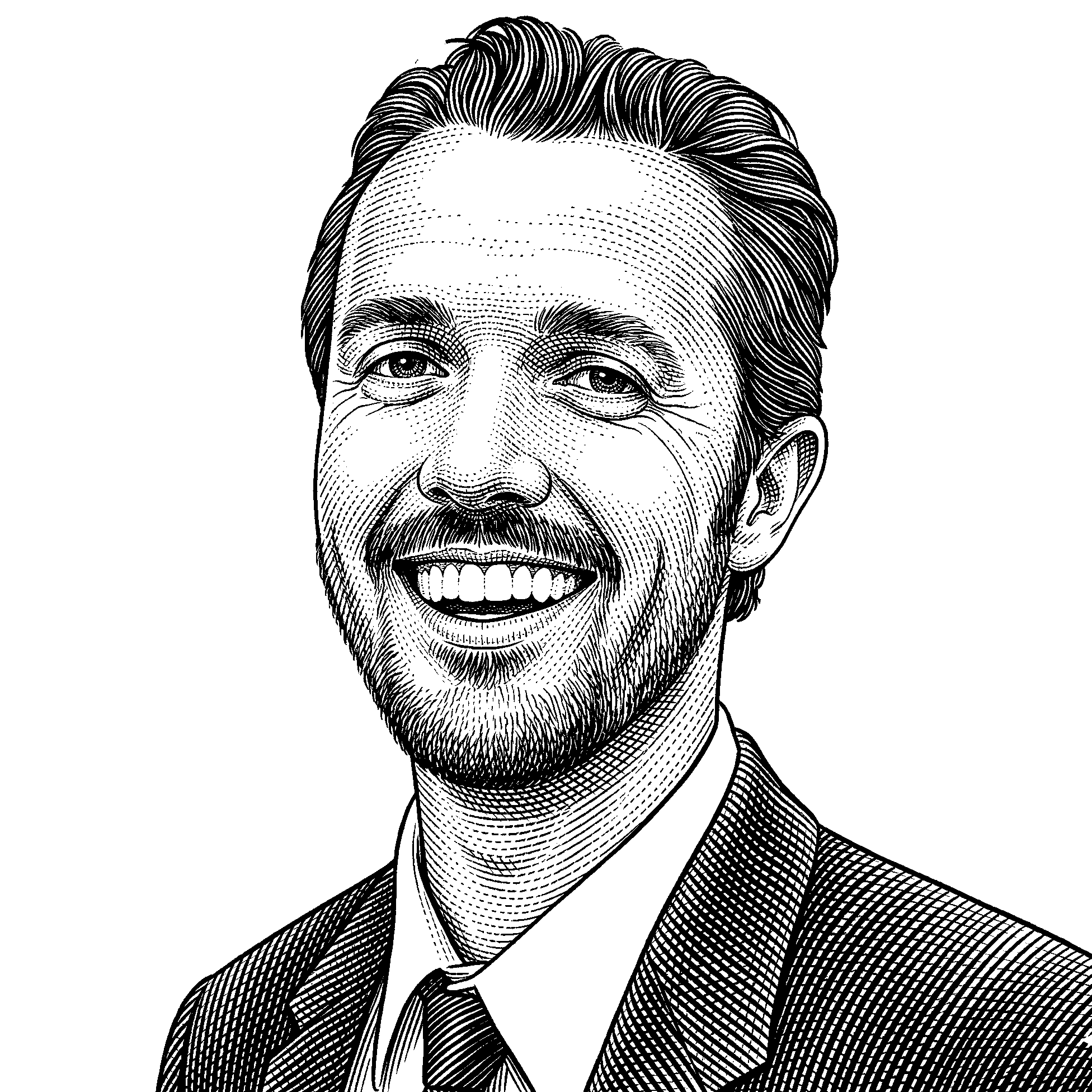
Michael Ferguson is a neuroscientist, researcher, and educator whose work explores the biological foundations of spiritual experience and the intersection of cognitive science and theology. A prominent voice in the dialogue between Mormonism and transhumanism, Dr. Ferguson is widely recognized for his pioneering research into the “religious brain,” seeking to understand how profound spiritual states are mapped within the human nervous system. ¶ Dr. Ferguson’s academic journey began with a focus on physics and communication, but his interest soon shifted toward the complexities of the human mind. He earned his Ph.D. in Bioengineering from the University of Utah, where his doctoral research gained international attention. During this period, he led a landmark study using functional magnetic resonance imaging (fMRI) to monitor the brain activity of devout Latter-day Saints as they reported “feeling the Spirit.” This research identified specific activation in the nucleus accumbens—a region of the brain associated with reward and dopamine—suggesting that spiritual experiences leverage the same neural circuits involved in music, love, and other deeply meaningful stimuli. ¶ Following his doctoral work, Dr. Ferguson completed postdoctoral fellowships at Cornell University and Beth Israel Deaconess Medical Center. He currently serves as an Instructor in Neurology at Harvard Medical School and as a researcher at the Center for Brain Circuit Therapeutics at Brigham and Women’s Hospital. His clinical and research interests have expanded to include the use of brain lesion network mapping and deep brain stimulation to explore the neural circuits associated with religiosity, spirituality, and various neuropsychiatric conditions. ¶ A frequent contributor to the Mormon Transhumanist Association, Dr. Ferguson presented “The Religious Brain Project” at the MTAConf 2014. In this and other presentations, he argues that a scientific understanding of spiritual mechanics does not diminish their sanctity but rather provides a “technological” vocabulary for the soul. He posits that by understanding the neural architecture of transcendence, humanity can better cultivate profound experiences of wonder, connection, and ethical transformation.
Transcript
Speaker 1
I’m pleased to introduce Michael Adam Ferguson. Glad to have him back presenting with us. Michael is a PhD candidate at the University of Utah, specializing in functional imaging of the brain. He has authored and co-authored papers on the stability of large-scale brain networks, attention, and neuroplasticity in journals including Neuroimage and Proceedings of the National Academy of Sciences. He and his husband, J. Seth Anderson, identify as queer Mormons and feel a sense of calling to help reveal Mormonism to itself. He blogs at queermormons. org on the topics of neuroscience, religion, and queer theory. Please welcome Michael.
Michael Ferguson
There we go. Okay. After much ado, my name is Michael Ferguson again, and I’m with a project called the Religious Brain Project. We’re at the University of Utah. And we’ve got some great collaborations with Brigham Young University as well as the Human Brain Institute at Cornell and the Cognitive Neuroscience Laboratory at Harvard.
Michael Ferguson
I put this slide up here sort of with an ironic twist to it. So minds are simply what brains do. The phrase that Marvin Minsky uses to describe this relationship between mental and physical properties. And I love how dismissive it is. And this is often the type of dismissiveness that we get when we talk about religion. Mind is an incredibly complex phenomenological system. Brain is the most intricate physical system in the known universe, much less the relationship between the two that’s dynamical. There’s nothing simple about either one of those.
Michael Ferguson
As we move forward into the Western tradition of neuroscience investigation, the conversation often starts with Rene Descartes Perhaps because he so famously asserted dualism, that there was this metaphysical realm and this physical realm. At least that’s how it’s been popularly interpreted. But so Descartes talked about the pineal gland, which is an anatomical structure in the brain, being the interface between soul and body.
Michael Ferguson
Then we have what has been used in monism or materialism is a model of mind Championed by Hegel, which is dialectical in nature, gets into absolute ideals.
Michael Ferguson
As we move forward, we have Joseph Smith who takes this binary of dualism or monistic materialism and he queers it by saying it’s actually a spectrum What we have is spiritual stuff that’s really the same spectrum of stuff as physical matter. It’s just more refined
Michael Ferguson
Then we had another wrecking ball come in. And in this case, it was the observations. Of evolutionary processes in the organic origins of life.
Michael Ferguson
So now One of the parade Mormon scholars to keep an eye on is Matt Bowman, and he’s been looking at the emergence of fundamentalism in American religion. And in his new book, The Urban Pulpit. He discusses how a lot of religious fundamentalism in the United States is a reaction. to poor articulations of theology. And I think that that’s really fascinating.
Michael Ferguson
As we look forward to what are some of the practical outcomes From studying religion from a biological perspective, one of them is a religious aim. It’s to articulate a theology that fits into the most advanced sciences and understandings that we have of human neural systems.
Michael Ferguson
Bridging These Worlds was William James, and he championed pragmatism, where we look at the measurable empirical outcomes of any type of religious system or belief. And we assess them on those terms, and he reminded Quite wisely, of the words of Jesus of the Gospels, that it’s not by their roots ye shall know them, it’s by their fruits ye shall know them. In essence, a lot of the metaphysi metaphysical, mechanistic questions are misplaced if the goal is to g get to some type of veracity of goodness or assessments of morality.
Michael Ferguson
There’s Mr. James. There are also some exciting potential bridges between neurotheology and neurophilosophy. And like Chelsea was saying in the previous presentation, So many of these conversations really require a refined language in order to communicate in maximally effective ways between parties that might have fundamentally different propositional assumptions.
Michael Ferguson
Talking about the importance of studying religion and its dynamic influence with the brain, we can also look at this in terms of public health. Utah has recently been assessed as the one state in the United States that has the highest diagnosis of mental health illness. You can’t think about Utah without thinking about Mormonism and religious energy. Whatever the relationship is, as mitigated by complex third and fourth party dynamics or direct dynamic causality, these are questions that we really need to understand from the perspective of public health urgency.
Michael Ferguson
BYU is doing terrific work looking at social media and how that can be used for public health monitoring with suicidality, and they just published a paper this year. that looks at innovative ways for doing pattern analysis on social media data streams and seeing how those correlate to public health concerns. So there’s a lot of untapped potential moving forward using social media in these intersections of religion and of public health.
Michael Ferguson
So what are we doing with the Religious Brain Project? Well, this Monday, we’re sending out our first electronic questionnaire to 150 plus participants who volunteered for the study. We’re going to be doing metrics on personality. domains of religiosity, empathy, obsessiveness, moral cognition, and structure of prayer, just to name some of our behavioral explorations.
Michael Ferguson
Psychology of religion increasingly is becoming an empirical data driven pursuit, and this is something that is new and that is exciting to see a lot of interdisciplinary work that’s moving this field forward.
Michael Ferguson
So gifts of the data stream. Once we begin collecting data, some of the things that we hope to do are look at behavioral clusters. If somebody measures high for a mental health risk to see, okay, what are the patterns of the religiosity and practice that are correlated with that? What are domains of moral cognition? that tend to correlate out with high levels of anxiety inside of an active LDS population. They’re really great questions we can start to get at once the data comes in and we’re able to look at correlations and the patterns.
Michael Ferguson
We’re also going to be doing neurophysiological data. This is where our subject goes into the scanner. I primarily work with functional magnetic resonance imaging and associated analyses. We are going to be looking at a sample size of 20 individuals to begin with. And we want more than that. The higher your sample size, the more powerful your outcomes are going to be.
Michael Ferguson
The method that we’re going to be starting with is functional connectivity. And this is one that is relatively new. And it hasn’t really permeated the popular dialogue yet, so look for this one to be coming through the New York Times pipeline. But functional connectivity takes bold signals, so blood oxygen-level-dependent signal, which is a neurophysiological marker. And you can look at the time series from one region, how it is similar and different from the time series in other regions. And then that gives you A way to understand which regions in the brain are most coactivated, which ones are, you know, for shorthand, which ones are talking to each other most frequently. And we put that together, and that becomes what we call the human connectome.
Michael Ferguson
Each individual person, we can document the matrix of how their brain is uniquely laid out functionally so that correlations in one region can be reflected in networks that we know functions and we know how these networks operate with one another.
Michael Ferguson
We’re also going to be doing some task-based material. So with the functional connectivity data, it’s just a person lying in a wakeful resting state. It’s a task-neutral state in the scanner. And they’re just told to let their mind wander. So we’re looking at default processes.
Michael Ferguson
With task-driven data, we’re going to be having them watch general conference videos, Mormon messages, engaging in personal prayer. reading scriptural passages and listening to hymns. They’re going to also have a button that they can depress when they’re feeling the Spirit. as they identify that. And so using the lexicon of the religious culture that we’re studying in order to assess a particular biological response is going to hopefully give us some neuroanatomy for core features of Mormon spirituality.
Michael Ferguson
What we can then do is look at the domains from the behavioral data and correlate them. With the networks that we’re seeing as participatory in Mormon spirituality.
Michael Ferguson
So, for example, let’s take some of our high spirit feelers. These are people who report A high affective intensity and frequency of spiritual ecstasy. What we can then do is look at those hubs within the neural network for spiritual responsiveness and assess whether there’s a heightened correlation Between the nubs, hubs, excuse me, in those neural regions. And there’ll be little nubs of activity everywhere.
Michael Ferguson
What we can do then is ask questions about neuroplasticity. Let’s imagine a longitudinal study where you have the same subjects at multiple time points, and you have somebody before an LDS mission, and then you look at their functional neural patterns after an LDS mission. And you assess what are the long-term plastic effects of neuromodulation Post-missionary experience in the LDS culture.
Michael Ferguson
You can control age match, subtract out pure developmental effects, and then you can start to I mean, from there, the sky is the limit as far as The data that you could process in order to fine-tune if the goal is to enhance the quality. of spiritual life. I mean, again, lots of directions that you could go depending on the questions of interest.
Michael Ferguson
There’s a big trend within neural imaging data to do open source sharing. And I think this is fantastic, especially for an organization that has altruistic and technological Motivations like the Mormon Transhumanist Association. There are beautiful data sets to data mine. If that would be something that people in the association would be interested in training on, I mean, I’m sure that we could work out some cool cooperativity there.
Michael Ferguson
I think that there’s a high opportunity to understand religious culture within America. Baylor University has done some fabulous work that took principal components of attributional responses for the personality of the God that they worship. And the core axes were authoritative, benevolent, critical, and distant.
Michael Ferguson
The Human Neuroscience Institute at Cornell that we’ll be working with has recently published neural data where you can take somebody, put them in the scanner, have them infer empathetically the personality type of another individual. And based on the regions that are co-activated in the brain, determine the personality type of the individual that they’re interacting with, or for whom they’re developing theory of mind.
Michael Ferguson
So combine those two together, you could look at the type. I mean, I shouldn’t say this, like it’s a done deal. There would have to be a lot of rigorous research in order to get a positive result. you know, hypothetically it’s possible to infer the personal characteristics that someone attributes to the divinity of their choice.
Michael Ferguson
Cross-cultural empathy in order to look at moral cognition within other religious cultures. Other scales of devotion and of literality in the same domain, the same religious group. and opportunities to create empathic scaffolding in order to bridge some of these moral cognitive differences that end up having ill social consequences across religious-driven groups.
Michael Ferguson
Imagine Communities, it’s one of the fantastic works coming out of the humanities that’s looking at the role that imagination plays in the active process of community participation and neurobiological molecular bonding. with those you imagine to be in your community.
Michael Ferguson
I’m ending with this quote by Henry Eyring, who is the current First presidency, Elder Eyring, his father. So Henry Eyring said, A purpose of science is to separate the grain of truth from the shaft of error. And I think that the Mormon Transhumanist Association embodies this this principle of faith, hope and charitable application of all the means given to us. And as far as investigation and exploration, having the openness to the errors of the chaff of our scientific models pulled away by better data.
Michael Ferguson
So thank you very much, and I’ll take any questions. Are we out of time? Okay. Then I will not take questions, but I’ll be around. Yeah.
Michael Ferguson
To the project, if they want to. If you want to contribute as far as data that you respond to surveys and get on the mailing list, go to Religious Brain Project. Under the volunteer tab. If you want to donate financially, there’s also a donate tab there. And if you just want to check out what we’re doing, then that is there as well.